
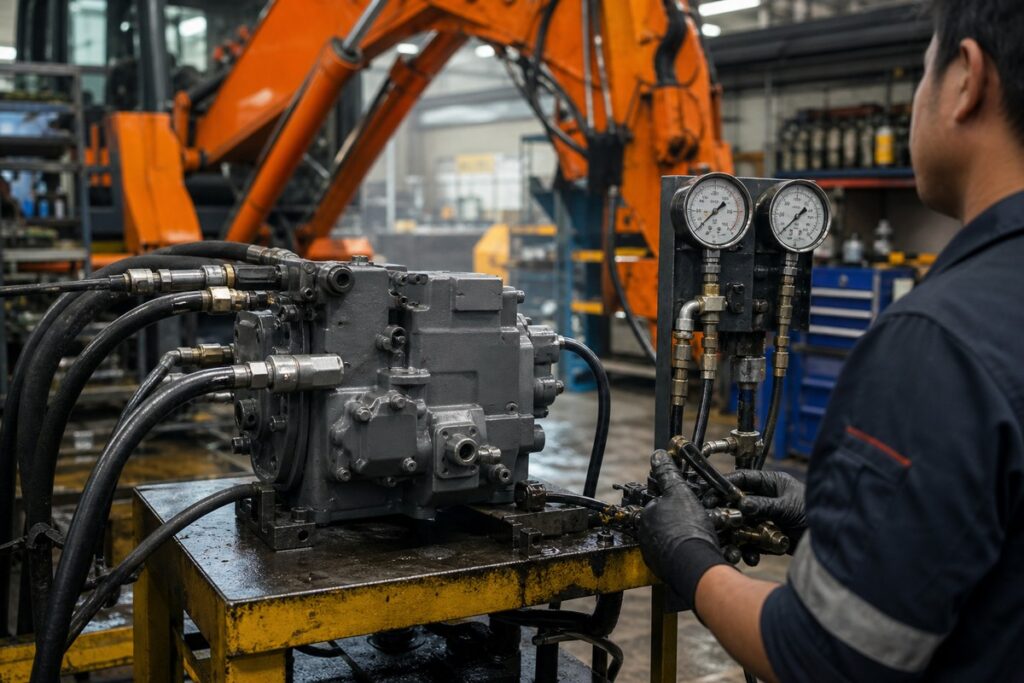
When a Hitachi excavator has slow hydraulics, buyers and mechanics should check pilot pressure, pump control signal, regulator movement, return filter, suction strainer, servo piston, control spool and pump test evidence before ordering a replacement pump.
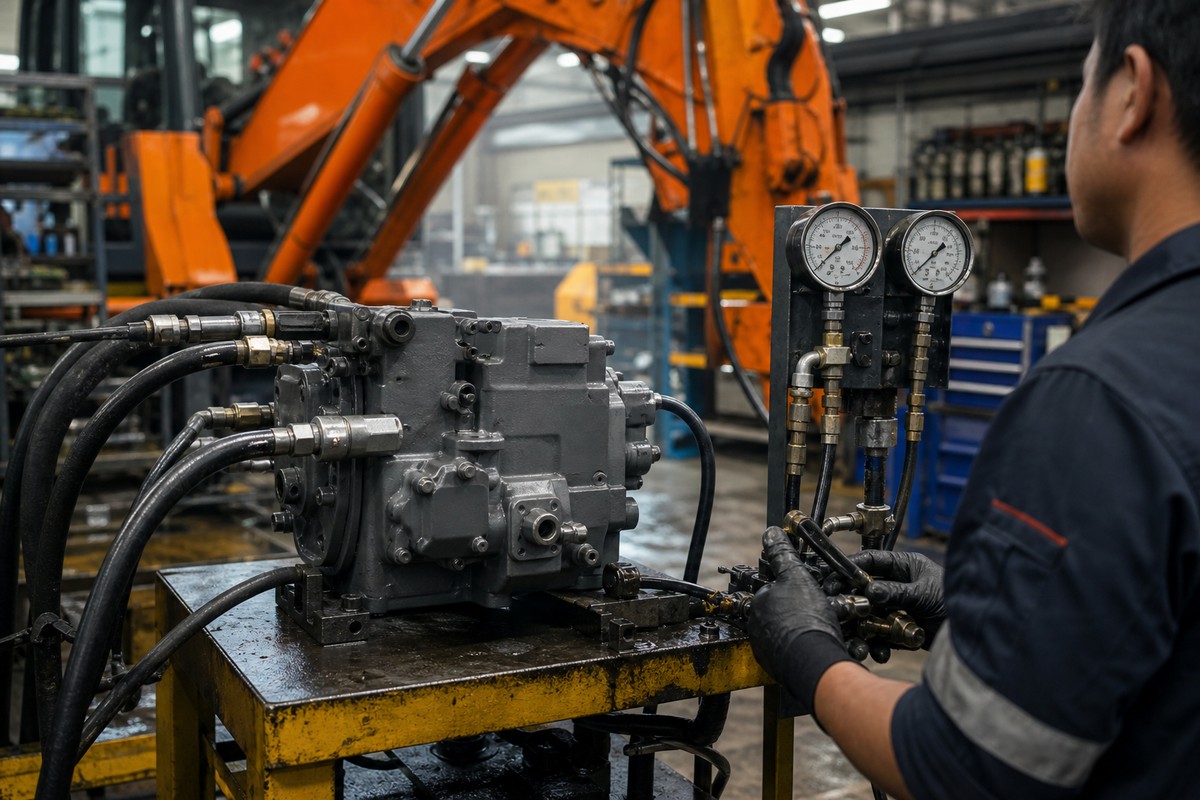
This topic comes from practical forum-style troubleshooting and connects to PRIMA guides on Hitachi hydraulic pump sourcing and excavator hydraulic pump buying.
Buyer Summary
- Slow hydraulics do not automatically prove the main pump is bad.
- Pilot pressure, pump regulator, filters, suction restriction and control signals should be checked first.
- A replacement pump should be ordered with old-pump photos, port layout, rotation, regulator position and test evidence.
- Used or rebuilt pump options need clear condition and warranty boundaries.
What should be checked before blaming the pump?
Start with pilot pressure, filters, suction path, pump control signal and regulator response.
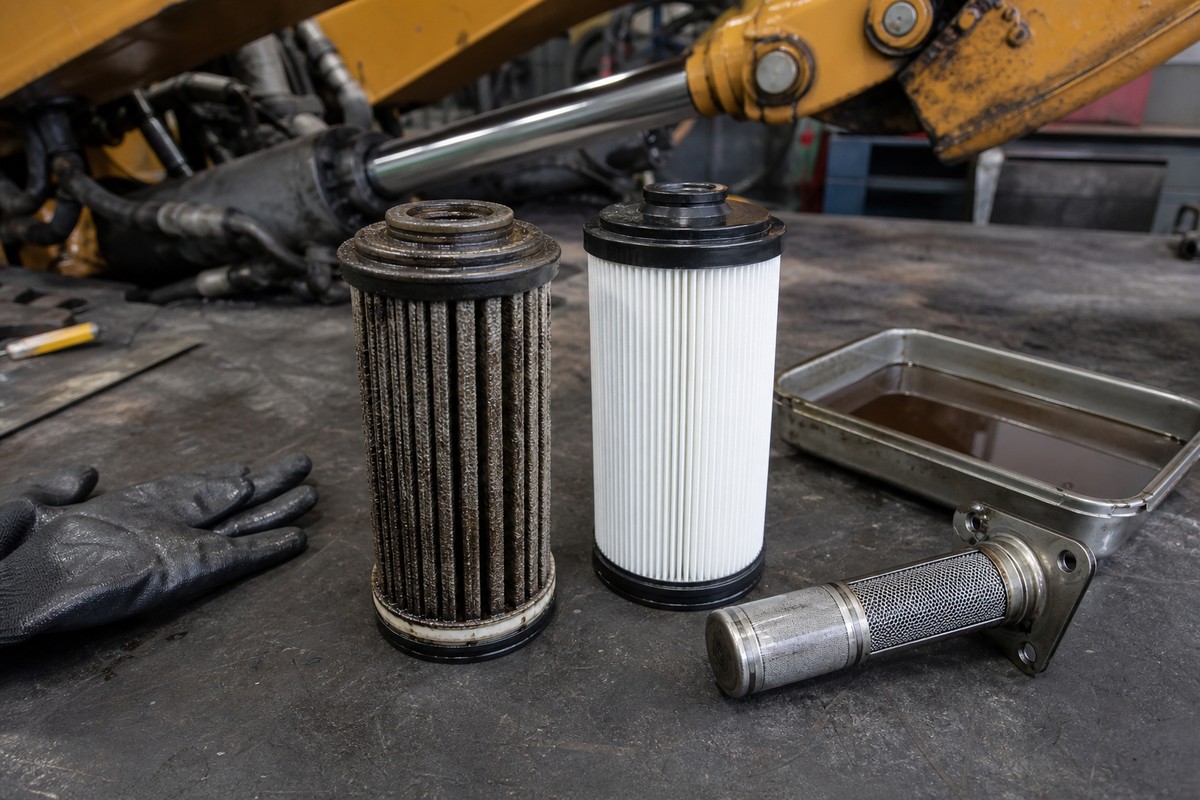
A pump that is not stroking may be reacting to a control problem. A restricted filter, weak pilot pressure, stuck regulator, servo issue or control spool problem can make the machine feel weak even when the pump is not the root cause.
| Check | Evidence | Why it matters |
|---|---|---|
| Pilot pressure | Gauge reading under command | Controls pump response |
| Filter and suction | Filter/strainer condition | Controls flow supply |
| Regulator | Movement and signal check | Controls pump displacement |
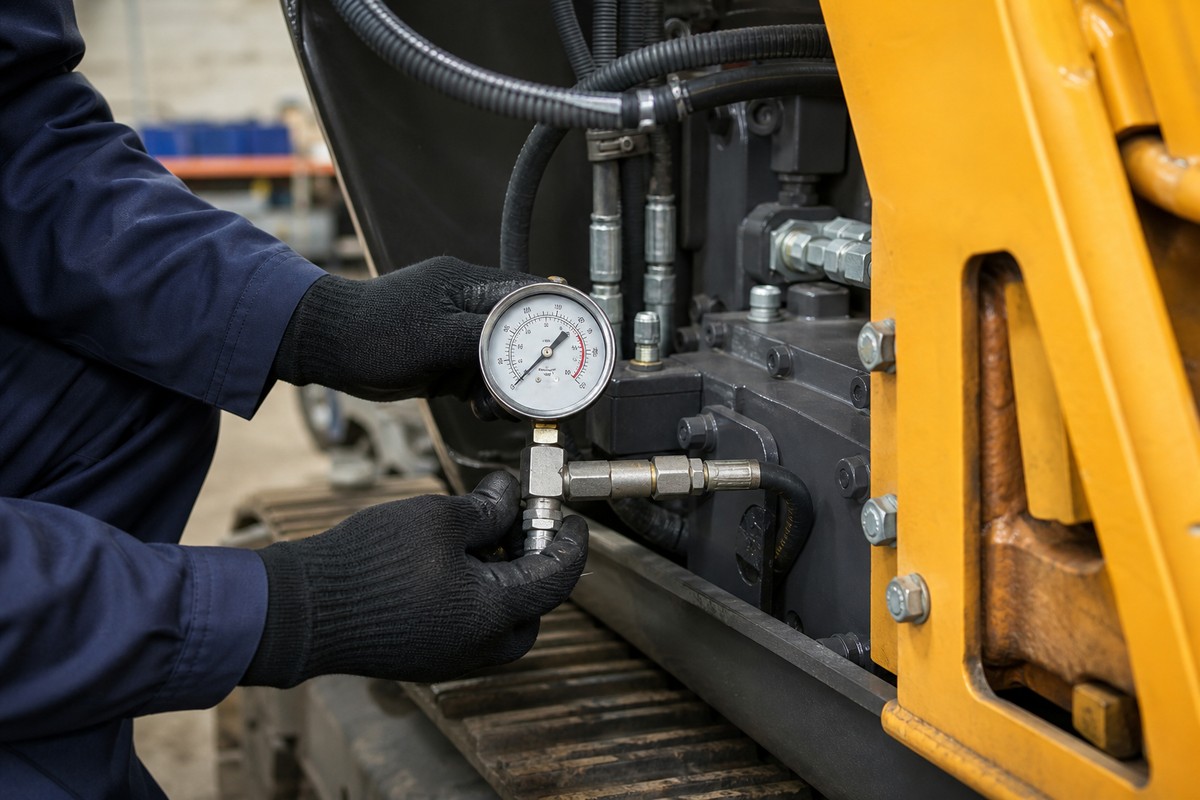
How to separate pressure from flow problems
Relief pressure alone does not prove usable hydraulic flow.
A machine may reach relief pressure briefly but still move slowly if pump flow is low, control signal is weak or leakage is high. Mechanics should compare pressure, flow, engine load and function speed. This distinction helps buyers avoid ordering the wrong component.
| Symptom | Likely evidence | Possible direction |
|---|---|---|
| Pressure OK but slow | Flow test or speed comparison | Pump control/leakage |
| Pressure low | Relief and pilot check | Control or relief problem |
| One function slow | Valve/spool check | Circuit-specific issue |
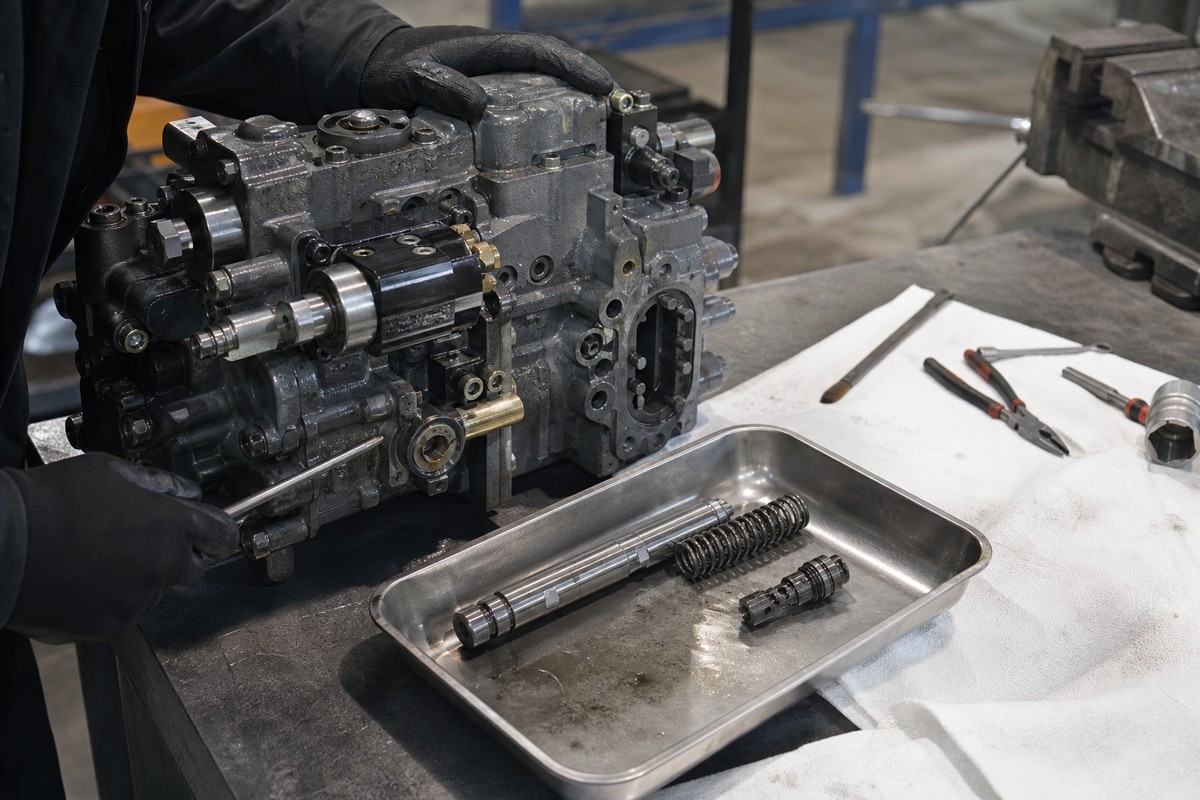
What pump details matter for a replacement quote?
The old pump should be documented by photos, port layout, regulator, rotation, mounting and visible part number.
Hitachi pump variations can look similar. A buyer should not order only by model name. PRIMA should compare all connection points and condition options before confirming OEM, aftermarket, used or rebuilt availability.
When is a rebuilt or used pump acceptable?
A rebuilt or used pump can be practical when test evidence, photos and warranty limits are clear.
If the machine value or urgency does not justify an original new unit, used or rebuilt may be considered. The buyer should ask for photos, port protection, inspection notes and warranty scope. The supplier should not pretend all condition grades carry the same risk.
| Option | Best use case | Evidence needed |
|---|---|---|
| OEM/new | High-value or critical machine | Part number and warranty |
| Rebuilt | Cost-controlled repair | Test/inspection evidence |
| Used | Urgent or budget repair | Real photos and condition notes |
How PRIMA should package hydraulic pump evidence
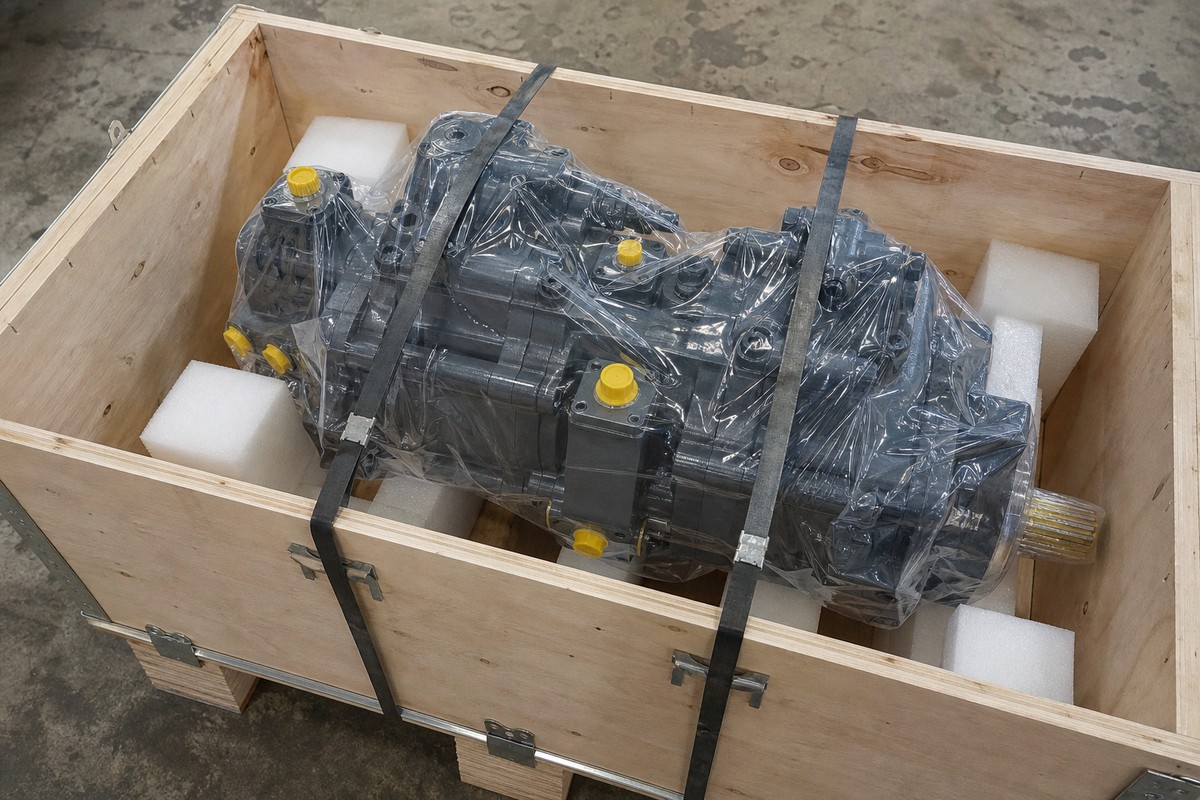
The quote file should include the diagnostic reason, fitment proof, condition grade and shipment protection.
Hydraulic pumps are sensitive to contamination and impact. Before shipment, PRIMA should show capped ports, packing protection, actual batch photos and a clear warranty boundary.
Evidence Table
| Diagnostic question | Evidence to request | Buyer benefit |
|---|---|---|
| Is the pump really bad? | Pilot, filter, regulator and flow evidence | Avoids unnecessary purchase |
| Will the replacement fit? | Old-pump photos, ports and mounting | Prevents mismatch |
| Can it ship safely? | Capped ports and packing photos | Reduces contamination risk |
Buyer FAQ
Does slow hydraulics always mean the pump is bad?
No. Pilot pressure, filters, regulator, leakage and control signals should be checked first.
What should I send before asking PRIMA for a Hitachi pump?
Send model, serial number, old-pump photos, port layout, part number, rotation, regulator photos and failure symptoms.
Can PRIMA quote rebuilt Hitachi hydraulic pumps?
Depending on availability, used or rebuilt options can be considered when evidence and warranty boundaries are clear.
Conclusion
Slow hydraulics should be diagnosed before a pump is purchased. A careful evidence file helps buyers decide whether to repair, rebuild or replace the pump with less risk.
References
- Hitachi Construction Machinery: Official brand context.
- Bosch Rexroth hydraulics: General hydraulic system reference.
- ISO 9001: General supplier quality-system reference.