
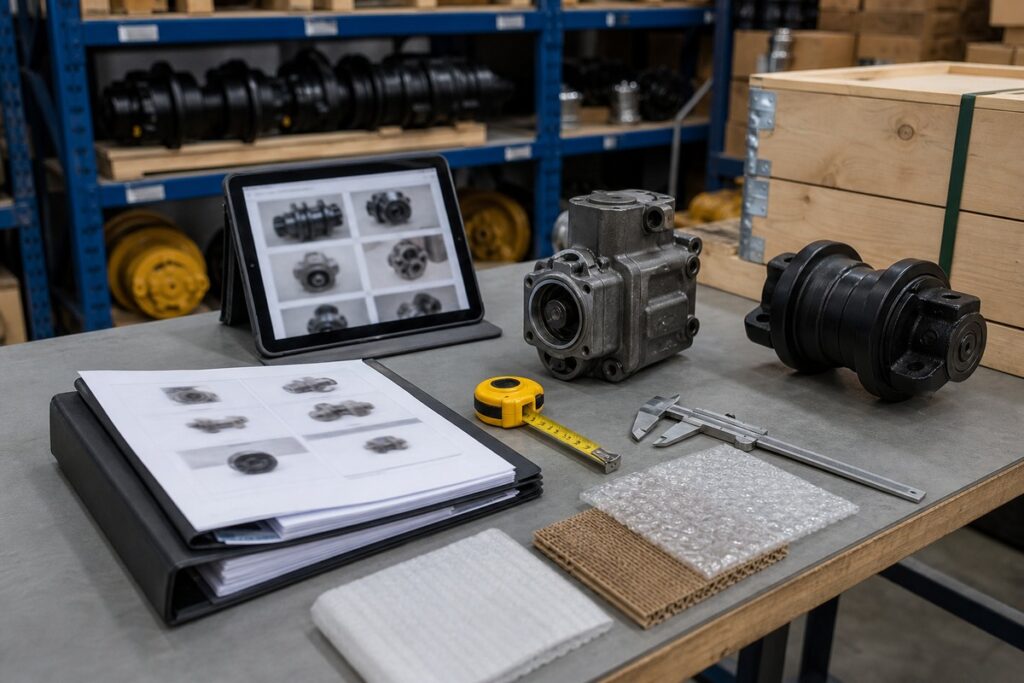
Buyers should prepare an excavator parts RFQ file before contacting a China supplier by collecting the machine model, serial or PIN evidence when available, old-part photos, visible part or casting numbers, measurements, quantity, required condition, jobsite symptoms, packing needs and delivery destination. A short message that says only “send price for excavator parts” is not enough. A strong RFQ lets PRIMA separate exact-fit items from substitute options, compare OEM, aftermarket, used and rebuilt choices honestly, and avoid quoting a part that looks similar but fails at the bolt pattern, port layout, link count or machine serial range.
Excavator parts sourcing often fails before the supplier even quotes. The buyer may know the machine brand and model, but the missing details are usually the old-part photos, serial context, dimensions, port direction, condition boundary and shipment constraints that decide whether the replacement fits.
This guide sits above PRIMA’s part-number and fitment support pages. Use it as the first buyer file, then connect the RFQ to part-specific pages such as part-number verification, OEM / aftermarket / used / rebuilt comparison, engine parts quote checks and spare-parts fitment review.
Buyer Summary
- Best for importers, repair shops, fleet owners and dealers requesting excavator parts from China.
- The RFQ file should prove identity, fitment, condition, quantity, packing and destination before price comparison.
- Model name alone is not enough when two parts look similar but differ by serial range, hole spacing, port layout or link count.
- PRIMA should label OEM, aftermarket, used and rebuilt options clearly and avoid any unsupported official-dealer claim.
Quick answer: what should an excavator parts RFQ file include?
A practical excavator parts RFQ file should include the excavator model, serial or PIN plate when available, old-part photos from every side, visible part number or casting marks, key measurements, quantity, working symptoms, required condition, destination country, packing needs and expected delivery timing. For hydraulic pumps, final drives and engines, buyers should add port layout, shaft or flange photos and failure symptoms. For undercarriage parts, they should add track chain link count, pitch, shoe width, bolt pattern and roller/idler dimensions. This evidence helps PRIMA quote the right part category instead of guessing from a model name alone.
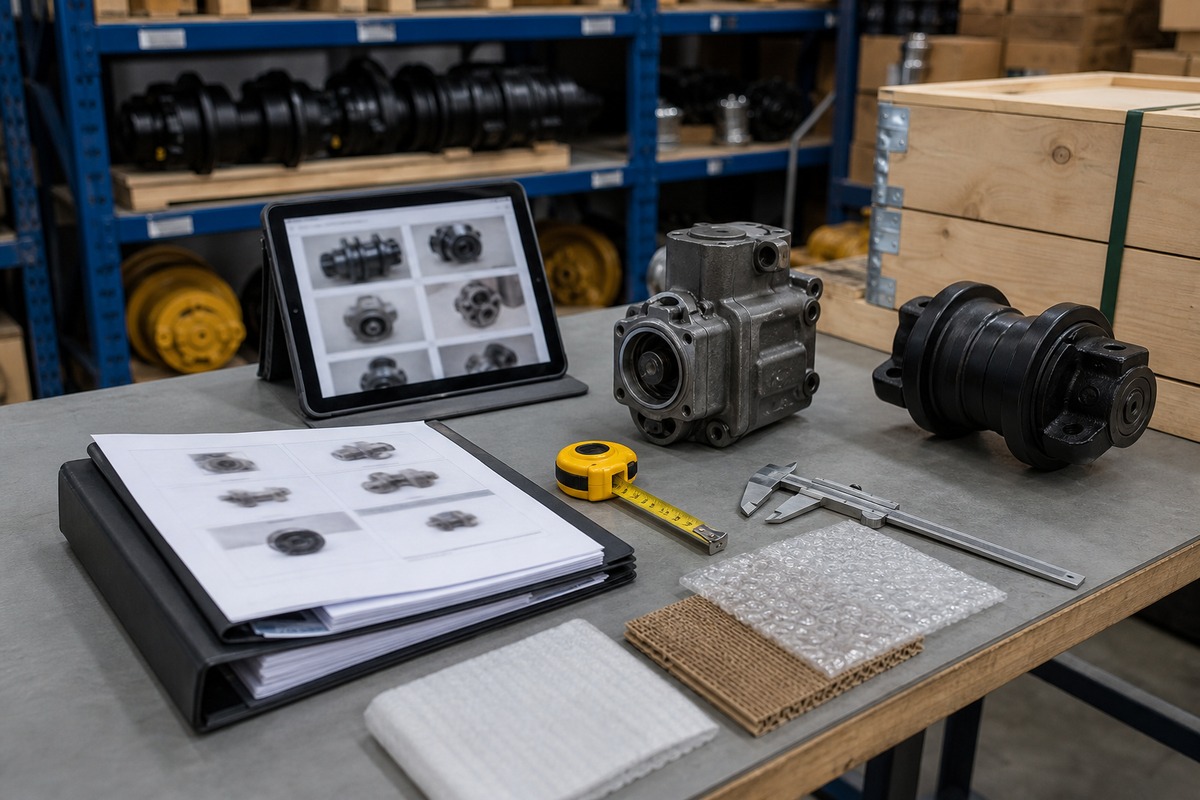
Which machine identity details should start the RFQ?
Start with the machine model, serial or PIN evidence and current machine photos. The model name tells the supplier the general family, but the serial range can change pump, final-drive, engine, undercarriage and cab-component fitment. If the serial plate is missing or unreadable, buyers should say that clearly and send all available machine-side evidence instead.
PRIMA should keep the quote conditional when only a model name is available. A conditional quote is more honest than a confident price that later fails because the buyer’s machine uses a different revision, attachment configuration or regional specification.
| Check area | Evidence to include | Risk reduced |
|---|---|---|
| Model and serial | Machine model, serial/PIN plate, year or hour meter if known | Wrong serial range or machine family |
| Machine context | Photos of the machine, attachment and operating condition | Quoting a part for the wrong application |
| Missing proof note | Say when serial or tag evidence is unavailable | False certainty during quote approval |
What old-part photos and numbers matter most?
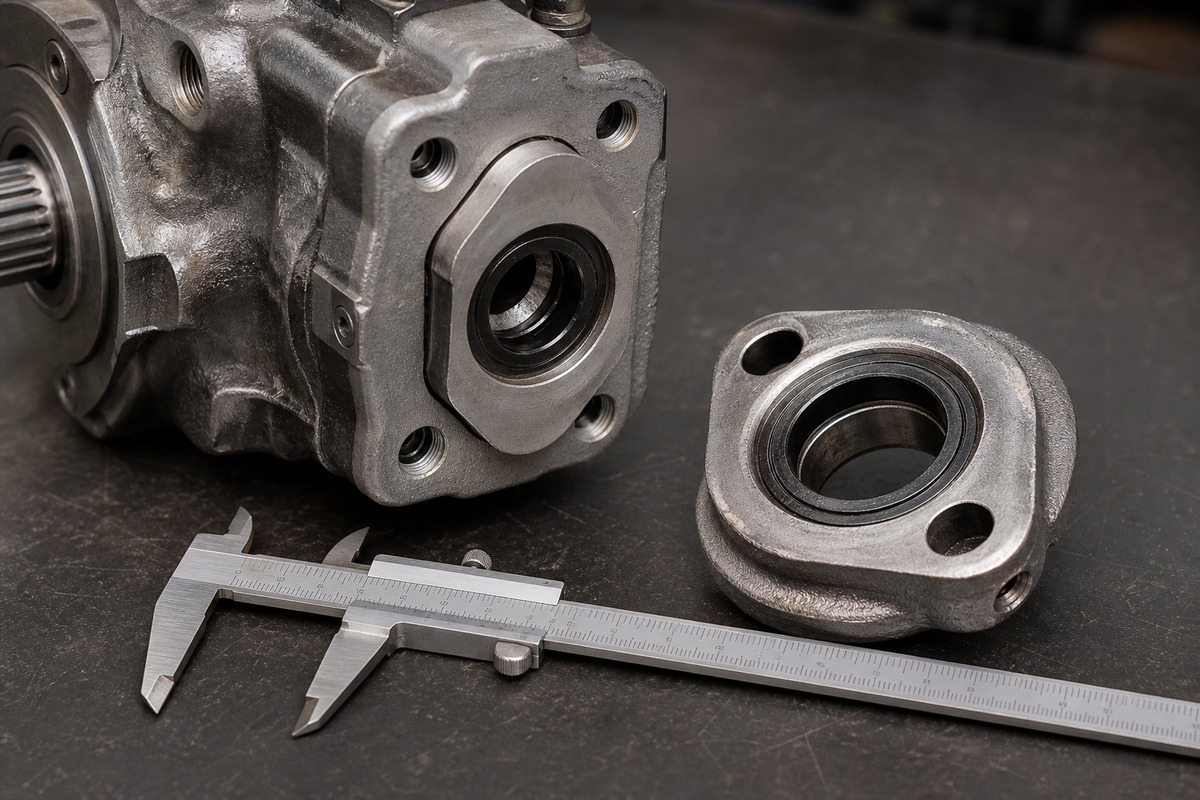
The old part is often the best evidence. Buyers should photograph every side, mounting face, port face, shaft end, plug position, tag area, casting marks and damaged area before cleaning removes useful traces. Even when the part number is not readable, the photo sequence can show shape, port direction and mounting features.
For an excavator parts supplier, a visible part number is helpful but not always enough. Rebuilt components, substitute brands and older machines can carry marks that do not map cleanly to the current replacement. PRIMA should compare the number with photos and measurements before treating the match as final.
| Check area | Evidence to include | Risk reduced |
|---|---|---|
| Photos | All sides, tag area, ports, mounting face and damaged area | Supplier sees only the easiest angle |
| Numbers | Part number, casting number, tag and old invoice reference | Confusing a casting number with a service part number |
| Condition | Broken, leaking, worn, rebuildable or sample-only | Quoting new when the buyer expects rebuilt or used |
Which measurements prevent wrong-part orders?
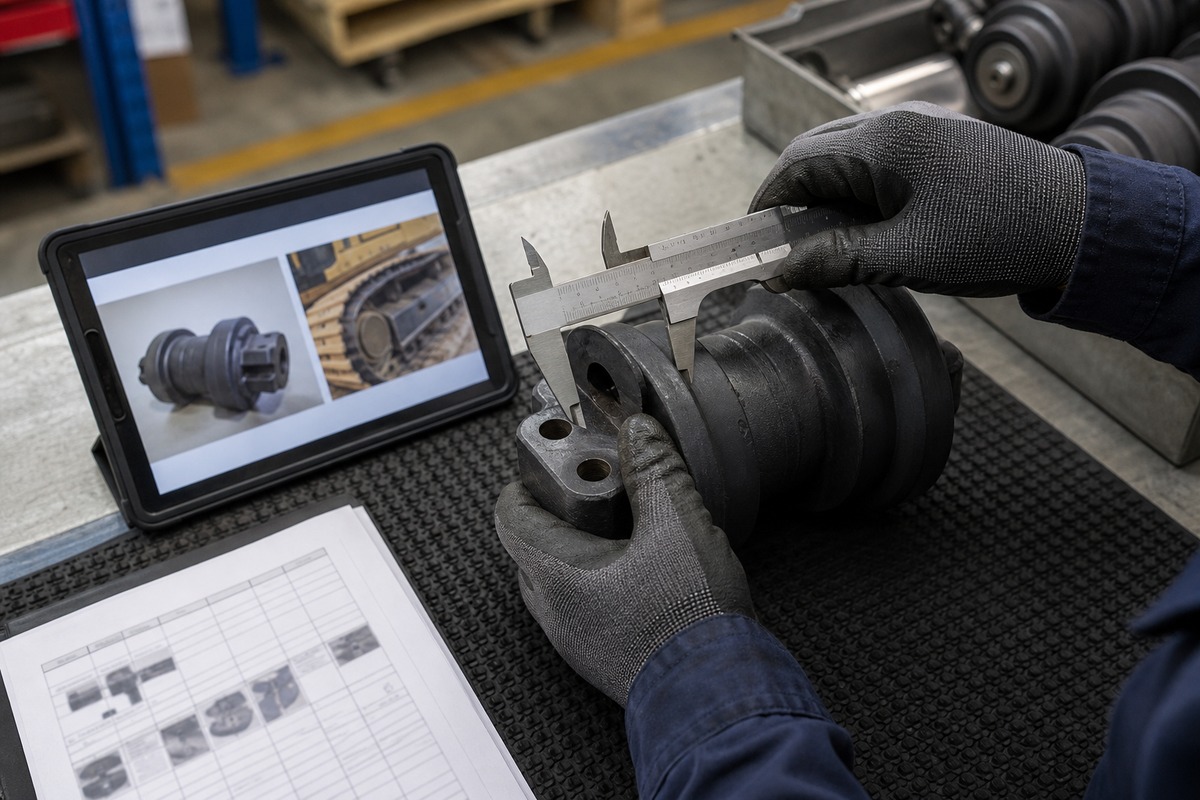
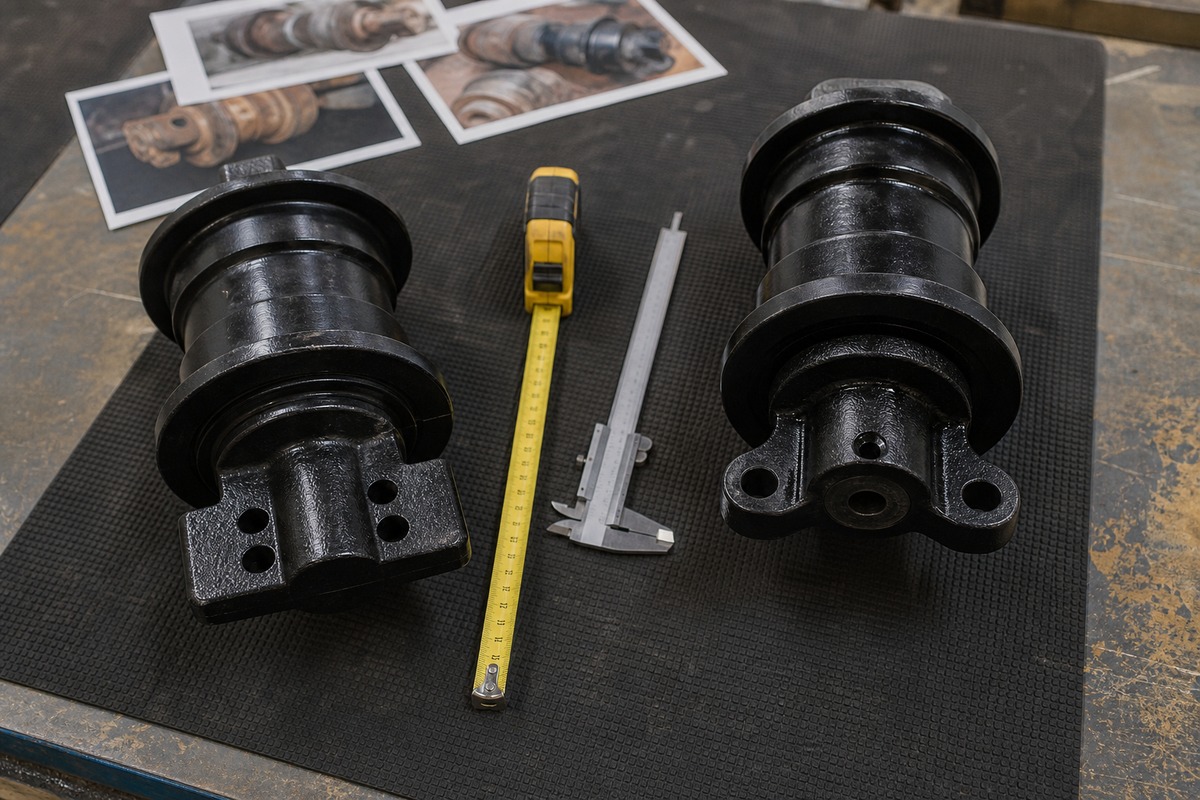
Measurements turn a similar-looking part into a fitment decision. Hydraulic and drivetrain parts need port direction, shaft size, flange pattern and bolt spacing. Undercarriage parts need roller width, shaft diameter, bolt pattern, track chain pitch, link count, shoe width and sprocket tooth profile. Buckets and teeth need pin diameter, pin center distance, ear width and adapter family.
A buyer does not need a perfect engineering drawing to start. Clear photos with a tape measure or caliper are usually enough to decide whether PRIMA can quote directly, request one more dimension or recommend a safer substitute boundary.
| Check area | Evidence to include | Risk reduced |
|---|---|---|
| Hydraulic parts | Port layout, shaft/flange, rotation, plug position | Wrong pump, motor or hose path |
| Undercarriage | Link count, pitch, shoe width, roller/idler dimensions | Track mismatch or sprocket/chain conflict |
| Bucket wear parts | Pin diameter, center distance, ear width, tooth/adaptor family | Attachment cannot install on site |
How should buyers describe quantity, packing and shipping needs?
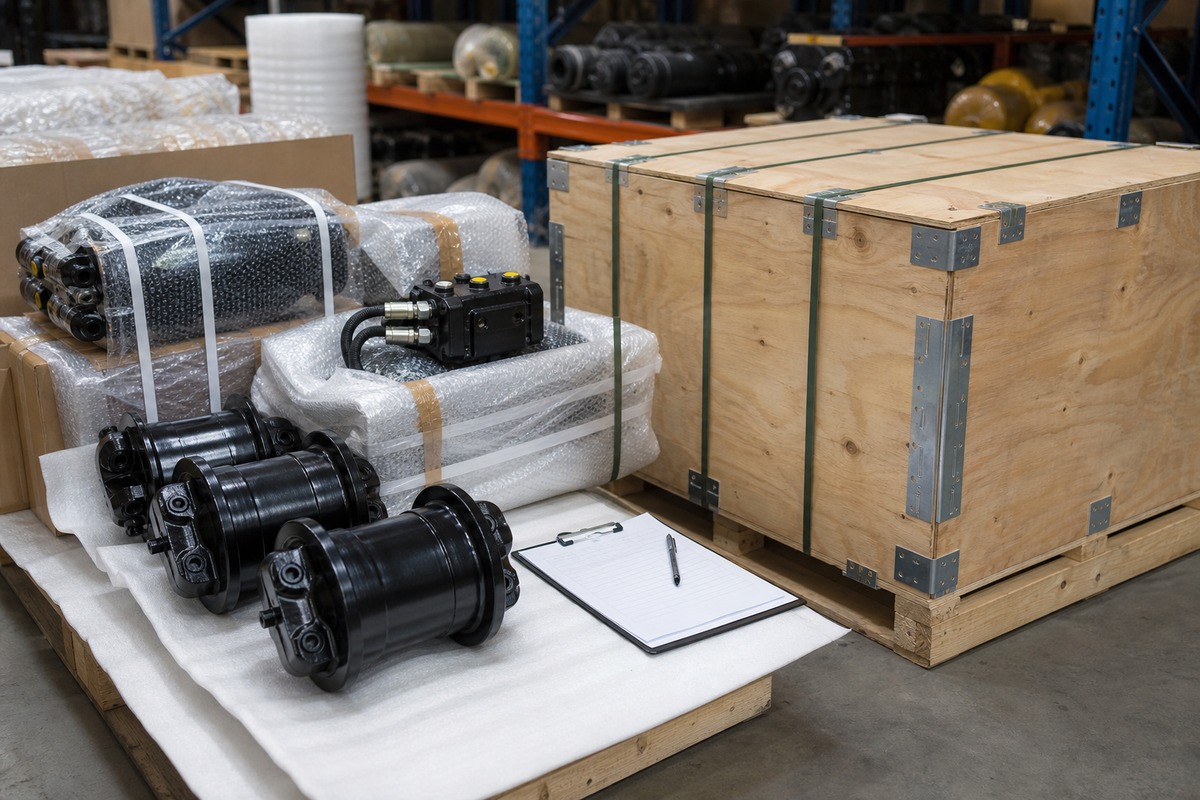
The RFQ should not stop at part identity. Quantity, urgency, destination country, preferred condition, packing strength, pallet or crate requirement and shipping method can change the quote. A heavy hydraulic pump needs different protection from a seal kit or filter order. A mixed-parts shipment should label each item so the receiving team can match the carton to the machine file.
Commercial documents should describe the goods accurately. PRIMA should connect quote wording, invoice, packing list and packing photos to the same order file so the buyer is not left matching loose parts after arrival.
| Check area | Evidence to include | Risk reduced |
|---|---|---|
| Quantity and timing | Pieces required, spare quantity, urgent downtime note | Price or availability mismatch |
| Packing | Caps, foam, crate, pallet, rust protection and item labels | Transit damage or receiving confusion |
| Shipping file | Destination, invoice wording and packing-list match | Document and customs review problems |
Evidence Table
| Decision area | RFQ evidence | Buyer value |
|---|---|---|
| Identity | Model, serial/PIN evidence, machine photos and old-part photos | Prevents quoting from model name only |
| Fitment | Numbers, dimensions, port direction, bolt spacing, link count or pin measurements | Separates exact fit from similar-looking parts |
| Condition | New, aftermarket, used, rebuilt or sample-only boundary | Prevents expectation disputes |
| Shipment | Quantity, packing, destination, invoice and packing-list match | Reduces receiving and customs friction |
Key Facts For PRIMA Buyers
- Model name alone is not enough for reliable excavator parts fitment.
- Old-part photos and measurements are often stronger evidence than a typed part number.
- Hydraulic, undercarriage and bucket parts each require different RFQ evidence.
- OEM, aftermarket, used and rebuilt options should be separated before price comparison.
- Packing and invoice wording should connect to the same quote file before shipment.
Before the buyer pays deposit
If the RFQ belongs to a used excavator purchase, send one sourcing file for the machine and parts request so PRIMA can check model, serial/PIN, old-part evidence, supplier route, availability, packing and export details together. send one sourcing file for the machine and parts request.
Buyer FAQ
Can I request excavator parts by machine model only?
You can start with the model, but PRIMA should not treat fitment as confirmed until photos, numbers or measurements support the match.
Is a part number always enough?
No. Some marks are casting numbers, old supplier codes or incomplete tags. Use the number with photos and dimensions.
What should I send for hydraulic pumps or final drives?
Send port layout, shaft or flange photos, mounting pattern, rotation if known, failure symptoms and old tag photos.
What should I send for undercarriage parts?
Send link count, pitch, shoe width, roller or idler dimensions, bolt pattern and photos of worn parts on the machine.
Should the RFQ include packing requirements?
Yes. Heavy parts need caps, foam, crate or pallet protection and clear item labels before export.
Useful PRIMA Links
- PRIMA excavator parts supplier buyer guide
- Excavator spare parts fitment checklist
- Part-number verification before ordering
- OEM, aftermarket, used and rebuilt comparison
- Engine parts quote checklist
External References
- Cat Parts Store parts lookup
- U.S. CBP Basic Importing and Exporting
- UPS guide to commercial invoices
Conclusion
A useful excavator parts RFQ file saves time because it lets the supplier decide what is confirmed, what is conditional and what still needs evidence. PRIMA should use the file to keep fitment, condition, price, packing and shipment expectations tied to the same order record before the buyer pays.