
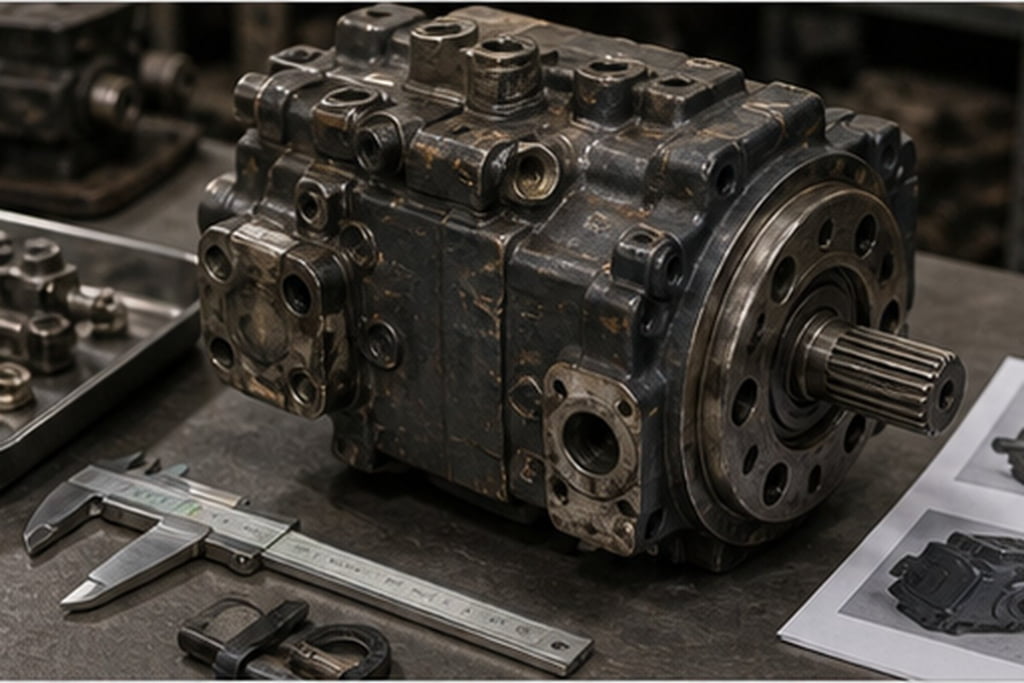
Before replacing an excavator hydraulic pump, buyers should confirm the machine model and serial, symptoms, pressure or flow test evidence when available, old-pump photos, part number, port layout, shaft type, rotation direction, regulator configuration, replacement condition and export packing proof.
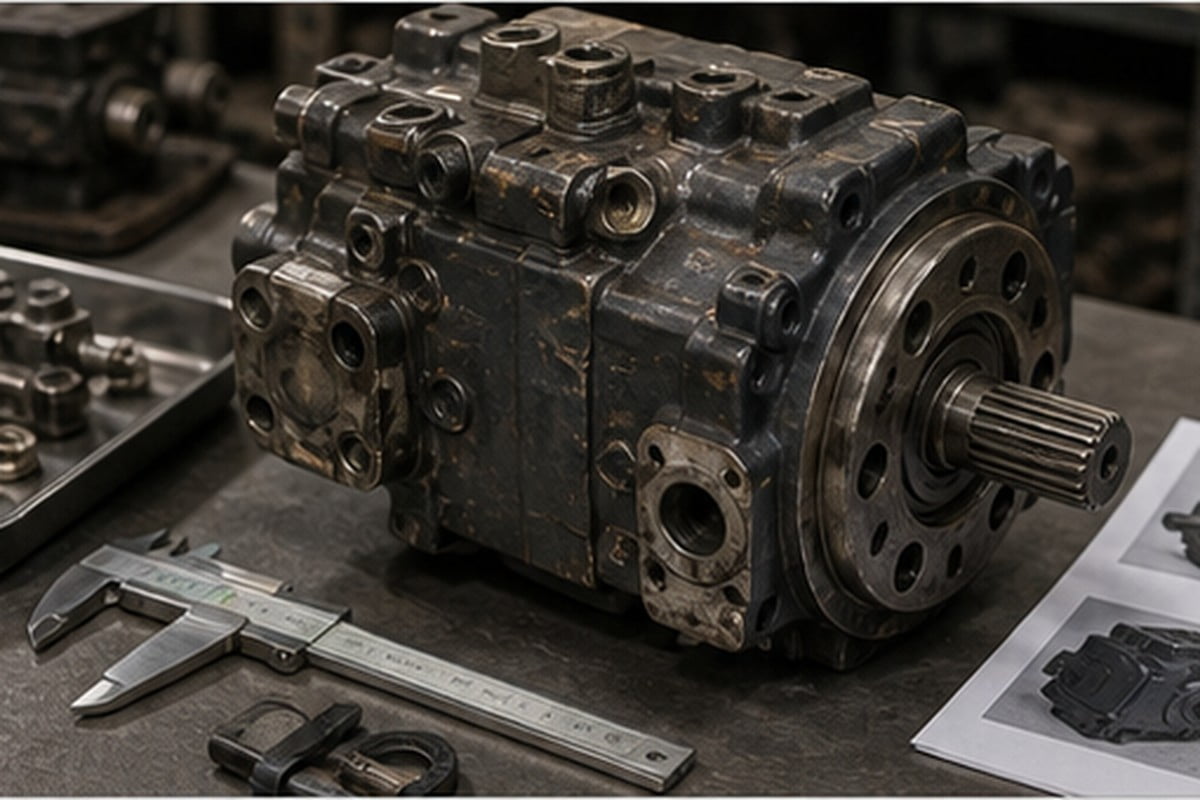
This PRIMA guide uses run `50` hydraulic evidence for hydraulic pump testing, how to test hydraulic pump, hydraulic pump maintenance, hydraulic failure symptoms and Indonesian pump intent. It links to PRIMA’s excavator hydraulic pump buyer guide, Hitachi hydraulic pump guide, Indonesian hydraulic pump checklist and PRIMA parts supplier hub.
Quick answer: what should be checked before replacing a hydraulic pump?
An excavator hydraulic pump should be replaced only after the buyer documents the machine model, serial, symptoms, old-pump photos, part number if available, port layout, shaft, rotation direction, regulator, pressure or flow evidence when available, oil contamination clues and replacement condition. PRIMA should also clarify whether the buyer needs new, used, rebuilt or aftermarket supply, and show capped-port packing before export. If the issue may come from hoses, cylinders, travel motor, control valve or oil contamination, pump replacement should not be treated as certain without diagnostic evidence.
Buyer Summary
- This page helps buyers avoid replacing a hydraulic pump without enough diagnostic and fitment evidence.
- Symptoms should be linked to photos, test notes and machine serial before a part is quoted.
- Port layout, shaft, rotation and regulator details are critical for pump fitment.
- Packing should cap ports and protect the shaft because contamination can damage the replacement pump.
What diagnostic evidence should come before a pump quote?
A slow or weak excavator does not automatically prove the pump is the failed part.
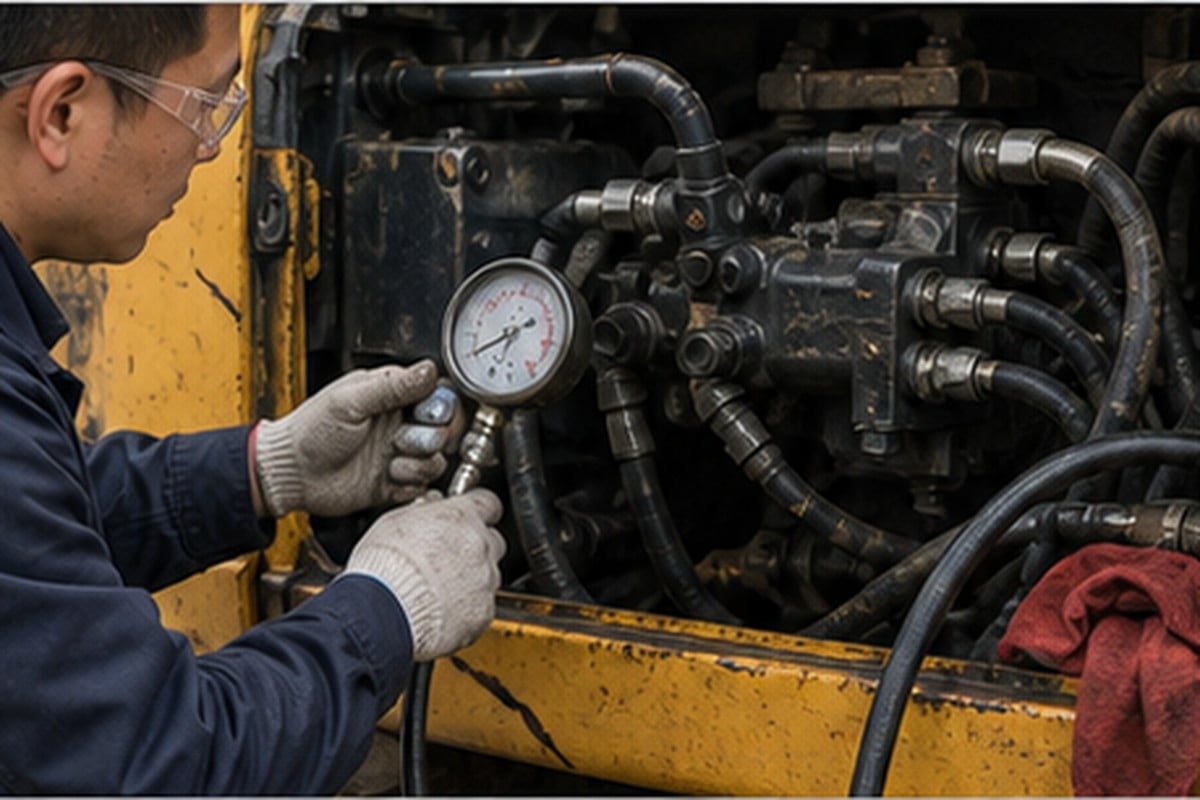
Buyers often ask for a hydraulic pump after seeing slow movement, weak digging, heat, noise or leakage. Those symptoms may point to the pump, but they can also involve hoses, cylinders, relief valves, control valve, travel motor, swing motor, oil condition or filter restriction. PRIMA should ask what the machine does, when the symptom appears and whether any pressure or flow test is available.
The quote file should record model, serial, symptoms, photos of the pump area, visible leakage, oil contamination clues and any workshop diagnosis. This does not replace a mechanic’s test, but it helps prevent ordering a pump when the buyer has not separated pump failure from system problems.
| Symptom | Evidence to request | Possible non-pump cause |
|---|---|---|
| Slow hydraulics | Pressure/flow notes and function video | Relief valve, oil, filter or cylinder issue |
| Noise / heat | Oil condition, leakage and test history | Contamination or restriction |
| Weak travel | Travel and pump-area evidence | Final drive or travel motor issue |
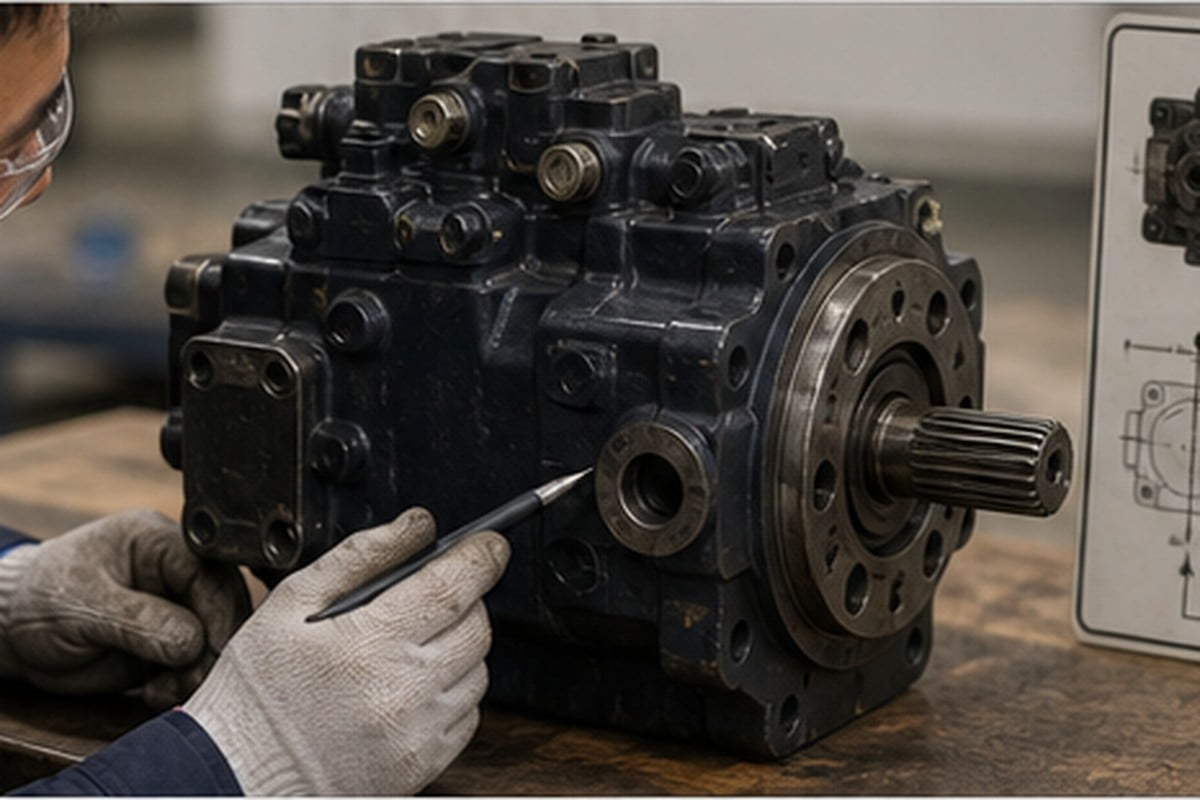
How should old-pump photos be prepared for fitment?
The old pump is the best reference for port layout, shaft, regulator and rotation.
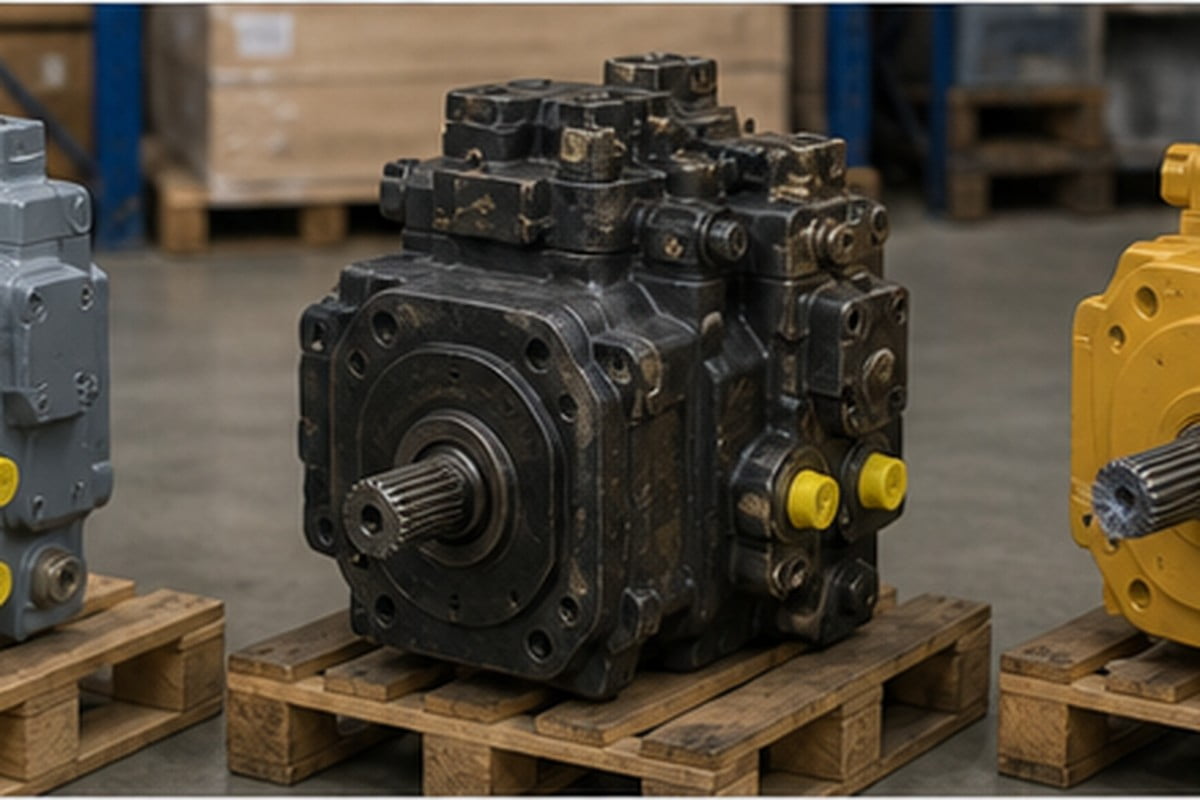
Buyers should photograph the old pump from several sides before removal if possible. The photo set should include part number plate if visible, main ports, pilot ports, drain ports, regulator, shaft, mounting face, hose orientation and any damaged area. If the tag is missing, good photos and machine serial become even more important.
PRIMA should ask for photos with enough distance to understand orientation and close-ups for each interface. Written numbers alone are risky because a small port or shaft difference can stop installation. Caliper or ruler photos are helpful when the pump has several similar variants.
| Fitment item | Photo needed | Risk controlled |
|---|---|---|
| Port layout | All ports and hose direction | Wrong hydraulic connection |
| Shaft / mounting | Shaft type, bolt pattern and pilot | Mechanical mismatch |
| Regulator | Regulator side and connector details | Control mismatch |
How should new, used, rebuilt and aftermarket pumps be compared?
Replacement condition should match the buyer's downtime, budget and warranty needs.
A new or aftermarket pump may be chosen for predictable condition, while a used or rebuilt pump may be selected for price or lead time. Each option needs different evidence. Used pumps should show current photos and condition notes. Rebuilt pumps should explain repair scope, test status and warranty boundary.
PRIMA should not let a price table hide condition differences. The quote should state whether ports are capped, whether accessories or regulators are included, whether the buyer must reuse old components and what evidence supports the supplier’s condition claim.
| Option | Evidence needed | Buyer caution |
|---|---|---|
| New / aftermarket | Model coverage and supplier confirmation | Variant mismatch |
| Used | Current photos and known condition | Unknown remaining life |
| Rebuilt | Repair scope and test status | Unclear rebuild boundary |
What packing proof protects a hydraulic pump during export?
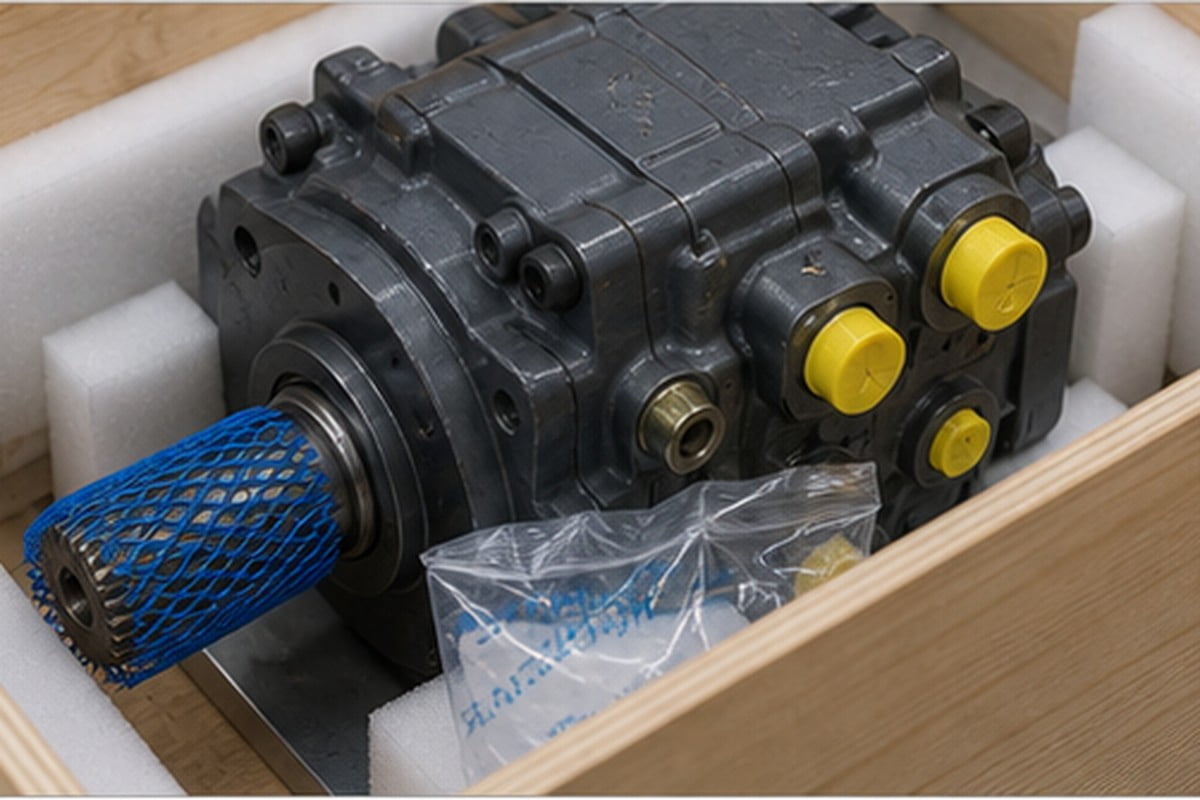
Ports, shaft and regulator must be protected from contamination and impact.
Hydraulic pumps are sensitive to dirt, moisture and impact. Before shipment, PRIMA should show port caps, shaft protection, regulator protection, wrapped surfaces, foam support, moisture protection where needed and a strong crate. The part should not move inside the crate.
The packing photos should remain in the same quote file as old-pump evidence and invoice details. If the buyer receives a different port layout or damaged shaft, these photos help compare the shipped item against the approved part.
| Packing item | Proof | Reason |
|---|---|---|
| Ports | Caps or plugs | Prevents contamination |
| Shaft | Protective wrap and padding | Prevents impact damage |
| Crate | Fixed pump and moisture protection | Controls export handling risk |
Evidence Table
| Replacement stage | Required proof | Risk controlled |
|---|---|---|
| Diagnose | Symptoms, test notes and machine serial | Replacing the wrong component |
| Identify | Old-pump photos, part number, port and shaft evidence | Wrong pump variant |
| Select | New, used, rebuilt or aftermarket condition proof | Price-risk confusion |
| Ship | Capped ports, shaft protection and crate photos | Export contamination or damage |
Key Facts For PRIMA Buyers
- Run 50 supplied 31 checked hydraulic diagnostic rows across 15 distinct keywords and 4 domains.
- A hydraulic pump quote should include symptoms and old-pump evidence before price comparison.
- Port layout, shaft, rotation direction and regulator details are core fitment checks.
- This page does not claim a pump is failed without diagnostic evidence from the buyer's machine.
Buyer FAQ
Can slow hydraulics prove the pump is bad?
No. Slow hydraulics can also come from relief valves, oil, filters, cylinders, travel motors, control valves or contamination.
What photos should I send for a hydraulic pump quote?
Send machine serial, old-pump tag, port layout, shaft, mounting face, regulator, hose orientation and damaged areas.
Is a rebuilt hydraulic pump safe to buy?
It can be, if repair scope, test status, photos and warranty boundary are clearly documented.
Why does PRIMA ask for packing photos?
Ports and shafts must be protected from contamination and impact during export shipping.
Conclusion
Hydraulic pump replacement should be evidence-led. PRIMA's buyer file should connect symptoms, old-part fitment, condition choice and export packing before the buyer treats any pump quote as final.
References
- ISO hydraulic fluid power vocabulary: General hydraulic terminology reference.
- OSHA construction safety: General equipment safety reference.
- U.S. CBP importer guidance: General import-document responsibility reference.