
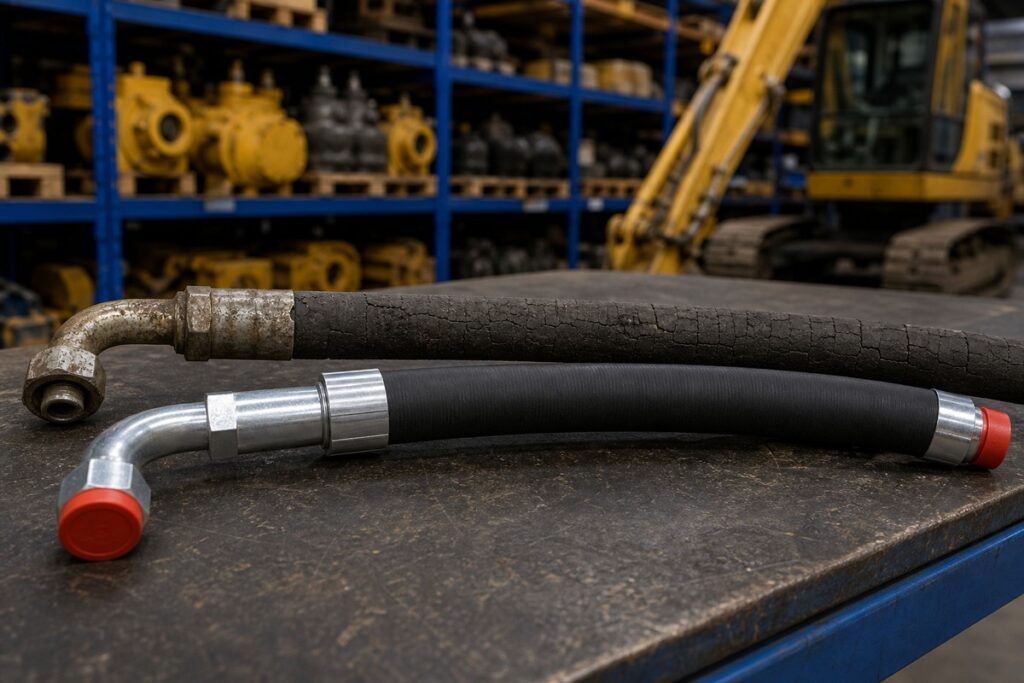
Buyers should check excavator hydraulic hoses before ordering from China by confirming the old hose, hose length, inside diameter, pressure rating, fitting type, fitting angle, crimp quality, thread or flange standard, O-ring condition, routing, bend radius and safety boundary. A hose that looks similar can fail if the fitting angle, crimp, pressure class or routing is wrong. PRIMA should also remind buyers that hydraulic pinhole leaks are dangerous: no one should search for leaks by hand, and pressure-test evidence should be handled with a shield and safe procedure.
Hydraulic hoses are small compared with pumps and cylinders, but one wrong hose can stop an excavator or create a serious safety risk. A buyer needs more than a supplier photo; the order should be tied to measurements, fitting details and machine routing.
This checklist supports PRIMA’s hydraulic pump buyer guide and used excavator hydraulic leak inspection guide. It turns the hose quote into a repeatable evidence file.
Buyer Summary
- Best for repair shops, importers and fleet buyers replacing excavator boom, arm, bucket, travel or attachment hoses.
- Require old hose photos, total length, ID/OD, pressure rating, fitting type, fitting angle and thread or flange standard.
- Do not inspect suspected high-pressure leaks by hand; treat pressure-test evidence as a safety-controlled process.
- Protect caps, threads, O-rings and hose bend radius during packing and shipment.
Quick answer: what proves an excavator hydraulic hose is safe to order?
A safe excavator hydraulic hose order starts with the removed hose and the machine routing. Buyers should send old hose photos, total length, inside diameter, outside diameter, working pressure or SAE/DIN standard if visible, fitting style, thread or flange size, straight or elbow angle, crimp sleeve condition, O-ring or seal type and where the hose is installed on the machine. PRIMA should ask whether the hose failed from abrasion, rubbing, over-bending, twisting, heat, pressure spikes or wrong installation. Before shipment, the file should show caps on both ends, clean fittings, safe pressure or leak-test evidence and packing that prevents kinks or crushed hose.
Which hose details should buyers collect before quoting?
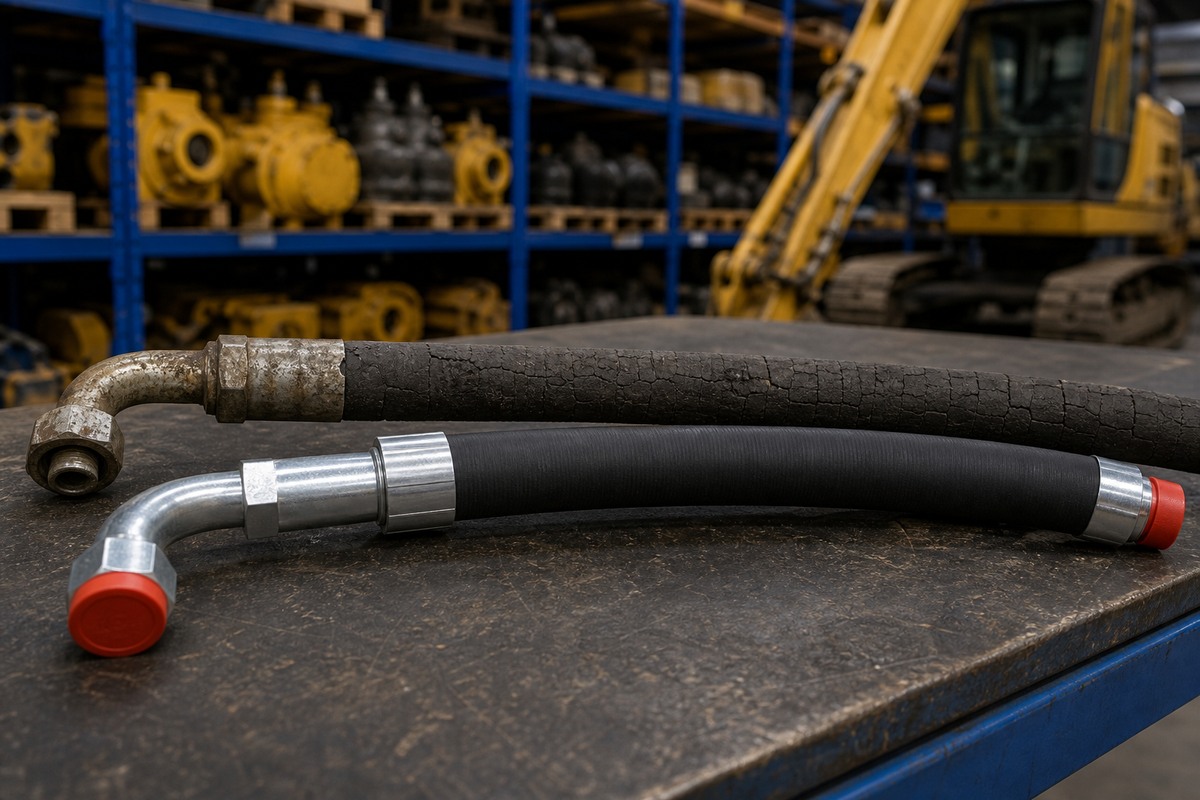
The old hose should be photographed before it is cut, thrown away or replaced by a local temporary hose. Total length, hose diameter, fitting style and fitting angle matter together. If only one field is missing, the new hose may fit one end but twist, kink or interfere with the boom or arm at full movement.
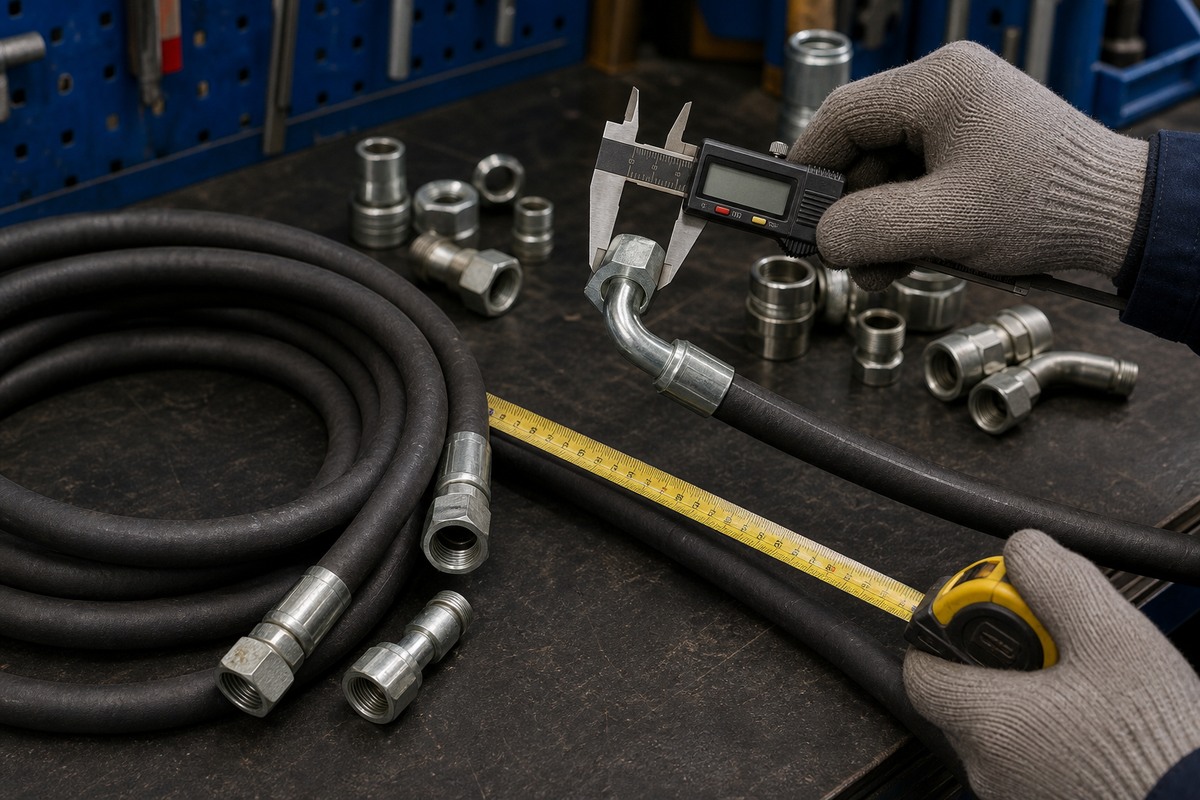
PRIMA should request photos of both ends, the middle jacket, any printed specification, routing on the excavator and the failed area. When text is unreadable, measurement photos and connector comparison become the strongest evidence.
| Check | Evidence to save | Buyer value |
|---|---|---|
| Hose body | Length, ID/OD, pressure class and visible standard | Controls pressure and routing fit |
| Fittings | Thread/flange type, straight or elbow angle and seal type | Prevents installation mismatch |
| Failure point | Abrasion, burst, crack, leak or crushed area | Helps avoid repeat failure |
How should fitting and crimp quality be checked?
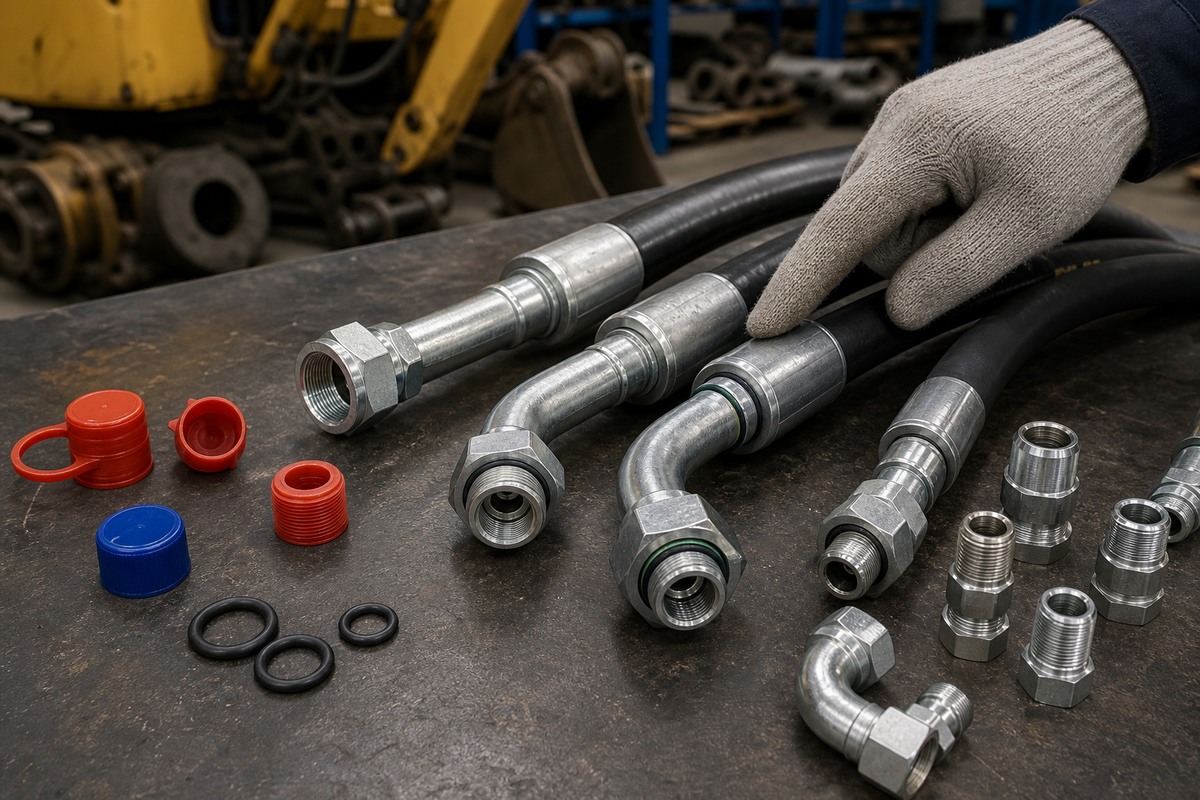
A hydraulic hose is an assembly, not only a rubber tube. The crimp sleeve, fitting tail, O-ring, adapter and thread condition decide whether the hose can hold pressure and seal. Buyers should compare the old and new fittings side by side and ask for clear photos before shipment.
Hose assemblies should not be mixed casually from unrelated hose and fittings. If the buyer asks for a non-original substitution, PRIMA should label the evidence and condition boundary instead of promising universal fit.
| Check | Evidence to save | Buyer value |
|---|---|---|
| Crimp sleeve | Even crimp, no cracks, no loose sleeve | Controls assembly retention |
| Seals | O-rings, washers, caps and seal seats | Controls leak prevention |
| Adapters | Thread pitch, flange face and elbow angle | Controls machine-side fitment |
What safety boundary belongs in hose testing?
High-pressure hydraulic leaks can inject fluid through skin. Parker safety guidance warns against exposure to high-velocity fluid discharge, whipping hose and high-pressure injection injuries. PRIMA should never encourage buyers or mechanics to feel for leaks with hands.
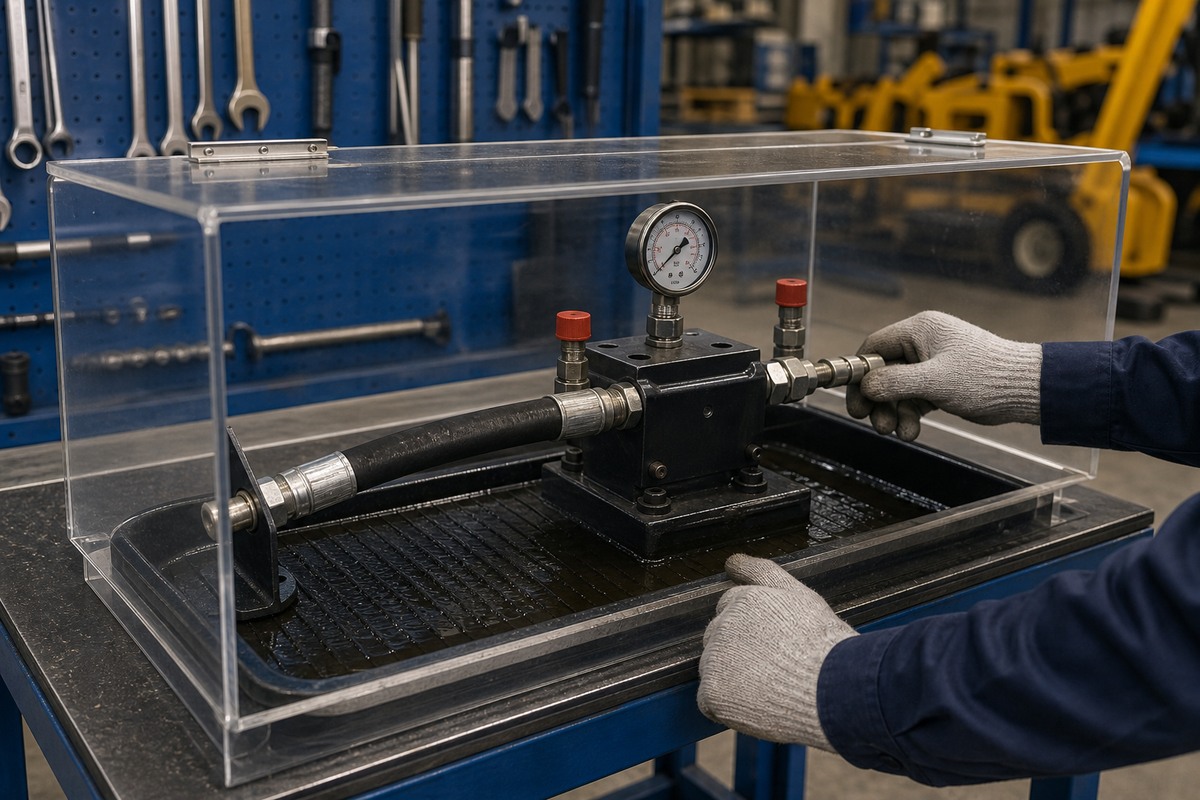
Pressure-test or leak-test evidence should use suitable fixtures, a shield, caps, controlled pressure and trained handling. If the hose is for a critical lifting or attachment circuit, the buyer should follow the equipment manual and local safety procedure before operation.
| Check | Evidence to save | Buyer value |
|---|---|---|
| Leak check | Shielded pressure-test setup or documented safe inspection | Reduces unsafe field testing |
| Routing | Bend radius, clamp position and rubbing points | Prevents early hose failure |
| Machine risk | Boom, arm, bucket, travel or attachment circuit | Sets the seriousness of the replacement |
Which export packing proof protects hydraulic hoses?
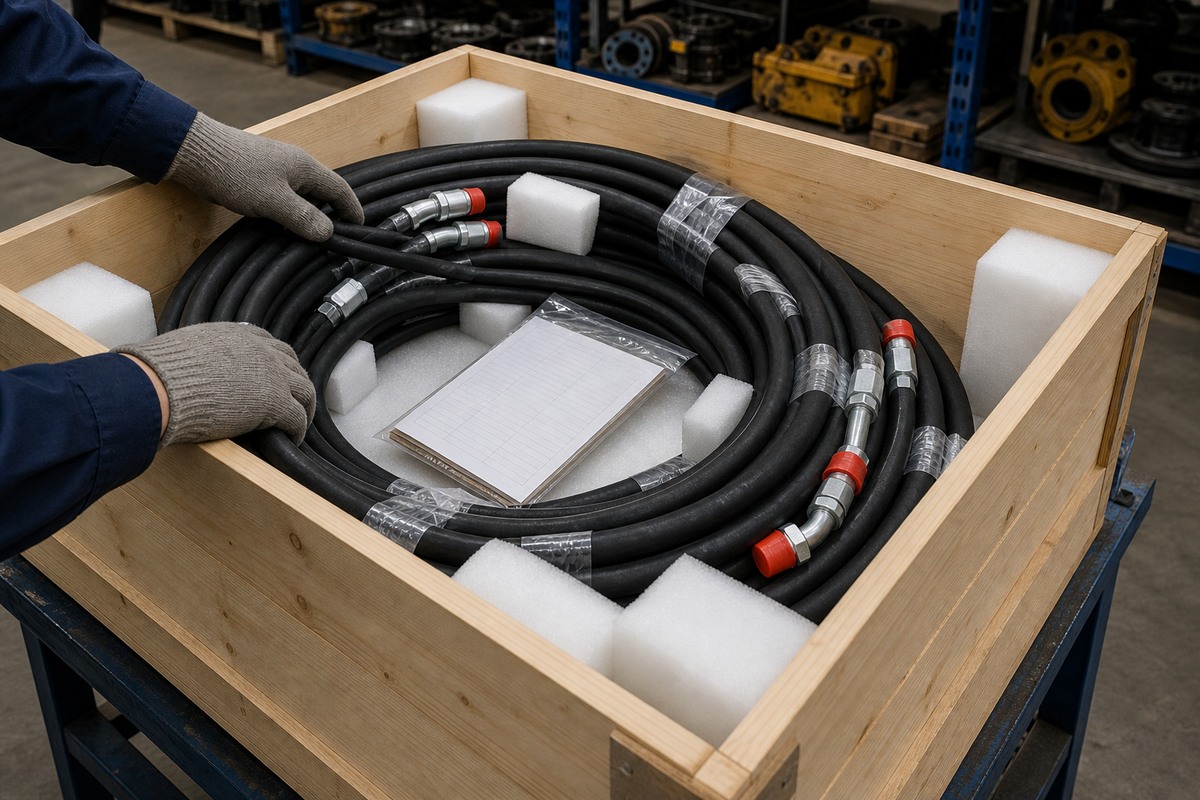
Hoses should be capped, coiled without tight kinks and protected from crushed fittings. Threads and sealing faces can be damaged if the hose moves loose inside a carton. For mixed orders, each hose should be tied to the quote line and photos.
The final packing file should show capped ends, foam or sleeve protection, documents and crate or carton photos. This helps the buyer check the hose before installation and reduces disputes if fittings arrive bent or dirty.
| Check | Evidence to save | Buyer value |
|---|---|---|
| Caps | Both ends capped or plugged | Keeps contamination out |
| Coiling | No tight kink, twist or flattened hose | Protects hose structure |
| Traceability | Photos tied to quote line and machine position | Simplifies receiving inspection |
Evidence Table
| Decision point | Evidence PRIMA should save | Risk controlled |
|---|---|---|
| Fitment | Length, diameter, fitting type, angle, thread/flange and seal evidence | Wrong hose or leaking connection |
| Safety | No hand leak search, shielded test and routing notes | Injection injury and hose whip risk |
| Export | Caps, clean fittings, protected coil and crate/carton photos | Contamination and transit damage |
Key Facts For PRIMA Buyers
- Hydraulic hose fitment depends on length, pressure rating, fitting type and fitting angle.
- Crimp sleeve and seal evidence are part of the hose quote, not optional photos.
- High-pressure leaks should never be checked by hand.
- Caps and clean packing help keep contamination out of the hydraulic circuit.
Buyer FAQ
Can I order a hydraulic hose by excavator model only?
No. Use the old hose, routing, length, diameter and fitting evidence before confirming.
What if the old hose label is unreadable?
Measure length, diameter, fitting type, fitting angle and thread or flange size, then photograph both ends clearly.
Should hoses be pressure tested?
For critical or custom assemblies, safe pressure or leak-test evidence is useful, but the test must follow safe procedure.
Can PRIMA match non-original hoses?
Yes when the condition, fitting and safety boundary are clearly recorded.
What packing proof is needed?
Capped ends, protected fittings, no tight kinks and carton or crate photos should be saved.
Useful PRIMA Links
- Excavator hydraulic pump buyer guide
- Used excavator hydraulic leak inspection guide
- Excavator parts supplier buyer guide
- Excavator main control valve inspection guide
Conclusion
The safest PRIMA order is the one tied to saved evidence: machine identity, old-part photos, measurements, diagnosis notes, condition boundary, packing proof and a clear note about what remains uncertain. Buyers should compare the evidence file before payment, before shipment and again when the machine or part arrives.