
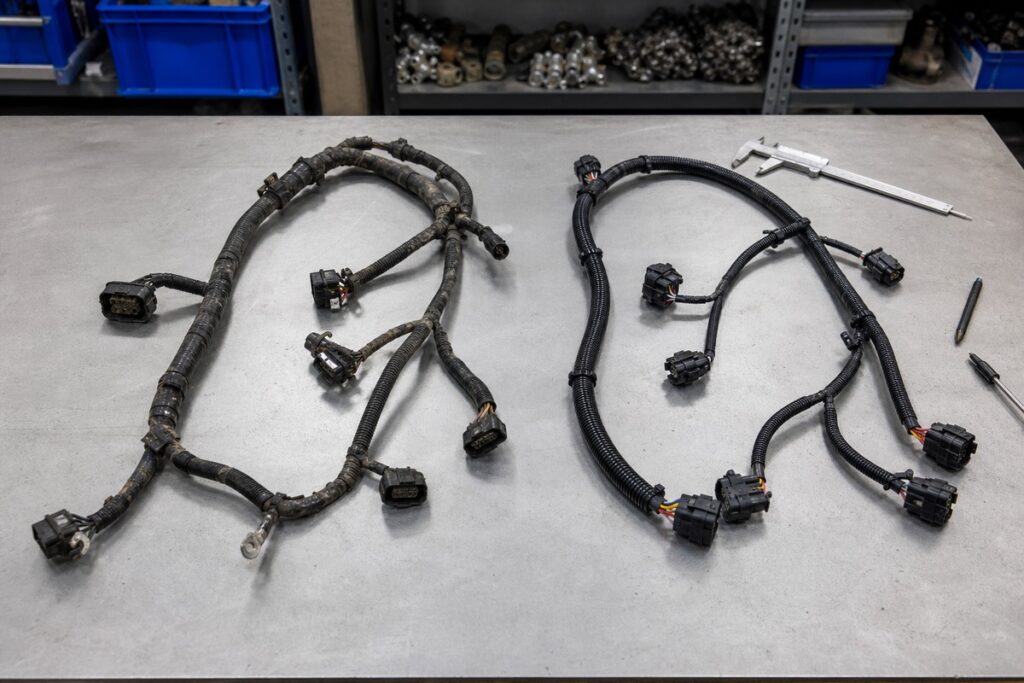
Buyers should check an excavator wiring harness before ordering from China by confirming the old harness, machine and engine context, controller or sensor position, connector pin count, connector key shape, branch length, loom routing, ground points, abrasion points, continuity evidence and protected export packing. A wiring harness that looks similar can still fail if one branch is short, one connector key is wrong or the pin layout does not match the machine. PRIMA should keep the quote conditional until connector photos and routing evidence are saved.
Electrical parts create expensive downtime because the failure is often hidden. A harness can be damaged by heat, oil, vibration, rubbing, poor repair work or water inside a connector. The safest buyer file combines the old harness, connector closeups and installation route.
This page supports PRIMA’s engine parts quote checklist and alternator inspection guide. It gives buyers a practical way to confirm harness fitment before payment.
Buyer Summary
- Best for buyers replacing engine harnesses, sensor harnesses, controller harnesses, alternator/starter leads or cab-to-engine wiring.
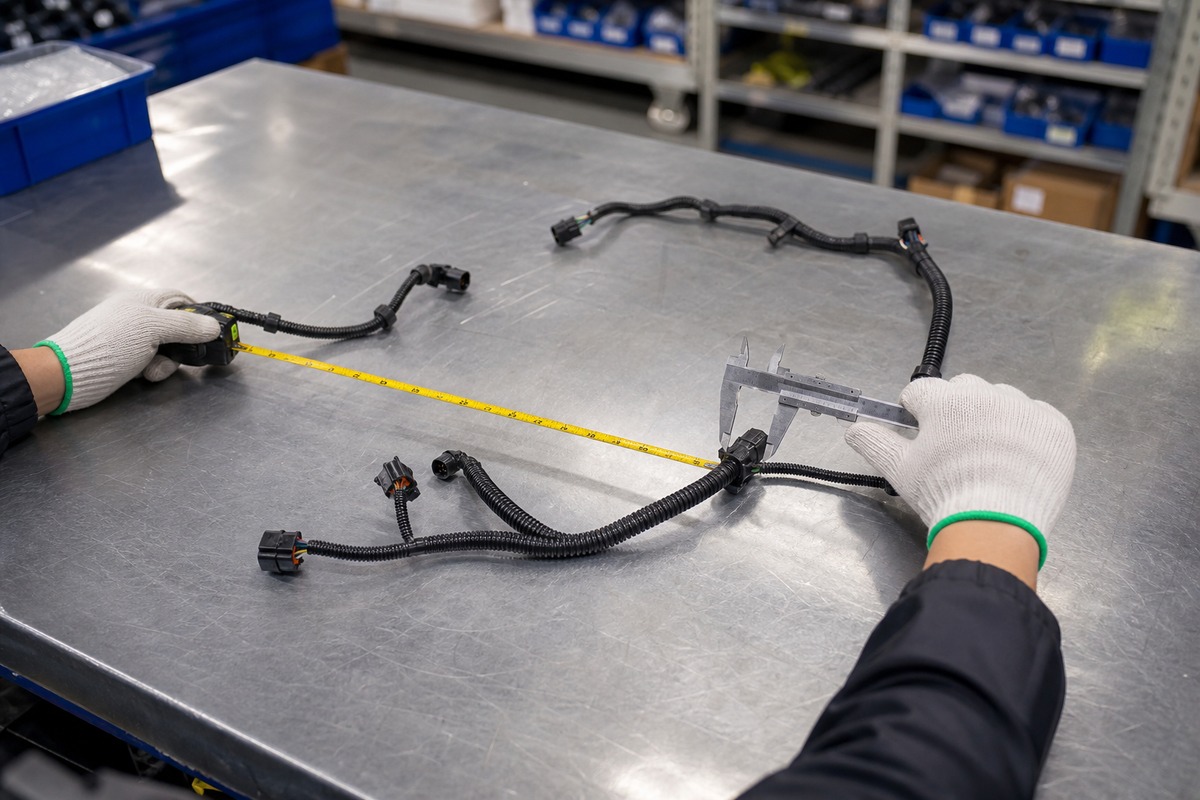
- Require photos of the removed harness, connector faces, pin count, branch length, ground points and routing on the machine.
- Separate harness failure from sensor, fuse, relay, ECU and ground faults before blaming the harness.
- Protect connectors, pins, seals and bend radius during export packing.
Quick answer: what proves an excavator wiring harness is safe to order?
A safe excavator wiring harness order starts with the removed harness and connector evidence. Buyers should send machine model, engine model, controller or sensor position, connector face photos, pin count, key shape, latch style, branch length, routing clips, ground eyelets and the failure location. PRIMA should ask whether the problem is no start, intermittent fault code, sensor error, charging issue, damaged insulation, oil contamination, water entry or a previous splice. Before shipment, the file should show continuity or pinout check evidence when possible, sealed connectors, protected pins, no tight bends and packing that keeps branches from being crushed.
Which harness identity details should come before price?
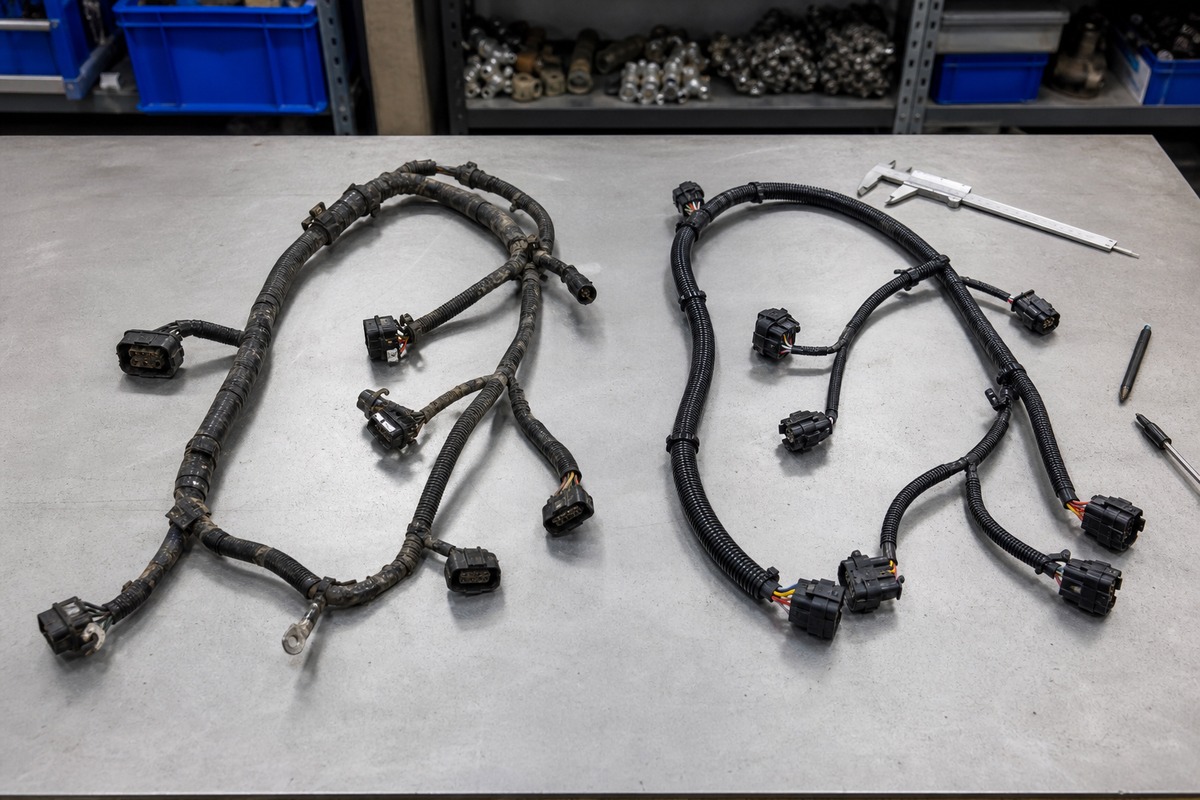
The old harness is the best matching source. Buyers should photograph the complete harness before it is cut or discarded, then record where each branch connects on the machine. Connector count alone is not enough; the same-looking housing may have a different key, latch, cavity seal or pin arrangement.
PRIMA should keep the quote as conditional when only the excavator model is available. Engine package, controller version, local repair history and sensor layout can change the harness. A quote with a clear evidence request is safer than a fast quote that later causes an electrical fault.
| Check | Evidence to save | Buyer value |
|---|---|---|
| Machine context | Model, engine, controller and harness position | Defines the harness family |
| Connector faces | Pin count, key shape, latch and seal photos | Prevents wrong connector selection |
| Branch routing | Length, clips, ground eyelets and damaged area | Prevents short branches or rubbing |
How should connector pins, seals and locks be checked?
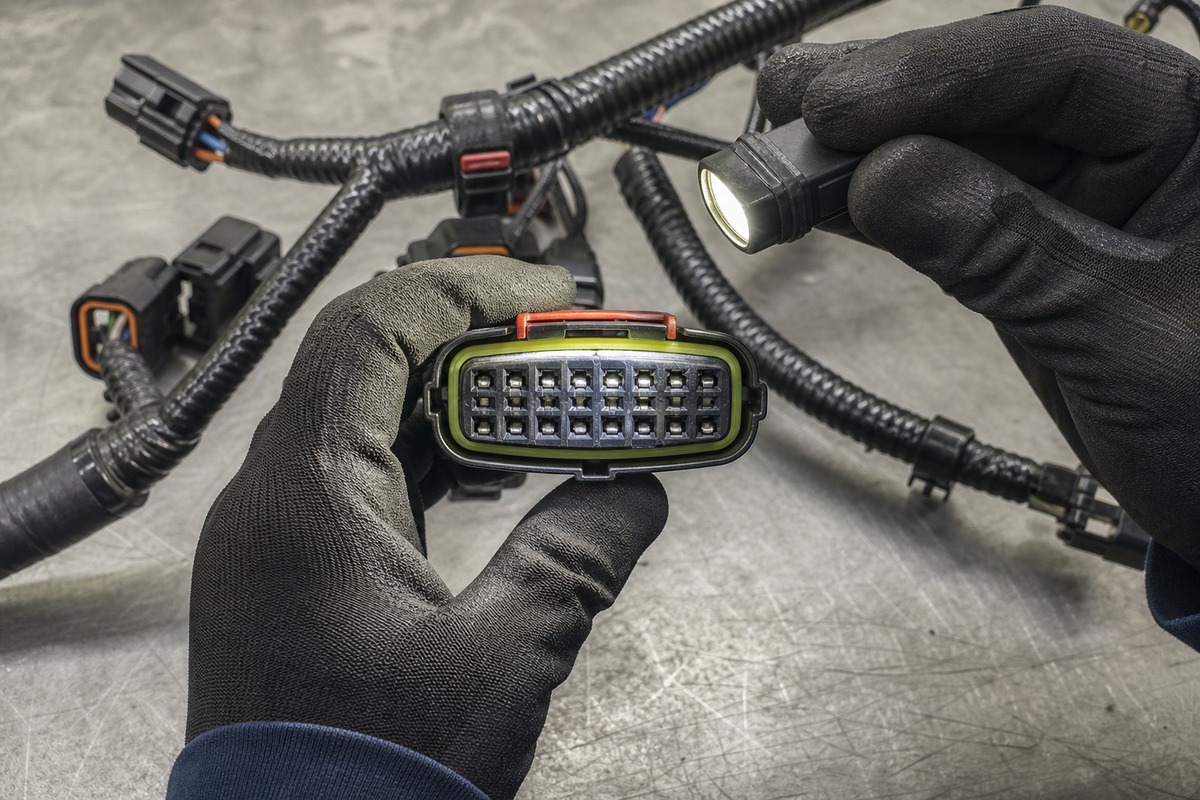
Connector quality decides whether the harness can survive vibration, water and repeated service work. Buyers should ask for close photos of the connector face, rear seal, lock tab, terminal cavities and any repair splice. Corroded pins, broken latches or swollen seals can create intermittent faults even when the wire length is correct.
TE Connectivity describes Deutsch DT connectors as sealed connectors used for harsh environments. That is the right inspection mindset for excavator harnesses: protect sealing, locking and terminal alignment, not just the outside loom.
| Check | Evidence to save | Buyer value |
|---|---|---|
| Pins | Straight terminals, correct cavity layout and no corrosion | Controls signal reliability |
| Seals | Rear seals, cavity plugs and connector gasket | Controls water and dust entry |
| Locks | Latch, wedge lock and strain relief condition | Controls vibration resistance |
What diagnosis should be separated from harness replacement?
A wiring harness may not be the root cause of every code. Fuses, relays, sensors, ECM power, alternator output, starter draw, battery voltage and ground straps can all create similar symptoms. The buyer should record the exact fault code, when it appears and whether the issue is intermittent.
A continuity check, wiggle-test notes, voltage drop check or resistance measurement can help confirm whether the harness is really damaged. If the machine has previous splices, PRIMA should label the fitment risk and request extra connector photos.
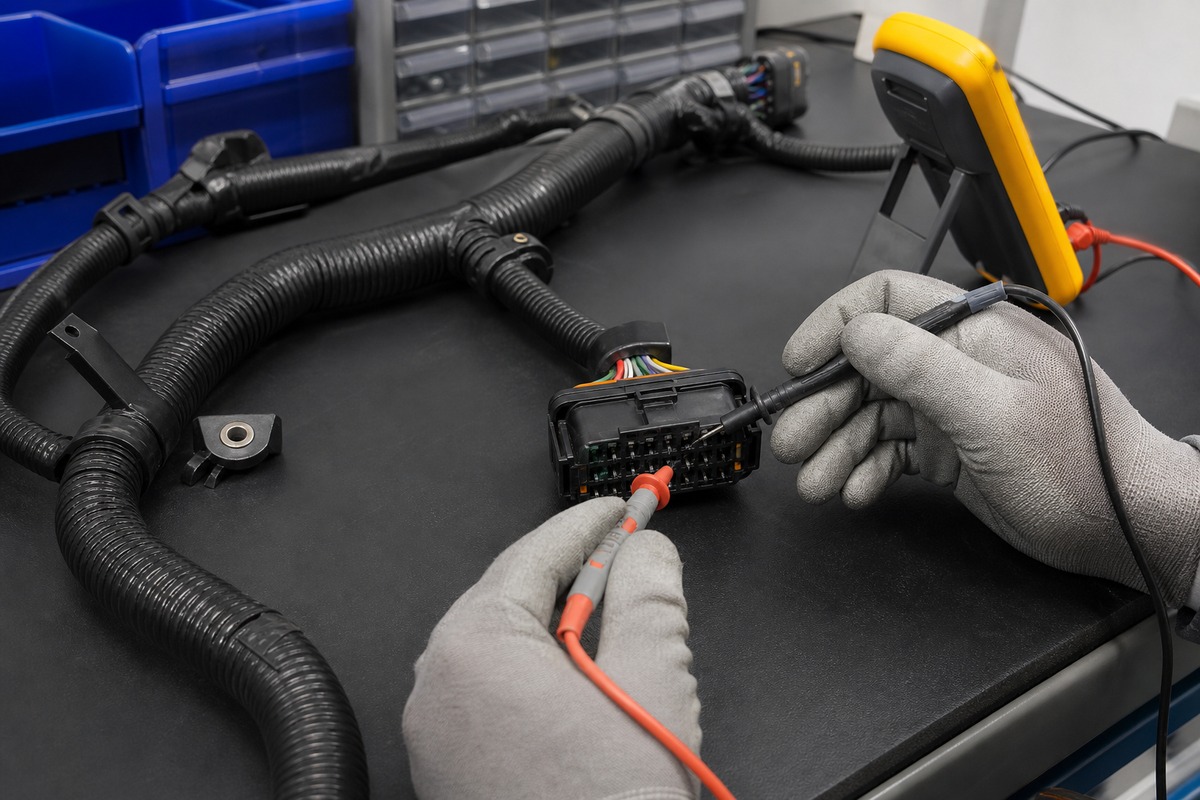
| Check | Evidence to save | Buyer value |
|---|---|---|
| Electrical symptom | No start, sensor code, charging issue or intermittent fault | Separates diagnosis from parts matching |
| Continuity evidence | Pin-to-pin check, ground path and voltage drop notes | Reduces blind replacement |
| Repair history | Splices, heat damage, oil soak or rubbed loom photos | Sets the condition boundary |
Which export packing proof protects a wiring harness?
A harness should be packed with loose curves, protected connectors and no sharp folds. Pins, locks and seals can be damaged if a heavy part presses into the carton. Small connector caps and clips should be separated in clear bags and tied to the quote file.
The final packing photos should show the same harness, protected connectors, branch layout, blank documents and a carton or crate that prevents crushing. This helps the buyer inspect the harness before installation and reduces disputes over bent pins or missing small parts.
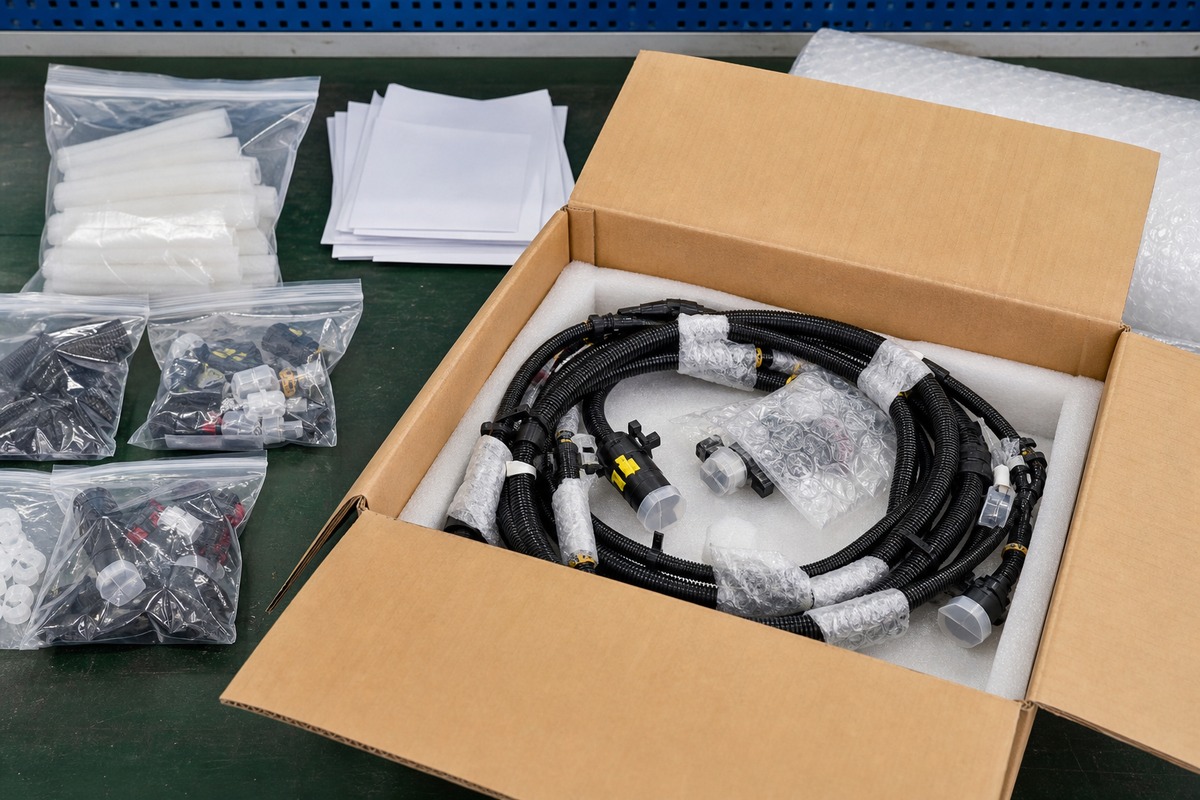
| Check | Evidence to save | Buyer value |
|---|---|---|
| Connector protection | Caps, foam and separate small clips | Prevents bent pins or missing locks |
| Coiling | No tight bends, crushed branches or forced folds | Protects conductor and loom |
| Traceability | Photos tied to quote line and machine position | Simplifies receiving inspection |
Evidence Table
| Decision point | Evidence PRIMA should save | Risk controlled |
|---|---|---|
| Fitment | Connector face, pin count, branch length, routing and ground points | Wrong harness or short branch |
| Diagnosis | Fault code, continuity check, fuse/relay/sensor/ground evidence | Replacing the wrong part |
| Export | Protected connectors, loose coil, small parts and carton photos | Bent pins, missing clips and transit damage |
Key Facts For PRIMA Buyers
- Excavator wiring harness fitment depends on connector layout and branch routing, not model name alone.
- Seals, pins and locks are part of the quote evidence.
- Intermittent electrical faults can come from fuses, sensors, grounds or ECU power, not only the harness.
- A harness should be packed without tight bends and with protected connectors.
Buyer FAQ
Can I order an excavator wiring harness by model only?
It is risky. Send connector faces, pin count, branch length, routing and old harness photos before confirming.
What if the connector looks the same?
Check key shape, latch, pin cavity layout and seal style. Similar housings can still be incompatible.
Should continuity be checked?
Yes when possible, especially for intermittent faults or previous repairs.
Can PRIMA match a repaired harness?
Yes, but previous splices and modified branches should be labeled as fitment risk.
How should the harness be packed?
Use protected connectors, loose curves, separated small clips and photos before closing the carton.
Useful PRIMA Links
- Excavator engine parts quote checklist
- Excavator alternator inspection guide
- Excavator starter motor inspection guide
- Excavator parts supplier buyer guide
Conclusion
The safest wiring-harness order is based on connector evidence, routing evidence and diagnosis notes. Buyers should not approve payment only from a machine model or a similar exterior photo. PRIMA should keep the evidence file with old harness photos, connector faces, pin count, branch length, continuity notes and packing proof so the buyer can inspect the part before installation.