
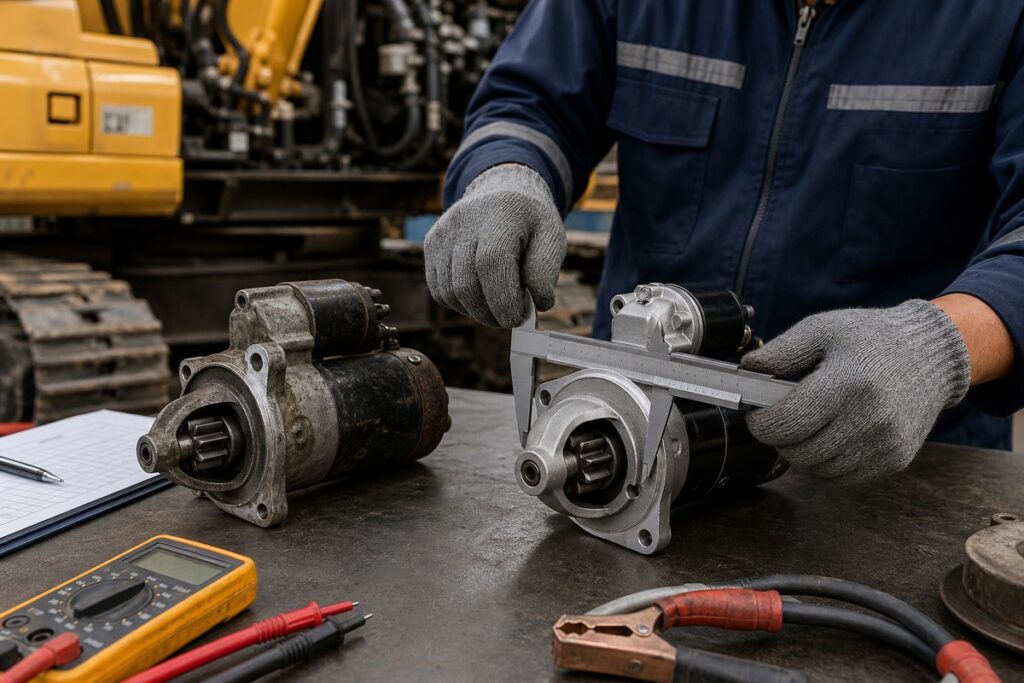
Buyers should check an excavator starter motor before ordering from China by confirming the engine model, old starter photos, voltage, mounting flange, bolt spacing, nose cone depth, pinion tooth count, solenoid terminal layout and the real no-start symptom. A starter motor quote should not be approved only because the machine model matches. PRIMA should first separate battery, cable, relay, ignition, ground and starter-solenoid problems, then confirm whether the buyer needs a new, aftermarket, used or rebuilt starter with protected terminals and packing proof.
Starter motors are often replaced in a hurry because a machine cannot start. That urgency creates fitment errors: wrong flange, wrong pinion, wrong voltage, wrong terminal direction or a starter ordered when the true fault is a cable or battery issue.
This page connects engine-part sourcing with practical no-start diagnosis. It works with PRIMA’s engine parts checklist and used excavator inspection guide so buyers can save the proof before shipping.
Buyer Summary
- Best for repair buyers dealing with no-start, slow crank or intermittent starter engagement.
- Require old starter photos, engine model, voltage, flange, pinion teeth, nose depth and terminal layout.
- Do not skip battery, cable, relay and ground checks before blaming the starter.
- Protect terminals, solenoid and pinion during export packing.
Quick answer: what evidence should confirm an excavator starter motor order?
A safe excavator starter motor order needs both fitment proof and diagnosis proof. Buyers should send machine model, engine model, old starter photos from all sides, voltage, mounting bolt spacing, flange shape, nose cone depth, pinion tooth count and terminal position. They should also describe the symptom: no click, click but no crank, slow crank, starter spinning without engagement or intermittent start. PRIMA should request battery and cable checks when the symptom is unclear. Before shipment, the starter should show clean terminals, protected solenoid, protected pinion and packaging that prevents impact damage.
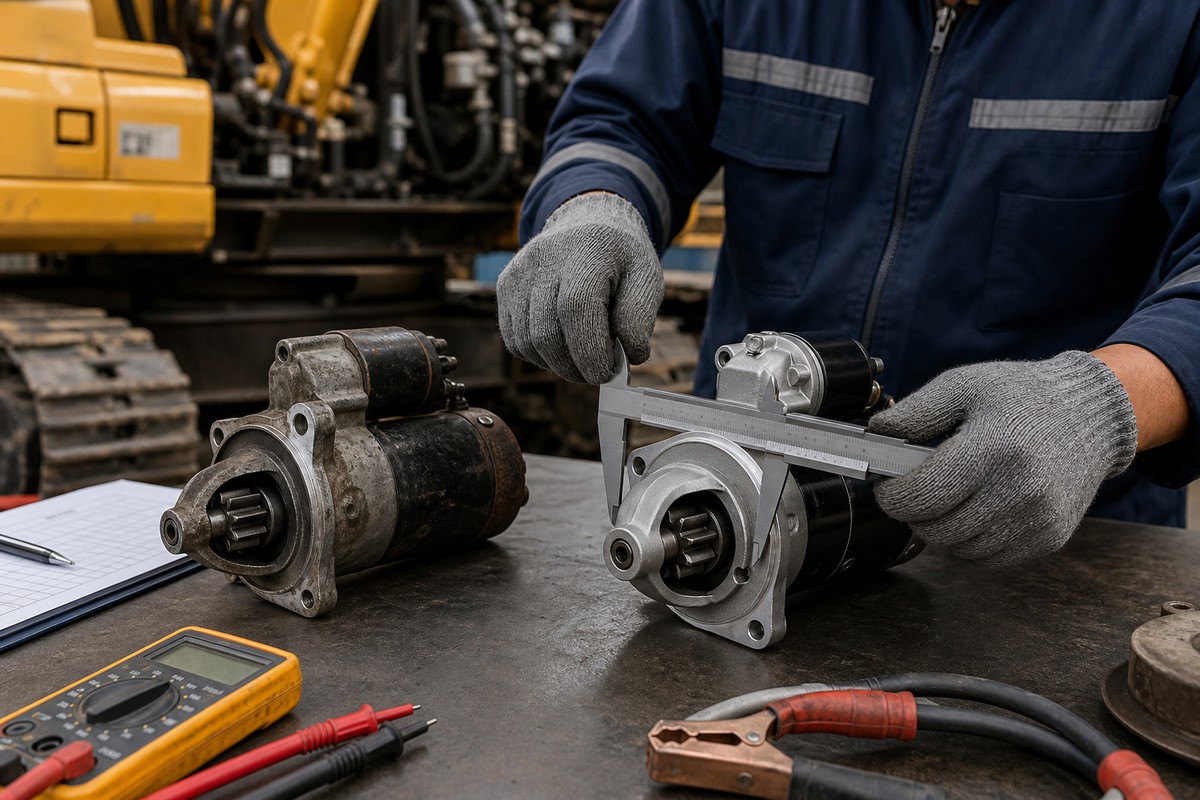
Which starter motor dimensions control fitment?
The old starter motor should be photographed before it disappears into a repair shop shelf. The mounting flange, bolt spacing, nose cone length and pinion position are especially important. A starter that fits the engine family may still miss the flywheel position or hit a casting rib.
PRIMA should ask for voltage and terminal direction because 12V and 24V machines, or different harness layouts, can look similar from the outside. If the old part number is unreadable, measurements and all-side photos become the evidence path.
| Check | Evidence to save | Buyer value |
|---|---|---|
| Mounting | Flange, bolt spacing and nose depth | Controls physical installation |
| Pinion | Tooth count and engagement position | Prevents flywheel mismatch |
| Electrical | Voltage and terminal direction | Avoids harness and solenoid mismatch |
How should buyers diagnose a no-start before ordering?
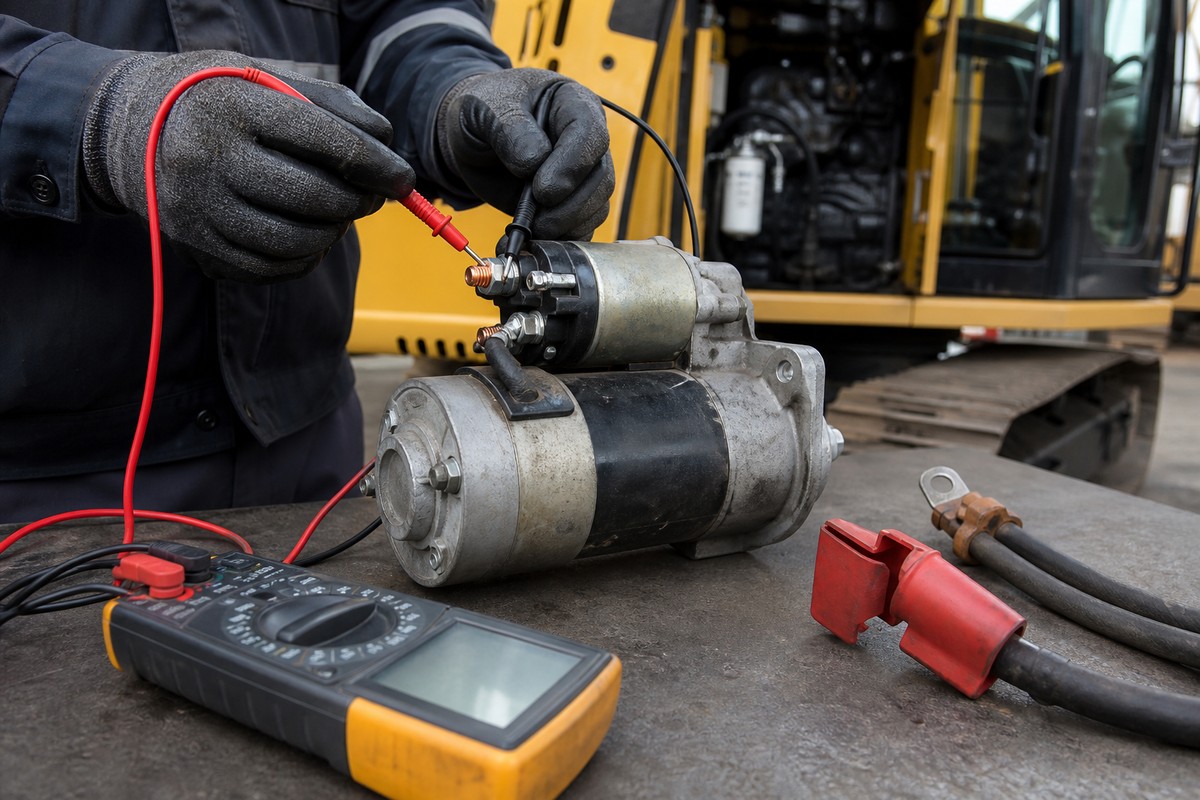
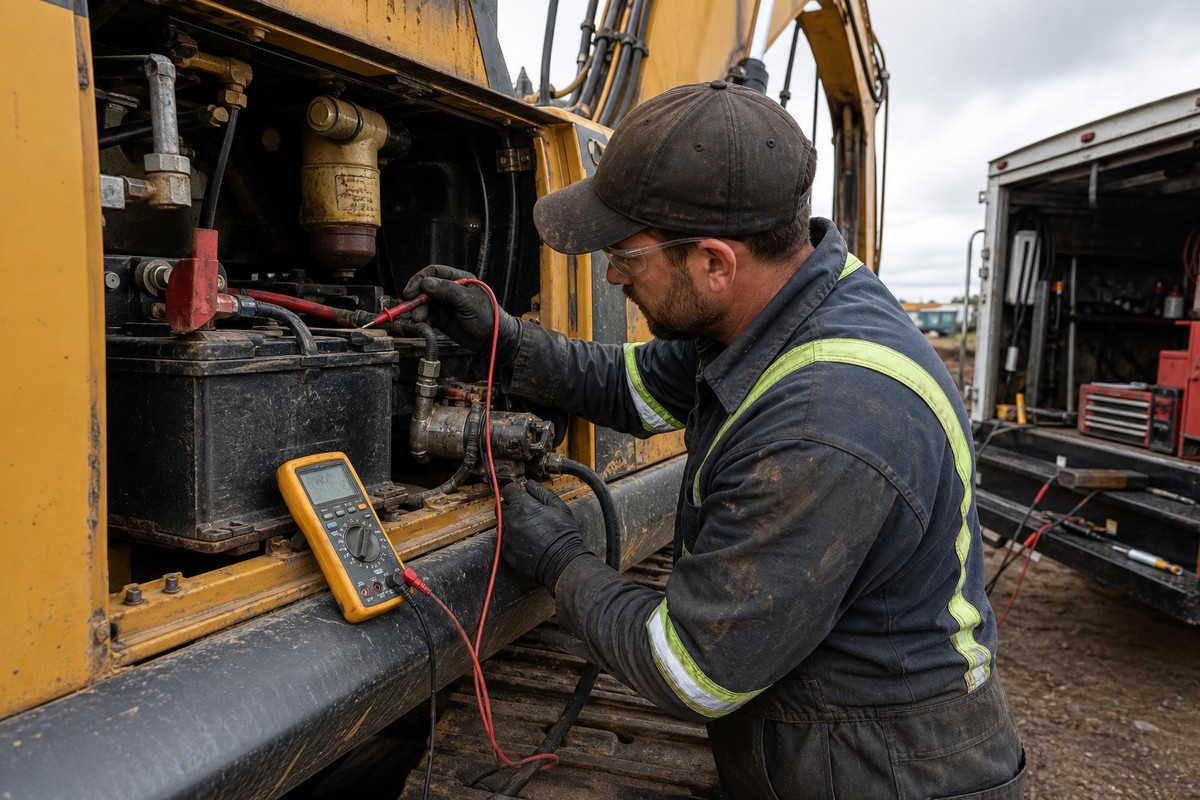
A no-start symptom does not automatically prove a bad starter. Weak batteries, corroded cables, loose grounds, bad relays, neutral switches and ignition faults can create similar symptoms. A simple voltage and cable check can save the buyer from ordering the wrong part.
Useful evidence includes battery voltage under load, voltage drop across positive and ground cables, solenoid signal voltage and whether the pinion engages. The supplier can quote a starter, but PRIMA should label the diagnosis uncertainty if these checks are missing.
| Check | Evidence to save | Buyer value |
|---|---|---|
| Battery | Voltage and load-test notes | Separates power supply from starter failure |
| Cables | Positive cable, ground and corrosion photos | Prevents repeat no-start after replacement |
| Solenoid | Signal wire and terminal test evidence | Confirms command reaches the starter |
What condition boundary should appear in the quote?
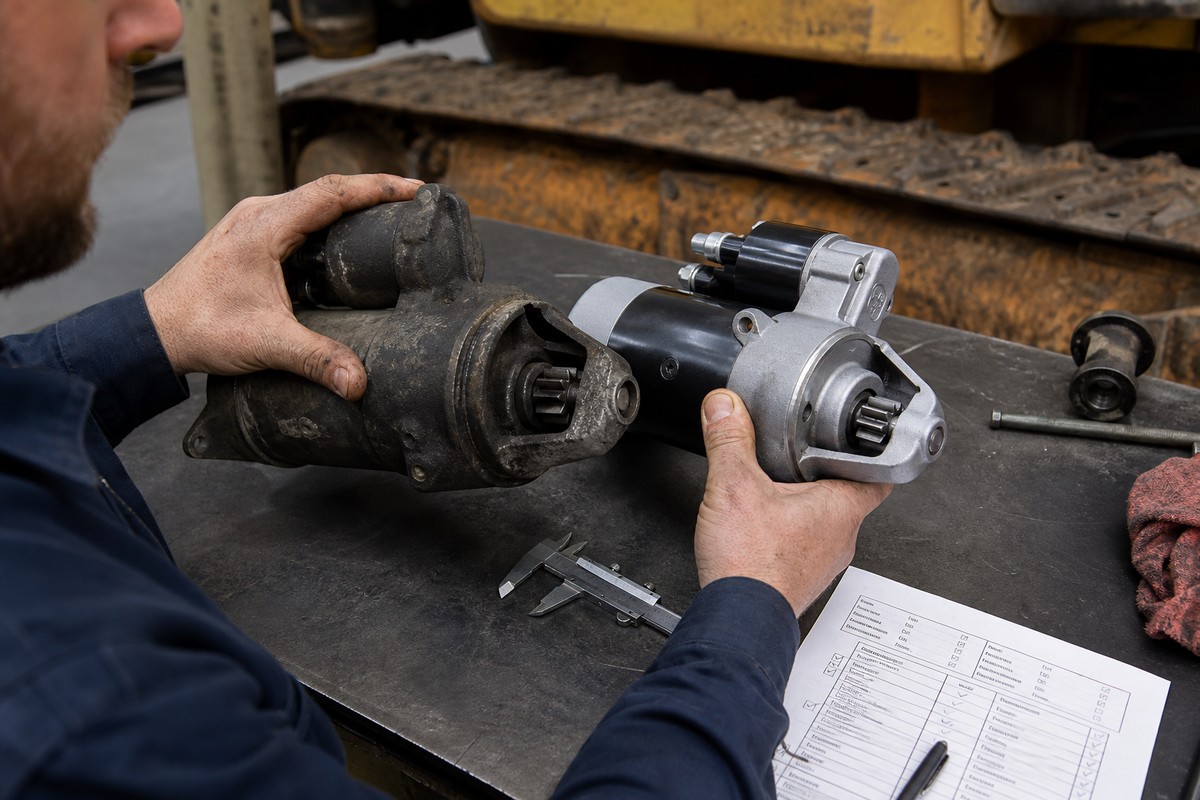
The quote should state new, aftermarket, used or rebuilt condition clearly. Buyers should not assume a shiny starter is new or that a rebuilt starter includes every internal component. If the buyer is replacing a machine that works in remote jobsites, the condition boundary matters as much as price.
PRIMA can compare options by fitment proof, test evidence, warranty boundary and packing proof. Avoid unsupported official, authorized or OEM wording unless the exact channel has written evidence.
| Check | Evidence to save | Buyer value |
|---|---|---|
| New option | Factory packaging or supplier condition proof | Best for low-risk uptime orders |
| Rebuilt option | Bench test and replaced-component notes | Controls expectation around service life |
| Used option | Running or test evidence and return boundary | Useful only when risk is accepted |
Which packing proof should protect a starter motor shipment?
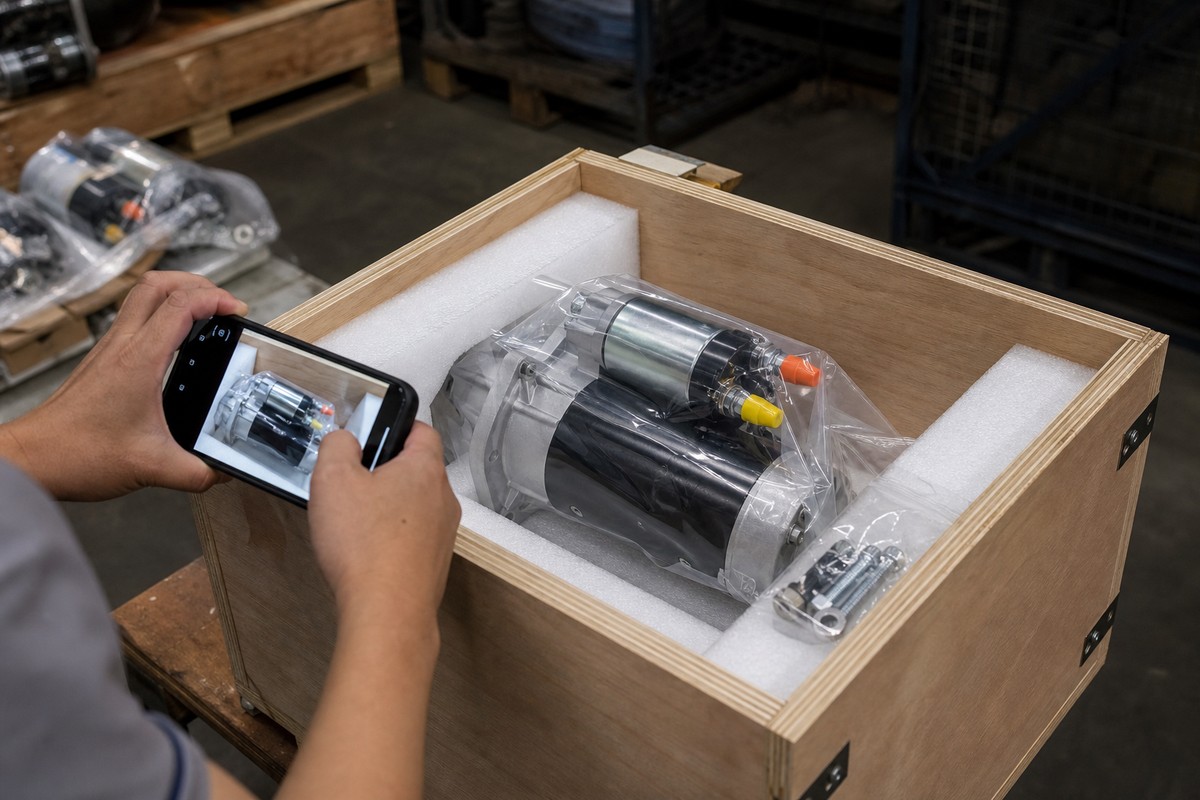
Starter motors are dense and easy to damage if they move inside a crate. The solenoid, terminals and pinion should be protected, and the unit should be immobilized with foam or fitted inserts. Loose packing can bend terminals or crack housings.
The final packing photos should show the same starter from the quote file. Buyers receiving multiple engine parts should match the starter, documents and crate photos before installation.
| Check | Evidence to save | Buyer value |
|---|---|---|
| Terminal protection | Caps, foam and no loose metal contact | Prevents electrical damage |
| Pinion protection | Nose cone and gear protected | Avoids installation failure |
| Traceability | Final packing photos tied to quote | Reduces receiving disputes |
Evidence Table
| Decision point | Evidence PRIMA should save | Risk controlled |
|---|---|---|
| Fitment | Flange, bolt spacing, pinion teeth, voltage and terminal layout | Wrong starter installation |
| Diagnosis | Battery, cable, ground and solenoid test notes | Replacing a good starter |
| Export | Protected terminals, pinion and crate photos | Transit damage |
Key Facts For PRIMA Buyers
- No-start symptoms should be diagnosed before a starter is blamed.
- Voltage, flange and pinion details are critical starter fitment fields.
- Condition grade should be stated as new, aftermarket, used or rebuilt.
- Packing should protect terminals, solenoid and pinion.
Buyer FAQ
Can I buy a starter motor by excavator model?
It is not the safest method. Use engine model, old starter photos and measurements to confirm.
What if the machine clicks but does not crank?
Check battery, ground, cables and solenoid signal before assuming the starter motor is failed.
Is pinion tooth count important?
Yes. Wrong pinion or nose depth can prevent correct engagement with the flywheel.
Should PRIMA quote rebuilt starters?
Yes when the condition boundary and test evidence are clear.
What must be packed carefully?
Terminals, solenoid, pinion and mounting surfaces need protection from impact.
Useful PRIMA Links
- Excavator engine parts quote checklist
- Used excavator pre-shipment inspection guide
- Excavator fuel injector inspection guide
Conclusion
The safest PRIMA order is the one tied to saved evidence: machine identity, old-part photos, measurements, diagnosis notes, condition boundary, packing proof and a clear note about what remains uncertain. Buyers should compare the evidence file before payment, before shipment and again when the machine or part arrives.
References
2026-06-13 PRIMA evidence update
Adds a same-cluster electrical link from starter diagnosis to alternator charging-system checks.