
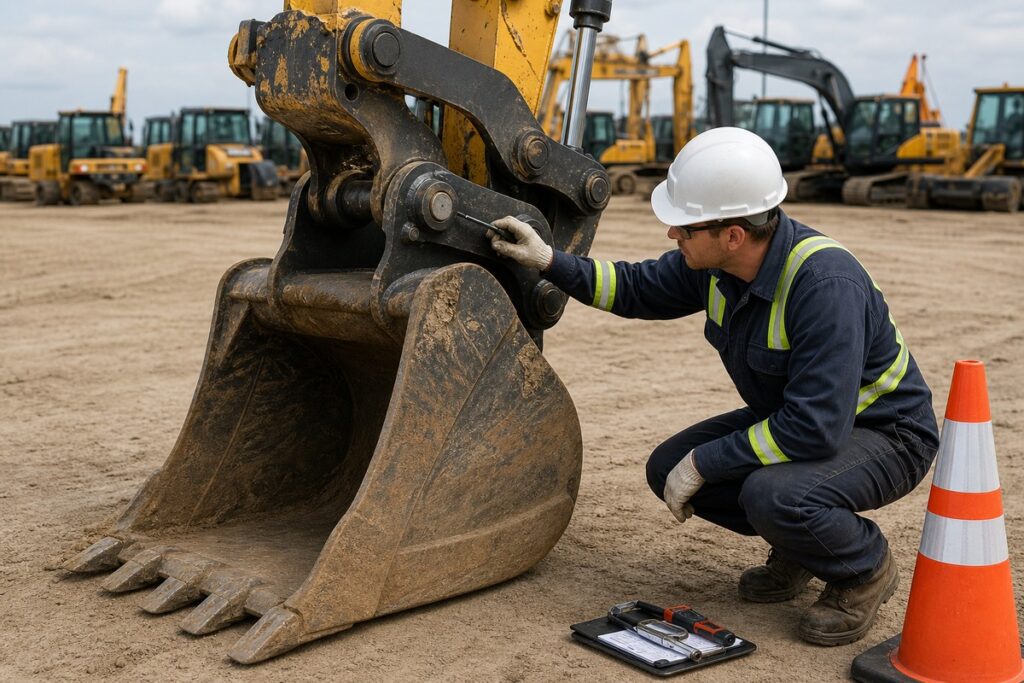
Buyers should check an excavator quick coupler before ordering from China by confirming the machine class, pin diameter, pin center distance, ear width, bucket lug dimensions, coupler type, hydraulic hose layout, lock engagement, safety pin or locking indicator and wear condition. A quick coupler is not just an attachment convenience part. If the lock, pin fit or safety procedure is wrong, the bucket or attachment can release unexpectedly. PRIMA should quote quick couplers with fitment photos, safety-boundary wording, function-test evidence and export packing proof.
Quick couplers make attachment changes faster, but they also carry a safety responsibility. A buyer should not approve a coupler from a catalog image without pin, ear, lock and hydraulic details.
This guide supports PRIMA bucket and attachment pages such as the excavator bucket for sale checklist and bucket buyer guide. It keeps the quote focused on fitment and safe use.
Buyer Summary
- Best for buyers adding or replacing excavator quick couplers, buckets and attachments.
- Fitment proof must include pin diameter, pin center distance, ear width and bucket lug data.
- Safety proof must show lock engagement, safety pin or indicator and function-test boundary.
- Do not put workers near the swing zone during test or operation.
Quick answer: what should prove a quick coupler is correct?
A safe quick coupler order needs measurement proof and safety proof. Buyers should send excavator model, machine weight class, old coupler or bucket lug photos, pin diameter, pin center distance, inside ear width, outside ear width and whether the coupler is mechanical, hydraulic or semi-automatic. PRIMA should ask for locking mechanism photos, safety pin or indicator evidence and a low-ground function test before shipment when practical. The quote should clearly state that operators must follow manufacturer instructions and site safety rules; a correct-looking coupler is not safe if the lock is not engaged.
Which dimensions decide whether a quick coupler fits?
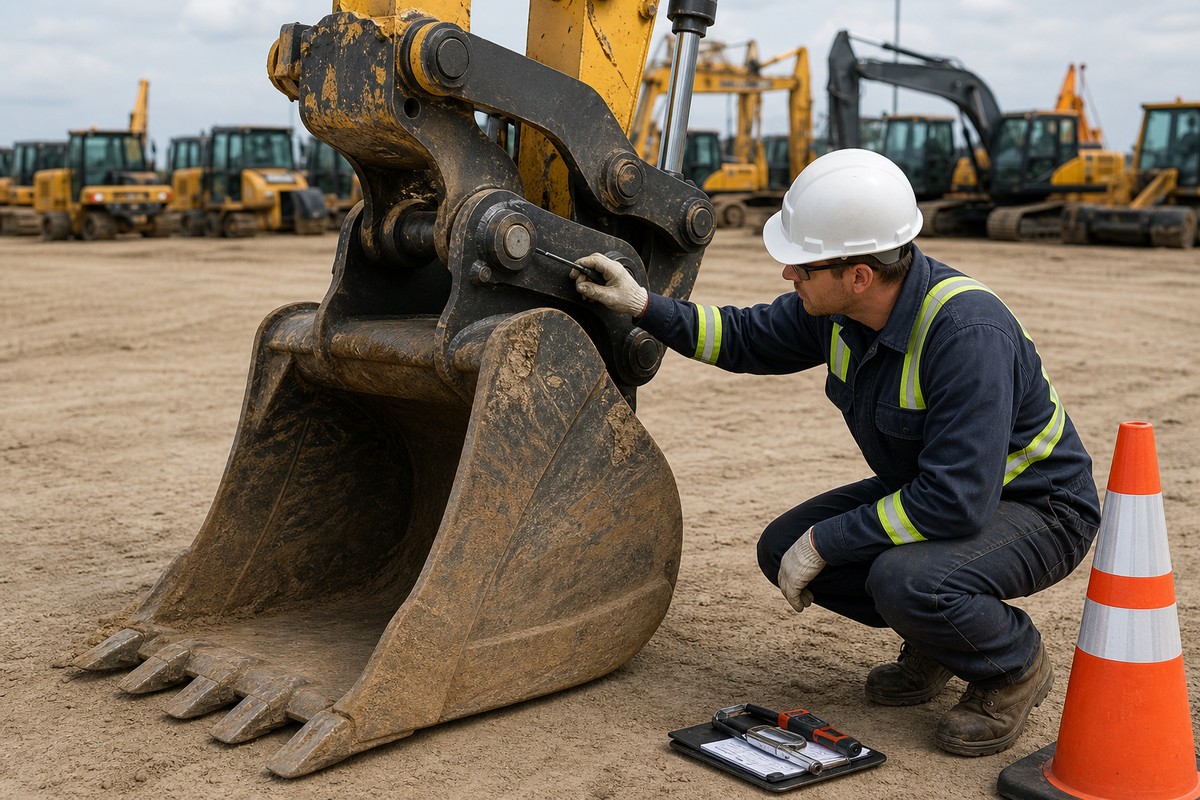
Pin diameter, pin center distance and ear width decide whether the coupler connects to the arm and bucket. Buyers should measure the actual bucket and arm arrangement, not only the machine model. Modified buckets, repaired ears and mixed attachment fleets can change the fitment story.
PRIMA should request photos with a ruler or caliper visible. If the buyer has several buckets, the quote should state which bucket or attachment the coupler is matched to first.
| Check | Evidence to save | Buyer value |
|---|---|---|
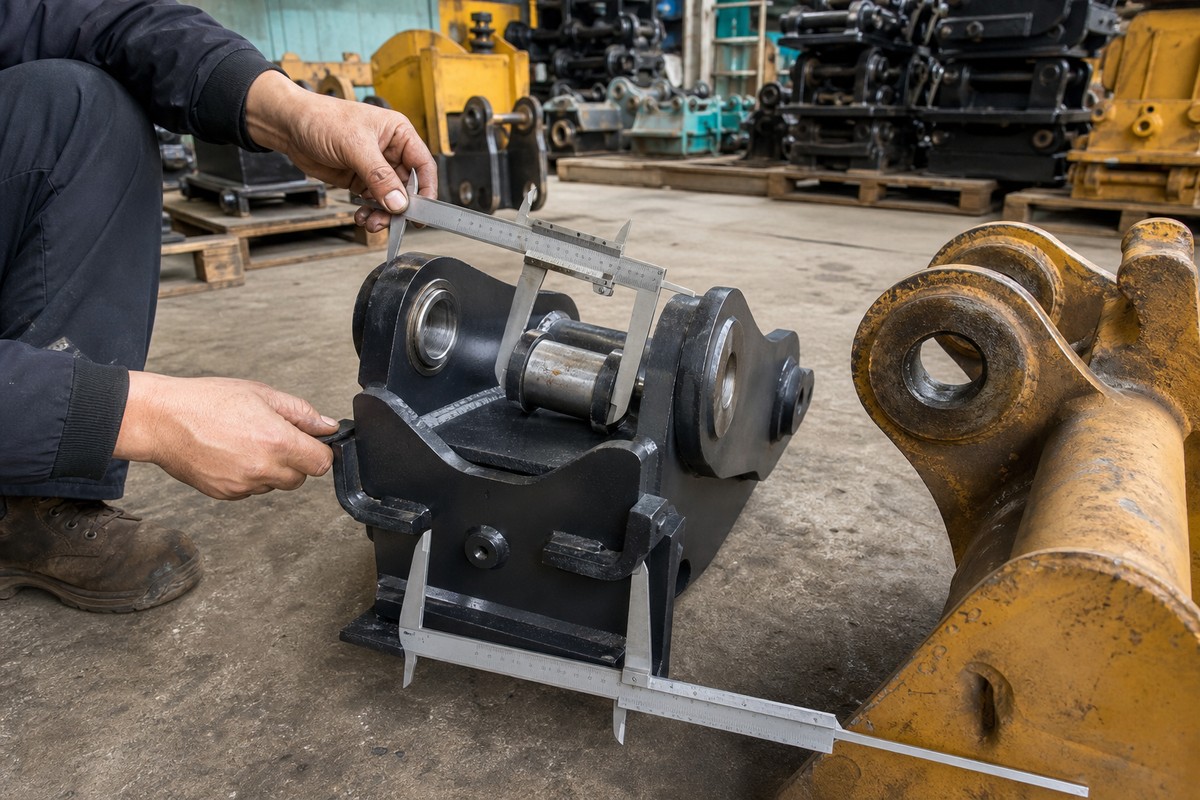
| Pin diameter | Measured photos for arm and bucket pins | Prevents loose or impossible fit |
| Pin center distance | Center-to-center measurement | Controls attachment geometry |
| Ear width | Inside and outside lug width | Prevents side play or interference |
What safety checks belong in the evidence file?
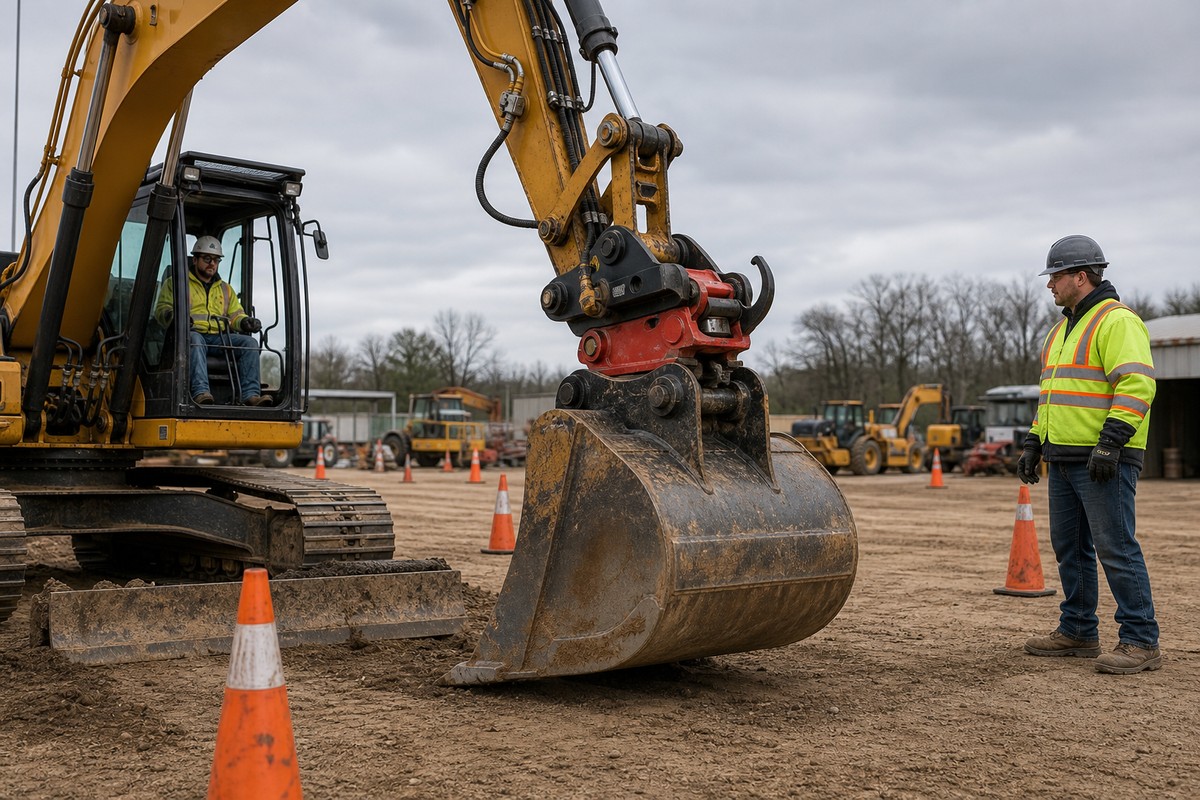
The evidence file should show the lock, safety pin, latch or indicator according to the coupler type. A low-ground shake or curl test can show engagement, but it should be done with people outside the swing zone and under safe site procedures.
NIOSH and OSHA safety material highlight the risk of unintended bucket or attachment release. PRIMA should not describe a coupler as safe only because it was shipped; safety depends on design, fitment, installation, inspection and operator use.
| Check | Evidence to save | Buyer value |
|---|---|---|
| Lock engagement | Latch, pin or indicator photos | Confirms the coupler is not only hanging on pins |
| Function test | Low-ground movement evidence | Reduces release risk before work |
| Safety boundary | Operator instructions and no swing-zone workers | Protects workers during attachment changes |
How should buyers inspect wear and damage?
Used couplers should be inspected for hook wear, cracked welds, elongated pin holes, bent brackets, damaged hydraulic cylinders and leaking hoses. Wear near the locking area is more serious than cosmetic paint loss.
A rebuilt or repaired coupler needs clear welding and replacement-part disclosure. PRIMA should keep the condition boundary visible so the buyer knows whether they are buying new, used, repaired or rebuilt equipment.
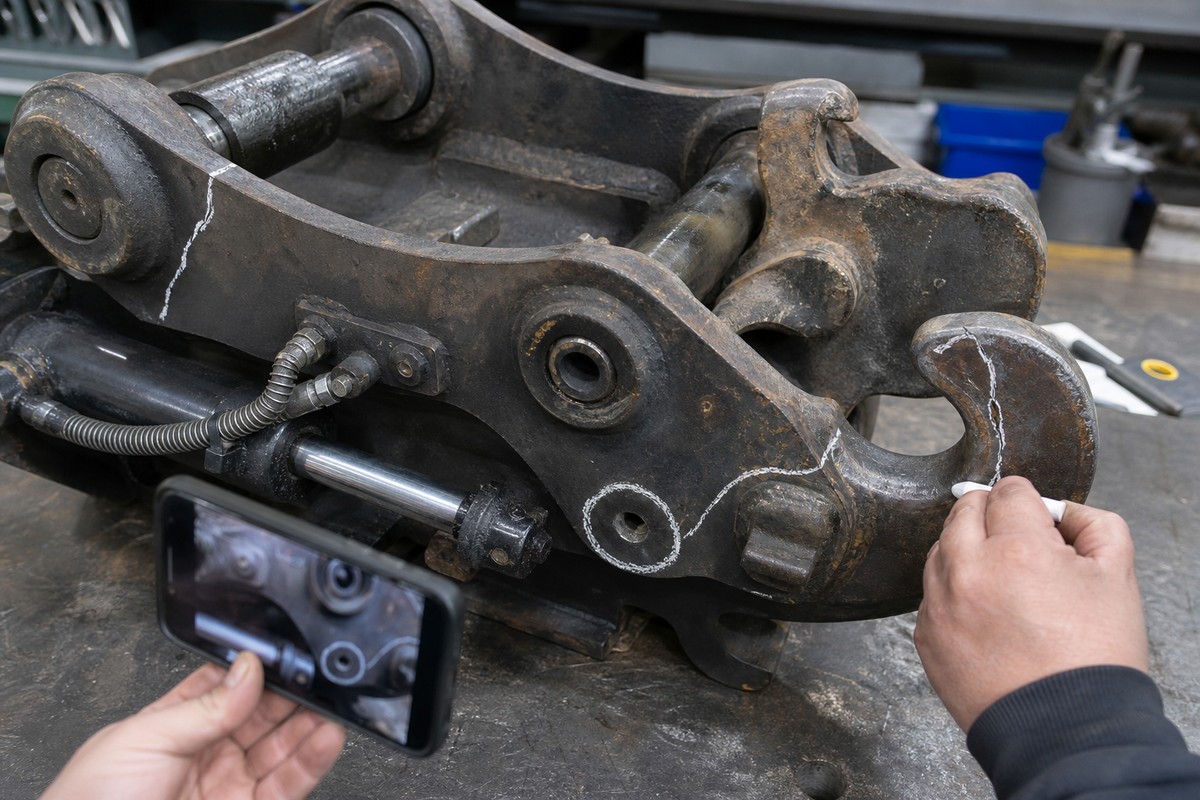
| Check | Evidence to save | Buyer value |
|---|---|---|
| Hooks and latch | Close photos of wear faces | Controls release and fitment risk |
| Pin holes | Roundness and bushing condition | Prevents sloppy attachment movement |
| Hydraulics | Cylinder, hose and cap evidence | Reduces leak and installation risk |
Which packing proof matters for a quick coupler?
A quick coupler is heavy and can damage hoses, pins and painted surfaces if it moves in transit. Pins should be secured, hoses capped, sharp edges protected and the coupler strapped to a pallet or crate.
The final packing photos should show the coupler, pin set and hose protection. Buyers should keep these photos with the quote so receiving inspection can verify the exact unit.
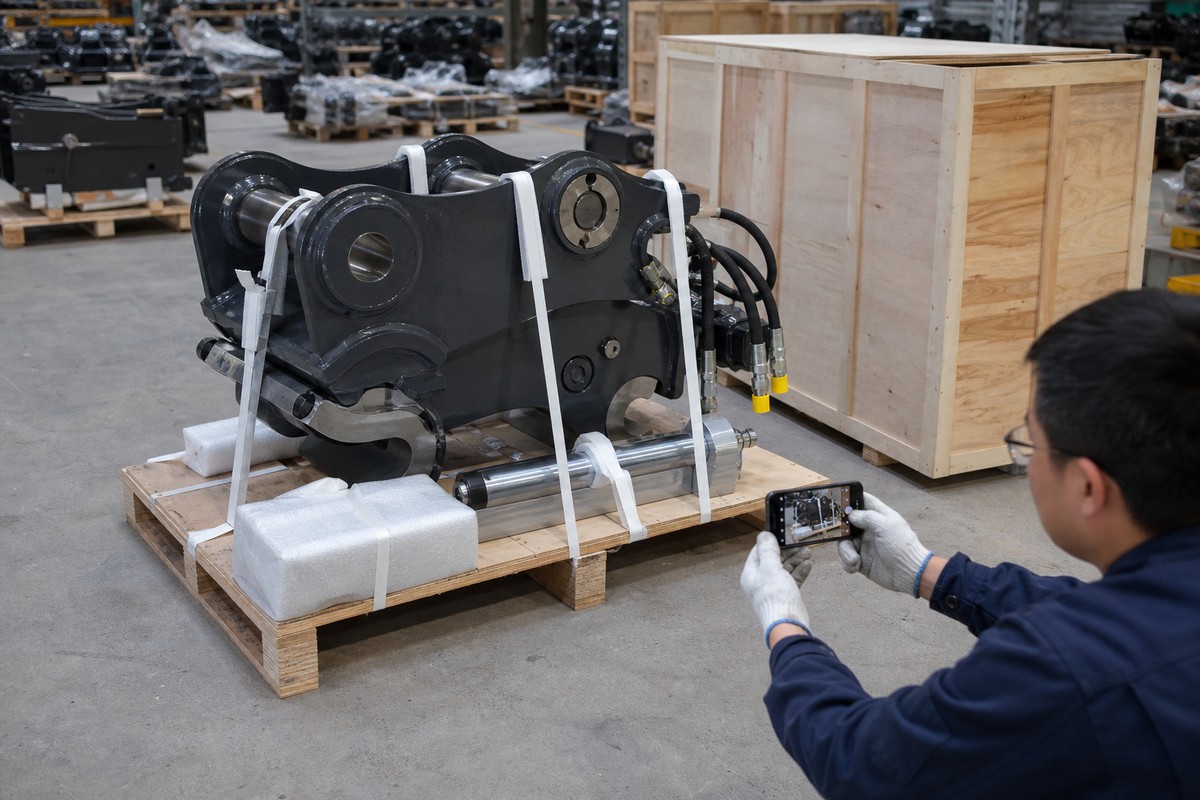
| Check | Evidence to save | Buyer value |
|---|---|---|
| Pins | Secured pin set and bushings | Avoids missing hardware at installation |
| Hoses | Caps and bend protection | Prevents contamination and leaks |
| Pallet/crate | Straps, blocks and edge guards | Stops transit damage |
Evidence Table
| Decision point | Evidence PRIMA should save | Risk controlled |
|---|---|---|
| Fitment | Pin diameter, pin center distance, ear width and bucket lug photos | Wrong coupler geometry |
| Safety | Lock, safety pin, indicator and low-ground test evidence | Unintended attachment release |
| Export | Secured pins, capped hoses and crate proof | Missing parts or transit damage |
Key Facts For PRIMA Buyers
- Quick coupler fitment depends on actual pin and lug measurements.
- Safety evidence is separate from fitment evidence.
- Used couplers need hook, latch, pin-hole, weld and hose inspection.
- Workers should stay outside the swing zone during coupler testing.
Buyer FAQ
Is pin diameter enough to order a quick coupler?
No. Pin center distance, ear width, bucket lug dimensions and lock type also matter.
Can PRIMA sell used quick couplers?
Only with clear condition, wear and safety-boundary evidence.
Should a hydraulic coupler include hose proof?
Yes. Hoses should be capped and routing should be clear before shipment.
Why mention safety in a sourcing guide?
Because a mismatched or unlocked coupler can release an attachment unexpectedly.
What if my bucket ears were repaired?
Measure the repaired bucket directly instead of relying on model data.
Useful PRIMA Links
For the broader decision that comes before the coupler check, use PRIMA’s excavator attachment selection guide to compare job requirements, carrier limits, pin geometry, attachment weight and hydraulic compatibility.
Conclusion
The safest PRIMA order is the one tied to saved evidence: machine identity, old-part photos, measurements, diagnosis notes, condition boundary, packing proof and a clear note about what remains uncertain. Buyers should compare the evidence file before payment, before shipment and again when the machine or part arrives.