
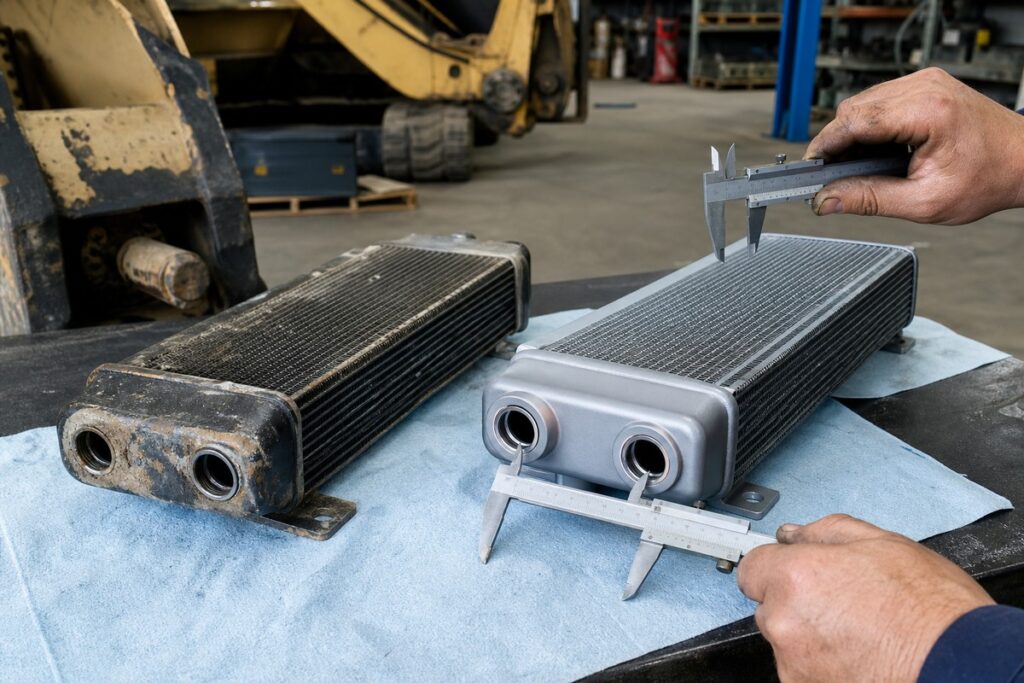
Buyers should check an excavator oil cooler before ordering from China by confirming the old cooler identity, core size, inlet and outlet direction, mounting points, hose or flange style, leak-test evidence, airflow condition and export packing. The quote should not rely on machine model alone because similar excavators can use different cooling packages. PRIMA should treat oil cooler replacement as both a fitment issue and an overheating diagnosis issue: a new cooler will not solve clogged radiator fins, weak fan drive, mixed coolant, blocked screens or hydraulic contamination unless those causes are separated first.
An oil cooler is a small-looking part that can stop a machine when it is wrong. It sits between hydraulic heat, engine heat and jobsite dust, so buyers need evidence from the old cooler and the machine cooling package, not only a supplier catalog photo.
This guide supports buyers already using PRIMA’s engine parts quote checklist and water pump inspection guide. It helps a buyer decide whether to approve an oil cooler quote, request more photos or pause for diagnosis.
Buyer Summary
- Best for importers, repair shops and fleet owners replacing an excavator hydraulic oil cooler or cooling package component.
- Require old cooler photos from every side, core dimensions, port direction, mount positions and leak-test proof.
- Separate fitment evidence from overheating diagnosis before approving payment.
- Protect ports and fins during export packing because small damage can create leaks or airflow loss.
Quick answer: what proves an excavator oil cooler is safe to order?
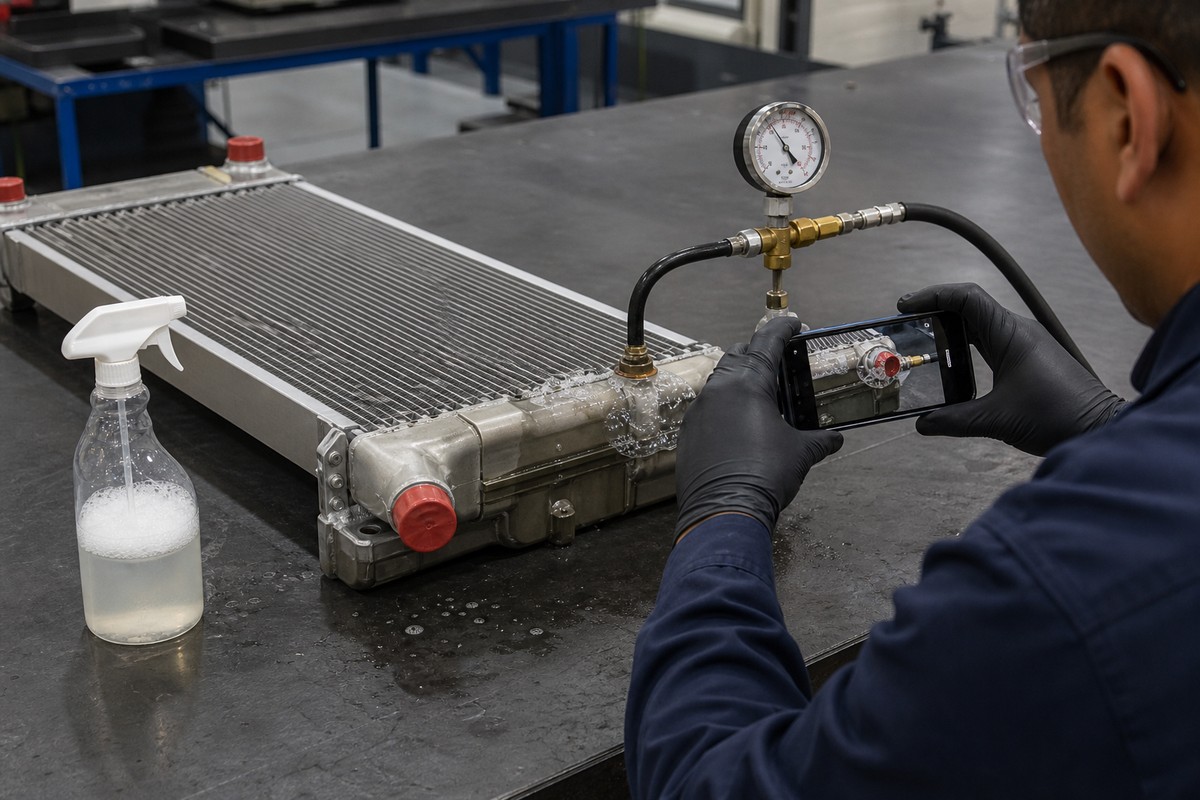
A safe excavator oil cooler order starts with the old cooler on the bench. Buyers should send all-side photos, core width, height and thickness, port style, port direction, mounting holes, hose or flange details and the machine model with serial context. PRIMA should also ask why the cooler is being replaced. If the problem is overheating, the buyer should check airflow through the radiator stack, fan performance, coolant condition, hydraulic oil contamination and blocked screens before blaming the cooler. Before shipment, the evidence file should show a pressure or leak check, capped ports, protected fins and crate photos.
Which oil cooler identity details should come first?
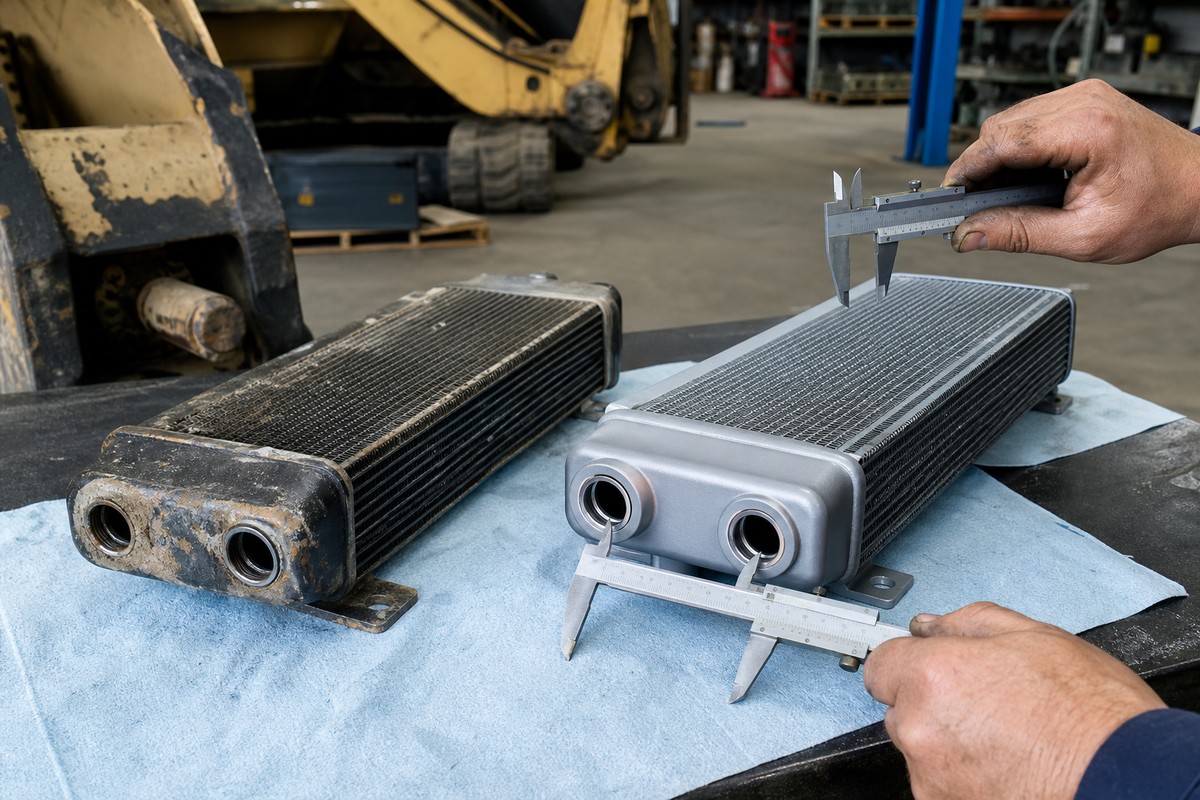
The old cooler is the strongest fitment source. Buyers should photograph the front, rear, side tanks, ports, mounting brackets and any stamped or cast marks before cleaning removes clues. When the cooler is damaged, a measurement photo is still useful because the supplier can compare core size, bracket position and pipe orientation.
PRIMA should keep the quote conditional when only the excavator model is available. Engine version, hydraulic package, fan layout and prior repairs can change the cooler that fits. A conditional quote is safer than a confident-looking match that arrives with the wrong port direction.
| Check | Evidence to save | Buyer value |
|---|---|---|
| Old cooler | All-side photos, marks and damaged areas | Confirms the part family before price negotiation |
| Core dimensions | Width, height, thickness and bracket spacing | Controls installation and cooling capacity |
| Port layout | Inlet/outlet direction, hose style and cap proof | Prevents hose rerouting at the jobsite |
How should buyers separate fitment from overheating diagnosis?
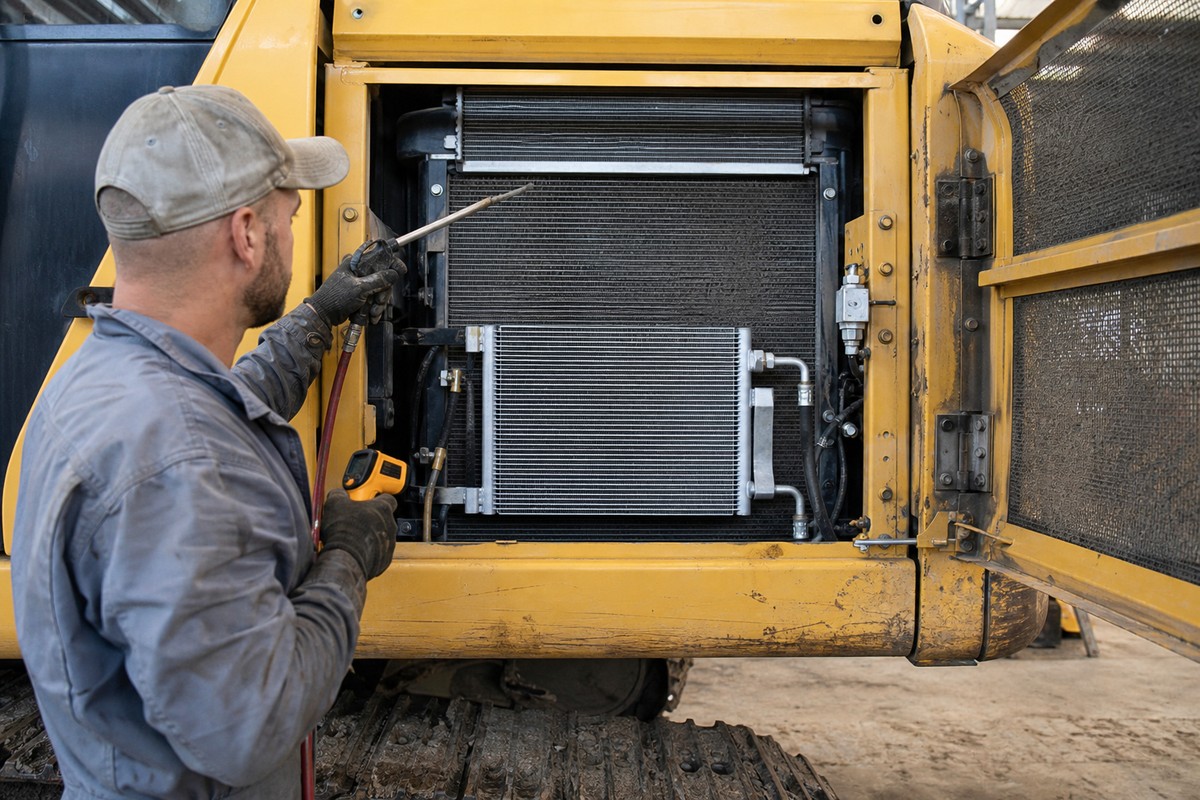
An oil cooler can be blamed for overheating even when the root cause is a blocked radiator stack, weak fan drive, packed dust screen, mixed coolant or hot hydraulic oil from a pump or valve problem. Buyers should ask for symptom notes: when the temperature rises, whether the machine is under load and whether both engine and hydraulic temperatures climb.
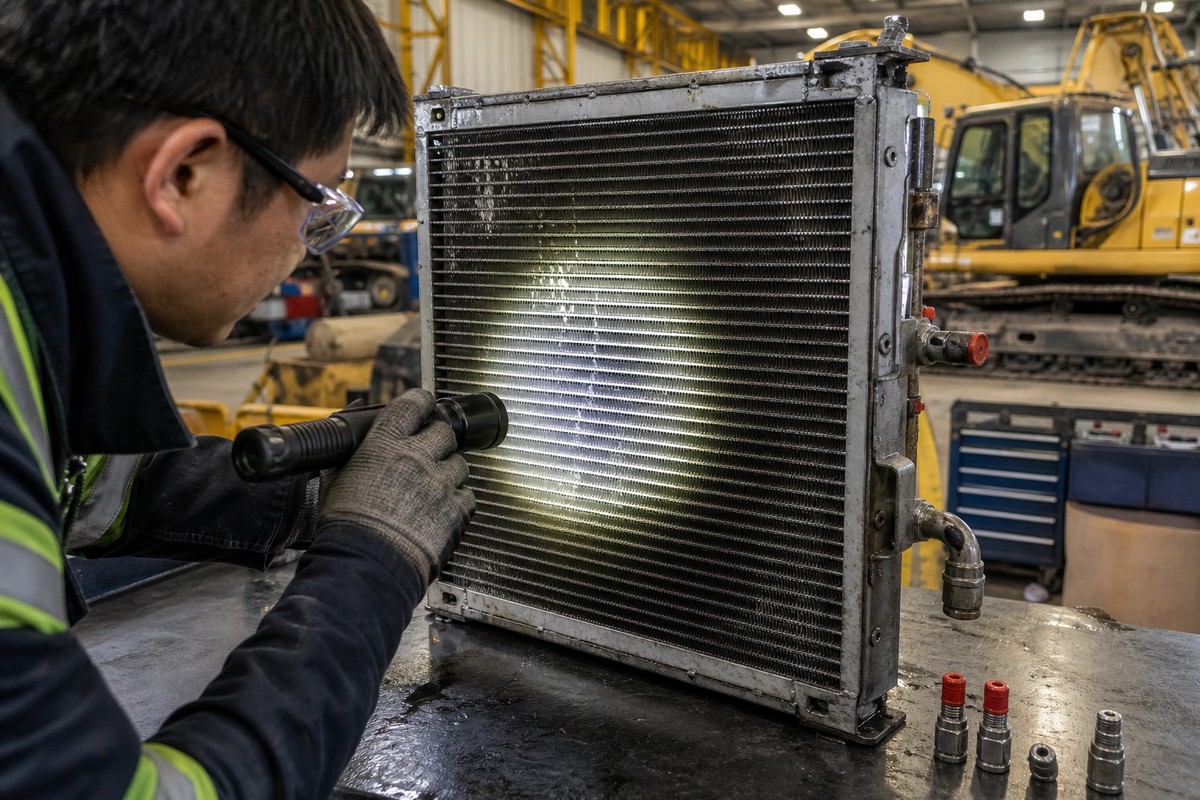
Useful evidence includes flashlight inspection through the fins, photos of debris between cooler layers, fan and belt condition, oil color and any leak traces. If the old cooler is clogged internally or leaking externally, replacement makes sense. If airflow is blocked, cleaning and diagnosis should come before ordering.
| Check | Evidence to save | Buyer value |
|---|---|---|
| Airflow | Fin photos from both sides and screen condition | Separates blocked airflow from part failure |
| Leak check | Pressure or capped-port test evidence | Confirms external or internal leak risk |
| System symptoms | Temperature pattern and oil/coolant condition | Prevents replacing the wrong part |
What should PRIMA request before approving a substitute cooler?
A substitute cooler needs a side-by-side evidence path. The supplier should compare the old cooler and proposed cooler by dimensions, port direction, mounting face and core type. Similar length is not enough; bracket height, hose angle and clearance around the fan shroud can decide whether installation is clean.
PRIMA should avoid unsupported claims such as official or OEM unless written proof exists for the exact option. It is safer to describe the condition honestly as new, aftermarket, used or rebuilt, then show the measurements that support the match.
| Check | Evidence to save | Buyer value |
|---|---|---|
| Substitute option | Side-by-side dimensions and port photos | Makes the quote auditable |
| Condition grade | New, aftermarket, used or rebuilt boundary | Avoids expectation disputes |
| Clearance | Fan shroud, hose path and bracket comparison | Reduces installation changes |
Which packing proof protects the cooler during export?
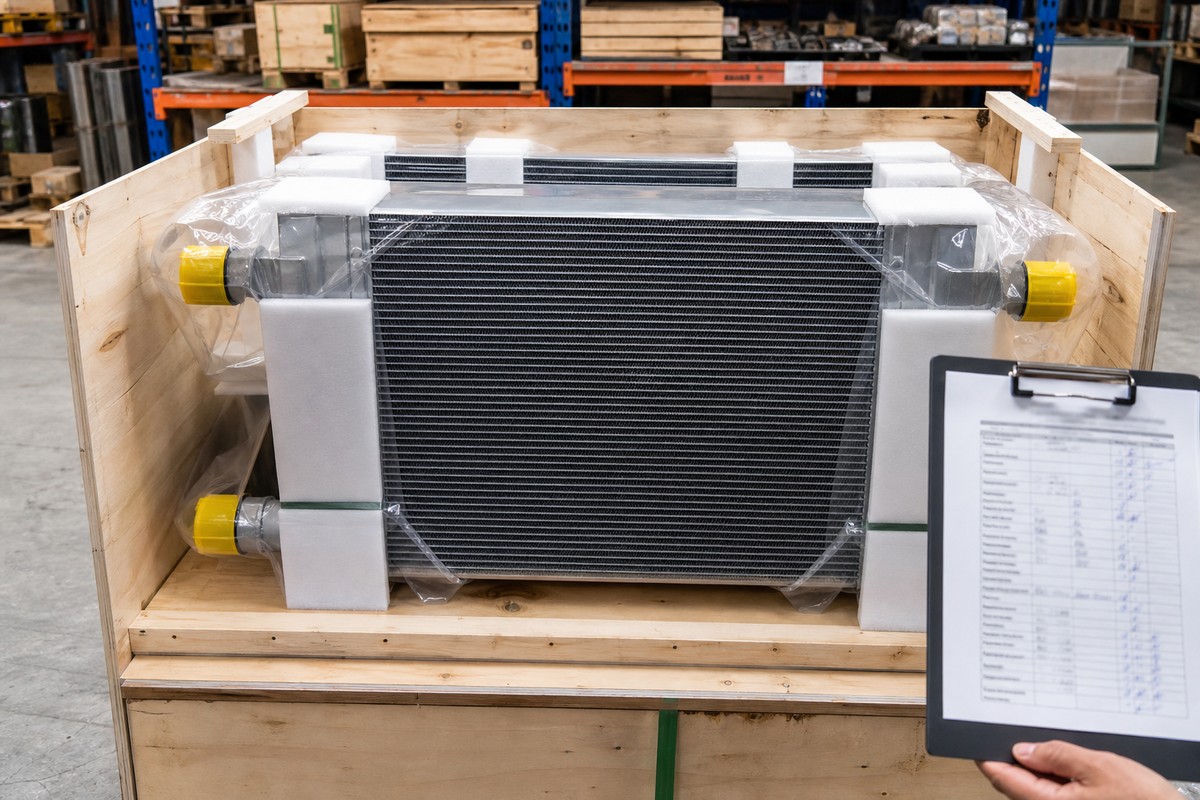
Oil cooler fins and ports are easy to damage. Before shipment, buyers should request caps on all ports, foam or board protection over the core, corner guards and crate photos. A cooler that passes inspection can still fail if a port is bent during transport.
The final file should connect the part photos, test evidence and packing photos to the same order. This is especially important when a repair shop receives multiple parts in one shipment and needs to confirm which cooler belongs to which machine.
| Check | Evidence to save | Buyer value |
|---|---|---|
| Port protection | Caps, plugs and wrapped fittings | Keeps dust and impact out of the oil circuit |
| Fin protection | Foam, board and crate spacing | Prevents airflow damage before installation |
| Order trace | Final photos tied to the quote file | Makes receiving inspection faster |
Evidence Table
| Decision point | Evidence PRIMA should save | Risk controlled |
|---|---|---|
| Fitment | Old cooler photos, dimensions, bracket positions and port layout | Wrong cooler or hose modification |
| Diagnosis | Airflow, leak, oil and temperature evidence | Replacing a good cooler |
| Export | Capped ports, protected fins and crate photos | Transit damage and contamination |
Key Facts For PRIMA Buyers
- Machine model alone is not enough for an oil cooler quote.
- Overheating can come from airflow, fan, coolant, hydraulic oil or valve/pump problems.
- A replacement cooler should be packed with port caps and fin protection.
- PRIMA should label new, aftermarket, used or rebuilt condition clearly.
Buyer FAQ
Can I order an oil cooler by excavator model only?
It is possible but risky. PRIMA should request old cooler photos, dimensions and port layout before treating the match as confirmed.
Does overheating always mean the oil cooler is bad?
No. Blocked fins, coolant issues, fan problems and hydraulic faults can also raise temperature.
Should a used oil cooler be pressure tested?
Yes. A used or rebuilt cooler should have leak-test evidence before export.
What packing is important?
Port caps, fin protection, corner guards and crate photos are the minimum evidence buyers should request.
Can PRIMA claim the cooler is OEM?
Only with current written proof for the exact option. Otherwise describe the condition and fitment evidence accurately.
Useful PRIMA Links
- Excavator engine parts quote checklist
- Excavator water pump inspection guide
- Excavator hydraulic leak inspection guide
Conclusion
The safest PRIMA order is the one tied to saved evidence: machine identity, old-part photos, measurements, diagnosis notes, condition boundary, packing proof and a clear note about what remains uncertain. Buyers should compare the evidence file before payment, before shipment and again when the machine or part arrives.
References
- Mini excavator cooling and oil cooler cleaning best practices
- Cat parts reference and maintenance support
2026-06-13 PRIMA evidence update
Adds a same-cluster cooling-system link from oil cooler checks to radiator fitment and pressure-test checks.