
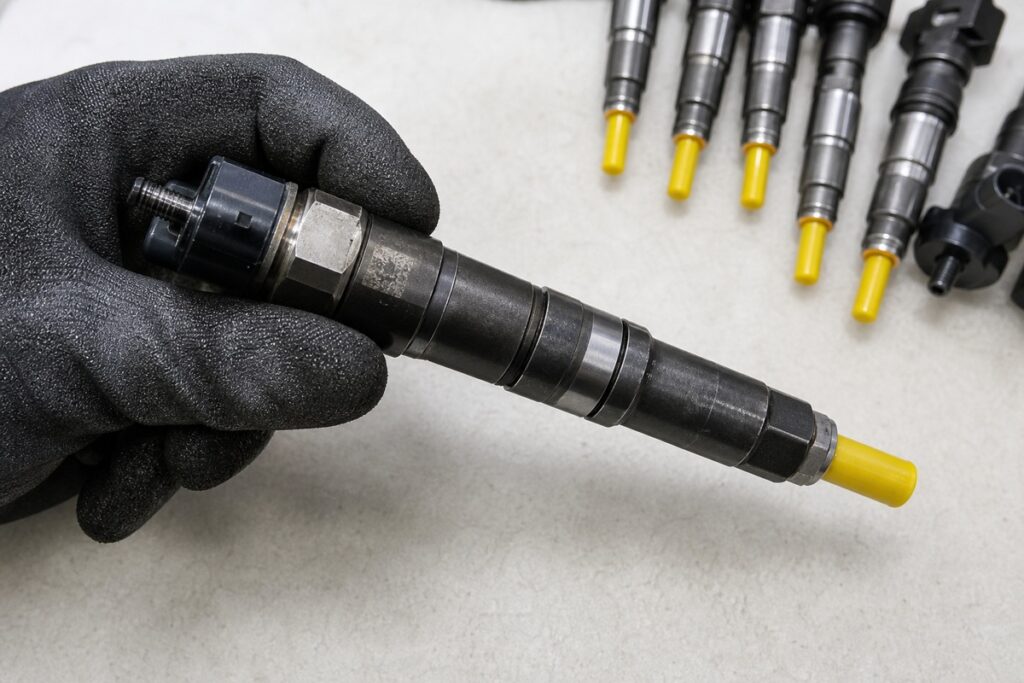
Buyers should check excavator fuel injectors before ordering from China by matching the injector part number, engine model, engine serial context, connector type, nozzle end, trim or calibration code when present, matched-set quantity, condition grade and clean capped packing. A fuel injector is small, but a wrong code can stop the engine repair or create rough running after installation. PRIMA should ask for old injector photos from multiple sides and should separate new aftermarket, rebuilt and used injectors in the quote. For rebuilt or used pieces, bench-test evidence, caps and clean packing are part of the decision, not optional decoration.
Fuel injector sourcing looks simple until the buyer receives a set with the wrong connector, nozzle or calibration code. Many repair shops ask for the lowest unit price, but the safer comparison is a matched evidence file: old injector markings, engine identity, quantity, test status and packing.
This guide supports the PRIMA engine parts checklist and part-number verification process. It is designed for importers, maintenance teams and dealers buying injectors in sets from China.
Quick answer: how should excavator fuel injectors be verified?
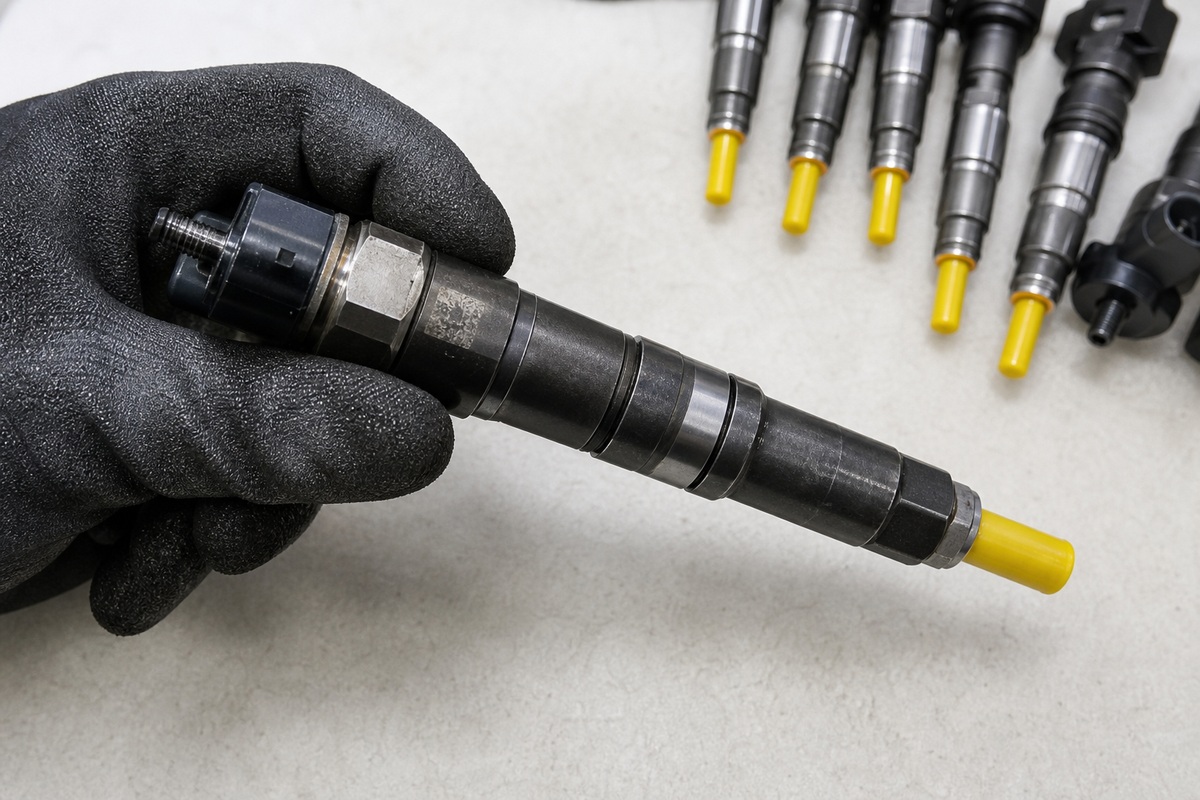
Excavator fuel injectors should be verified by number, engine context and visible configuration. Buyers should send the old injector part number, engine model, engine serial context, connector photo, nozzle-end photo, trim or calibration code if present and required quantity. A matched set should be photographed together so the buyer can see whether the pieces share the same quoted specification. If the injectors are rebuilt or used, PRIMA should request bench-test evidence or condition notes and should state the warranty boundary. Injectors should be capped, sealed and packed cleanly because contamination or nozzle damage can ruin an otherwise correct part. Model-name matching alone is not enough for a safe order.
Buyer Summary
- Best for buyers replacing injectors in engine repairs, fleet maintenance or spare-parts stock orders.
- Required evidence: old injector number, engine model, connector, nozzle, trim code if present and quantity per set.
- Main buyer risk: mixed or wrong-code injectors that physically fit but create engine performance problems.
- Used or rebuilt injectors need test evidence, condition grade and clean capped packing.
Which numbers and codes matter most?
The old injector marking is the first evidence. Buyers should photograph the full body, connector end and any printed or engraved code before cleaning or discarding the old part. If the injector has a trim, calibration or correction code, that code should be recorded in the buyer file.
The engine model and serial context help confirm the part family. Excavator model alone is weak because the same machine series can use different engines or injection systems. When the buyer cannot read the number, PRIMA should request more photos or mechanic notes and keep the quote conditional.
| Check | Evidence | Buyer value |
|---|---|---|
| Injector identity | Old injector marking and quoted number | Prevents wrong-code order |
| Engine context | Engine model and serial context | Controls variant risk |
| Part number | Body marking or supplier quoted number | Primary matching evidence |
How should rebuilt or used injectors be judged?
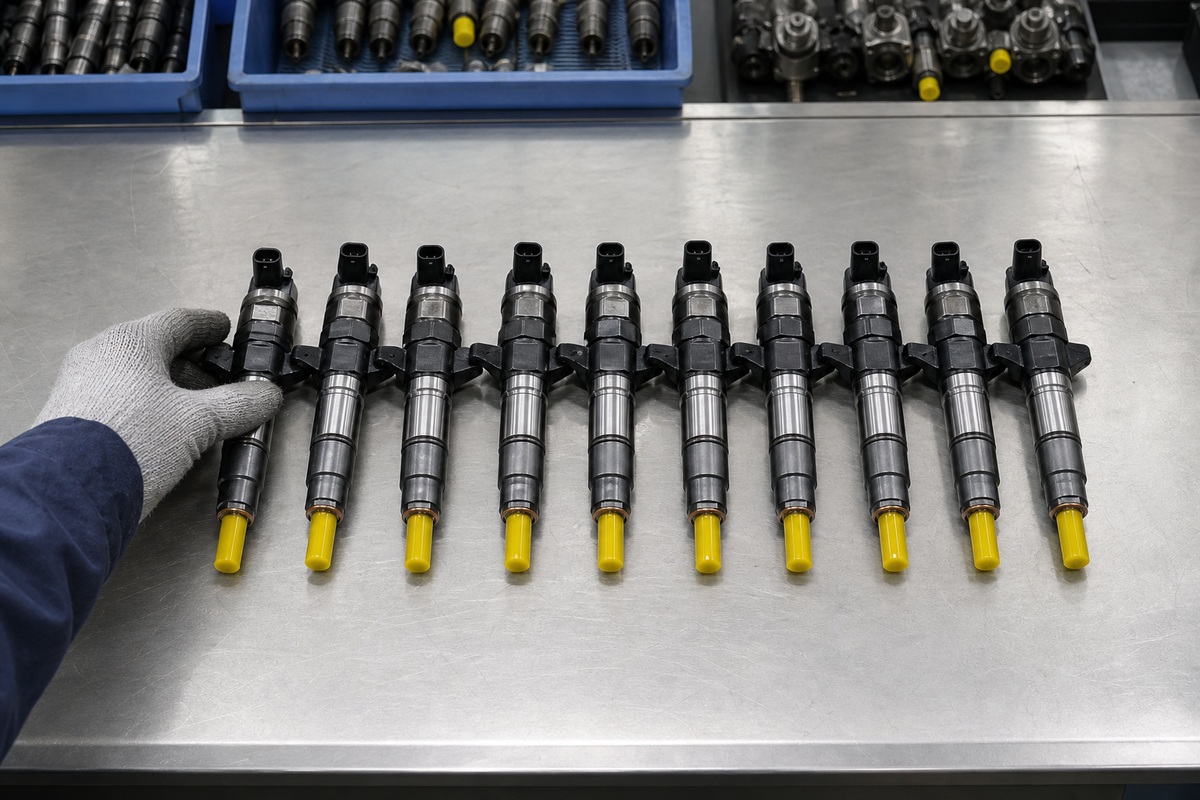
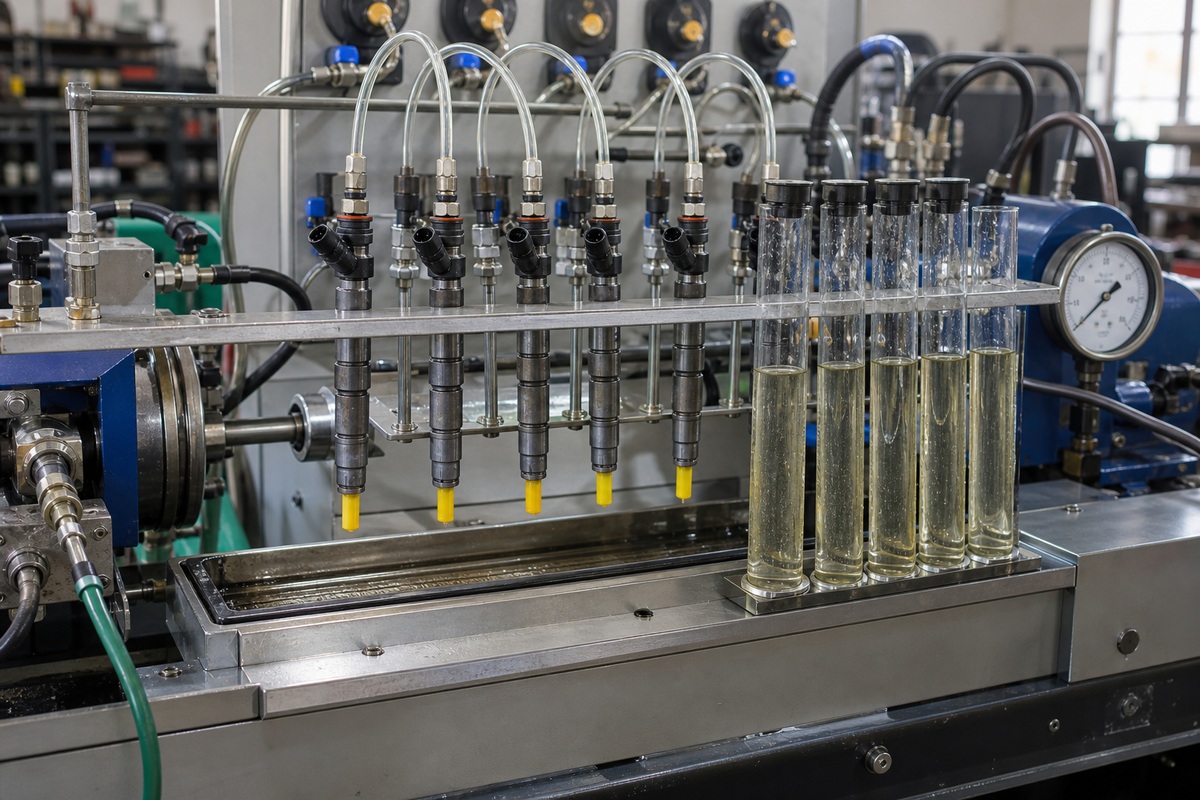
For rebuilt or used injectors, the buyer should not accept a clean surface as proof. Useful evidence includes bench-test photos, flow or leakage notes, cap condition and a clear statement of what has been replaced or checked. If the supplier cannot provide a test report, the quote should say so.
Condition grade should be visible in the commercial discussion. A new aftermarket injector, a rebuilt original injector and a used injector are not the same offer. PRIMA should keep the comparison honest so the buyer is not comparing a cheap used part with a new-part expectation.
| Check | Evidence | Buyer value |
|---|---|---|
| Trim/calibration code | Record if present on old injector | May affect engine control |
| Connector | Plug shape and pin layout | Must fit harness |
| Matched set | All pieces photographed together | Avoids mixed shipment |
Which photos prevent connector and nozzle mistakes?
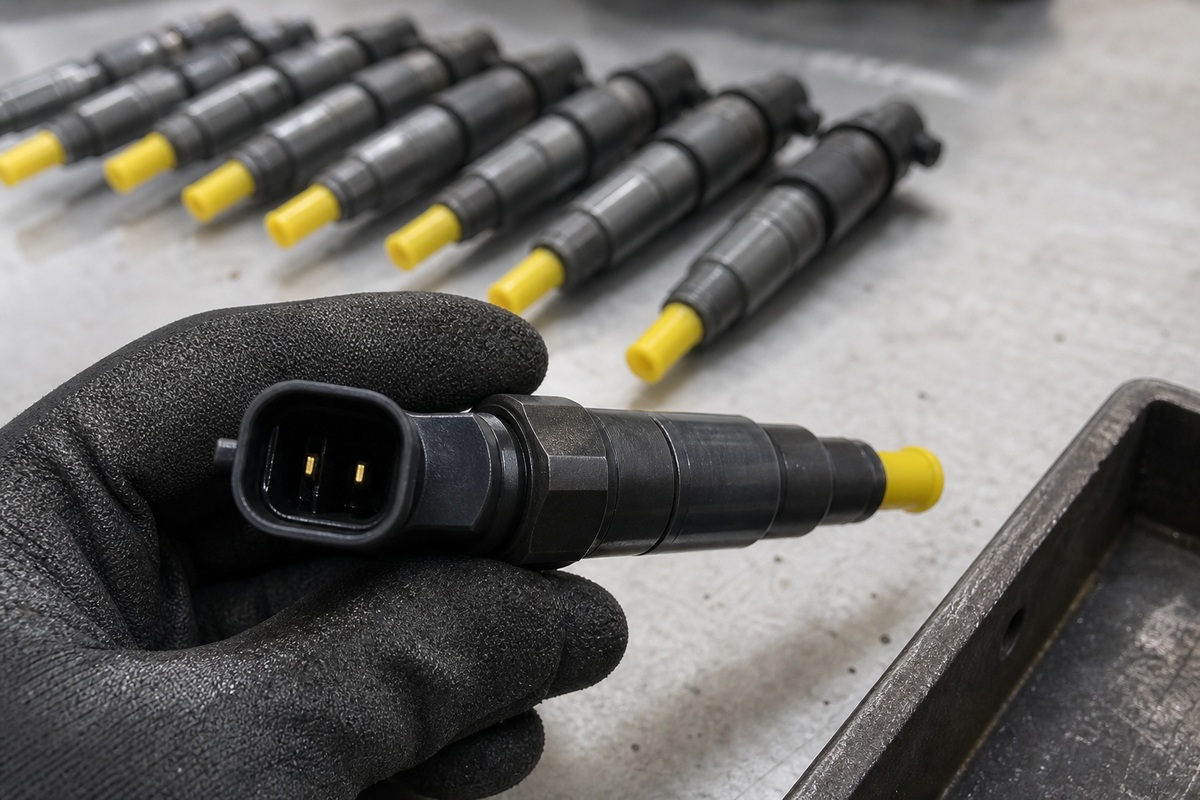
A good injector file includes connector shape, pin layout, nozzle end, body length, mounting or clamp area and all pieces in the set. The buyer should compare these with the old injector, especially when an alternative part number is proposed.
Matched-set photos are useful because injectors often ship in multiples. A row of injectors with the same visual specification gives the receiving team a quick check before installation. If one piece looks different, it should be questioned before shipment.
| Check | Evidence | Buyer value |
|---|---|---|
| Connector | Plug shape and pin layout | Must fit harness |
| Nozzle end | Tip shape and cap condition | Protects spray side |
| Electrical and nozzle fit | Connector and nozzle photos | Avoids harness or spray-end mismatch |
How should injectors be packed for export?
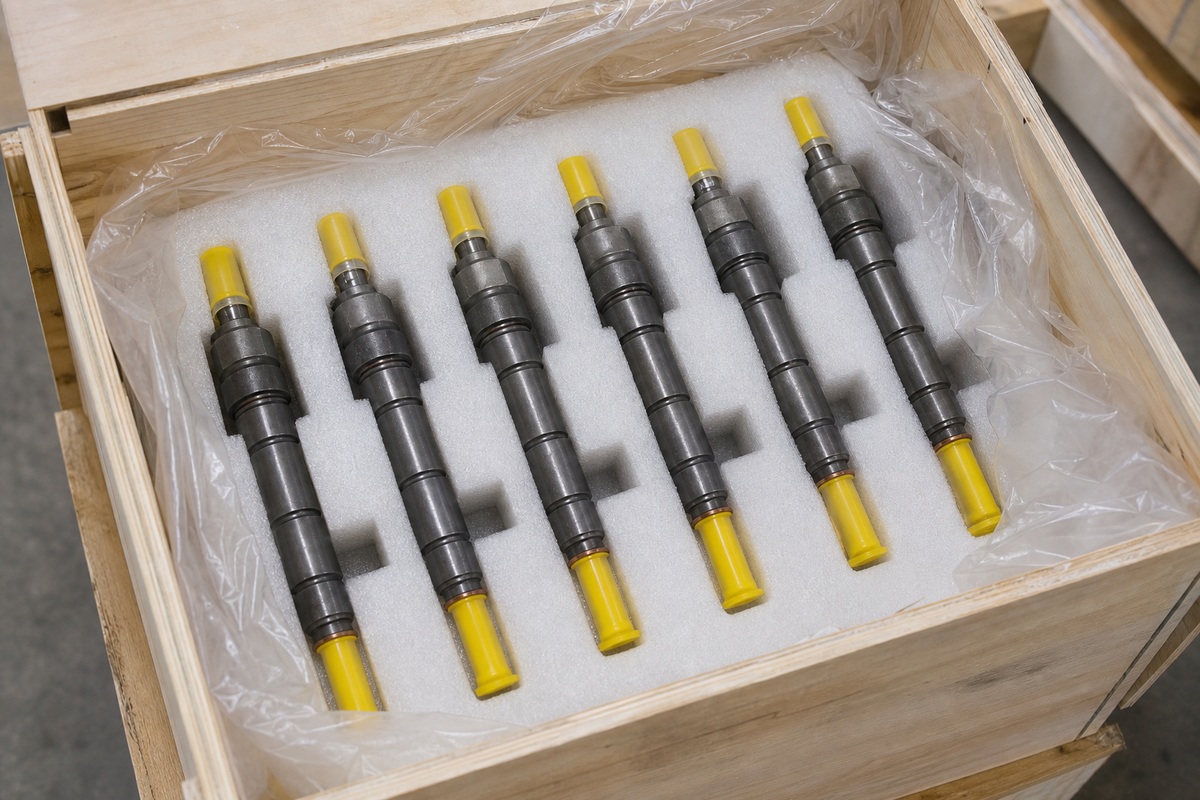
Fuel injectors need clean handling. The nozzle end should be capped, the connector protected and the body sealed against dust or moisture. Foam slots, sealed bags and a clean carton are more than cosmetic details because contamination can create repair failure.
Before shipment, ask for packing photos that show the set quantity, caps and outer carton. The buyer should compare the received injectors with the approved file before installing them in the engine.
| Check | Evidence | Buyer value |
|---|---|---|
| Condition grade | New aftermarket, rebuilt or used | Sets warranty expectation |
| Clean packing | Caps, sealed bags and foam or carton proof | Reduces contamination |
| Receiving file | Compare arrived part with approved photos | Controls post-arrival disputes |
Evidence Table
| Buyer question | Evidence PRIMA should provide | Why it matters |
|---|---|---|
| Injector identity | Old injector marking and quoted number | Prevents wrong-code order |
| Engine context | Engine model and serial context | Controls variant risk |
| Electrical and nozzle fit | Connector and nozzle photos | Avoids harness or spray-end mismatch |
| Matched set | All pieces photographed together | Avoids mixed shipment |
| Clean packing | Caps, sealed bags and foam or carton proof | Reduces contamination |
Key Facts For PRIMA Buyers
- Fuel injector orders should start from old-part numbers and engine context.
- Connector and nozzle photos reduce fitment mistakes.
- Trim or calibration codes should be recorded when present.
- Matched sets should be photographed together before shipment.
- Clean capped packing is part of injector quality control.
Buyer FAQ
Can one injector be replaced alone?
It depends on the engine condition and service plan. The buyer should confirm whether a matched set is required.
Are trim codes always needed?
Not always, but if a trim or calibration code is present, record it before ordering.
What if the old injector number is unreadable?
Send connector, nozzle, body and engine photos, but keep the quotation conditional until matching evidence is stronger.
Should rebuilt injectors include a test report?
A test report or bench evidence is strongly preferred; if unavailable, the condition boundary should be stated.
What packing evidence matters most?
Caps on nozzle ends, sealed clean bags and cushioned packing protect against contamination and tip damage.
Conclusion
The safest order is not the fastest visual match. It is the order with machine identity, old-part evidence, fitment comparison, condition boundary and packing proof saved before payment. PRIMA should keep each quote tied to the evidence file, explain what is confirmed, and leave uncertain claims conditional until the buyer or supplier provides stronger proof.
References
2026-06-14 PRIMA evidence update
Adds fuel injection pump fitment and test evidence as a same-cluster diesel fuel-system path.