
When a critical excavator component fails on a remote African job site, the difference between waiting weeks for an OEM part from the original manufacturer versus sourcing an equivalent from a Chinese supplier can mean thousands of dollars in lost productivity daily. Understanding how to source OEM-quality spare parts from China has become an essential competitive advantage for equipment dealers and fleet operators managing operations across emerging markets.
OEM vs. Aftermarket: Understanding the Difference
Original Equipment Manufacturer (OEM) parts are produced by the same factory that supplies components to the excavator brand itself. These parts carry the excavator manufacturer’s branding and pricing but guarantee fit, function, and warranty compatibility. Aftermarket parts are produced by third-party manufacturers and offer varying degrees of quality and compatibility. The gap between OEM and quality aftermarket parts has narrowed significantly, with some aftermarket suppliers now producing components that meet or exceed OEM specifications.
Chinese spare parts suppliers have invested heavily in manufacturing capabilities, and many now produce OEM-equivalent excavator components for Caterpillar, Komatsu, Hitachi, SANY, and XCMG machines. These suppliers often operate the same production lines as major brands but sell under their own branding or as unbranded components. The key is identifying suppliers with genuine quality certifications and testing protocols.
Sourcing Spare Parts from Chinese Suppliers
The Chinese excavator parts ecosystem is vast and ranges from legitimate OEM-quality suppliers to opportunistic sellers of inferior merchandise. Reputable Chinese spare parts suppliers typically operate from industrial centers in Shijiazhuang, Shanghai, and Guangzhou, where clustering of manufacturing expertise creates quality advantages. Look for suppliers with established export experience, documented quality control processes, and responsive communication before placing orders.
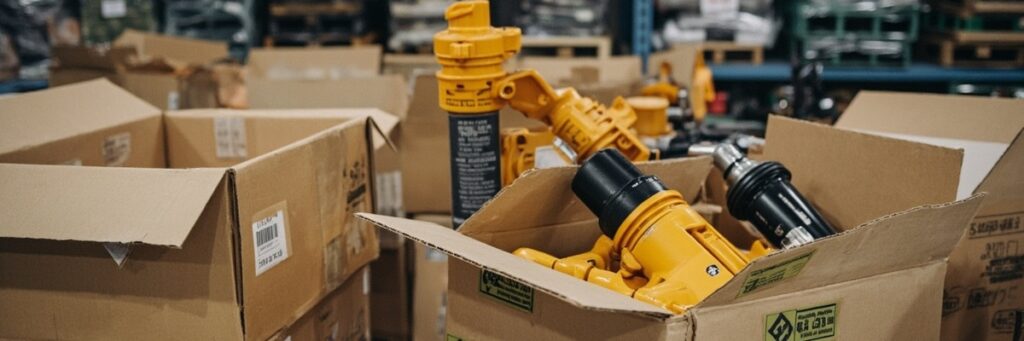
Common high-value spare parts sourced from China include hydraulic cylinders, boom and arm assemblies, bucket teeth and adapters, track chains and rollers, and undercarriage components. Electrical components like sensors and control modules require more careful vetting as quality variations can cause significant operational issues. Hydraulic system components particularly benefit from careful quality verification, as inferior seals or materials can cause system failures.
Quality Verification and Risk Management
Protecting yourself from quality issues requires a multi-layered verification approach. Request material certifications and manufacturing specifications for critical components. Ask for sample parts before committing to large orders. Consider using third-party inspection services like SGS or Bureau Veritas for high-value orders, with inspection costs typically ranging from $200-500 per component type.
Establish clear quality guarantees with suppliers, including replacement provisions for parts that fail to meet specifications. Maintain relationships with at least two suppliers for critical components to avoid single-source dependency. Document all communications and specifications in writing to support any quality disputes. For equipment maintenance best practices, keep detailed records of parts sources and performance to refine supplier relationships over time.
### How do I verify Chinese spare parts quality before purchase?
Request material certifications, ask for samples, and use third-party inspection services for high-value orders. Verify the supplier has relevant quality certifications and export experience. Start with small pilot orders to establish quality baselines before scaling up.
### What are the most commonly replaced excavator parts?
The most frequently replaced components on used excavators are bucket teeth and adapters, hydraulic cylinder seals, track rollers and idlers, air filters and oil filters, and undercarriage components. These parts experience high wear rates and represent the most common sourcing requirement for fleet operators.
### How long does spare parts shipping from China typically take?
Sea freight from China to Africa typically takes 25-45 days depending on origin port and destination. Air freight options reduce delivery to 5-10 days but increase costs by 300-500%. Plan spare parts inventory accordingly to avoid operational downtime from logistics delays.
Conclusion
Sourcing excavator spare parts from China offers significant cost and availability advantages for equipment operators in emerging markets. Success requires careful supplier vetting, quality verification processes, and strategic inventory planning. Build relationships with reliable Chinese suppliers who understand your equipment requirements and can provide consistent quality over time. The cost savings and supply chain reliability achieved through effective Chinese parts sourcing can significantly improve equipment fleet profitability.