
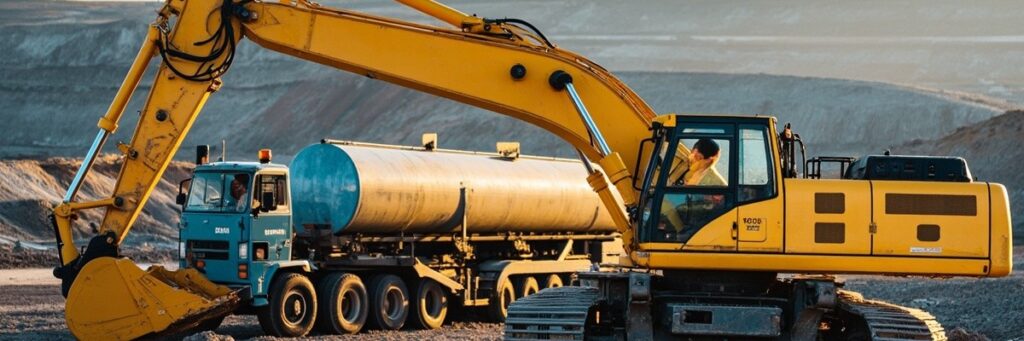
Estimate excavator operating costs from the work you expect the machine to do, the hours it will actually run, and current local quotations. Separate fuel and service costs from ownership costs, transport, labour and downtime. A model name or purchase price alone cannot establish a reliable cost per hour for a used excavator.
Buyer summary
- Compare costs using the same currency, period, duty cycle and hour definition.
- Use measured or clearly labelled estimated fuel consumption; record the delivered diesel price.
- Build service costs from the correct machine manual and itemised local quotations.
- Keep repair uncertainty, downtime and ownership costs visible instead of hiding them in one headline rate.
Image note: The images below are visual references. They do not document the condition, inspection results or operating costs of a specific machine offered by PRIMA.
What belongs in an excavator cost comparison?
Use three separate totals: the cost to acquire and put the machine into service, the cost to operate it, and the cost of owning it over your chosen period. For an imported used machine, the first total may include the purchase quotation, agreed inspection or preparation work, freight, destination charges and inland delivery. Obtain the relevant quotations before treating the acquisition budget as complete.
For operating costs, list fuel, lubricants and consumables, scheduled servicing, wear parts and repairs. Add labour, transport between jobs and project overhead when calculating the cost of delivering work. State which items you have included. A contractor’s customer billing rate includes different items from a machine-only running cost and cannot be used as a direct fuel-and-maintenance benchmark.
For ownership cost, work with the acquisition amount, expected resale value, financing cost and applicable fixed charges for the same ownership period. Do not count the full acquisition price and depreciation twice. Caterpillar’s total ownership cost guide explains the distinction between owning and operating expenses and why utilisation and unplanned downtime matter. It provides a planning framework, not a quotation for a PRIMA machine.
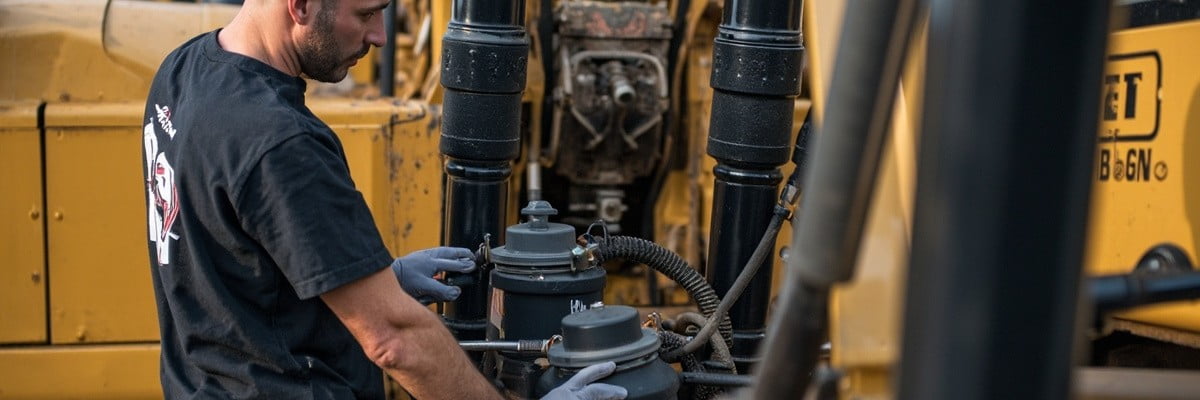
How should you calculate fuel cost per hour?
Fuel cost per engine hour = fuel consumed per engine hour × delivered fuel price per litre. Keep litres and gallons separate and use the same unit throughout. Record the date and location of the fuel quotation; a price from another country or an old quotation may not describe your project.
Ask how the fuel figure was obtained. Useful records identify the machine, attachment, task, material, operating mode, measurement period and hours. An idle-heavy loading job and continuous digging can have different results. A general specification, a short demonstration and an actual shift log are different kinds of evidence; label them accordingly.
For arithmetic only, an assumed 15 litres per hour at an assumed US$1.20 per litre gives US$18 per engine hour. These are fictional inputs to demonstrate multiplication, not a measured excavator result, current fuel quotation or PRIMA price. Replace both numbers with your own evidence. If consumption is uncertain, calculate a range and record what must be checked before purchase.
How do you build a service and repair budget?
First identify the exact model, serial range and configuration. Use the applicable operation and maintenance manual to identify the service tasks, required fluids, filters and intervals. Do not apply a single oil-change or hydraulic-fluid interval to every excavator. Operating conditions and the manufacturer’s instructions determine the relevant schedule.
For each planned service, obtain parts, fluid quantities, labour and disposal quotations from providers who can support the machine at its destination. Ask whether tax, travel, freight and installation are included. A component price alone is not the installed repair cost. Keep the quotation date and validity period with the estimate.
Separate known work from an allowance for unknown repairs. Known work should have a dated finding, the affected component and a repair quotation. An allowance is a planning assumption; it is not evidence that a component will fail or that a seller will cover it. A pre-purchase inspection can reduce uncertainty, but it does not establish a universal defect-detection rate or guarantee future reliability. Use the undercarriage evidence and repair-quotation checklist when that system is a material part of the budget.
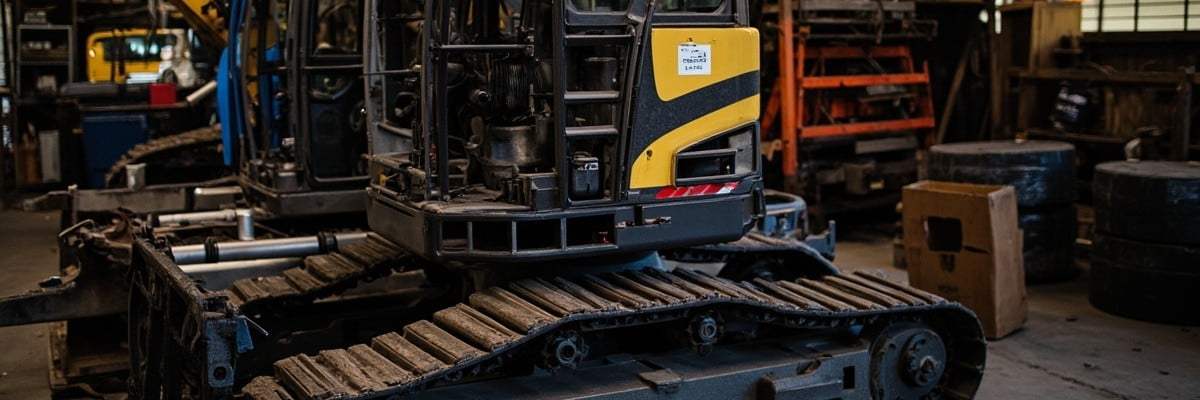
Which hours should you use in the calculation?
Decide whether you are calculating cost per engine hour, productive hour or billed hour. These denominators are not interchangeable. A machine may record engine hours while waiting, and a project may have paid labour or fixed costs during service and transport. State your definition beside every hourly result.
Fixed cost per planned operating hour = fixed cost for the period ÷ planned operating hours for that period. For illustration, an assumed annual fixed cost of US$6,000 is US$6 per hour at 1,000 hours, or US$12 per hour at 500 hours. This example only demonstrates utilisation sensitivity. It is not a recommended operating schedule or a quotation.
Prepare a base case and a lower-utilisation case. Add a separate downtime scenario using the likely waiting time for diagnosis, parts and repair at your destination. State whether the scenario includes replacement-machine hire, continuing labour or delayed project revenue; avoid adding the same loss twice. Revise the model when actual operating records become available.
What evidence should go in the buyer’s cost file?
| Cost input | Evidence to obtain | Decision boundary |
|---|---|---|
| Machine and acquisition | Machine reference, identity evidence, dated quotation and inclusions | Do not infer condition or availability from a generic model page. |
| Fuel | Consumption measurement or labelled estimate, duty cycle and local delivered fuel quote | Compare the same task and units; do not assign a universal brand saving. |
| Scheduled service | Applicable manual, service history and itemised parts/labour quotations | Use the schedule for the actual machine and conditions. |
| Repairs and wear | Dated inspection findings, measurements and installed repair quotes | Separate confirmed work from a contingency assumption. |
| Utilisation and downtime | Project hours, work calendar and local service/parts availability | Show a lower-hours scenario rather than assuming continuous work. |
| Ownership and resale | Acquisition scope, ownership period and documented resale assumption | Keep financing and fixed charges explicit; avoid double counting. |
When comparing China suppliers, keep the machine evidence with the cost worksheet. The PRIMA used-excavator sourcing page explains the buyer information and evidence to discuss before deposit. Ask which inspection, preparation, parts and export items are included in the specific quotation. Do not assume that every quotation includes a fuel test, a fixed service package or a multi-year ownership model.
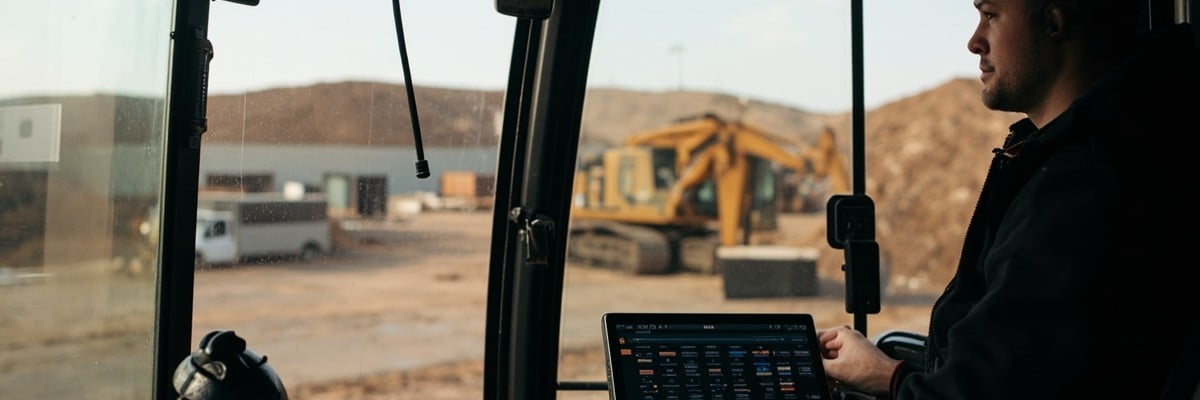
Buyer FAQ
Is there one reliable excavator operating cost per hour?
No. A useful estimate identifies the machine, work cycle, local prices, expected hours and included cost categories. A machine-only running cost, total ownership cost and contractor billing rate answer different questions.
Can a lower fuel figure prove one used machine is cheaper overall?
No. Compare equivalent work and include service, repairs, utilisation, transport and ownership assumptions. Record the evidence behind the fuel figure rather than transferring a generic brand comparison to a specific used machine.
What should I send PRIMA before discussing a machine and its costs?
Send the machine link or reference, intended work, destination and expected use. Ask for the available identity and condition evidence and a written quotation scope. Obtain local fuel, labour and service prices for the operating-cost calculation.
Prepare the next decision
Contact PRIMA with the machine reference and intended work to discuss the available machine evidence and quotation scope. Keep unknown costs marked as unknown until you have supporting measurements or quotations.