
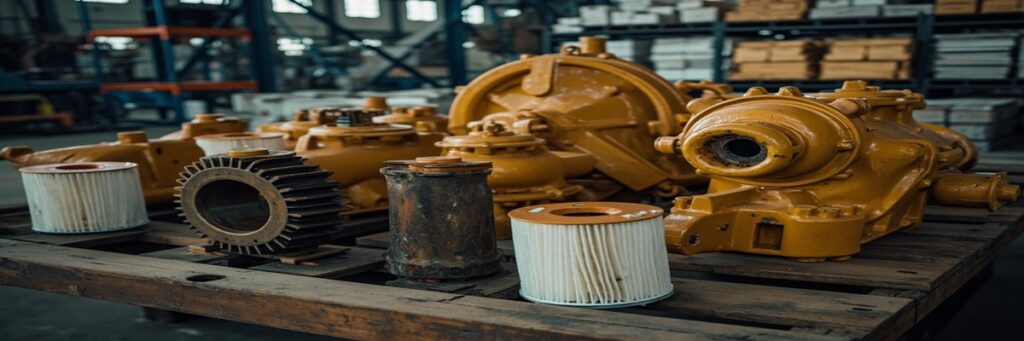
When your excavator goes down on a remote African construction site or South American mining operation, the difference between a one-day delay and a one-week delay often comes down to parts availability. Sourcing excavator spare parts from China has become the strategic choice for equipment dealers and fleet operators worldwide who need OEM-quality components at competitive prices without the premium markups of local distributors.
Why China Has Become the Global Hub for Excavator Spare Parts
China’s position as the world’s largest excavator manufacturing base has created an ecosystem of high-quality spare parts production. Major manufacturers like SANY, XCMG, LiuGong, and Zoomlion produce millions of original components annually, and the supporting supplier network for these brands has grown into a sophisticated manufacturing cluster capable of producing parts that meet or exceed OEM specifications.
According to OEM Excavator Parts suppliers, China’s parts manufacturing capabilities now extend across the full spectrum of excavator components, from hydraulic systems to undercarriage parts. This manufacturing depth means that even components for older machine models remain available years after production ends.
Key advantages of Chinese spare parts sourcing include:
Cost Reduction: Parts sourced directly from Chinese manufacturers typically cost 40-60% less than the same components purchased through dealer networks. A hydraulic pump that costs $2,500 from a Caterpillar dealer might cost $900-1,200 from a quality Chinese supplier.
Broad Model Coverage: Chinese suppliers manufacture parts for virtually all major brands including Caterpillar, Komatsu, Volvo, Hitachi, SANY, XCMG, and many smaller manufacturers. This breadth ensures parts availability even for mixed-fleet operators.
Customization Options: Chinese manufacturers can produce modified parts for specific applications, such as heavy-duty buckets for quarrying or specialized hydraulic configurations for extreme climate operations.
Key Excavator Spare Parts Categories from China
Understanding which parts categories offer the best value when sourced from China helps fleet managers prioritize their sourcing strategy:
Hydraulic Components: Hydraulic pumps, main control valves, swing motors, and travel motors represent the highest-value category. Quality Chinese hydraulic parts have improved dramatically, with many suppliers now offering components that match OEM performance specifications. For troubleshooting excavator hydraulic issues, having access to affordable replacement parts makes comprehensive repairs economically viable.
Undercarriage Parts: Track links, track rollers, carrier rollers, idlers, and track shoes experience high wear in abrasive conditions. Chinese undercarriage parts offer excellent value, with many suppliers providing parts compatible with both OEM and aftermarket undercarriage systems.
Engine Components: While engine parts require careful quality verification, Chinese manufacturers produce reliable filters, gaskets, water pumps, and starter motors at significant cost advantages. For engine overhauls, sourcing Chinese engine parts can reduce total rebuild costs by 50% or more.
Ground Engaging Tools (GET): Bucket teeth, adapters, and cutting edges are consumable items where Chinese manufacturing excels. These high-wear components require frequent replacement, making the cost savings from Chinese sourcing particularly impactful on operating economics.
Finding Reliable Excavator Parts Suppliers in China
The challenge with Chinese spare parts sourcing is distinguishing quality suppliers from those offering inferior products. Industry resources like YINT Parts and Made-in-China.com provide directories of verified suppliers with export experience.
Follow this verification framework when selecting Chinese parts suppliers:
Verify Export Experience: Ask specifically about shipments to your region. Suppliers experienced with African, Latin American, or Southeast Asian markets understand the logistics and documentation requirements for those destinations.
Request Sample Parts: Before placing large orders, request samples of critical components. Evaluate material quality, machining tolerances, and packaging. Quality suppliers welcome sample orders and often provide them at nominal cost.
Check Manufacturing Certifications: Look for suppliers with ISO 9001 quality management certification. While this doesn’t guarantee part quality, it indicates commitment to consistent manufacturing processes.
Review Technical Documentation: Quality suppliers provide detailed specifications, material certifications, and compatibility documentation for their parts. Vague responses to technical questions indicate suppliers who don’t fully understand their products.
Logistics and Shipping Considerations
Sourcing parts from China requires planning for international logistics. Lead times typically run 2-4 weeks for air freight and 4-8 weeks for sea freight, requiring operators to maintain strategic inventory of critical components.
For operators in Africa and Latin America, the total landed cost of Chinese parts includes:
• Product cost (FOB China pricing)
• International shipping (typically $2-5 per kilogram by air, $0.50-1.50 by sea)
• Import duties and taxes (varying by country and part category)
• Customs clearance fees and local agent costs
Despite these additional costs, the base cost advantage of Chinese parts typically maintains significant savings for all but the smallest orders. Planning larger quarterly orders rather than frequent small orders optimizes shipping economics.
Assessing Chinese Excavator Parts Quality
The primary concern with Chinese parts sourcing is quality consistency. A framework for quality assessment includes:
Visual Inspection: Compare casting quality, surface finish, and machining marks against OEM parts. Quality aftermarket parts should match OEM appearance standards.
Measurement Verification: Critical dimensions should be verified against OEM specifications using calipers and micrometers. Chinese manufacturers capable of precision manufacturing will have tight dimensional tolerances.
Material Testing: For high-stress components like hydraulic parts, hardness testing and material analysis can verify appropriate metallurgy. Suppliers should provide material certifications upon request.
Field Performance Tracking: Monitor the performance of installed Chinese parts to identify any quality trends. Establishing quality ratings for different suppliers helps optimize future sourcing decisions.
### What is the typical quality difference between OEM and Chinese aftermarket excavator parts?
Quality varies significantly among Chinese suppliers. Premium aftermarket parts from established Chinese manufacturers can achieve 90-100% of OEM performance at 50-70% of the price. Budget Chinese parts may offer only 60-80% of expected performance. For critical components like hydraulic pumps or final drive motors, investing in quality suppliers with proven track records is essential.
### How long does shipping excavator parts from China typically take?
Air freight typically takes 7-14 days from Chinese factory to destination country. Sea freight ranges from 25-45 days depending on the route and whether shipping to a direct port or requiring transshipment. For urgent needs, many operators maintain emergency air freight relationships to reduce downtime for critical components.
### Are Chinese excavator parts covered by warranty?
Reputable Chinese parts suppliers typically offer 6-12 month warranties on mechanical components. Warranty claims processes vary—established suppliers with export experience usually have clear procedures, while newer suppliers may have limited customer support. Always clarify warranty terms before placing orders.
## Conclusion
Sourcing excavator spare parts from China represents a significant opportunity for fleet operators to reduce maintenance costs while maintaining equipment reliability. Success requires careful supplier selection, quality verification processes, and strategic inventory planning to account for longer lead times. When executed properly, Chinese parts sourcing can reduce maintenance costs by 40-60% compared to OEM dealer pricing, materially improving equipment economics for construction and mining operations worldwide.