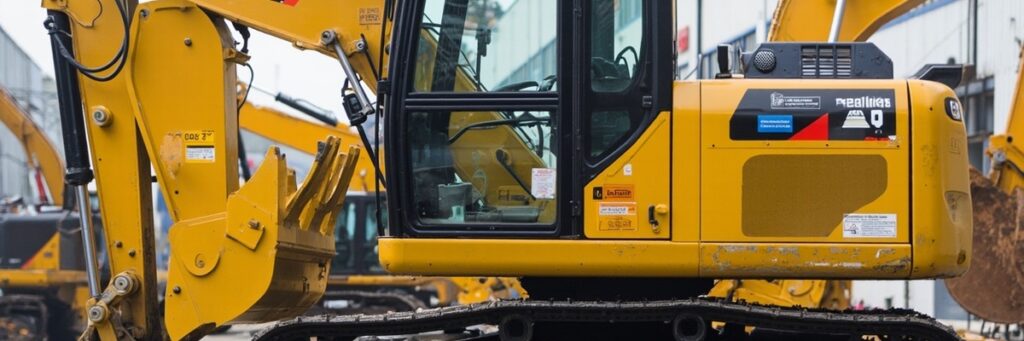
The CAT 320 is the world’s most traded used excavator, and for good reason — it offers the best balance of power, fuel efficiency, and parts availability of any 20-ton excavator. But buying a used CAT 320 without knowing what to look for is a fast path to expensive repairs. This guide covers exactly what to check before you buy.
Whether you are sourcing used excavators from China for a construction project in Kenya, the Philippines, or the UAE, the Caterpillar 320 should be at the top of your shortlist. Caterpillar’s global dealer network means parts are available in virtually every country, reducing downtime to a minimum. This makes the CAT 320 one of the lowest-risk used excavator purchases available today.
Why the CAT 320 Dominates the Used Market
The Caterpillar 320 sits in the sweet spot of the used excavator market — 20 metric tons operating weight, approximately 140–160 HP depending on the specification, and a 1.0–1.2 cubic meter bucket capacity. It is large enough for serious earthmoving but compact enough for transport between job sites.
Key reasons buyers prefer the CAT 320:
- Cat C7.1 ACERT engine — widely understood, well-documented maintenance schedules
- Proven hydraulic system with minimal部件 (components) complexity
- Strong residual value — CAT equipment holds its value better than Chinese brands
- Universal parts network — even in sub-Saharan Africa, CAT parts are accessible
- Multiple undercarriage options — standard track, wide track, and low ground pressure configurations
10-Point Pre-Purchase Inspection for Used CAT 320
Before committing to any used CAT 320 purchase, run through this checklist systematically:
1. Engine Oil and Coolant Condition
Pull the dipstick. Engine oil should be amber to dark brown, not black and milky. Coolant should be green or orange (depending on specification) and free of oil streaks. Milky oil indicates a head gasket leak — a costly repair on the C7.1 engine. White smoke at startup that clears after 30 seconds is normal; persistent white smoke indicates injector or compression problems.
2. Hydraulic System Audit
Run all hydraulic functions — boom, arm, bucket, swing, and track extension — through full range of motion. Listen for unusual noise: groaning indicates worn pumps, inconsistent speed suggests valve issues. Check hydraulic oil level and color — it should be translucent red, not black or frothy. Black hydraulic oil means the system has been overheated at some point, which degrades seals throughout.
3. Undercarriage Measurement
Measure track wear against new track pads. Most manufacturers consider 30% wear as the halfway point for replacement cost calculation. Measure sprocket teeth, idler wear, and roller flanges. Sprocket teeth worn to a sharp point rather than rounded indicate excessive track tension or alignment problems. Track tension should allow 20–25mm of deflection under a pry bar.
4. Boom and Arm Pin Bushing Play
With the boom raised, rock the arm back and forth. More than 3mm of play at the boom tip indicates worn pin bushings. Check the same at the bucket curl pin — rotate the bucket fully in both directions and feel for clearance. Worn bushings are not expensive to fix but they indicate how the machine has been used.
5. Structural Crack Inspection
Inspect all main structural welds — boom, arm, and main frame — under good lighting. Look for crack repairs that were painted over. Fresh weld discoloration is easy to spot against original factory welds. A cracked boom or arm structure is a no-buy regardless of price.
6. Undercarriage Frame Inspection
Roll the machine onto cardboard or a clean surface to inspect the undercarriage frame for oil leaks. Green or brown weeping from the travel motor indicates seal degradation. Check for signs of water submersion — rust patterns inside the engine compartment, water marks on electrical connectors, and rust in bolt heads all indicate the machine has been flooded at some point.
7. Hour Meter Verification
Cross-reference the hour meter reading against service records, hydraulic oil change records, and air filter replacement dates. A machine with 5,000 hours should have relatively clean internals; 15,000-hour machines will show some oil darkening. Inconsistent records suggest hour meter tampering, which is unfortunately common in the used export market.
8. Electrical System and Gauges
Turn the key on and verify all gauges sweep to zero and back. Let the engine warm up and verify the tachometer and temperature gauge stabilize in the normal range. Test the horn, work lights, and rotating beacon if equipped. Test the air conditioning — the AC compressor on the C7.1 is expensive to replace and the system should hold refrigerant.
9. Air Filter and Pre-Cleaner Condition
Open the air filter housing. Dual-element air filters should have both elements clean or recently replaced. A clogged air filter indicates deferred maintenance elsewhere. Check the pre-cleaner bowl (if equipped) — a full dust bowl means the machine has been operating in extremely dusty conditions without proper maintenance.
10. Final Functional Test
Put the machine under full load — dig into hard material and test the full dig cycle. Watch the hydraulic response under load: the arm should not droop under load, the boom should hold without drift, and swing speed should be consistent throughout. Excessive hydraulic drift on any function indicates internal valve or seal problems.
Known CAT 320 Problems and Cost Benchmarks
Common issues discussed by CAT 320 owners include the diesel particulate filter (DPF) on newer Tier 4 models, which requires periodic regeneration cycles in markets with low-quality fuel. If buying a Tier 4 Final machine for export to regions with high-sulfur fuel, budget for DPF system removal or modification.
Approximate repair cost benchmarks (USD):
- Hydraulic pump seal kit: $800–1,500
- Boom and arm pin bushing replacement: $1,200–2,500
- Travel motor seal overhaul: $600–1,200
- Main control valve overhaul: $2,000–4,000
- Engine overhaul (C7.1): $8,000–18,000
- Full undercarriage replacement (set): $12,000–22,000
Sourcing Used CAT 320 from China: What to Know
China is one of the world’s largest sources of late-model used CAT 320 machines, with many coming from leasing company returns and fleet upgrades. When sourcing from a used excavators supplier in China, verify the following:
- Ask for the original delivery documentation and first registration date
- Confirm the machine’s hours with a physical tachometer photograph — not just the display
- Request a pre-shipment inspection report from a third-party inspection company (SGS, Bureau Veritas, or similar)
- Clarify what is included in the sale — are spare parts, tools, or manuals included?
- Verify export eligibility — some machines with certain emission certifications cannot be exported to certain markets
Purchase Verdict
The CAT 320 remains one of the best used excavator purchases available, provided you perform due diligence before buying. Budget for a third-party inspection, factor in $2,000–5,000 for immediate repairs on any machine over 5,000 hours, and verify the machine’s hours against service records. A well-selected used CAT 320 sourced from China can deliver years of reliable service at a fraction of the cost of a new machine.
### What is a fair price for a used CAT 320 with 8,000 hours?
Used CAT 320 prices vary significantly by market and condition. In the export-from-China market, expect to pay USD 35,000–55,000 for an 8,000-hour machine in good condition, before shipping. Machines in Africa or Southeast Asia may command a premium if they arrive with fresh paint and documented service history.
### How many hours is too many for a used CAT 320?
There is no absolute threshold, but machines over 15,000 hours will require significant component replacement within 2–3 years. Focus on maintenance history rather than hours alone — a 12,000-hour machine with complete service records is preferable to an 8,000-hour machine with no documentation.
### Should I buy a CAT 320 or a Komatsu PC200 for Africa?
Both are excellent choices. CAT has stronger parts distribution across Africa, while Komatsu offers better fuel efficiency on some models. If your service network has a preferred brand, that should be the deciding factor. From a resale standpoint, CAT holds value slightly better in most African markets.
### What shipping costs should I budget for importing a used CAT 320?
Shipping costs from China to East Africa (Mombasa) or West Africa (Lagos) typically run USD 8,000–18,000 depending on machine size and vessel availability. Full container loads are cheaper per unit but require multiple machines. RORO (Roll-on Roll-off) vessels are the most cost-effective option for single machines.
