
Short answer: Shortlist a used Doosan wheeled excavator when frequent movement between work positions is central to the job and the site suits the actual machine. Shortlist a crawler when traction and the working platform are stronger requirements. Then compare the exact candidates: complete model designation, working equipment, support arrangement, condition and service needs. Neither wheels nor tracks alone establishes suitability.
A useful choice starts with your daily work, not an advertised travel speed or a universal cost-saving percentage. Two used machines can differ substantially in age, equipment and repairs. Define the job first, identify which configuration can meet it, and inspect the machine you may buy. This guide provides a comparison worksheet for that decision.
Buyer Summary
- Describe movement, ground conditions, working space and the main task.
- Match the complete machine identity to applicable documents.
- Compare installed supports, working equipment and attachment requirements.
- Inspect condition and obtain a repair scope before comparing total cost.
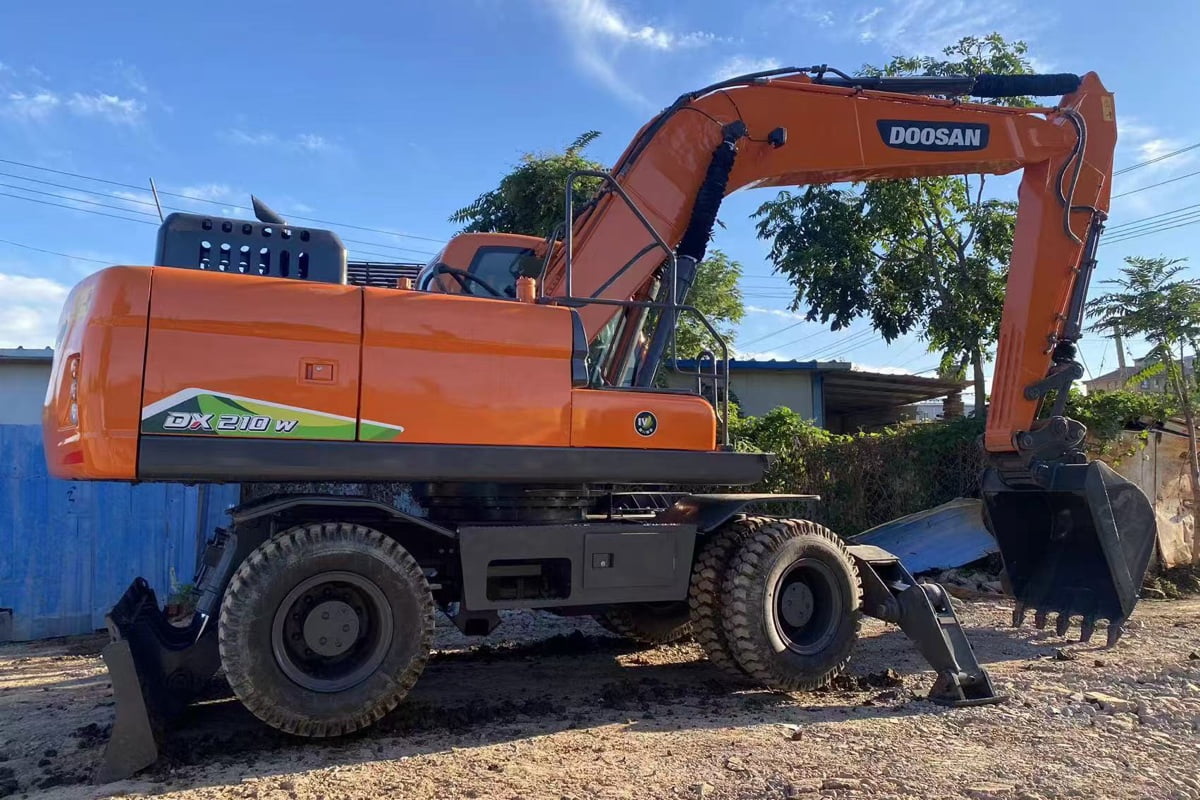
When does a wheeled Doosan make sense for your job?
Frequent repositioning on suitable firm surfaces can make a wheeled machine worth considering. Describe how often the operator moves, the distances involved and the access constraints. Ask whether the candidate can work in the available space with its actual blade or stabilizer arrangement. Movement advantages mean little if setting up for the work becomes the bottleneck.
Keep site movement separate from permission to travel on public roads. A machine’s wheels or advertised speed do not establish road eligibility, registration or suitability for your route. Resolve those requirements locally for the specific machine before relying on road travel in the purchase decision.
Quick answer: compare the work cycle
For a contractor moving repeatedly between short work sections, record movement and setup as well as digging. For a machine staying at one work area, concentrate on the working platform, reach, tool and duty. A wheeled candidate may be attractive in the first situation, but only when the actual route, surface and support configuration suit it. A crawler may be attractive in the second, but tracks do not make unsuitable ground safe.
Give each candidate the same job description. Ask what equipment is installed, which document supports its capability, what condition checks remain and which repairs are included in the offer. This produces a practical shortlist without inventing a universal winner, fuel saving or return on investment. Treat unresolved requirements as questions to answer before selection, rather than filling them with specifications from a similar-looking machine.
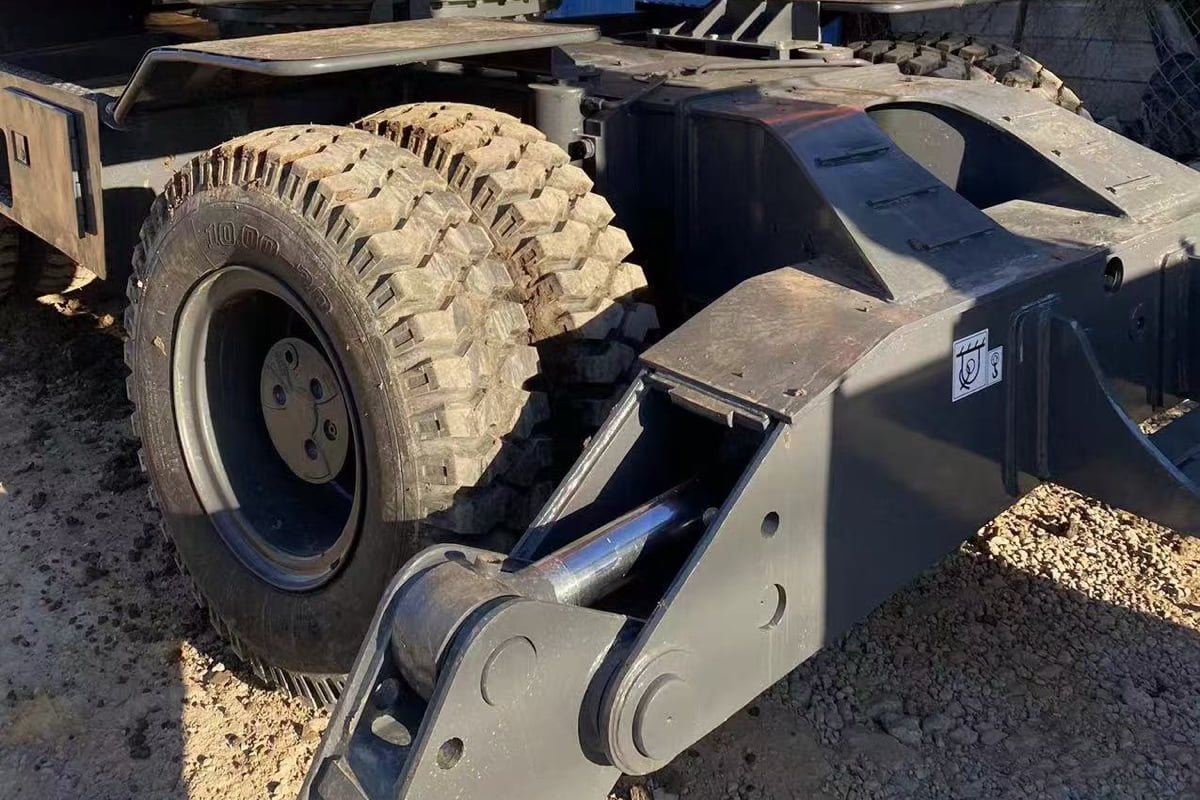
When should a crawler excavator enter the shortlist?
A crawler deserves consideration where traction and the working platform are central to sustained digging. Ground suitability still needs a site assessment. Track width, the machine’s configuration and actual conditions matter; a catalogue ground-pressure figure does not approve a particular site or slope.
Inspect both sides of the undercarriage and record measurements against the applicable component limits. A clean photograph cannot establish remaining wear life. Include the required undercarriage work in the comparison, rather than assuming that every crawler costs more to maintain or that every wheeled machine is cheaper.
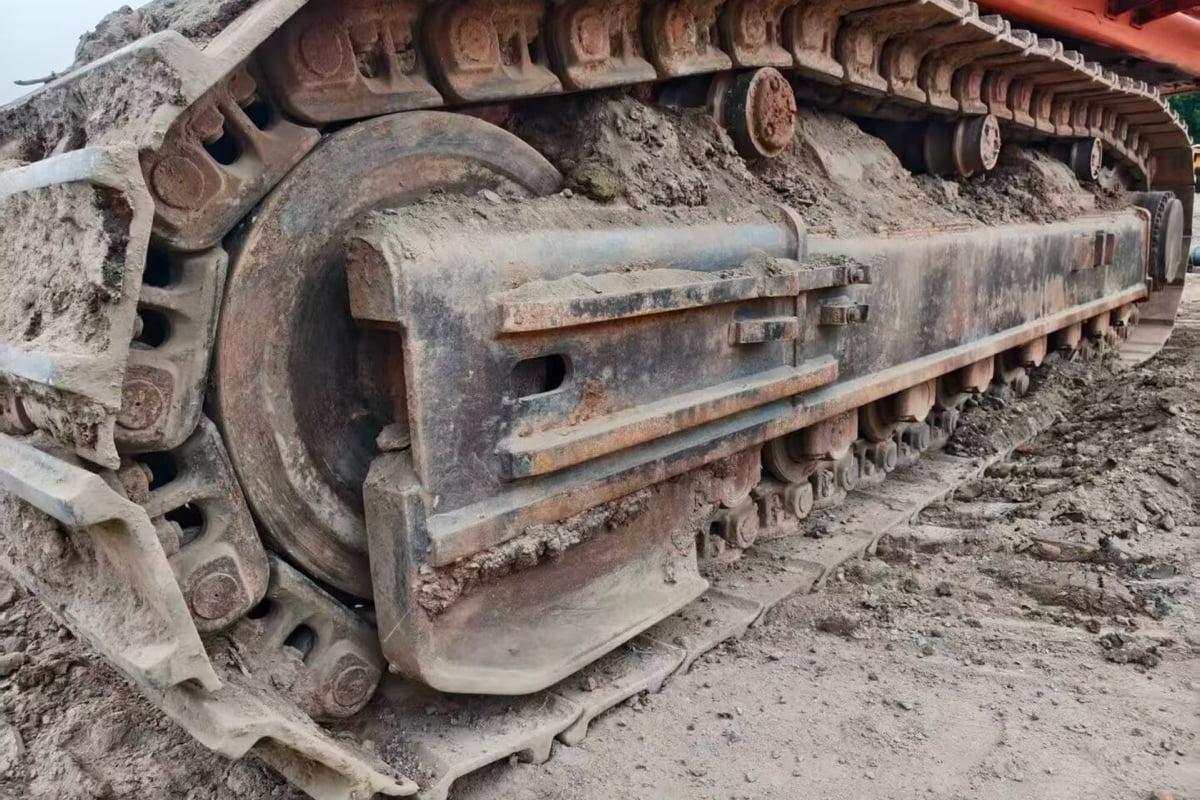
Which configuration details can change the decision?
Record the complete model and suffix, identification plate, installed boom and arm, bucket or coupler, auxiliary connections and support arrangement. Keep the applicable manual or specification with that candidate. Do not combine figures from different models into a fictional specification.
| Buyer requirement | Wheeled candidate | Crawler candidate |
|---|---|---|
| Movement and access | Route, turning space, tyres and setup arrangement | Travel requirements and working access |
| Working platform | Ground assessment and actual blade/stabilizers | Ground assessment and actual track configuration |
| Working equipment | Boom, arm, tool, connections and applicable limits | Same fields, checked for this exact candidate |
| Condition priorities | Tyres, axles, steering, brakes and support functions | Tracks, rollers, idlers, sprockets and travel functions |
| Service planning | Installed component identity and local support enquiry | Installed component identity and local support enquiry |
Current DEVELON North American wheel-excavator information illustrates why support arrangements and model configuration matter. It describes current -7K machines; it does not establish the equipment or capability of an older Doosan listing. For a separate manufacturer example, Volvo’s Middle East EW205D page ties published performance to a stated machine configuration. Do not transfer its figures to a Doosan candidate.
What evidence should you request before comparing prices?
Ask for a current identity-linked walkaround, relevant operating demonstrations and a written inspection scope. Photographs help identify visible components and questions; they do not prove hydraulic output, brake effectiveness or condition under load. Have a competent inspector assess the actual machine using its applicable instructions.
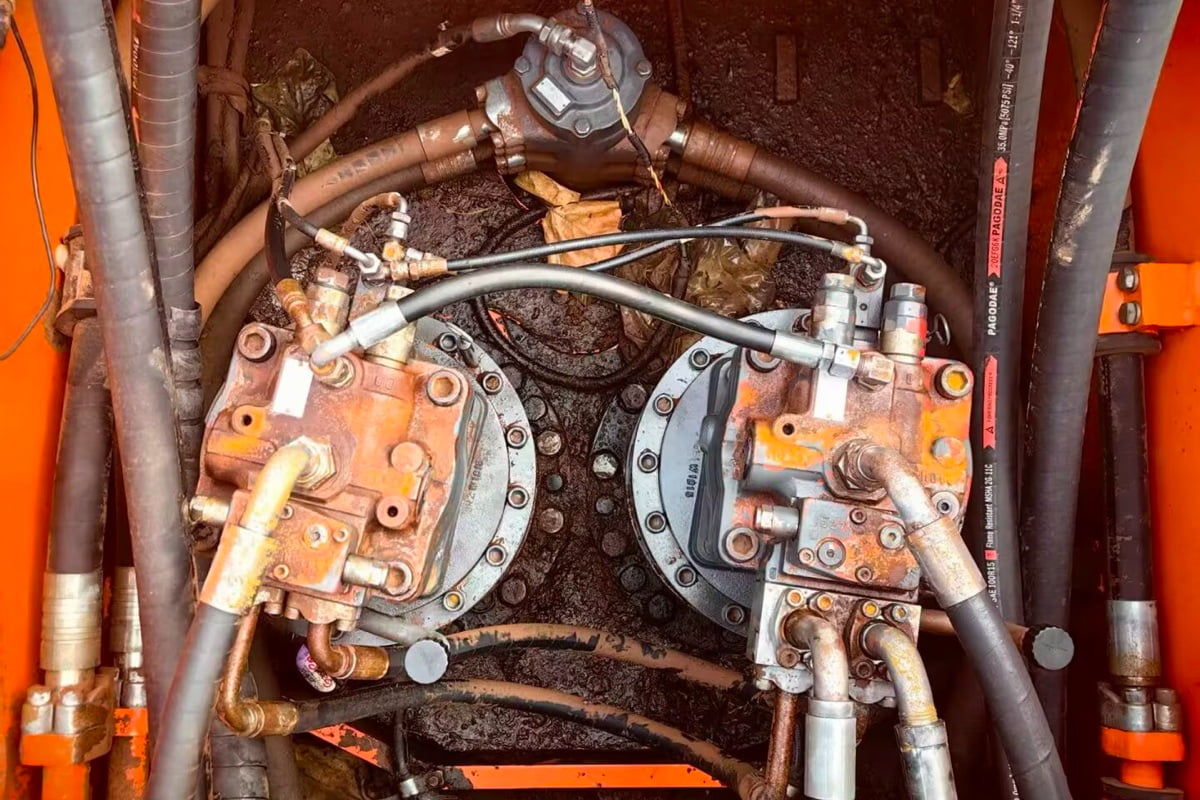
Keep requested repairs and preparation separate from the observed condition. Record what is included, what remains untested and what evidence will confirm completion. Compare asking price alongside documented repair needs and your own operating-cost assumptions. Do not use unsupported percentage savings or resale forecasts as a substitute for those inputs.
Use the used excavator inspection checklist for the next stage. A job-fit shortlist is not an inspection pass.
How should buyers interpret Doosan and DEVELON names?
The manufacturer’s DEVELON FAQ explains the construction-equipment rebrand. That history does not make every old and new component interchangeable. Identify the installed engine and other relevant components, then confirm the applicable parts information and support for the machine’s serial and market version.
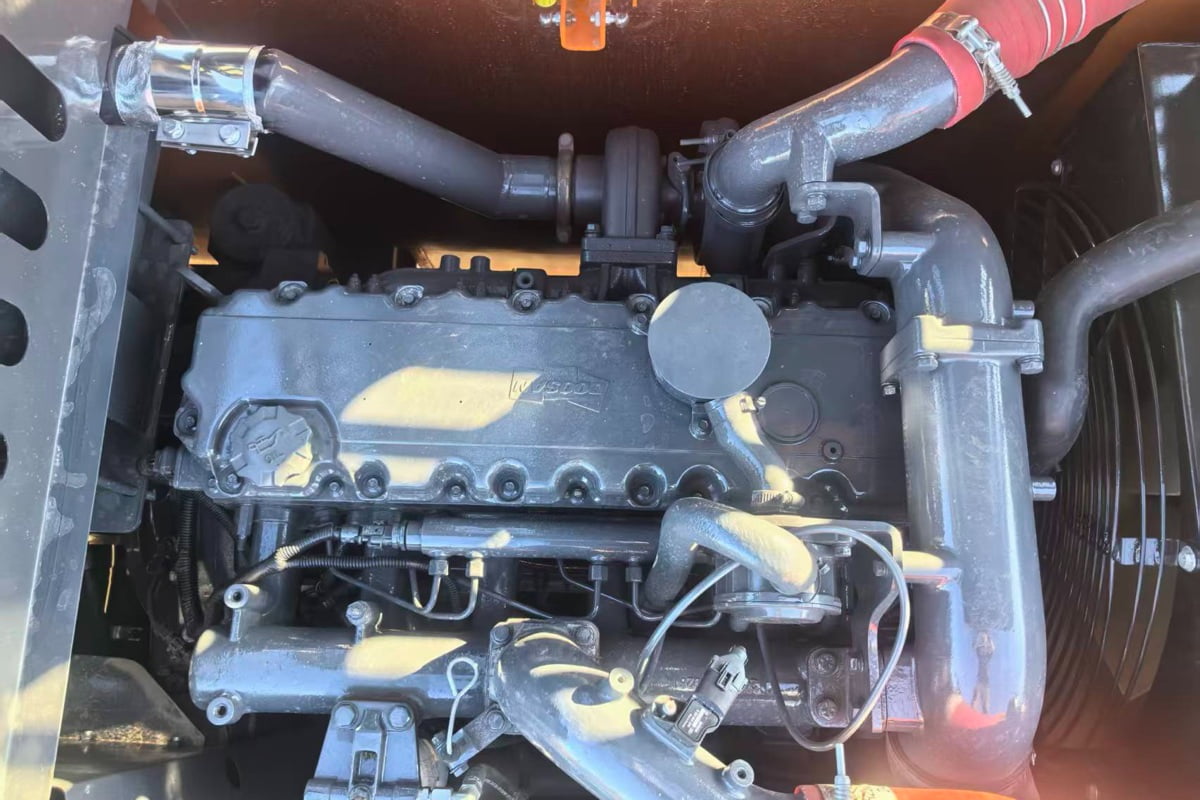
PRIMA’s DX210W photo record and DH500LC-7 photo record illustrate different configurations and inspection areas. They are historical records from different machine classes, not a matched capacity comparison. Confirm current availability and the exact unit before relying on either listing.
What should you send PRIMA to compare candidates?
Send the main job, ground conditions, movement pattern, working-space limits, required attachments and budget range. Include available candidate links or photographs. You can start with the information you have; PRIMA can discuss the remaining questions, sourcing options, a yard visit or third-party inspection.
For a broader shortlist, see choosing an excavator brand and model for the jobsite. To discuss wheeled and crawler options, send PRIMA your job requirements.
Frequently asked questions
Is a wheeled excavator always better for urban work?
No. Check movement, working space, ground and the installed support arrangement. An urban location alone does not determine the right configuration.
Can an older DX210W use a current DX210W-7K specification?
Do not assume so. Match the complete identity and configuration to the document before using its figures.
Do tracks prove that a machine is safe on soft ground?
No. Ground suitability requires a site assessment and the applicable machine instructions. A catalogue figure is not site approval.
Can PRIMA’s gallery prove a machine has passed inspection?
No. Historical photographs show visible details at the photographed time. Request current evidence and an agreed inspection of the actual candidate.
Prepared by PRIMA Equipment. Manufacturer references checked 1 November 2026. Photographs are historical PRIMA machine records, not current inspection reports.