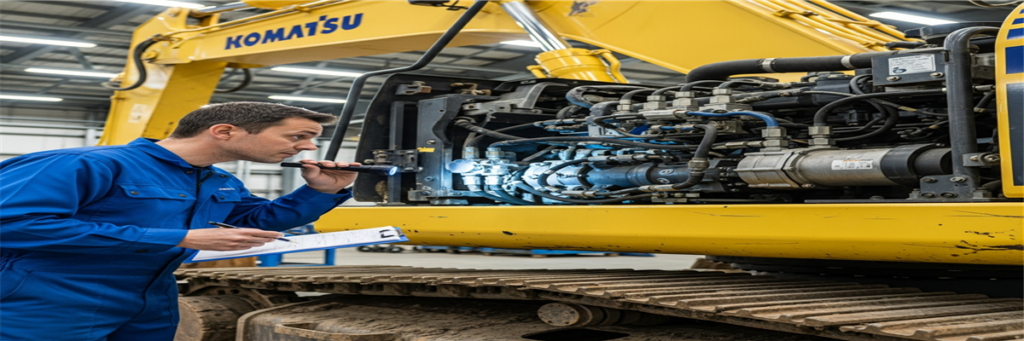
Every year, thousands of contractors and dealers lose money on used excavator purchases that looked good on paper but failed on the job site. The difference between a profitable machine and an expensive headache comes down to knowing exactly what to check — and what red flags to walk away from. This is the complete guide.
Why a Structured Inspection Process Matters
A used excavator is a $30,000–$120,000 investment. Unlike buying a used car, there is no Carfax report, no manufacturer-backed certification program, and in cross-border transactions, limited legal recourse if the machine doesn’t perform. Your inspection process is your warranty.
Professional buyers in Africa, the Middle East, and Southeast Asia who source from China follow a systematic approach. Here is the exact framework the best in the industry use.
Step 1: Define Your Requirements Before You Shop
Before contacting any supplier, clarify these specifications:
- Tonnage class — 6-ton mini, 13-ton midi, 20-ton standard, 30-ton heavy, or 45-ton+ mining class? Match the machine to your actual project scope.
- Brand preference — CAT and Komatsu command premium resale values. Hitachi and Volvo offer excellent hydraulic performance. SANY and XCMG deliver the lowest cost-per-hour but may have limited parts availability in some regions.
- Maximum working hours — Under 3,000 hours is “like new.” 3,000–6,000 is the sweet spot for value. 6,000–10,000 is acceptable with verified maintenance history. Above 10,000 requires careful evaluation of major component condition.
- Budget range — Set a total landed cost budget including purchase price, shipping, customs duties, and any repairs needed. A $50,000 machine that needs $15,000 in undercarriage work isn’t actually cheaper than a $60,000 unit in better condition.
- Shipping method — Ro-Ro (roll-on/roll-off) is cheapest for single machines. Flat rack containers work for machines up to 30 tons. Standard 40ft containers suit mini and midi excavators. Your choice affects which ports and suppliers you can work with.
Step 2: Evaluate the Supplier Before the Machine
The supplier matters as much as the machine. Here’s how to separate legitimate exporters from risky operators:
Green Flags
- Owns their own inventory yard (not a broker reselling other people’s machines)
- Provides real, unedited photos and videos of each specific machine
- Offers live WhatsApp video inspections on demand
- Transparent about defects — describes problems honestly rather than hiding them
- Has verifiable export history and customer references in your region
- Handles logistics and documentation in-house
Red Flags
- Stock photos or studio shots of freshly painted machines
- Unwillingness to show machines via live video
- Prices significantly below market rate (if it seems too good to be true, it is)
- Pressure to wire money immediately without inspection
- No physical yard address or verifiable business registration
- Claims every machine is “perfect condition” with no disclosed issues
Step 3: The 12-Point Machine Inspection Checklist
Whether you inspect in person or via live video, check every item on this list. No exceptions.
Engine
- Cold start test — The engine should start within 3–5 seconds without excessive cranking. White or blue smoke on cold start is normal briefly; black smoke or persistent white smoke indicates problems.
- Oil condition — Pull the dipstick. Oil should be amber to dark brown. Milky oil means coolant contamination (head gasket failure). Metal flakes mean internal wear.
- Exhaust smoke under load — Rev the engine while operating the boom. Steady black smoke under load suggests injector or turbo problems. Blue smoke means the engine is burning oil.
Hydraulic System
- Cylinder drift test — Raise the boom to full height and hold for 60 seconds with the engine off. More than 50mm of drift indicates worn cylinder seals or valve issues.
- Hydraulic oil check — Open the hydraulic tank. Oil should be clean and golden. Dark, burned-smelling oil signals overheating history. Foamy oil means air intrusion.
- Pump response — Operate all functions simultaneously (swing + boom + arm). Sluggish response or loss of power when multi-tasking indicates worn hydraulic pumps.
Undercarriage
- Track condition — Measure remaining tread depth. New tracks have ~30mm of grouser height. Below 10mm means replacement is imminent ($8,000–$15,000 per set).
- Roller and idler wear — Check for oil leaks from rollers (indicates failed seals). Spin each roller by hand — rough grinding means bearing failure.
- Track tension and alignment — Tracks should have 25–50mm of sag. Excessive looseness or uneven wear patterns suggest frame misalignment.
Structural Integrity
- Frame cracks — Inspect the main frame, boom foot, and arm junction points for cracks or repair welds. Fresh paint in localized areas often hides crack repairs.
- Boom and arm pin play — Grab the bucket and push/pull sideways. Excessive lateral movement means worn pins and bushings. Budget $2,000–$5,000 per joint for replacement.
- Swing bearing — With the machine on flat ground, try to rock the upper structure. Any clunking or visible movement indicates swing bearing wear — a $5,000–$12,000 repair.
Step 4: Verify Working Hours and History
The hour meter is the most manipulated data point on any used excavator. Here’s how professionals verify actual usage:
- ECU diagnostics — Connect to the machine’s electronic control unit. The ECU stores operating hours independently of the dashboard meter. Any discrepancy is a major red flag.
- Component wear vs. stated hours — A machine claiming 3,000 hours should have near-new undercarriage. Heavily worn components with low stated hours means the meter has been rolled back.
- Maintenance records — Request any available service records. Legitimate operators maintain logs. No records after purchase from a previous fleet isn’t unusual, but combined with other red flags, it’s concerning.
- Serial number verification — Cross-reference the machine’s serial number with the manufacturer’s production database when possible. This confirms year of manufacture and original specifications.
Step 5: Calculate True Landed Cost
The purchase price is only part of the equation. Smart buyers calculate the complete cost:
| Cost Component | Typical Range | Notes |
|---|---|---|
| Machine purchase price | $25,000–$120,000 | Depends on brand, model, condition, hours |
| Inland transport to port | $300–$800 | From supplier yard to Chinese export port |
| Ocean freight | $2,500–$6,000 | Varies by destination and shipping method |
| Import duties | 5–25% of CIF value | Varies dramatically by country |
| Port handling and clearance | $500–$1,500 | Destination port fees and agent costs |
| Immediate repairs needed | $0–$20,000 | Based on inspection findings |
| Total landed cost | $30,000–$150,000+ | Calculate before committing |
Model-Specific Buying Advice: The Most Traded Used Excavators
CAT 320D / 320D2 (20-Ton Class)
The world’s most popular used excavator. Known for exceptional durability and global parts availability. The C6.6 engine is proven and parts are available even in remote African locations. Watch for injector problems on high-hour units and check the swing motor for leaks. Typical price range from China: $35,000–$65,000 depending on hours and condition.
Komatsu PC200-8 / PC210-10 (20-Ton Class)
Komatsu’s flagship medium excavator. The SAA6D107 engine offers excellent fuel efficiency. CLSS hydraulic system provides smooth, precise control. Known weak point: the DPF (diesel particulate filter) system on newer models can cause issues in dusty conditions. Typical price: $30,000–$55,000.
Hitachi ZX200-5 / ZX210-6 (20-Ton Class)
Favored for its fast cycle times and responsive hydraulics. The Isuzu engine is reliable and economical. Excellent for production earthmoving. Check the travel motors carefully — they’re the most common failure point on high-hour units. Typical price: $28,000–$50,000.
SANY SY215C (21-Ton Class)
The value leader in the 20-ton segment. Powered by a Cummins engine with global service support. Build quality has improved dramatically since 2018 models. The trade-off is lower resale value compared to Japanese and American brands. For buyers who will operate (not resell) the machine, SANY delivers the best cost-per-hour in this class. Typical price: $20,000–$35,000.
Step 6: Secure the Transaction
International used equipment transactions involve real financial risk. Protect yourself:
- Use a formal sales contract — Specify the exact machine (serial number), agreed price, payment terms, inspection conditions, and dispute resolution process.
- Stage your payments — A typical structure is 30% deposit after inspection approval, 70% balance against Bill of Lading (proof the machine is loaded for shipping).
- Verify shipping documents — Obtain the original Bill of Lading, commercial invoice, packing list, and certificate of origin. These are required for customs clearance at destination.
- Insure the shipment — Marine cargo insurance typically costs 0.3–0.5% of the declared value. It’s a small price for peace of mind on a $50,000+ asset crossing an ocean.
Conclusion: Buy Smart, Profit More
The used excavator market offers tremendous value for contractors and dealers who approach it with discipline and knowledge. By following this structured buying process — defining requirements, vetting suppliers, conducting thorough inspections, verifying hours, calculating true costs, and securing transactions properly — you transform what many see as a risky purchase into a reliable, profitable investment.
The machines are out there. The savings are real. The key is knowing exactly what to look for — and having a trusted partner who shows you the truth, not just a fresh coat of paint.
