Industry News

Volvo CE Shuts Down Rokbak: Scotland Factory Faces Closure as Articulated Hauler Business Deemed Unprofitable

Volvo CE Shuts Down Rokbak: Scotland Factory Faces Closure as Articulated Hauler Business Deemed Unprofitable

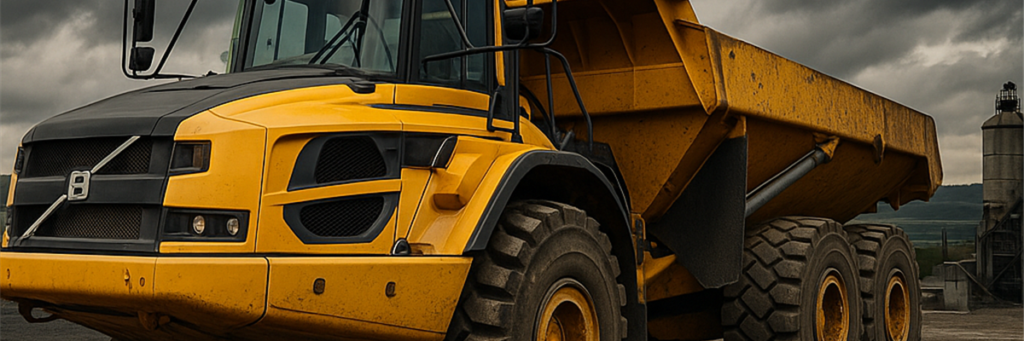
Volvo Construction Equipment has announced the closure of its Rokbak articulated hauler business, marking the end of a storied Scottish manufacturing legacy and signaling a major strategic shift in the global construction equipment market.

Rokbak’s Final Chapter: What Happened

On March 17, 2026, Volvo CE confirmed its decision to shut down the Rokbak articulated hauler division, citing “unsustainable profitability” as the primary driver. Rokbak, formerly known as Terex Trucks before Volvo’s acquisition, reported revenues of SEK 1.0 billion (approximately USD 95 million) in 2025 — but continued to operate at a loss.

The closure is expected to negatively impact Volvo CE’s operating income by approximately SEK 0.7 billion (USD 67 million) in Q1 2026 alone, underscoring just how deep the financial challenges ran.

120 Jobs at Risk in Motherwell, Scotland

The human cost is significant. Up to 120 employees at Rokbak’s Motherwell factory in Scotland face redundancy. The facility previously employed approximately 290 workers, with 320 staff globally. Volvo CE has pledged to work closely with unions, government representatives, and regulatory bodies to support affected workers through the transition.

Paul Douglas, Managing Director of Rokbak, acknowledged the difficulty of the decision: “We are grateful to our employees, customers, and partners, and we are committed to ensuring a smooth transition while honoring all of our commitments.”

What It Means for Existing Customers

For current Rokbak owners and operators, Volvo CE has confirmed that a dedicated support team will remain in place throughout the phase-out period and beyond. Aftermarket services — including parts supply, technical support, and training — will continue. Rokbak factory-approved parts carry a 2-year or 6,000-hour warranty, providing some reassurance to fleet operators.

Importantly, the Motherwell facility will not go dark entirely. Volvo CE plans to maintain it as a hub for designing and manufacturing its rigid hauler product line.

Industry Implications: A Sign of Broader Consolidation

Industry analysts view Volvo CE’s move as part of a broader recalibration sweeping the global construction equipment sector. Rising costs, supply chain disruptions, and geopolitical trade tensions are forcing OEMs to consolidate product lines and focus on scalable, profitable platforms.

The decision comes at a particularly turbulent time for international equipment trade. Recent US tariff policy shifts — including the Supreme Court’s February 2026 ruling invalidating IEEPA-based tariffs and the subsequent imposition of Section 122 tariffs — have created uncertainty across global supply chains. Section 232 tariffs on steel and aluminum, expanded to 50% in 2025, continue to weigh on equipment manufacturers who rely heavily on these raw materials.

Impact on the Used Equipment Market

The Rokbak closure has immediate implications for the used construction equipment market. With no new Rokbak articulated haulers being produced after the phase-out, existing machines could see increased residual values in the short term as supply tightens. For buyers in emerging markets — particularly in Africa, the Middle East, and Southeast Asia — well-maintained Rokbak units may represent compelling value propositions.

At the same time, operators who currently rely on Rokbak haulers may begin transitioning to alternative brands, creating a potential wave of used equipment hitting the secondary market. Major competitors including Caterpillar, Komatsu, and Bell Equipment are likely to benefit from this shift in brand loyalty.

Looking Ahead

Volvo CE’s decision to close Rokbak reflects a hard truth in today’s construction equipment landscape: niche product lines must either achieve scale or face the axe. For Volvo, the strategic bet is clear — concentrate resources on its core excavator, wheel loader, and rigid hauler platforms while exploring next-generation technologies like autonomous operation and electrification.

For the wider industry, the Rokbak closure serves as a reminder that even established brands with decades of heritage are not immune to the pressures of a rapidly evolving market. Companies that fail to adapt their portfolios risk being left behind.

Prima Excavator continues to monitor developments in the global construction equipment market. For buyers seeking quality used excavators and heavy machinery, contact our team for expert guidance on navigating today’s evolving equipment landscape.