
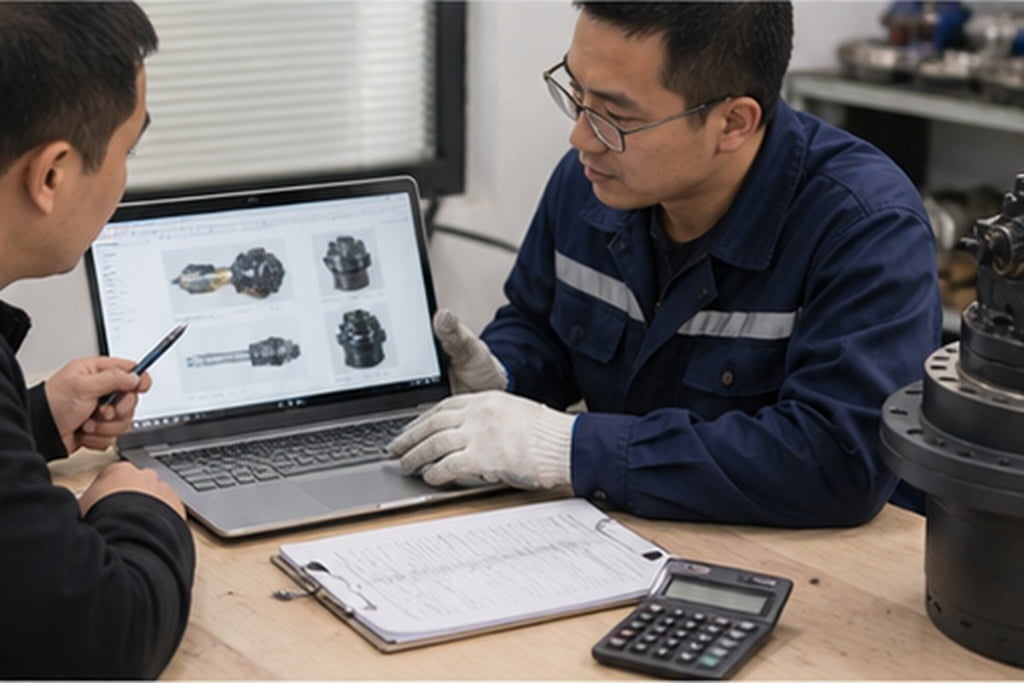
Before ordering a Komatsu PC220 final drive from China, buyers should confirm the excavator model and serial range, old final-drive photos, part number if available, mounting face, bolt pattern, pilot diameter, hydraulic ports, hose layout, rotation direction, condition grade, warranty boundary and export packing proof.
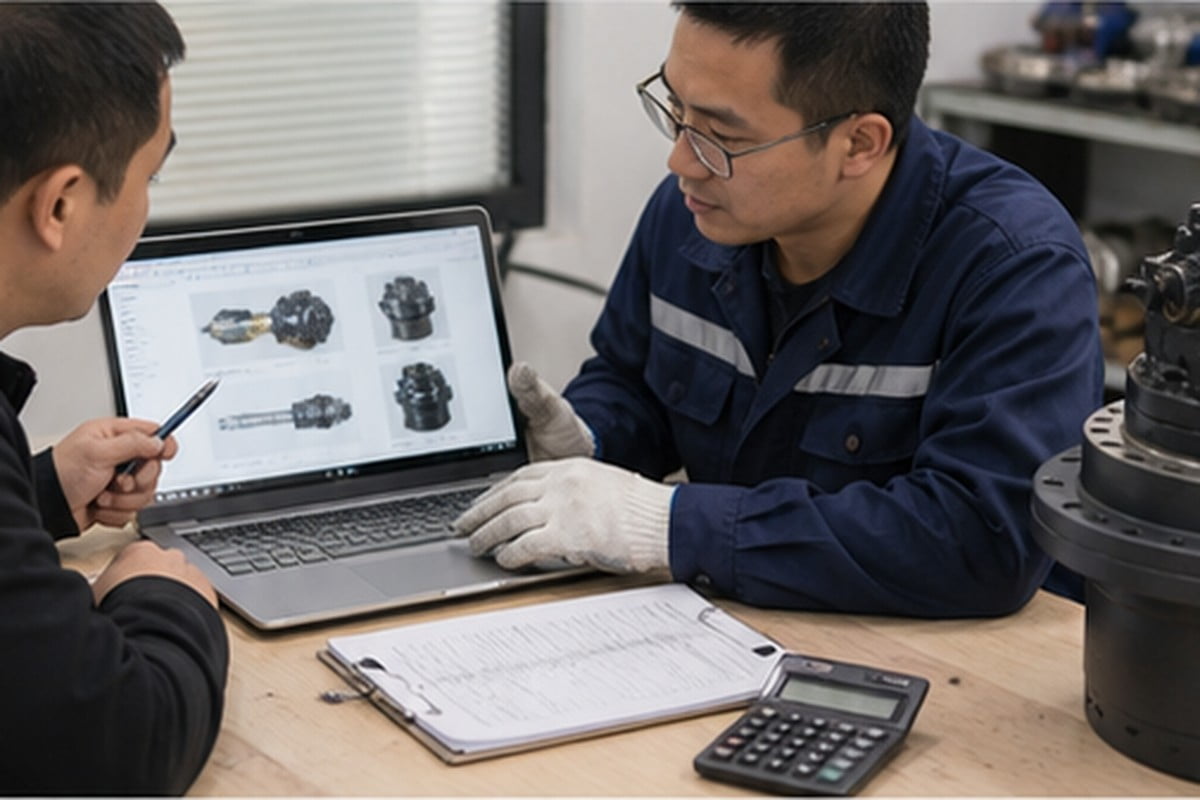
This PRIMA guide uses run `50` evidence for pc220 komatsu, komatsu pc220, komatsu final drive and komatsu final drive motor. It supports PRIMA’s Komatsu excavator parts buyer guide, final drive buyer guide, travel gearbox support page and excavator parts supplier hub.
Quick answer: what evidence is needed for a Komatsu PC220 final drive quote?
A Komatsu PC220 final drive quote should not rely on model name alone. Buyers should send the machine serial range, old final-drive photos, part number tag if available, mounting face, bolt pattern, pilot diameter, hydraulic port layout, hose orientation, sprocket-side photos and failure symptoms. PRIMA should confirm whether the option is OEM, aftermarket, used or rebuilt, and show packing with capped ports, shaft protection and crate support. A final drive should not be approved for order until fitment evidence and warranty boundaries are documented.
Buyer Summary
- This page is for buyers checking PC220 final drive or travel motor replacement options before ordering.
- Model name alone is not enough; serial range, old-part photos and measurements reduce wrong-fit risk.
- Condition grade and warranty boundary must be separated for OEM, aftermarket, used and rebuilt options.
- Packing proof should protect ports, shaft, seals and heavy gearbox surfaces during export.
What should buyers send before PRIMA quotes a PC220 final drive?
The quote should begin with machine identity and old-part evidence.
PC220 is a useful model clue, but excavator parts can vary by serial range, market, component supplier and previous repair history. The buyer should send machine model, serial plate, old final-drive photos, part number tag if visible, failure symptoms and destination. If the old component is still installed, photos should show the motor side, sprocket side, hose routing and mounting area.
PRIMA should keep those inputs in the quote file before comparing options. This prevents the common problem where two suppliers quote different final drives under the same model name. The final quote should explain which evidence was used and which details still need confirmation.
| Buyer input | Evidence | Risk controlled |
|---|---|---|
| Machine identity | Model and serial plate | Wrong serial-range part |
| Old part | Photos of final drive, tag and hose layout | Wrong mounting or port layout |
| Failure symptom | Weak travel, leakage, noise or no drive | Unclear replacement scope |
How are mounting face, ports and rotation checked?
Final drive fitment depends on physical interfaces, not only search keywords.
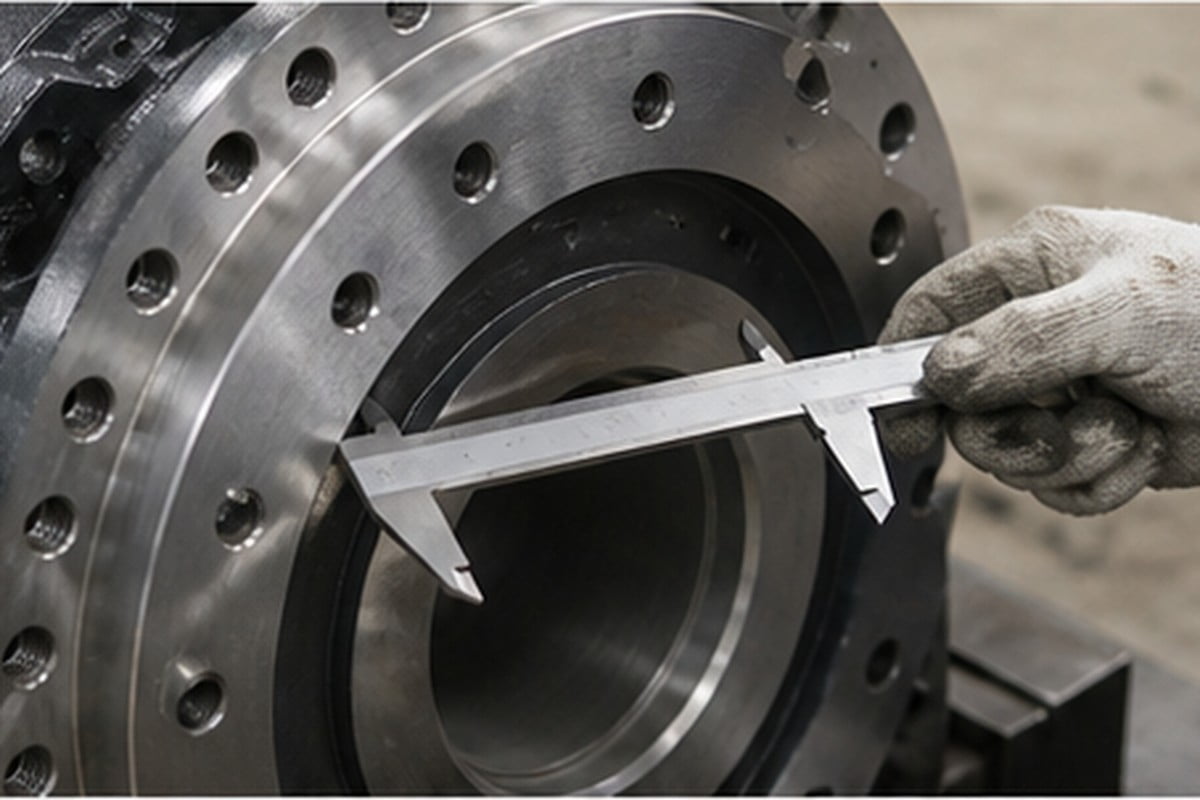
The mounting face, bolt count, pilot diameter, sprocket interface, hydraulic ports, hose orientation and drain/plug positions should be visible. Buyers should photograph the old part square-on when possible. If measurements are needed, a ruler or caliper photo is more useful than a written number alone.
Rotation direction and motor configuration should be checked against the old unit and machine behavior. If the final drive is supplied as a motor plus gearbox assembly, PRIMA should clarify whether the buyer needs the complete assembly or only a subcomponent. This avoids overbuying or incomplete replacement.
| Fitment point | Proof | Buyer decision |
|---|---|---|
| Mounting | Bolt pattern and pilot diameter | Confirms mechanical fit |
| Hydraulic ports | Port layout, hose orientation and drain points | Controls connection mismatch |
| Assembly scope | Motor, gearbox or complete final drive | Avoids wrong order scope |
How should OEM, aftermarket, used and rebuilt options be compared?
Each condition grade needs a different evidence and warranty boundary.
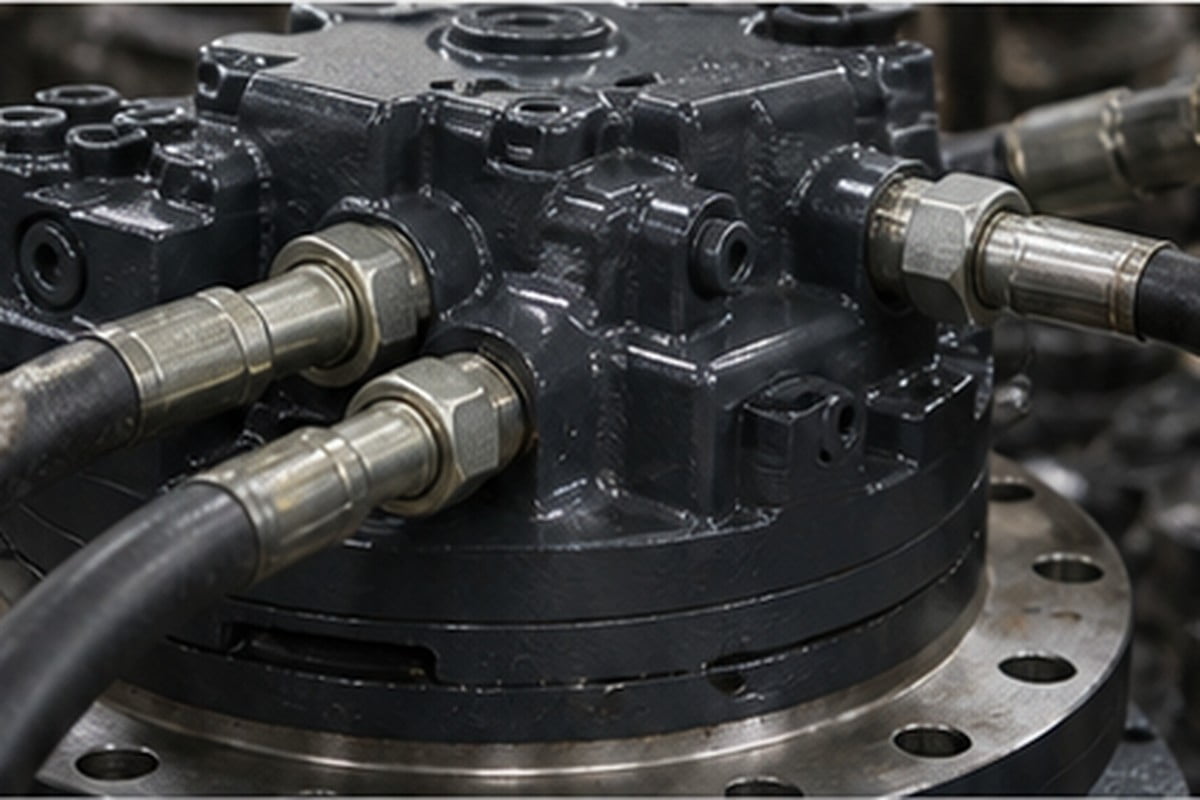
OEM and aftermarket options should be checked for model coverage, supplier traceability and packing condition. Used and rebuilt final drives need more evidence: current photos, leakage checks, gear or motor condition notes, replaced seals or bearings if known, testing status and warranty boundary. A low price should be treated carefully if the supplier cannot explain condition.
PRIMA should separate price, condition, delivery time and warranty in the quote table. Buyers should avoid comparing a used component against a new aftermarket option as if they were the same risk. The best quote is transparent about what is confirmed and what remains conditional.
| Option | Evidence needed | Main caution |
|---|---|---|
| OEM / aftermarket | Model coverage and supplier confirmation | Serial or port mismatch |
| Used | Current photos, leakage and condition notes | Unknown life remaining |
| Rebuilt | Repair scope, test status and warranty boundary | Unclear rebuild quality |
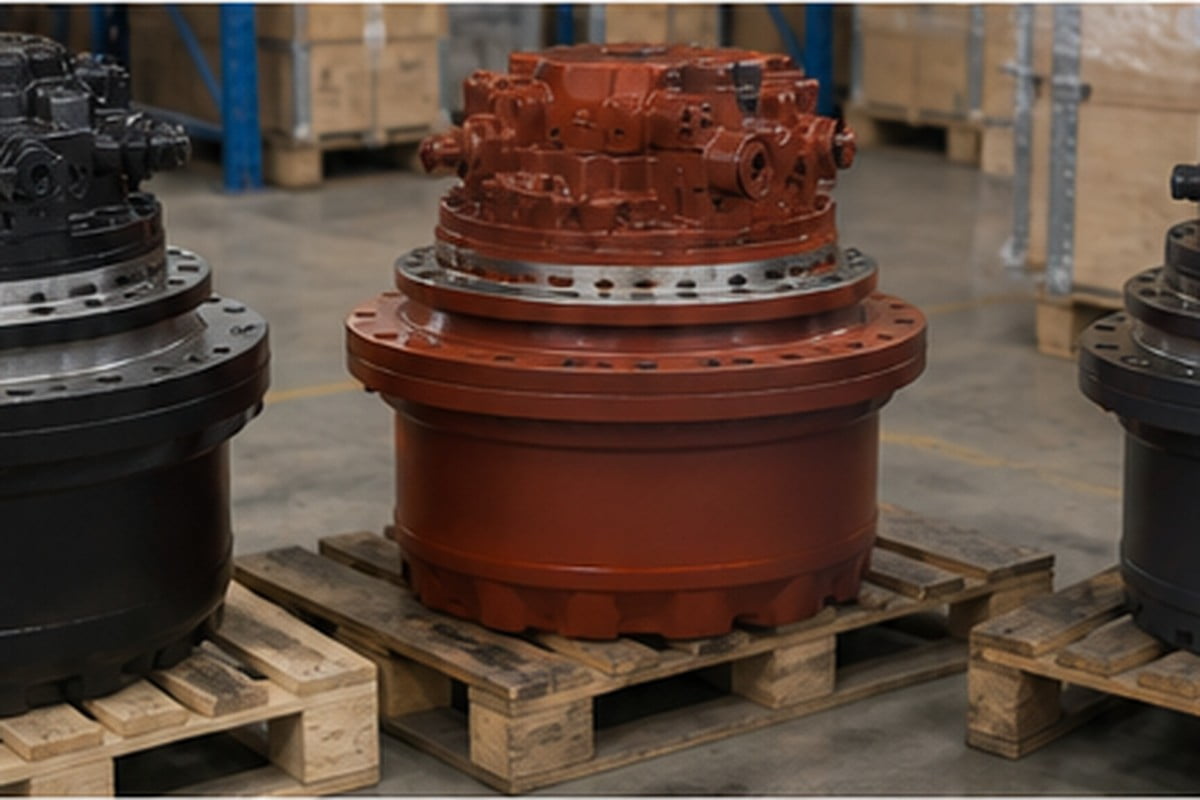
What packing proof should be requested before shipment?
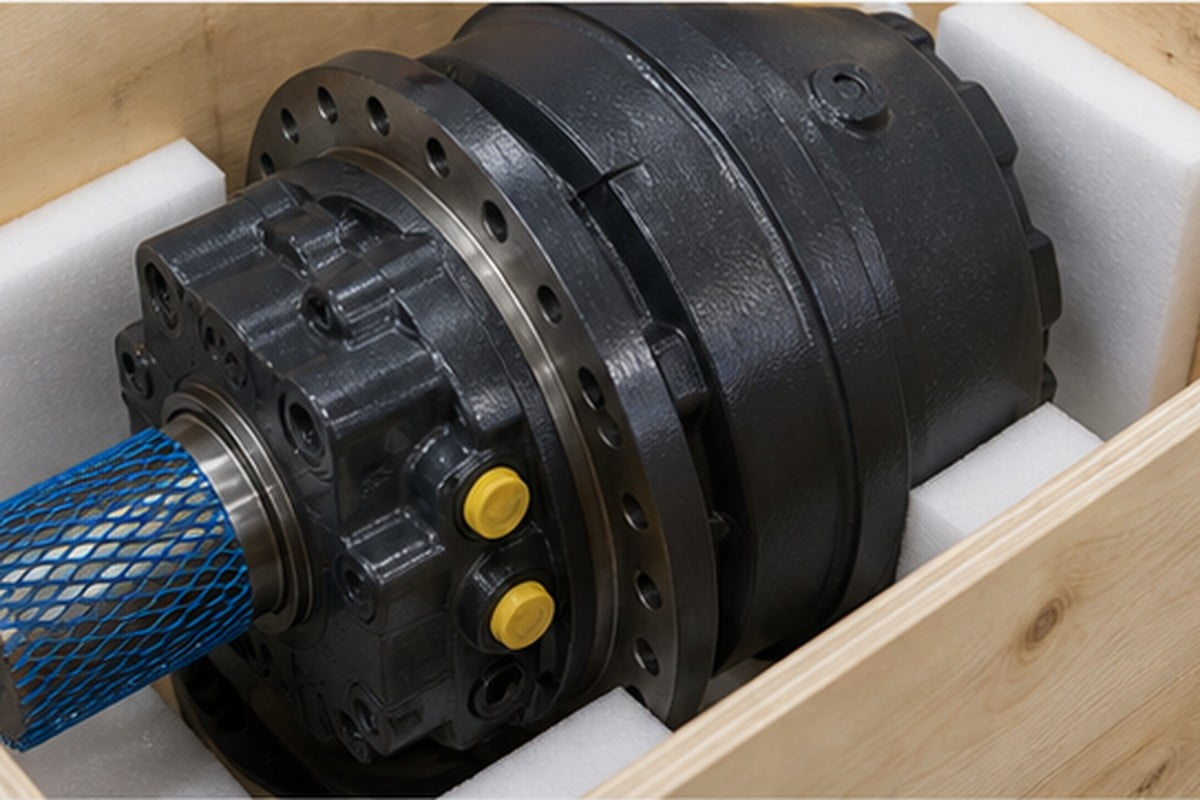
A heavy final drive needs protection for ports, shaft, seals and crate movement.
Final drives are dense, oily and easy to damage if packed loosely. Buyers should request capped ports, shaft protection, wrapped machined surfaces, absorbent or moisture protection when needed, strong crate base and photos showing the unit fixed in place. If several components ship together, each item should remain identifiable.
Packing photos should be saved with the quote file, invoice and shipment record. When the part arrives, the buyer can compare the received component and packing against the photos. This also helps PRIMA resolve questions if a port cap, plug or accessory is missing.
| Packing item | Proof to request | Protection value |
|---|---|---|
| Ports | Caps or plugs visible | Prevents contamination |
| Shaft / face | Protective wrap and padding | Reduces seal or surface damage |
| Crate | Fixed unit and strong base | Controls transit movement |
Evidence Table
| Quote stage | Required proof | Risk controlled |
|---|---|---|
| Identify | Model, serial and old final-drive photos | Wrong PC220 variant |
| Measure | Mounting, bolt pattern, pilot diameter and port layout | Fitment mismatch |
| Select | OEM, aftermarket, used or rebuilt condition evidence | Price-risk confusion |
| Ship | Capped ports, shaft protection and crate photos | Export damage |
Key Facts For PRIMA Buyers
- Run 50 included 18 checked Komatsu PC220 / final-drive rows across 6 distinct keywords and 5 domains.
- A PC220 final drive quote should be based on machine serial and old-part evidence, not model name alone.
- Port layout, rotation direction and mounting dimensions are high-risk final-drive fitment checks.
- PRIMA should not promise compatibility until the quote file contains enough photos and measurements.
Buyer FAQ
Is PC220 model information enough for a final drive quote?
No. PRIMA should also check serial range, old-part photos, mounting face, ports, rotation and condition requirements.
Should buyers choose used or rebuilt final drives?
They can, but only if condition photos, repair scope, test status and warranty boundary are clear.
What is the most common final-drive quote risk?
Wrong mounting, port layout, rotation or assembly scope can create expensive replacement delays.
Why does packing evidence matter?
Final drives are heavy and sensitive to port contamination, shaft damage and crate movement during export.
Conclusion
A Komatsu PC220 final drive order should be approved only after fitment, condition and packing evidence are documented. PRIMA's role is to turn the buyer's old-part information into a traceable quote file before shipment.
References
- OSHA construction safety: General heavy-equipment safety reference.
- ISO hydraulic fluid power vocabulary: General hydraulic terminology reference.
- U.S. CBP importer guidance: General import-document responsibility reference.