
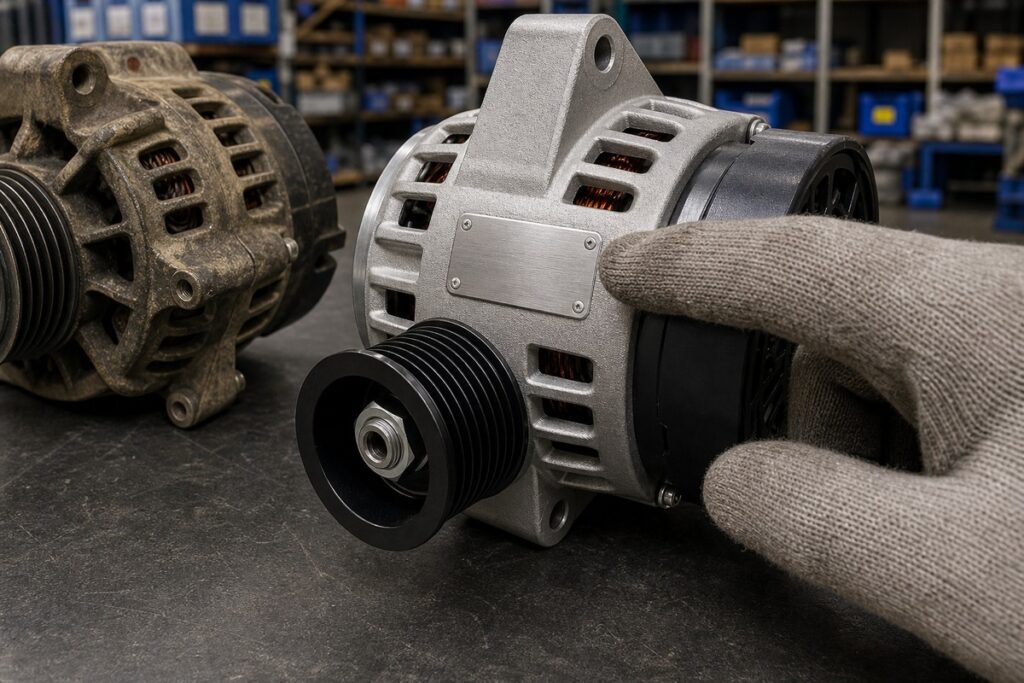
Buyers should check an excavator alternator before ordering from China by confirming the old unit, machine and engine context, voltage, amp rating, pulley diameter, belt groove count, mounting-ear position, plug and terminal layout, ground path, bench output evidence and packing protection. The safest quote does not rely on excavator model alone because electrical packages, harness repairs and engine variants can change the alternator that fits. PRIMA should also separate charging-system diagnosis from fitment: blown fuses, wiring faults, weak batteries or loose grounds can imitate alternator failure.
An alternator looks like a simple bolt-on part, but a small mismatch can stop installation: wrong pulley offset, wrong plug, wrong amperage, different mounting ear or a terminal that points into the engine frame. Importers should treat the old alternator as the main evidence source before approving payment.
This page connects PRIMA’s excavator engine parts quote checklist with practical electrical fitment checks. It also supports buyers who already reviewed the starter motor inspection guide and need the same proof discipline for charging parts.
Buyer Summary
- Best for importers, repair shops and fleet buyers replacing charging-system parts on used excavators.
- Require old alternator photos, voltage, amperage, pulley dimensions, belt groove count, mounting-ear layout and connector evidence.
- Check battery, fuses, wiring, regulator symptoms and ground condition before blaming the alternator.
- Use bench output and export packing proof to reduce receiving disputes and installation delay.
Quick answer: what proves an excavator alternator is safe to order?
A safe excavator alternator order starts with the removed alternator on the bench. Buyers should send photos from every side, machine model, engine model, part number or casting marks, voltage, amp rating, pulley diameter, belt groove count, pulley offset, mounting-ear spacing, plug shape, terminal direction and any harness repair history. PRIMA should ask whether the issue is no charge, overcharge, warning light, battery drain, dim lights or hard cranking. If the symptom is uncertain, the quote should mention that battery, fuse, wiring and ground checks are still required. Before shipment, save bench output evidence, clean terminal photos and foam-protected packing.
Which alternator identity details should come before price?
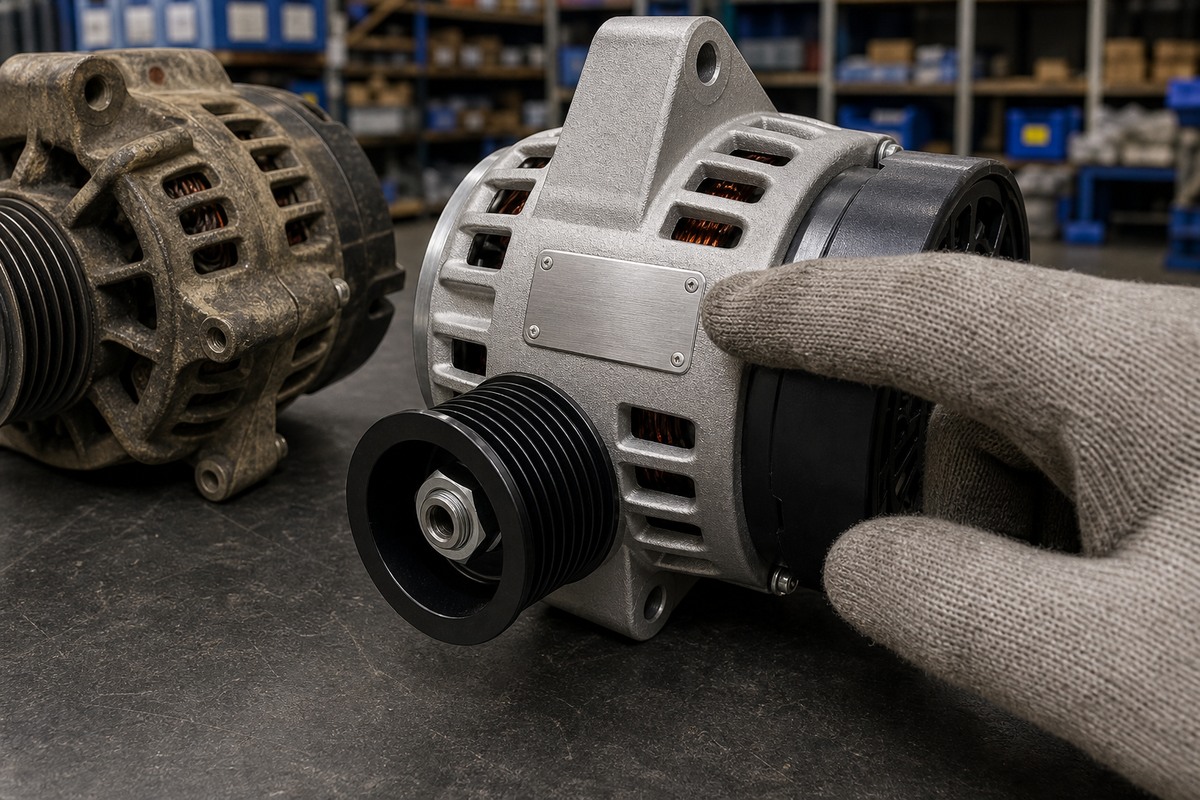
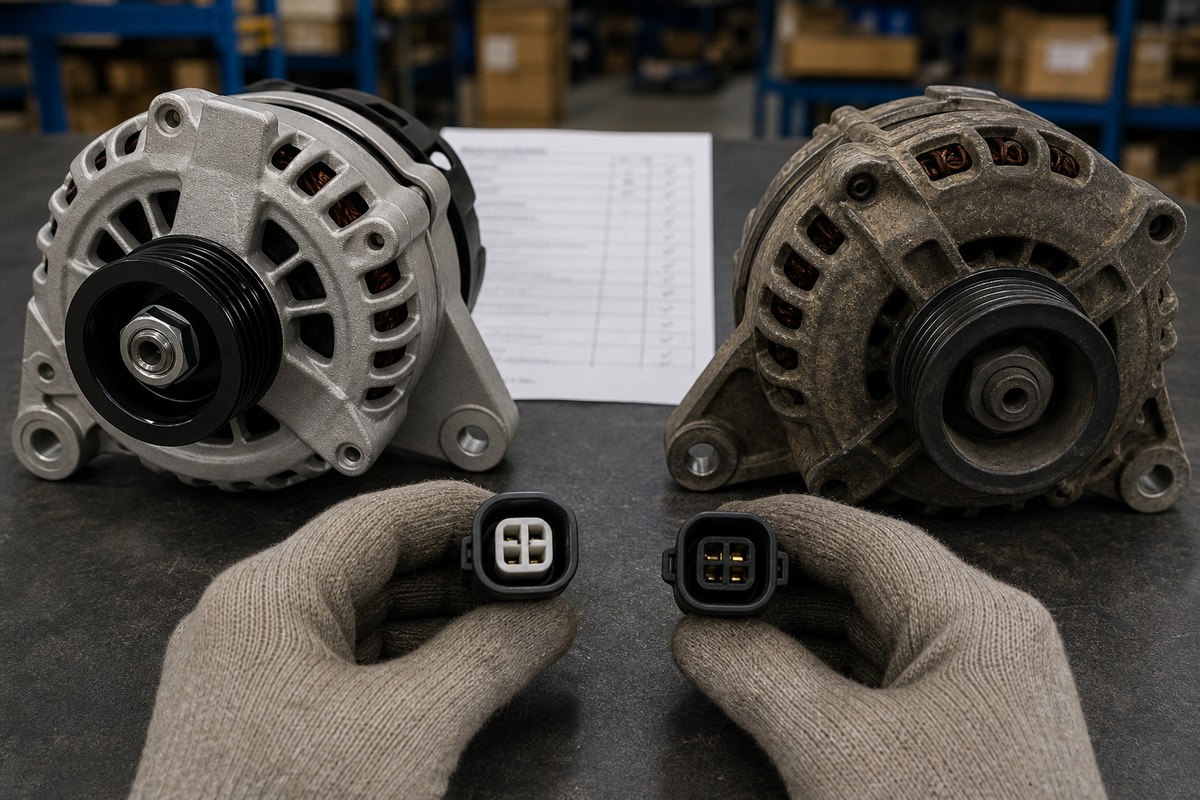
The old alternator is the strongest matching evidence. A supplier photo may look close, but the real fit depends on housing clock position, mounting ears, plug angle and pulley alignment. Buyers should photograph the front, rear, side, pulley face, label area and harness connector before the repair shop removes or discards the old unit.
PRIMA should keep the quote conditional when only the excavator model is available. Engine variants, previous repairs and local harness modifications can change the alternator. A conditional quote with a clear evidence request is more useful than a fast quote that later needs a return.
| Check | Evidence to save | Buyer value |
|---|---|---|
| Old unit photos | Front, rear, pulley, plug, terminals and label/casting area | Creates an auditable match |
| Machine context | Excavator model, engine model and serial context when available | Reduces wrong-family selection |
| Condition need | New, aftermarket, used or rebuilt boundary | Prevents expectation disputes |
How should buyers confirm pulley, belt and mounting fit?
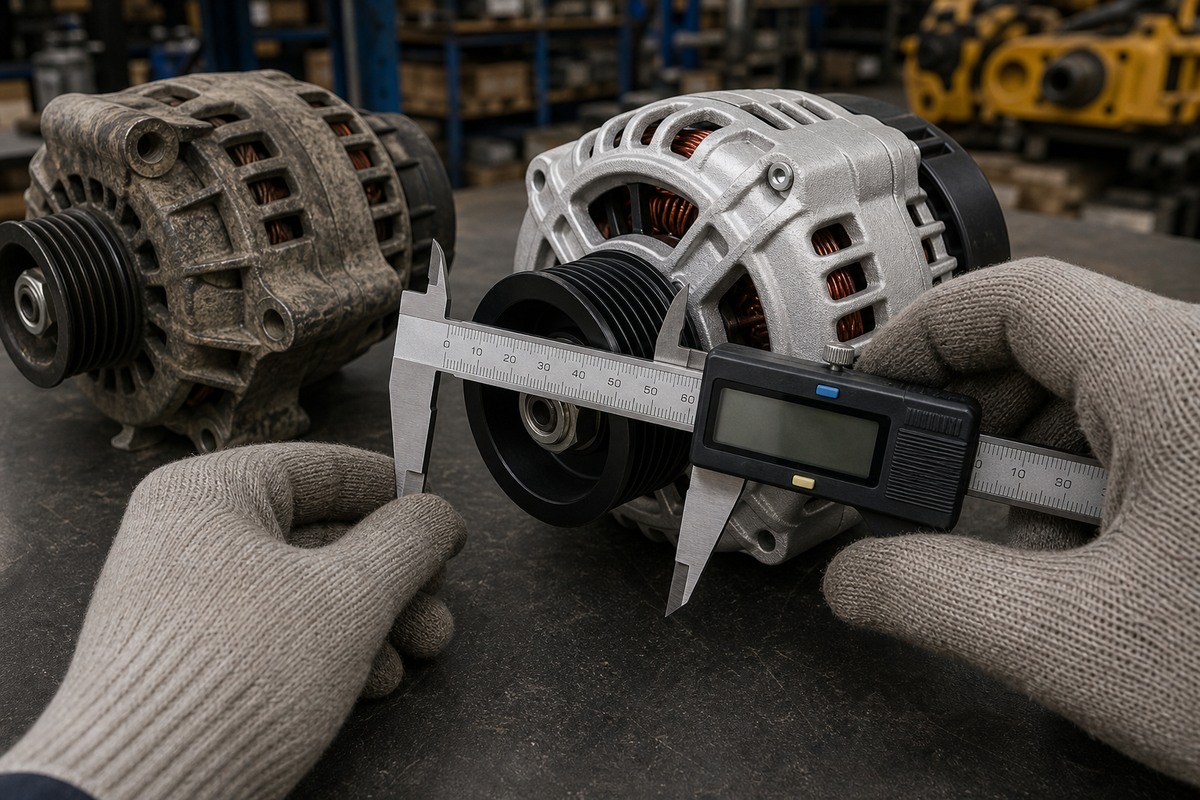
Pulley mismatch is one of the easiest errors to miss in a catalog comparison. Buyers should check pulley diameter, groove count, belt type and offset from the mounting face. A pulley that is only a few millimeters off can cause belt noise, charging instability or rapid belt wear.
Mounting ears also need measured proof. Bolt-hole spacing, ear thickness and housing angle decide whether the alternator sits correctly against the engine bracket. Photos with a caliper or ruler are worth more than a copied part-number claim when the old label is missing.
| Check | Evidence to save | Buyer value |
|---|---|---|
| Pulley | Diameter, groove count, belt type and offset | Controls belt alignment |
| Mounting ears | Bolt spacing, ear thickness and bracket face | Controls installation fit |
| Clearance | Rear terminal direction and housing clock position | Avoids frame or hose interference |
What charging-system diagnosis should be separated from fitment?
A warning light or dead battery does not always prove the alternator is bad. DENSO technical guidance highlights checks such as fuses, fusible links, warning-lamp circuit, regulator behavior, wiring connections and battery condition before replacement. For an excavator, loose grounds, damaged harnesses and dusty engine bays add more failure points.
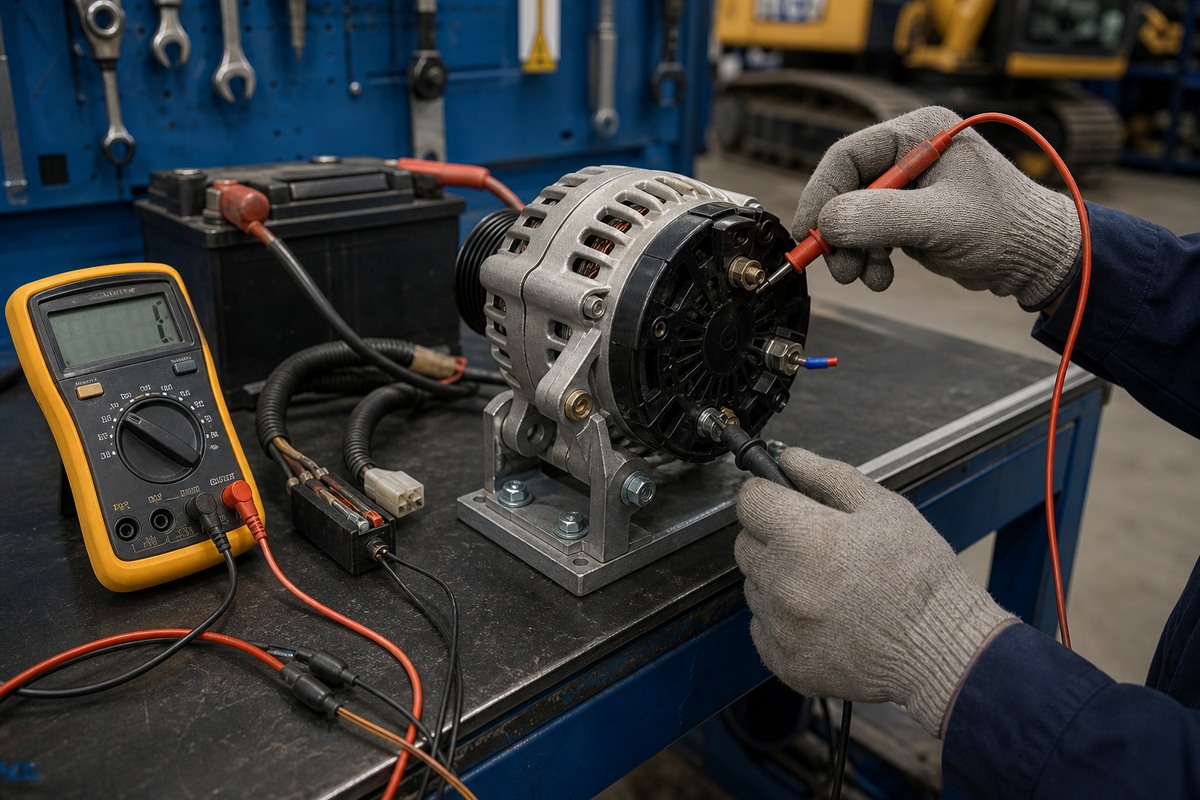
PRIMA can quote the alternator while still recording diagnosis uncertainty. Useful buyer evidence includes battery voltage, charging voltage, fuse condition, belt tension, connector corrosion and whether the problem appears after warm operation. This protects both sides if the replacement part is correct but the machine still has a wiring issue.
| Check | Evidence to save | Buyer value |
|---|---|---|
| Battery and fuses | Voltage notes, fuse/fusible-link check and warning-lamp behavior | Separates power-supply faults |
| Harness | Plug corrosion, broken wires and ground strap photos | Controls repeat no-charge complaints |
| Bench output | Alternator output check before shipment | Supports the part condition claim |
Which packing proof protects the alternator during export?
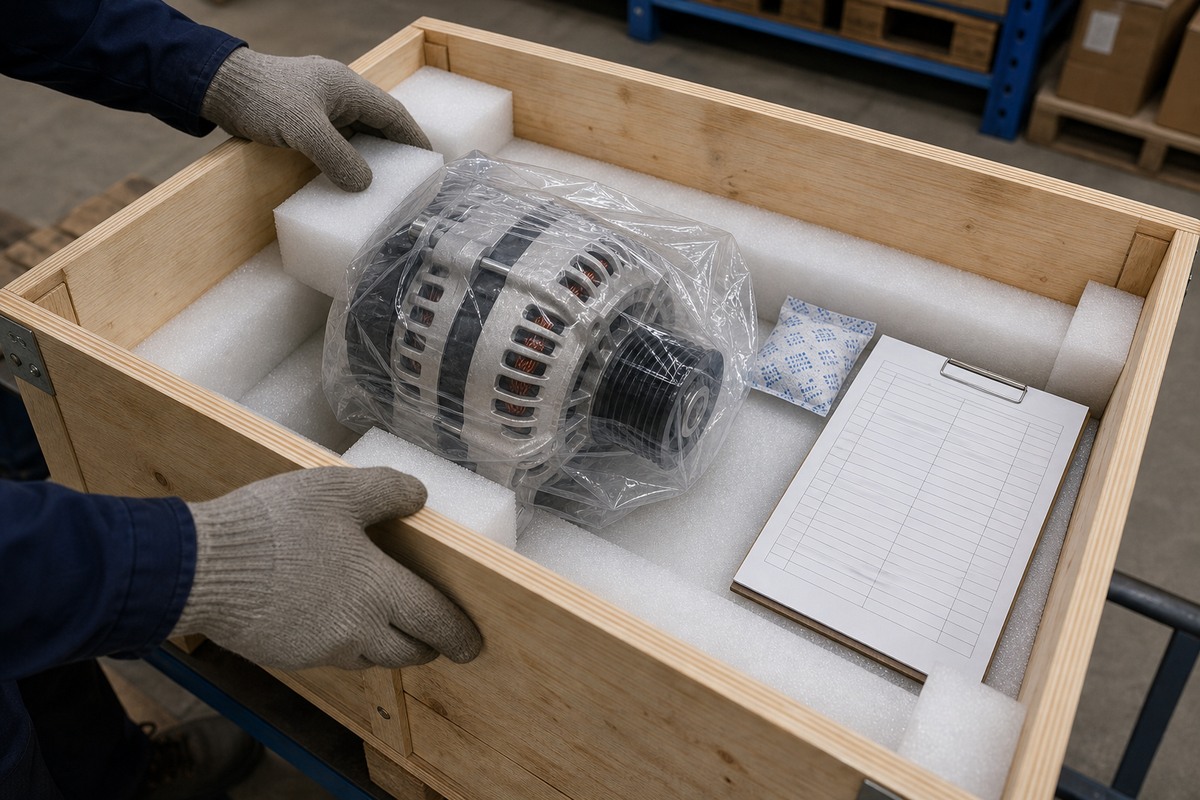
Alternators are dense, but the terminals, pulley and plug are still vulnerable. The unit should not move freely inside a carton or crate. Foam inserts, protected terminals, pulley protection and a clear document/photo set make receiving inspection easier.
When buyers order multiple electrical or engine parts in one shipment, each alternator should be traceable to the quote file. The packing photos should show the same part, condition, connector and paperwork that were approved before payment.
| Check | Evidence to save | Buyer value |
|---|---|---|
| Terminal protection | Caps, wrap and no loose metal contact | Prevents electrical damage |
| Pulley protection | Foam clearance around pulley and front housing | Avoids bent pulley or bearing impact |
| Traceability | Final packing photos tied to quote and media file | Reduces receiving disputes |
Evidence Table
| Decision point | Evidence PRIMA should save | Risk controlled |
|---|---|---|
| Fitment | Old-unit photos, voltage, pulley, mounting ears and connector layout | Wrong alternator or belt mismatch |
| Diagnosis | Battery, fuse, warning-light, regulator, harness and ground evidence | Replacing a good alternator |
| Export | Bench output, protected terminals, protected pulley and crate/carton photos | Transit damage and receiving dispute |
Key Facts For PRIMA Buyers
- Excavator model alone is not enough to confirm an alternator.
- Pulley offset, groove count and mounting-ear spacing can decide fitment.
- No-charge symptoms can come from fuses, wiring, battery, regulator or ground faults.
- PRIMA should avoid official/OEM claims unless written evidence exists for the exact option.
- Final packing should protect terminals, plug, pulley and paperwork.
Buyer FAQ
Can I order an excavator alternator by machine model only?
It is risky. Use the old alternator photos, engine context, voltage, pulley and connector evidence before confirming.
What if the warning light stays on after replacement?
Check fuses, wiring, battery condition, ground straps, belt tension and regulator circuit before assuming the new alternator is wrong.
Is amp rating important?
Yes. A lower-output alternator may fit physically but fail to support the machine’s electrical load.
Should PRIMA provide bench-test evidence?
For used or rebuilt units, bench output evidence is strongly recommended. For new aftermarket units, final terminal and packing proof should still be saved.
Can PRIMA claim the alternator is OEM?
Only with current written proof for the exact channel. Otherwise describe it as new, aftermarket, used or rebuilt with fitment evidence.
Useful PRIMA Links
- Excavator parts supplier buyer guide
- Excavator engine parts quote checklist
- Excavator starter motor inspection guide
- Used excavator engine inspection guide
Conclusion
The safest PRIMA order is the one tied to saved evidence: machine identity, old-part photos, measurements, diagnosis notes, condition boundary, packing proof and a clear note about what remains uncertain. Buyers should compare the evidence file before payment, before shipment and again when the machine or part arrives.
References
2026-06-14 PRIMA evidence update
Adds same-cluster electrical harness and belt-drive cooling links from the alternator support page.