
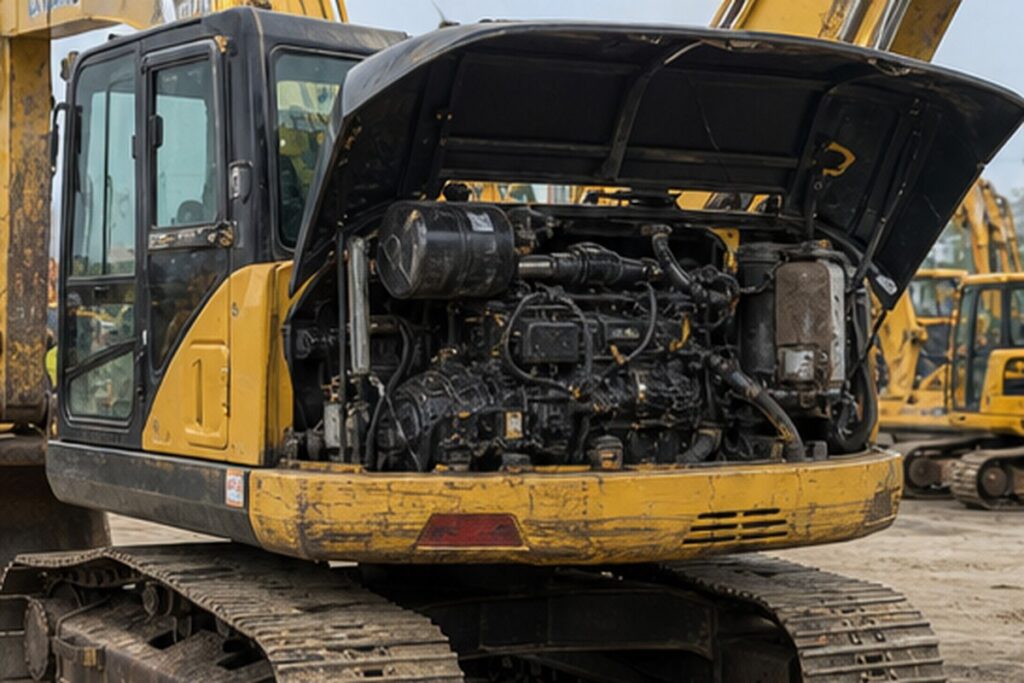
Buyers should inspect a used excavator engine by checking cold-start behavior, smoke, abnormal noise, oil leaks, radiator, belts, hoses, filters, hour meter consistency, engine serial evidence, idle stability, load response and pre-shipment photos before importing from China.
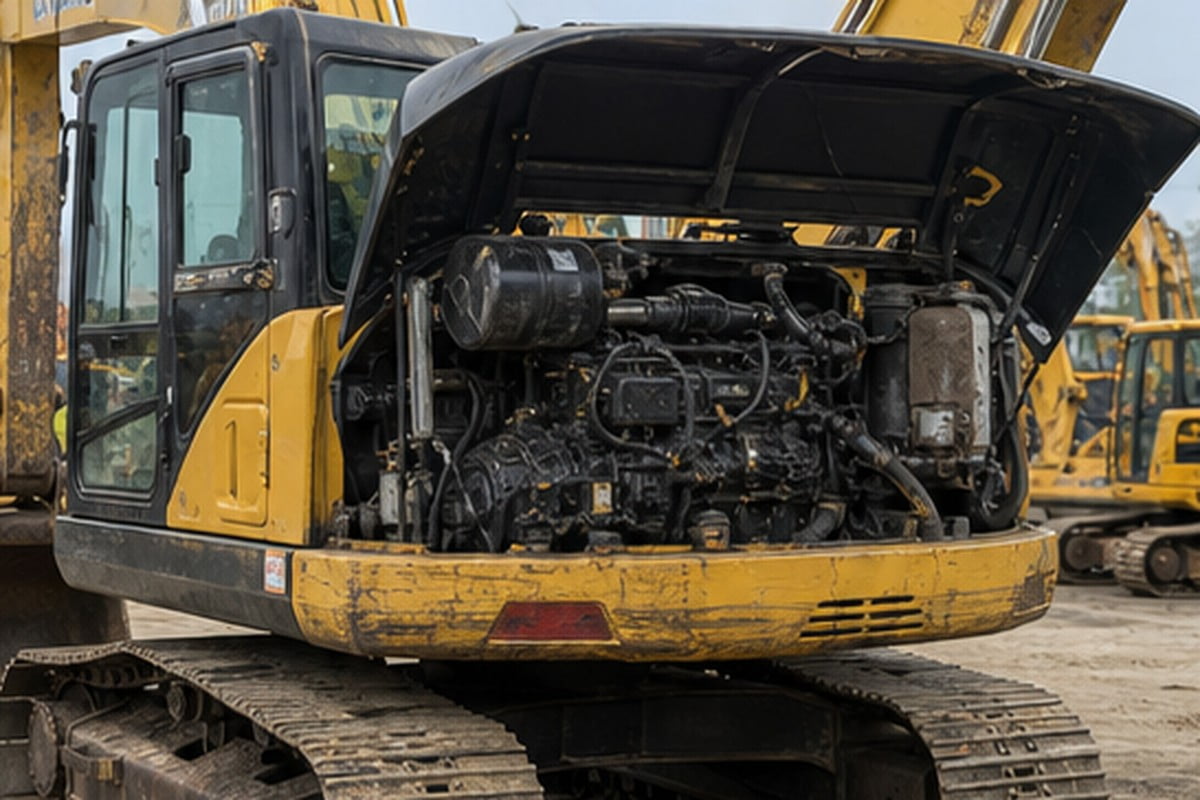
This page strengthens PRIMA’s used-machine inspection path. It connects the used excavator inspection checklist, pre-shipment inspection guide, engine parts quote checklist and shipping proof checklist.
Quick answer: what should buyers check in a used excavator engine?
A used excavator engine inspection should record cold start, warm idle, smoke color, oil leaks, coolant condition, radiator, belts, hoses, filters, abnormal noise, blow-by signs, hour meter consistency and engine serial evidence. Buyers should request current video, engine-bay photos and final pre-shipment photos for the exact machine. PRIMA should not call a used machine ready to work unless the visible engine evidence, hydraulic movement, undercarriage and loading proof support that claim. Engine inspection is part of a full machine file, not a standalone guarantee.
Buyer Summary
- This page is for buyers comparing used excavators before import and needing stronger engine proof.
- Cold-start and warm-running evidence are more useful than clean listing photos.
- Engine condition should be compared with hours, hydraulic response and undercarriage wear.
- No ready-to-work or low-hour claim is made without exact-machine evidence.
What should the cold-start video show?
Cold-start evidence helps reveal smoke, weak battery, rough idle and delayed response.
The buyer should request a video that begins before the engine is started. It should show the machine, hour meter area, engine sound, exhaust, warm-up time and idle stability. A cut video that starts after warm idle is weaker evidence.
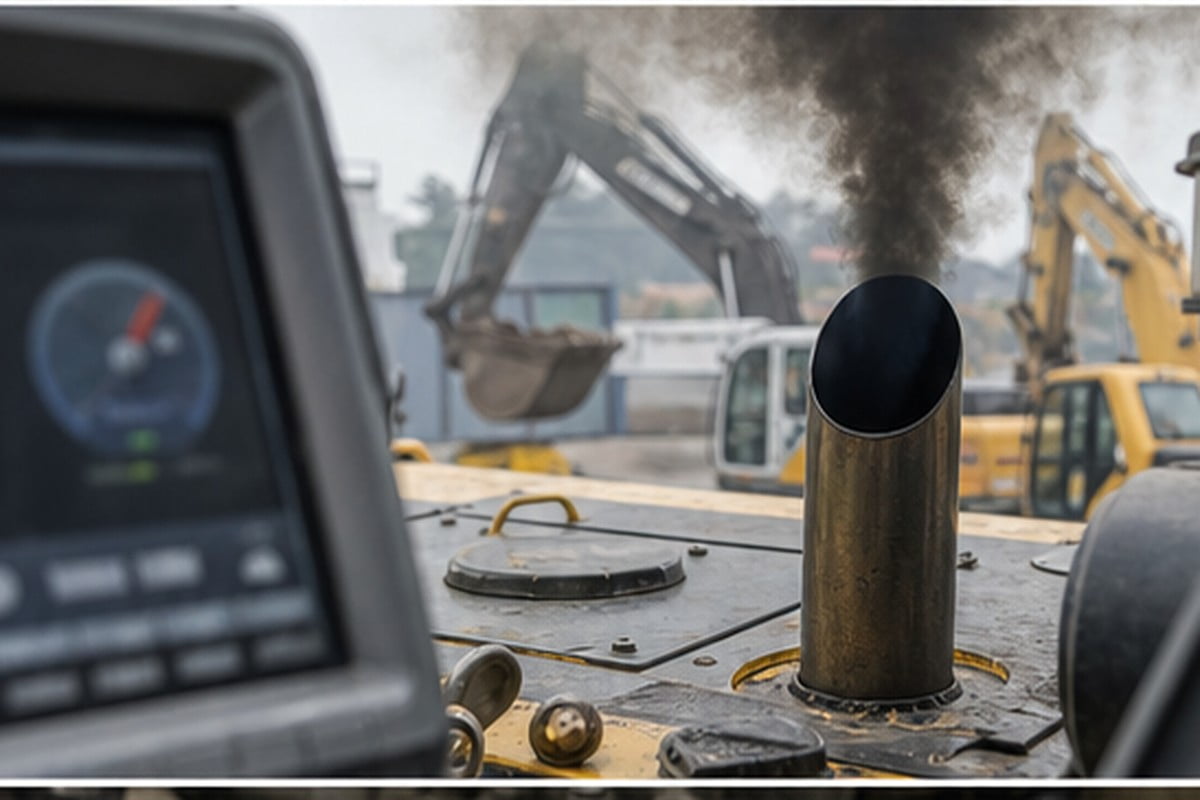
White, black or blue smoke should be recorded and explained. Some smoke may be normal at start-up, but heavy smoke, knocking, unstable idle or visible leaks should change the price, repair plan or rejection decision.
| Check | Evidence | Decision value |
|---|---|---|
| Cold start | Video from before ignition | Shows start behavior |
| Smoke | Exhaust observation | Signals fuel/oil/coolant risk |
| Noise | Audio from engine bay | Flags internal wear |
Which engine-bay photos should PRIMA request?
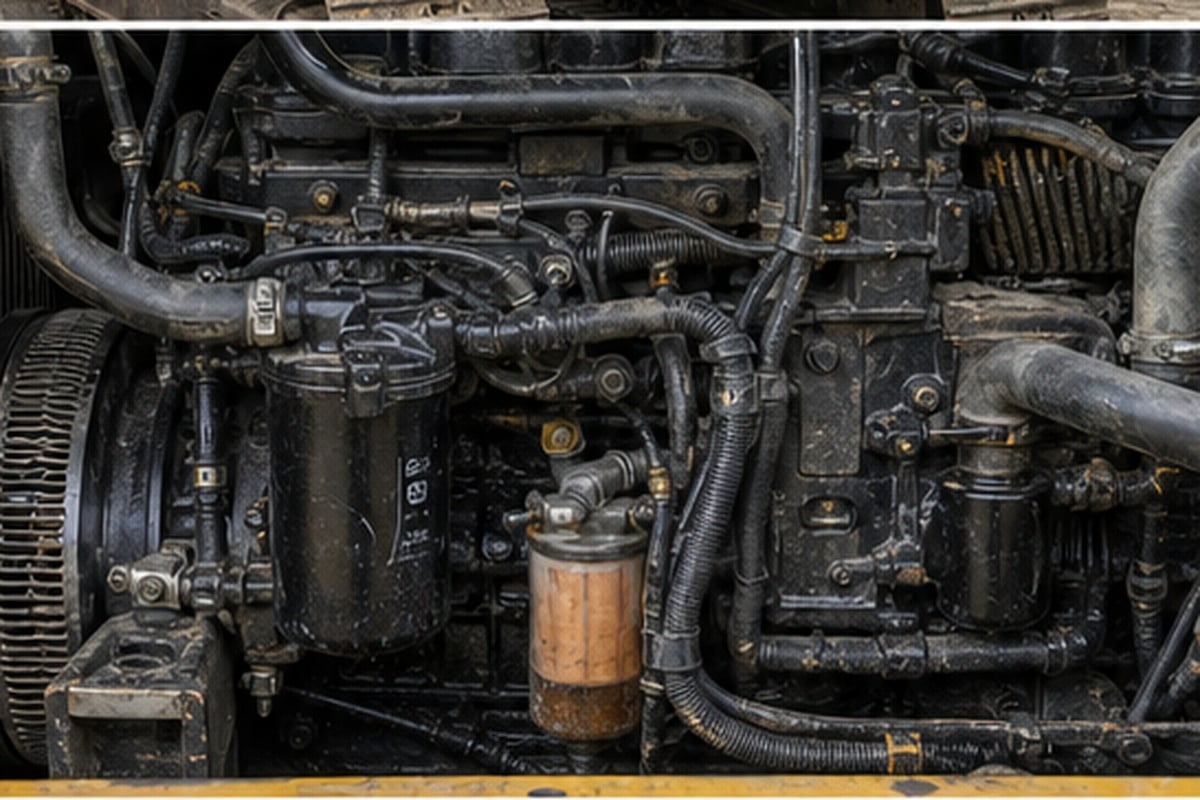
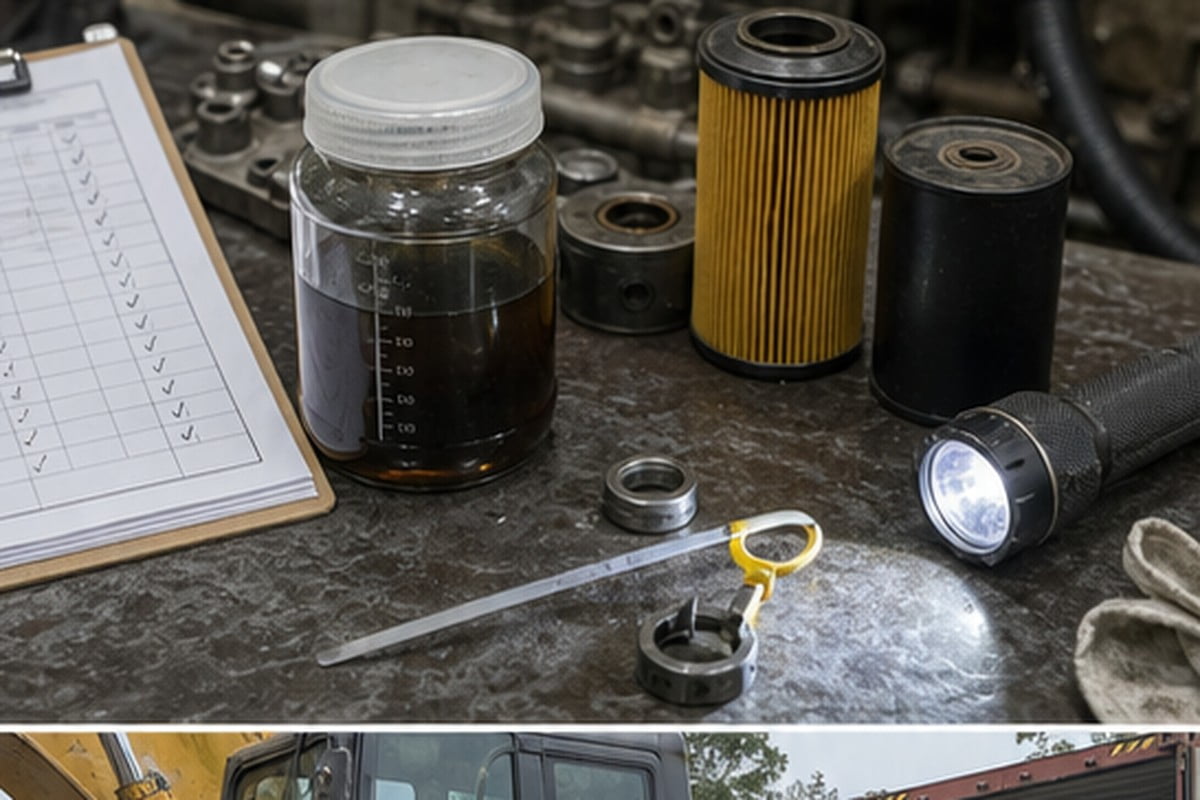
Engine-bay photos should show leaks, hoses, belts, filters, radiator and service access.
A used excavator can look attractive from outside while the engine bay shows oil leaks, cracked hoses, worn belts, blocked radiator fins or missing covers. PRIMA should request wide engine-bay photos plus close-ups of leak points, radiator, filters, belts, fan area and engine serial or casting area when visible.
These photos help separate normal used condition from a repair risk. They also support later spare-parts matching if the buyer needs filters, hoses, belts or engine components after arrival.
| Photo area | What to see | Risk controlled |
|---|---|---|
| Leak points | Oil and coolant traces | Hidden repair cost |
| Radiator | Fins and hoses | Overheating risk |
| Serial area | Engine identity | Parts matching |
How should engine condition be compared with hours and machine wear?
The hour meter should be checked against physical wear and operation behavior.
Hour meters can be replaced, fail or be inconsistent with real machine wear. Buyers should compare hour reading with pedal wear, seat wear, lever condition, undercarriage wear, engine-bay condition and maintenance evidence. PRIMA should avoid treating hours as proof by themselves.
If an engine sounds healthy but undercarriage wear is severe, the buyer may still face high landed repair cost. If the engine has smoke or leaks but the price is low, the buyer should decide whether repair cost is acceptable before deposit.
| Evidence | Compare with | Reason |
|---|---|---|
| Hour meter | Cab and undercarriage wear | Checks consistency |
| Engine bay | Smoke and idle | Finds repair signs |
| Maintenance clues | Filters, hoses, oil | Supports risk estimate |
What should be verified before shipment?
The final inspection file should prove the same machine is loaded and exported.
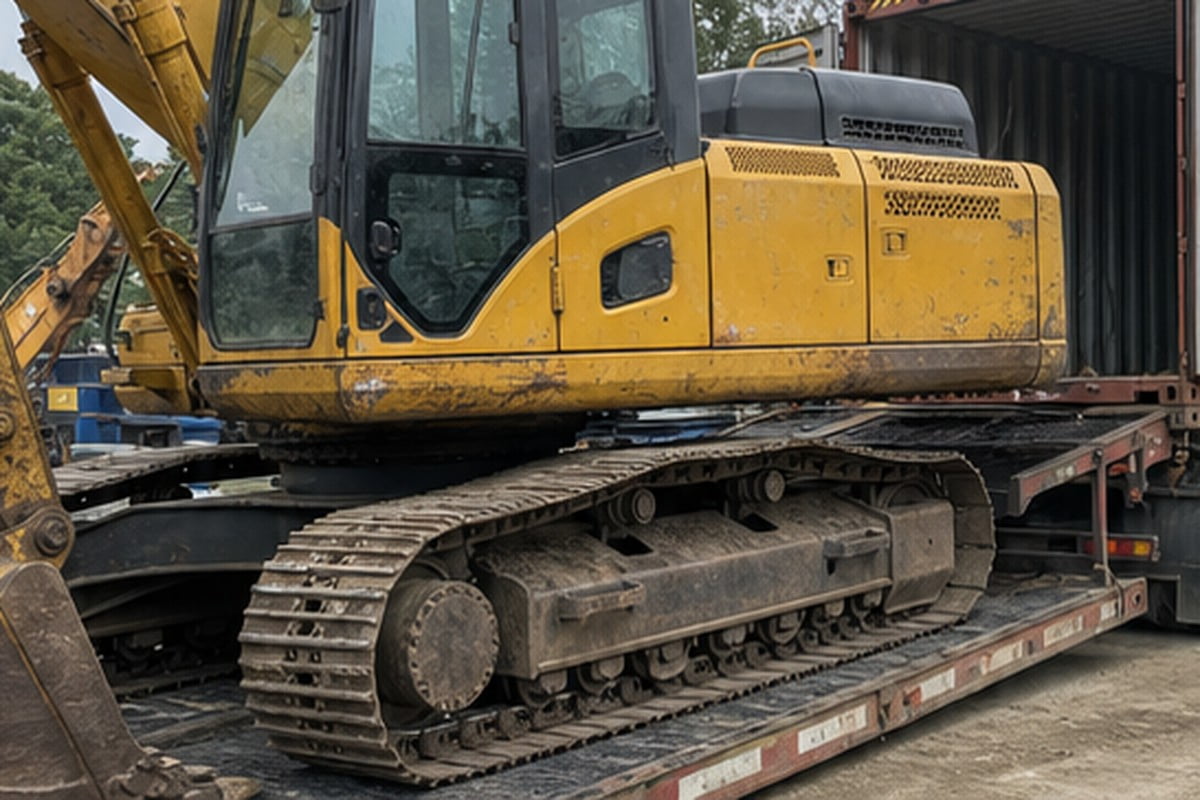
Before shipment, PRIMA should provide final walkaround photos, engine-bay photos, serial plate if available, loading photos and document plan. The buyer should compare these with the approved machine file.
If an engine issue is accepted as part of the deal, it should be written into the quote notes. This avoids disputes when the buyer expected a ready-to-work machine but the evidence only supported a repair candidate.
| Shipment proof | Evidence | Buyer value |
|---|---|---|
| Final walkaround | Same machine photos | Identity control |
| Engine photo | Condition before loading | Dispute prevention |
| Documents | Export and packing plan | Receiving check |
Evidence Table
| Buyer question | Evidence PRIMA should provide | Why it matters |
|---|---|---|
| Does the engine start cleanly? | Cold-start video and exhaust observation | Shows condition before warm-up |
| Are there leaks or overheating risks? | Engine-bay, radiator, hose and belt photos | Finds hidden repair cost |
| Are hours credible? | Compare hour meter with wear evidence | Reduces listing-risk |
| Is the shipped machine the same? | Final walkaround and loading photos | Connects inspection to export |
Key Facts For PRIMA Buyers
- Used excavator engine inspection should be part of a full exact-machine evidence file.
- Cold-start video is stronger than listing photos for engine condition.
- Hour meter data should be compared with physical wear and operation evidence.
- Final loading photos should match the inspected machine.
Buyer FAQ
Is a clean engine bay enough to approve a used excavator?
No. Buyers should also check cold start, smoke, noise, leaks, hours and machine wear.
What smoke color is risky?
Heavy blue, white or black smoke can indicate oil, coolant or fuel issues and should be reviewed by a mechanic.
Can PRIMA guarantee the engine condition?
PRIMA can provide inspection evidence, but used-machine condition claims must stay within what the exact evidence shows.
Why compare engine and undercarriage together?
A good engine with worn undercarriage can still create high landed repair cost.
Conclusion
Used excavator engine checks should be evidence-led. PRIMA's buyer file should record cold start, smoke, leaks, hours, wear and final shipment proof before the buyer approves import.
References
- U.S. CBP importer guidance: General import-document responsibility reference.
- UK HSE excavator safety notes: General excavator handling and safety context.