
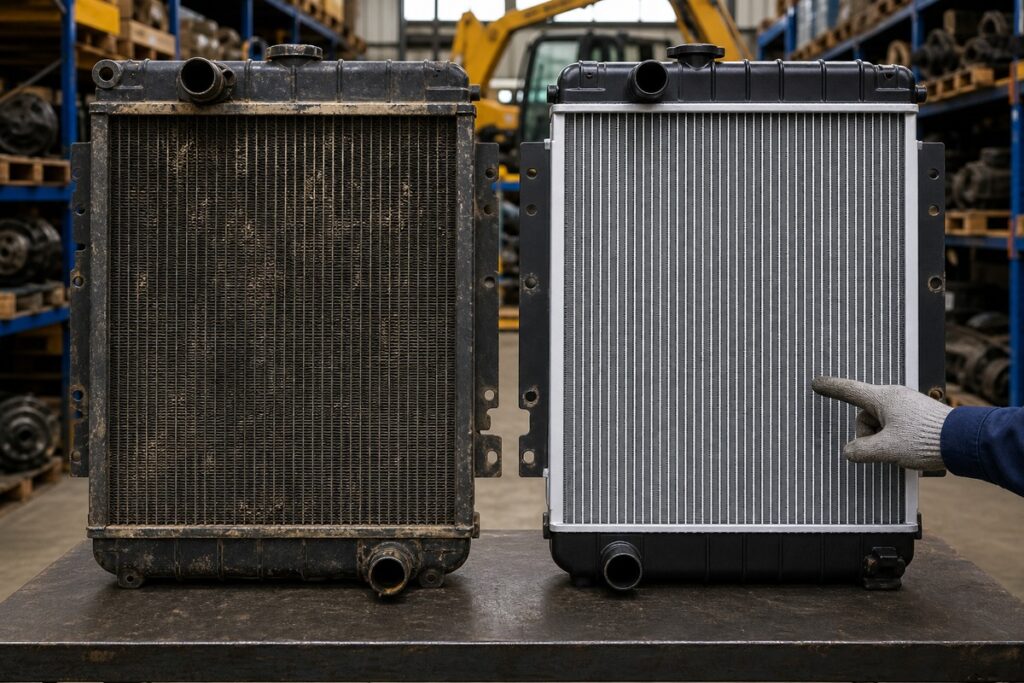
Buyers should check an excavator radiator before ordering from China by confirming the old radiator, core width, height and thickness, inlet and outlet direction, tank shape, bracket and mounting-hole spacing, cap or sensor positions, fin condition, pressure-test evidence and export packing. A radiator order should also separate replacement fitment from overheating diagnosis. Blocked fins, weak fan airflow, wrong coolant, hose leaks, damaged caps or oil cooler issues can all imitate radiator failure, so PRIMA should save evidence before approving the part.
A radiator is large enough to look obvious, but fitment errors still happen. Port direction, bracket position, shroud clearance and core thickness can change between similar excavator packages. Shipping damage is also common if fins and tanks are not protected.
This radiator checklist works with PRIMA’s oil cooler inspection guide and water pump guide. Together, they help buyers handle cooling-system parts as an evidence file, not only a price comparison.
Buyer Summary
- Best for importers and repair buyers replacing excavator radiators, cooling packages or damaged cores.
- Require old radiator photos, core dimensions, inlet/outlet direction, tank shape, bracket spacing and cap/sensor positions.
- Separate radiator fitment from overheating diagnosis, coolant leaks, blocked fins, cap faults and fan airflow problems.
- Demand pressure-test and export packing proof before shipment because radiator fins and tanks damage easily.
Quick answer: what proves an excavator radiator is safe to order?
A safe excavator radiator order needs old-radiator evidence and cooling-system context. Buyers should send all-side photos, core width, height and thickness, inlet and outlet position, tank shape, mounting bracket and hole spacing, shroud clearance, cap or sensor position, machine model, engine model and any overheating symptoms. PRIMA should ask whether the machine is losing coolant, overheating under load, showing dirty fins, mixing oil/coolant or leaking at hoses and tanks. Before export, the evidence file should show a pressure or leak test, protected ports, protected core faces, corner guards and crate photos.
Which radiator measurements decide whether the part fits?
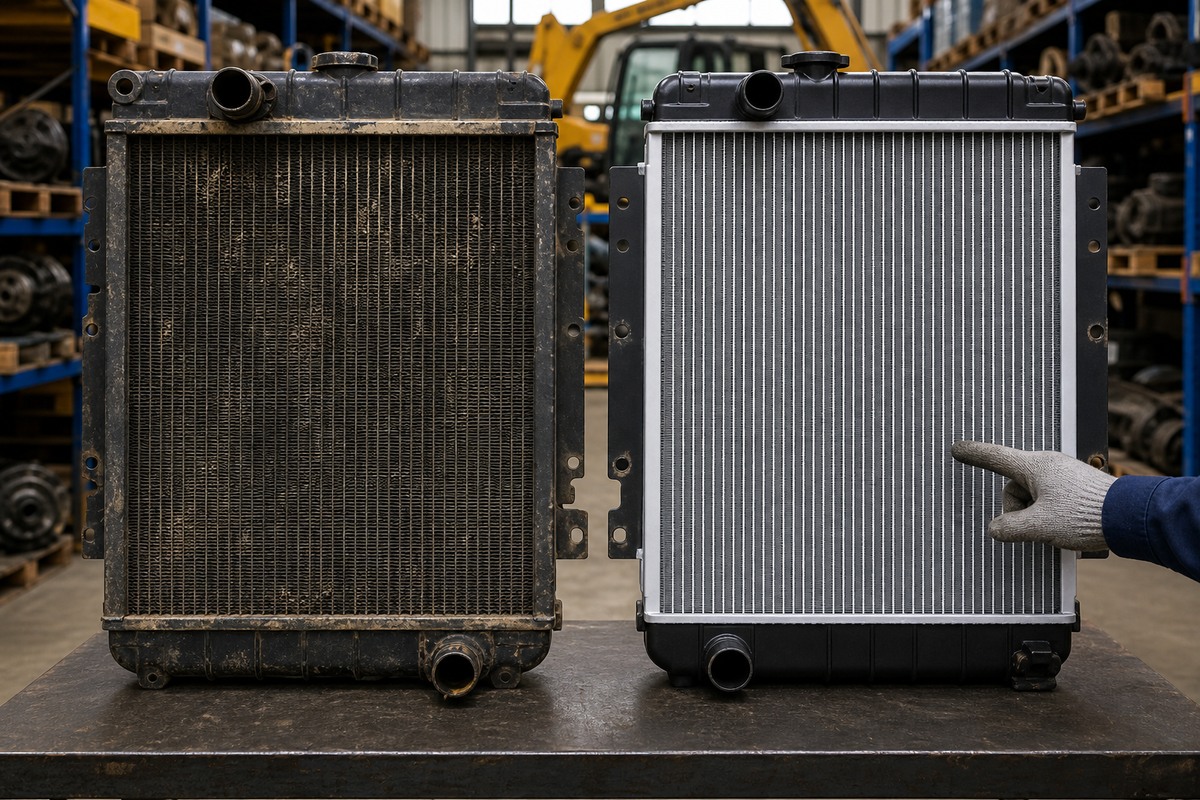
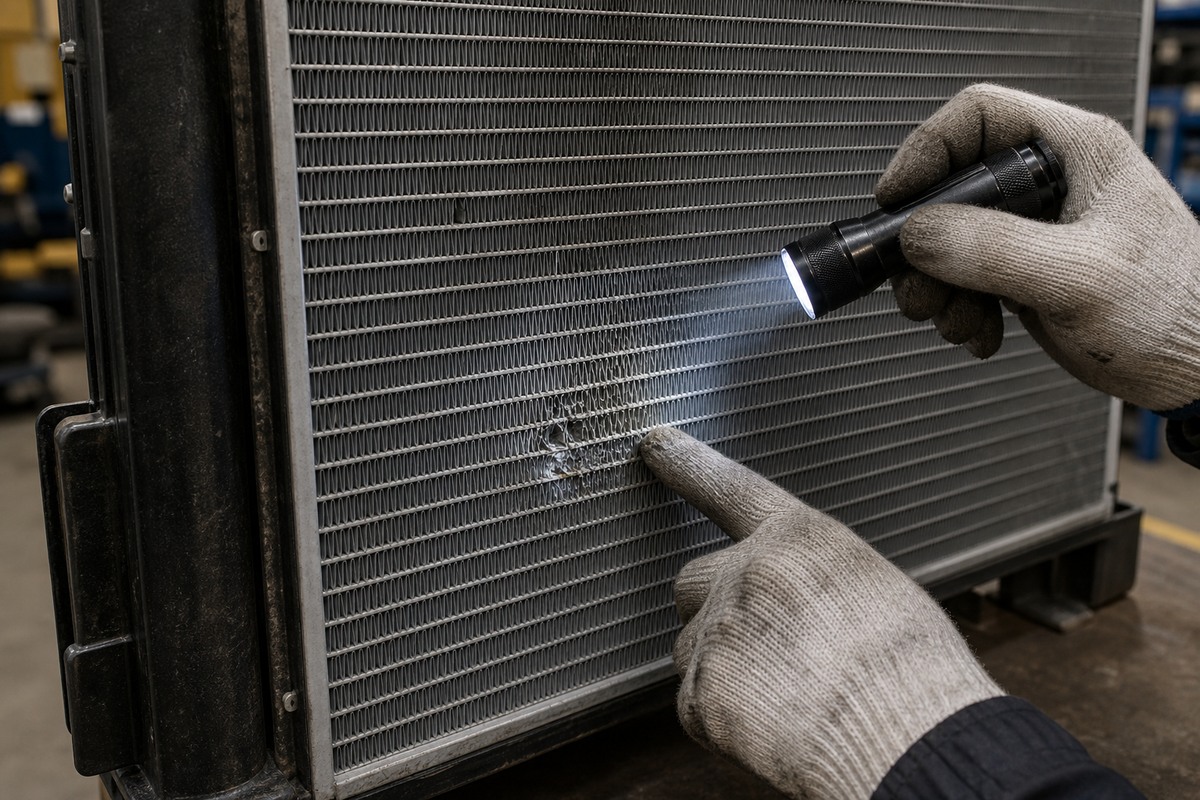
The old radiator should be measured before replacement is approved. Core width, height, thickness, tank shape, inlet and outlet direction, cap position and bracket layout decide whether the unit fits into the excavator frame and fan shroud. A radiator that looks similar in a catalog can still place a hose neck or bracket in the wrong position.
PRIMA should ask for direct comparison photos when possible: old radiator next to the proposed unit, with the same orientation. This makes the quote easier to audit and gives the buyer a receiving checklist when the shipment arrives.
| Check | Evidence to save | Buyer value |
|---|---|---|
| Core size | Width, height and thickness photos | Controls cooling package fit |
| Ports and tank | Inlet/outlet direction, tank shape and cap/sensor positions | Prevents hose and shroud conflicts |
| Brackets | Mounting-hole spacing and side bracket photos | Controls frame installation |
How should buyers inspect fins, blockage and damage?
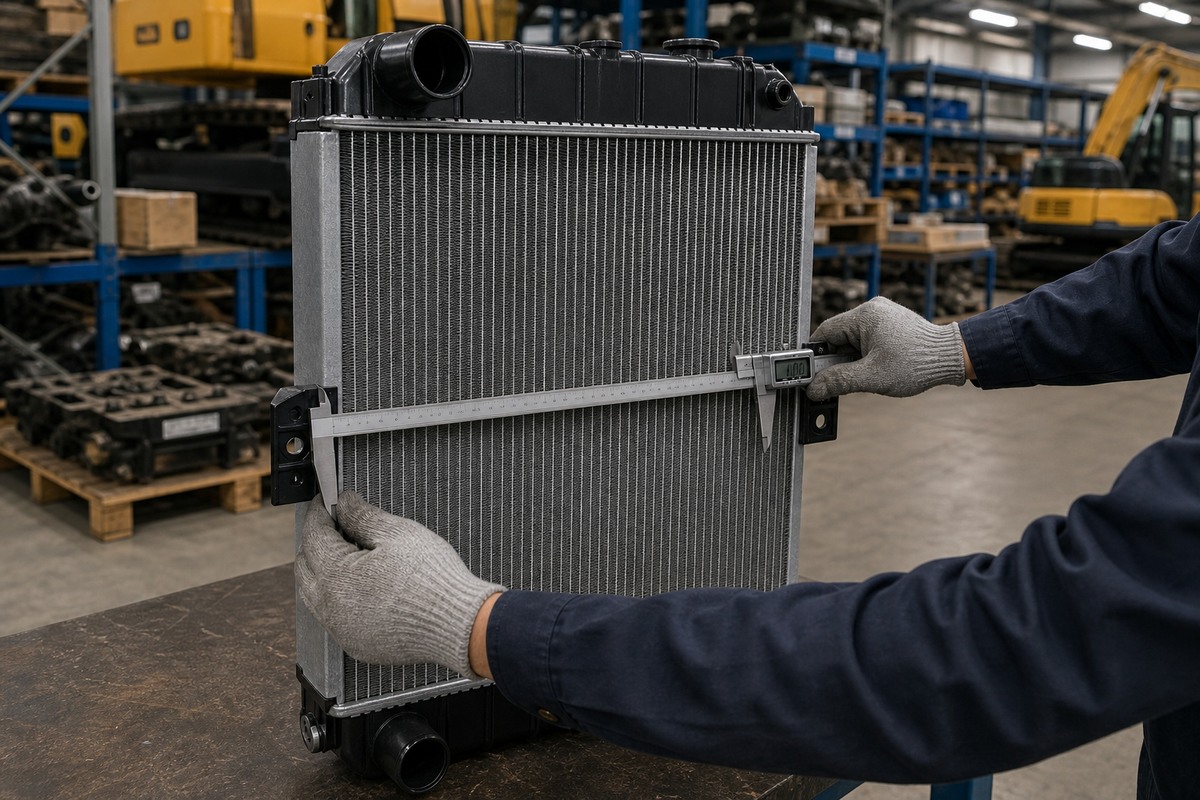
Radiator fins can be clogged with dust, oil and jobsite debris. Exterior soiling, crushed fins and blocked airflow can create overheating even when the radiator is not internally failed. Buyers should inspect both sides of the core with a flashlight and save close photos before deciding whether replacement or cleaning is the first step.
Gates cooling-system guidance emphasizes checking radiators for exterior soiling, external damage, corrosion, coolant flow blockage and leaks. For excavators, the same logic is especially important because cooling stacks often include radiator, oil cooler, air conditioning condenser and screens that trap dust between layers.
| Check | Evidence to save | Buyer value |
|---|---|---|
| Fin face | Flashlight photos from both sides | Shows airflow restriction |
| Contamination | Oil, mud, rust or debris evidence | Separates cleaning from replacement |
| Impact damage | Bent tank, crushed fin or cracked bracket photos | Supports replacement decision |
What leak and pressure evidence belongs in the quote file?
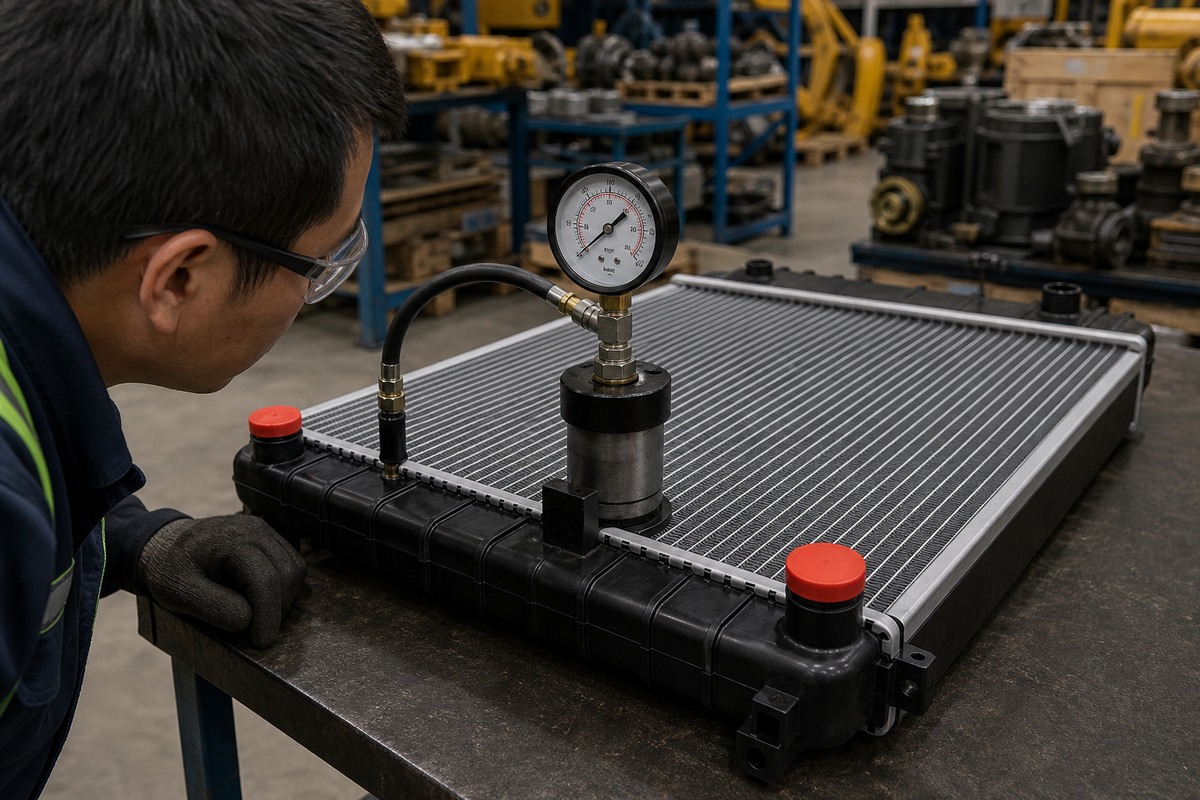
A radiator can leak at tanks, tubes, hose necks, cap seat or seams. A pressure test helps reveal leaks before the buyer installs the part or before a used/rebuilt unit is packed for export. The test pressure and method should follow the vehicle or component service boundary rather than an arbitrary high number.
Natrad’s pressure-test guidance describes the test as a way to identify leaks and pressure-related cooling-system problems. PRIMA should use pressure-test proof as part of the evidence file, while still noting that hose, cap, water pump and engine faults may need separate diagnosis.
| Check | Evidence to save | Buyer value |
|---|---|---|
| Pressure test | Gauge photo, capped ports and no visible leak | Reduces receiving and installation risk |
| Hose necks | Port shape, solder/weld area and cap-seat condition | Controls leak-prone locations |
| Diagnosis boundary | Coolant loss pattern and overheating symptoms | Avoids blaming the radiator for every cooling issue |
Which export packing proof protects a radiator shipment?
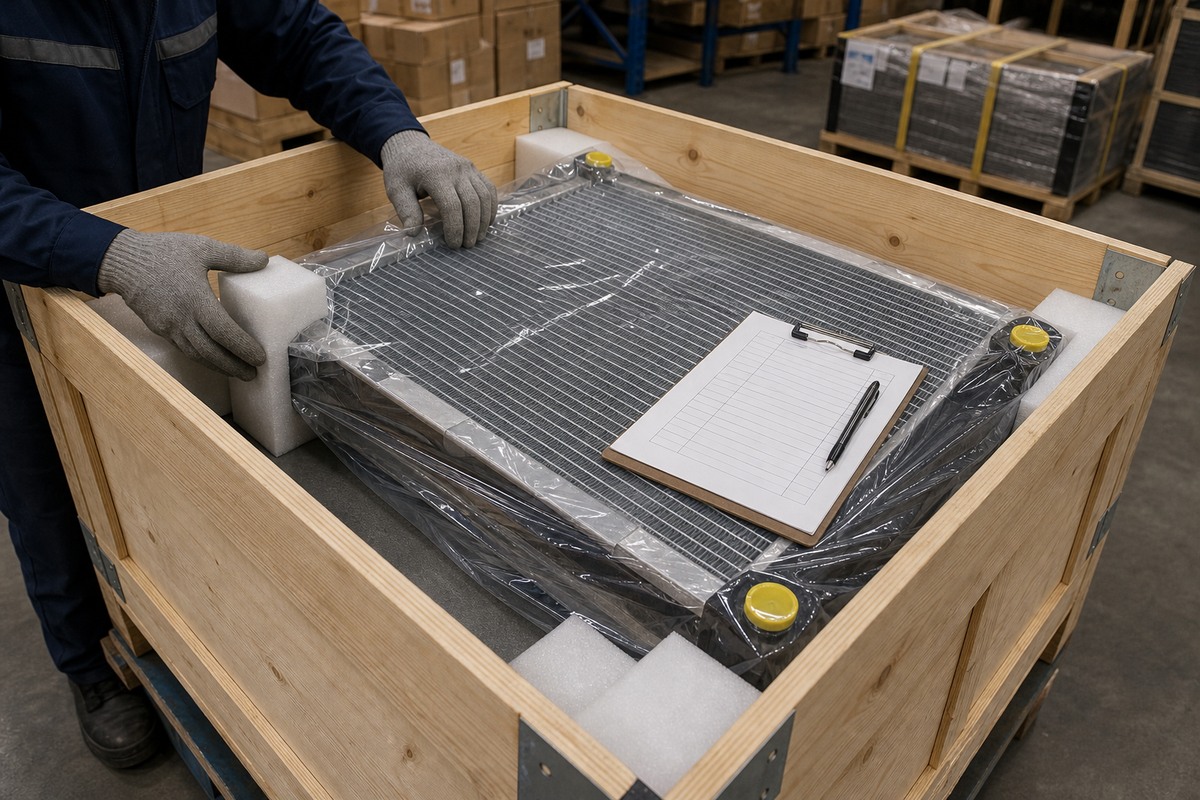
Radiators are high-risk shipping parts because fins, tanks and hose necks can be damaged by small impacts. Buyers should request foam over the core faces, corner guards, port protection and a crate or strong carton that prevents movement. A clean pressure test before shipment is not enough if the core is crushed in transit.
The packing photos should show the same radiator that was measured and tested. When multiple cooling parts ship together, labels and photos help the buyer match radiator, oil cooler, water pump and documents during receiving inspection.
| Check | Evidence to save | Buyer value |
|---|---|---|
| Core protection | Foam, board or guard over fin faces | Prevents airflow loss from bent fins |
| Port protection | Caps or wrap on hose necks and sensor ports | Prevents contamination and bent necks |
| Crate evidence | Corner protection, no loose movement and clear document match | Reduces transit disputes |
Evidence Table
| Decision point | Evidence PRIMA should save | Risk controlled |
|---|---|---|
| Fitment | Old radiator photos, core size, port direction, bracket spacing and cap/sensor positions | Wrong radiator or hose modification |
| Diagnosis | Fin blockage, coolant leak, fan airflow, cap and water pump evidence | Replacing the wrong cooling part |
| Export | Pressure test, protected fins, protected ports and crate photos | Transit damage and receiving disputes |
Key Facts For PRIMA Buyers
- Radiator core size and port direction matter as much as the excavator model.
- Blocked fins or cooling-stack debris can imitate radiator failure.
- Pressure-test evidence reduces leak risk, especially for used or rebuilt radiators.
- Packing must protect fins, tanks, hose necks and brackets.
- PRIMA should label condition and remaining diagnosis uncertainty clearly.
Buyer FAQ
Can I order an excavator radiator by model only?
It is not recommended. Use old-radiator photos, core size, tank shape, ports and bracket measurements.
Does overheating always mean the radiator is bad?
No. Blocked fins, dirty screens, weak fan airflow, cap faults, water pump problems and coolant issues can also cause overheating.
Should a used radiator be pressure tested?
Yes. A used or rebuilt radiator should have pressure or leak-test proof before export.
What should be checked when the new radiator arrives?
Compare dimensions, brackets, ports, cap/sensor positions, fin condition and packing damage before installation.
What packing is best for export?
Use core-face protection, corner guards, port protection and a crate or strong carton that prevents movement.
Useful PRIMA Links
- Excavator parts supplier buyer guide
- Excavator oil cooler inspection guide
- Excavator water pump inspection guide
- Used excavator engine inspection guide
Conclusion
The safest PRIMA order is the one tied to saved evidence: machine identity, old-part photos, measurements, diagnosis notes, condition boundary, packing proof and a clear note about what remains uncertain. Buyers should compare the evidence file before payment, before shipment and again when the machine or part arrives.