
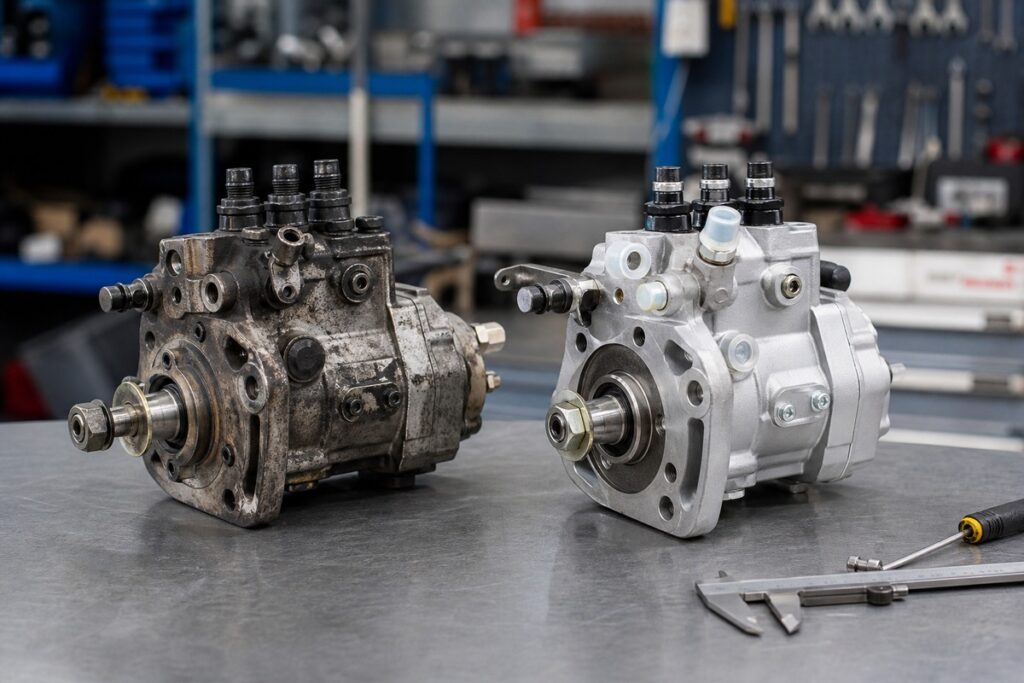
Buyers should check an excavator fuel injection pump before ordering from China by confirming the engine model, old pump part number or plate, pump type, mounting flange, drive shaft, gear or timing side, solenoid and connector layout, fuel line ports, condition grade, test bench evidence and clean capped packing. A fuel injection pump is not a generic fuel pump. Wrong timing, shaft, flange, solenoid or calibration can create no-start, smoke, low power or engine damage. PRIMA should separate pump matching from fuel-system diagnosis before approving a replacement.
Fuel injection pump orders need more discipline than many engine parts because fitment and calibration both matter. A pump can bolt close to the engine and still fail if the shaft, timing mark, governor, solenoid or outlet layout is wrong.
This guide connects PRIMA’s fuel injector inspection guide with the used excavator engine inspection guide. It helps buyers request proof before paying for new, used or rebuilt fuel-system parts.
Buyer Summary
- Best for buyers replacing diesel injection pumps, common-rail high-pressure pumps, rebuilt pumps or used engine fuel-system parts.
- Require old pump photos, engine model, part number or plate, mounting flange, drive shaft, port layout, solenoid and timing-side evidence.
- Separate fuel supply, air-in-fuel, injector, sensor, ECU and filter problems from pump failure before replacement.
- For used or rebuilt pumps, request test bench or condition evidence and clean capped packing before shipment.
Quick answer: what proves an excavator fuel injection pump is safe to order?
A safe excavator fuel injection pump order starts with engine identity and old-pump evidence. Buyers should send engine model, machine serial context, old pump plate or casting, all-side photos, mounting flange, drive shaft, timing gear side, solenoid or connector, outlet ports, fuel line position and failure symptoms. PRIMA should ask whether the machine has no start, hard start, low power, smoke, rough running, fuel contamination, air in fuel, injector fault or filter restriction. For rebuilt or used pumps, test bench evidence and condition notes should be saved. Every pump should ship with clean capped ports, protected shaft and traceable packing photos.
Which pump identity details should buyers collect first?
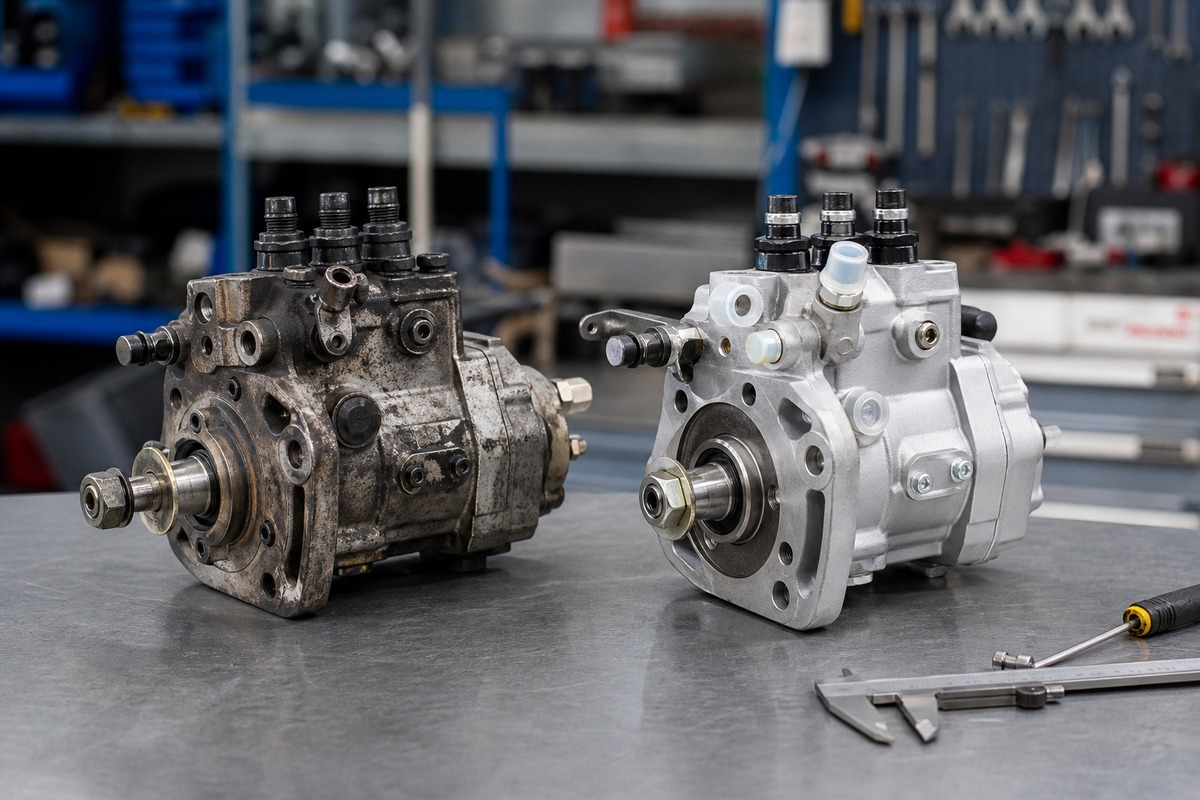
The old pump should be photographed before removal when possible, and again on the bench after removal. The buyer should capture the plate or casting marks, mounting side, fuel line side, connector side, timing gear side and drive shaft. If the old plate is unreadable, flange and port comparison become more important.
PRIMA should keep the quote conditional when only the excavator model is available. Engine family, serial range, emission system and previous engine swaps can change the pump. The evidence file should make clear whether the option is new aftermarket, used or rebuilt.
| Check | Evidence to save | Buyer value |
|---|---|---|
| Engine context | Engine model, machine serial and old-pump position | Defines the pump family |
| Pump identity | Plate, casting, all-side photos and pump type | Reduces wrong option selection |
| Condition grade | New, aftermarket, used or rebuilt boundary | Sets warranty expectation |
How should flange, shaft, ports and timing side be checked?
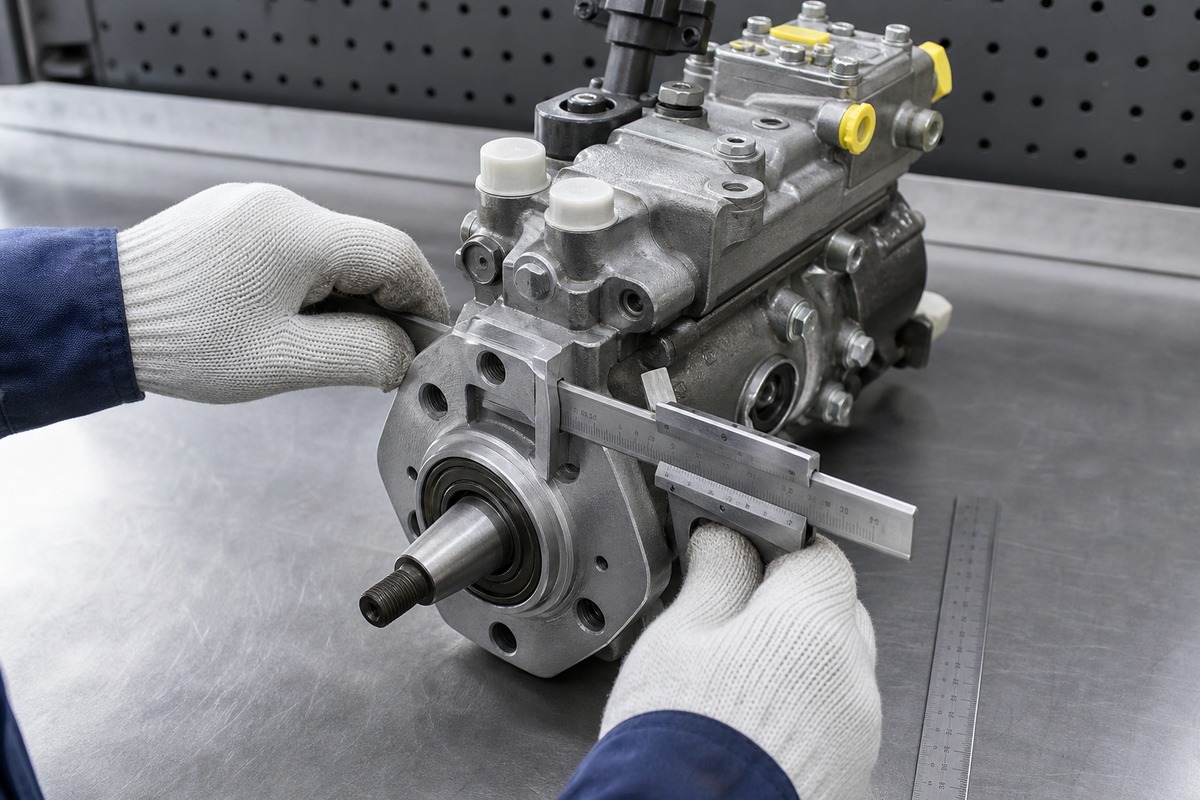
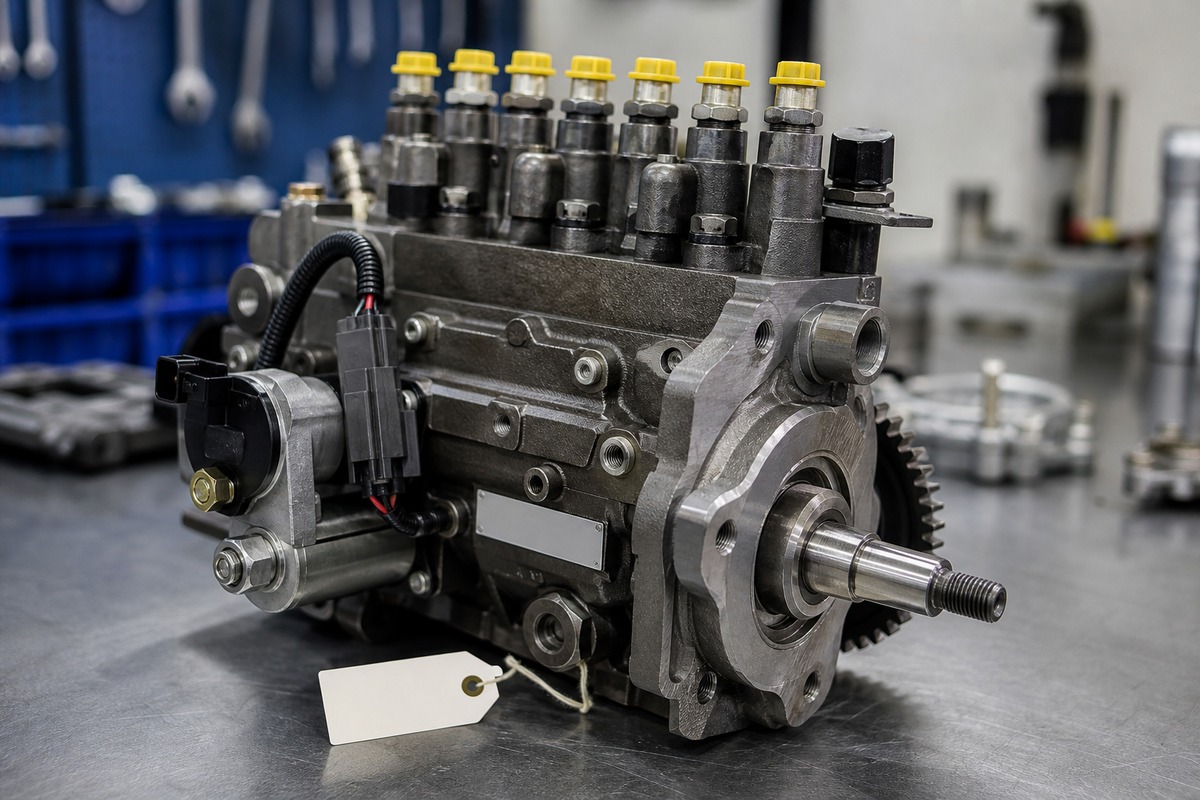
Mounting flange and drive shaft determine whether the pump can physically install. Port layout and fuel line direction determine whether the existing pipes can connect without unsafe bending. Timing marks, gear side and solenoid position should be photographed because the pump is part of a timed fuel system.
A buyer should not approve a replacement only from a front view. Side-by-side photos of old and proposed pumps, with the same orientation, make the order easier to audit and give the repair shop a receiving checklist.
| Check | Evidence to save | Buyer value |
|---|---|---|
| Mounting | Flange shape, bolt holes and shaft photos | Controls physical installation |
| Fuel ports | Outlet count, port angle and line direction | Prevents fuel line mismatch |
| Timing side | Gear side, keyway, timing mark or solenoid position | Controls engine setup risk |
What diagnosis should be separated from pump replacement?
A no-start or low-power complaint may come from fuel filters, air in the fuel supply, blocked pickup, injector faults, rail pressure sensor, ECU command or wiring. DENSO describes the common rail pump as part of a system delivering pressurized fuel, so pump judgment should be connected to the rest of the fuel system.
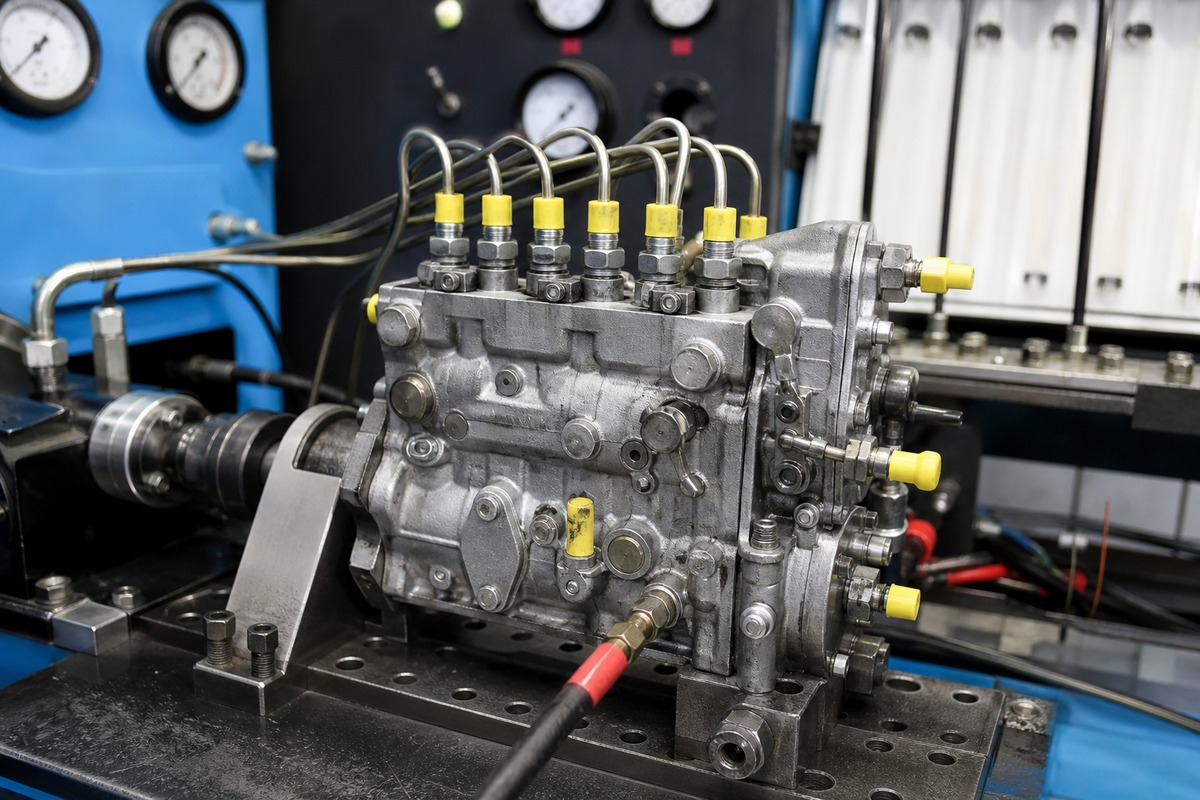
For used or rebuilt pumps, test bench evidence is especially useful. Oregon Fuel Injection describes pump repair and testing with test stands for inline, rotary and common-rail pumps. PRIMA should save test evidence when it is available and clearly label any remaining diagnosis uncertainty.
| Check | Evidence to save | Buyer value |
|---|---|---|
| Fuel supply | Filter, air-in-fuel and supply line notes | Avoids replacing a good pump |
| Controls | Solenoid, sensor, ECU command and wiring context | Separates electrical faults |
| Bench evidence | Flow, pressure or condition notes when available | Supports used/rebuilt options |
Which packing proof protects a fuel injection pump?
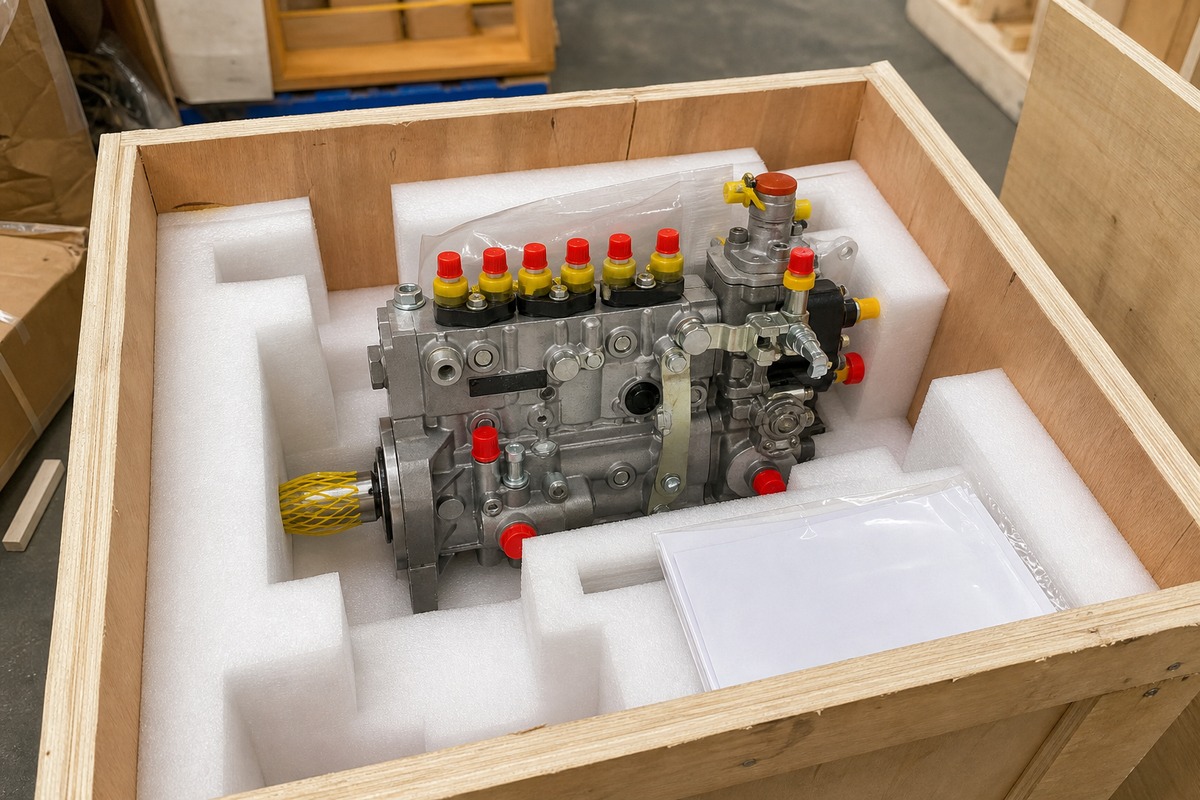
Fuel-system parts must stay clean. Every port should be capped, the shaft should be protected and the pump should not move inside the carton or crate. Dust, moisture or impact can damage a pump that was otherwise correct.
The final packing file should show capped outlets, protected solenoid or connector, protected shaft, foam support and documents tied to the quote. This is especially important when the buyer orders pumps, injectors and filters together.
| Check | Evidence to save | Buyer value |
|---|---|---|
| Cleanliness | All ports capped and no open fuel passages | Controls contamination |
| Shaft protection | Foam or guard around drive shaft and flange | Prevents impact damage |
| Traceability | Packing photos tied to quote and test evidence | Reduces receiving disputes |
Evidence Table
| Decision point | Evidence PRIMA should save | Risk controlled |
|---|---|---|
| Fitment | Engine model, pump plate, flange, shaft, ports and timing side | Wrong pump or unsafe line modification |
| Diagnosis | Fuel supply, filter, injector, sensor, wiring and bench evidence | Replacing the wrong component |
| Export | Capped ports, clean packing, shaft protection and crate photos | Contamination and transit damage |
Key Facts For PRIMA Buyers
- A fuel injection pump should not be matched only by excavator model.
- Flange, drive shaft, outlet ports and timing-side evidence are critical.
- No-start and smoke complaints can come from filters, injectors, sensors or wiring.
- Used or rebuilt pumps need condition and test evidence when available.
- Clean capped packing is part of the fuel-system quality file.
Buyer FAQ
Is a fuel injection pump the same as a simple fuel lift pump?
No. The injection pump is part of the high-pressure or timed fuel system and needs more fitment evidence.
Can I order by engine model only?
Engine model helps, but old pump photos, plate, flange, shaft and port layout are still needed.
Should rebuilt pumps be tested?
Yes when possible. Test bench or condition evidence should be saved for used or rebuilt pumps.
What if the pump plate is unreadable?
Use casting marks, all-side photos, flange, shaft, port layout and engine context.
How should the pump be packed?
All ports capped, shaft protected, clean foam support and crate or carton photos should be saved.
Useful PRIMA Links
- Excavator fuel injector inspection guide
- Excavator engine parts quote checklist
- Used excavator engine inspection guide
- Excavator parts supplier buyer guide
Conclusion
A fuel injection pump order should be tied to engine identity, old-pump evidence, diagnosis notes, condition grade and clean packing proof. PRIMA should not treat the pump as a generic part. The buyer file should explain what is confirmed, what remains conditional and what evidence will be checked again before installation.