
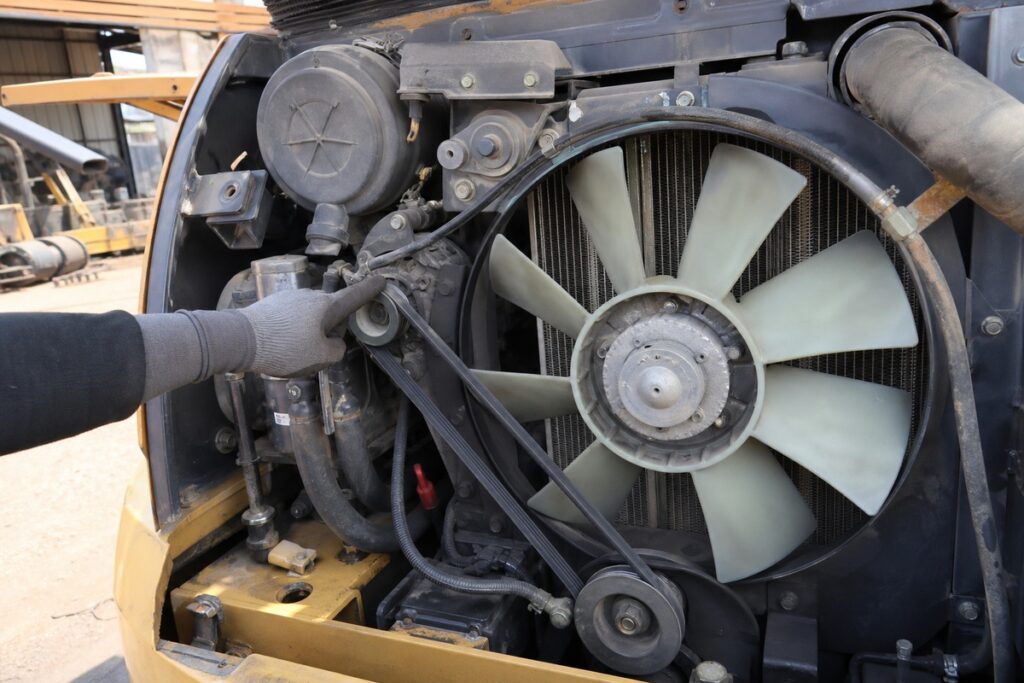
Buyers should check excavator fan belts and cooling fans before ordering from China by confirming the old belt profile, belt length, rib or V-belt count, pulley condition, tensioner or idler condition, fan blade diameter, blade count, hub bolt pattern, shroud clearance, overheating symptoms and export packing. A belt or fan order should be separated from radiator, water pump, thermostat and hydraulic overheating diagnosis. PRIMA should ask for engine-off inspection photos and should not encourage unsafe checks near a running fan or moving belt.
Fan belts and cooling fans look simple, but they sit at the center of cooling reliability. A wrong belt profile, weak tensioner, damaged pulley or wrong fan hub can turn a small order into repeat overheating or belt failure.
This page supports PRIMA’s radiator inspection guide and water pump inspection guide. It helps buyers connect cooling symptoms with parts evidence before shipment.
Buyer Summary
- Best for buyers replacing fan belts, tensioner pulleys, idlers, cooling fans, fan hubs or shroud-related cooling parts.
- Require old belt profile, belt length, rib count, pulley condition, tensioner alignment, fan diameter, blade count and hub bolt pattern.
- Separate fan/belt fitment from overheating diagnosis, radiator blockage, water pump faults and hydraulic heat.
- Inspect with engine off and protect belts, pulley bearings and fan blades during export packing.
Quick answer: what proves excavator fan belts and cooling fans are safe to order?
A safe fan belt and cooling fan order starts with engine-off photos and old-part measurements. Buyers should send the old belt, belt width, length, rib or V-belt count, pulley groove photos, tensioner or idler condition, fan diameter, blade count, fan hub bolt pattern, shroud clearance and overheating symptoms. PRIMA should ask whether the belt squeals, jumps, cracks, glazes, sheds ribs, runs off-center or fails after replacement. Gates belt guidance connects belt problems with tension, pulley alignment, contamination and worn drive components, so the quote should not treat the belt as an isolated rubber part. Before shipment, save belt/fan QC photos and protected packing.
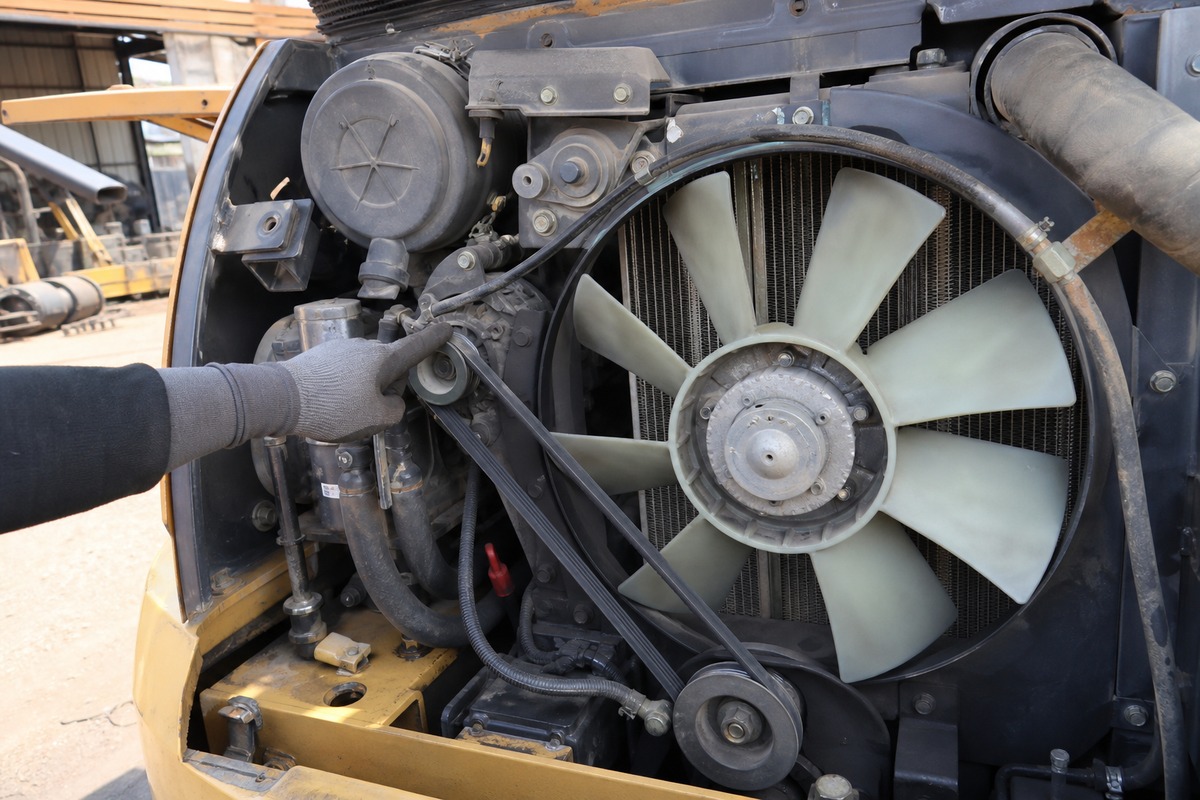
Which belt details should buyers collect before quoting?
The old belt should be photographed and measured before a replacement is approved. Width, length, rib count, V-belt profile, part marks if readable and pulley groove shape all matter. If the buyer only sends an excavator model, PRIMA should request engine and pulley evidence before confirming.
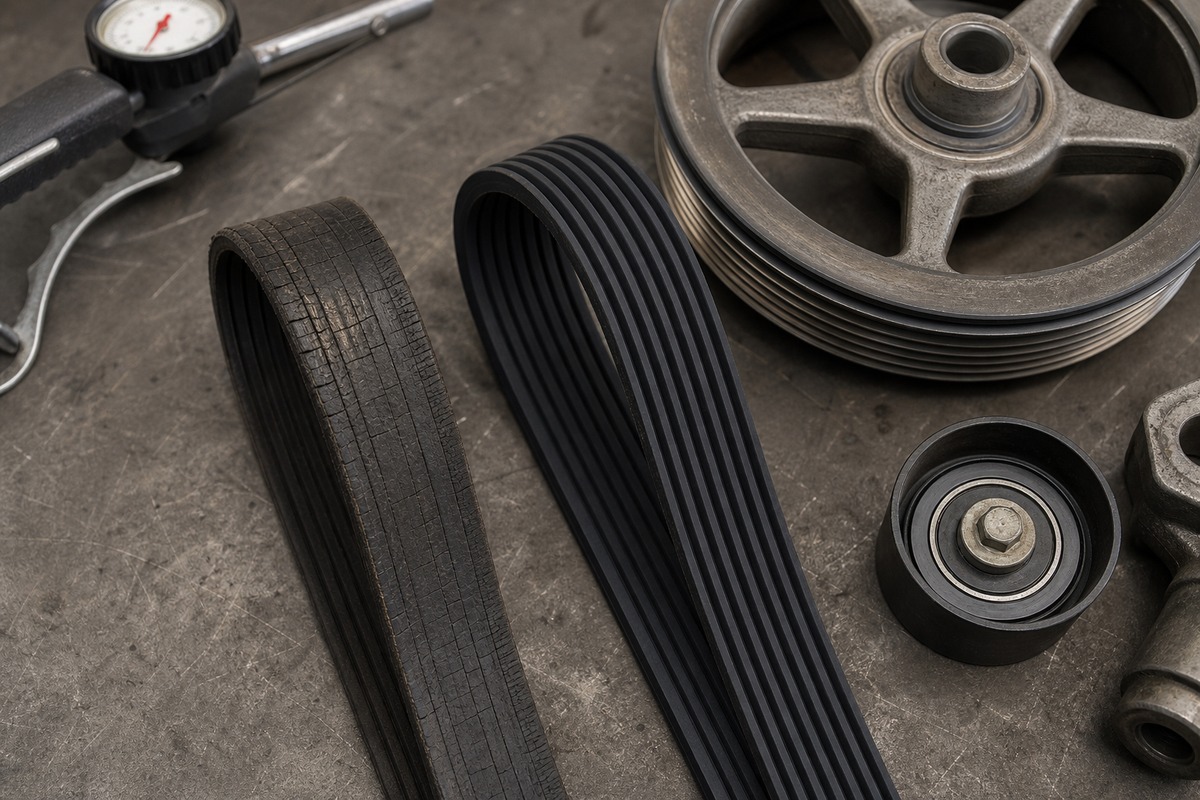
For machines with repeated belt failure, the old belt surface tells a story. Cracks, glazing, missing ribs, edge wear, oil swelling or abnormal dust can point to tension, pulley alignment, contamination or bearing problems.
| Check | Evidence to save | Buyer value |
|---|---|---|
| Belt identity | Width, length, rib count, V profile and old-belt photos | Controls fitment |
| Pulley grooves | Groove count, wear and alignment photos | Controls tracking |
| Failure pattern | Cracks, glazing, rib loss, edge wear or oil damage | Guides diagnosis |
How should pulley alignment and tensioner condition be checked?
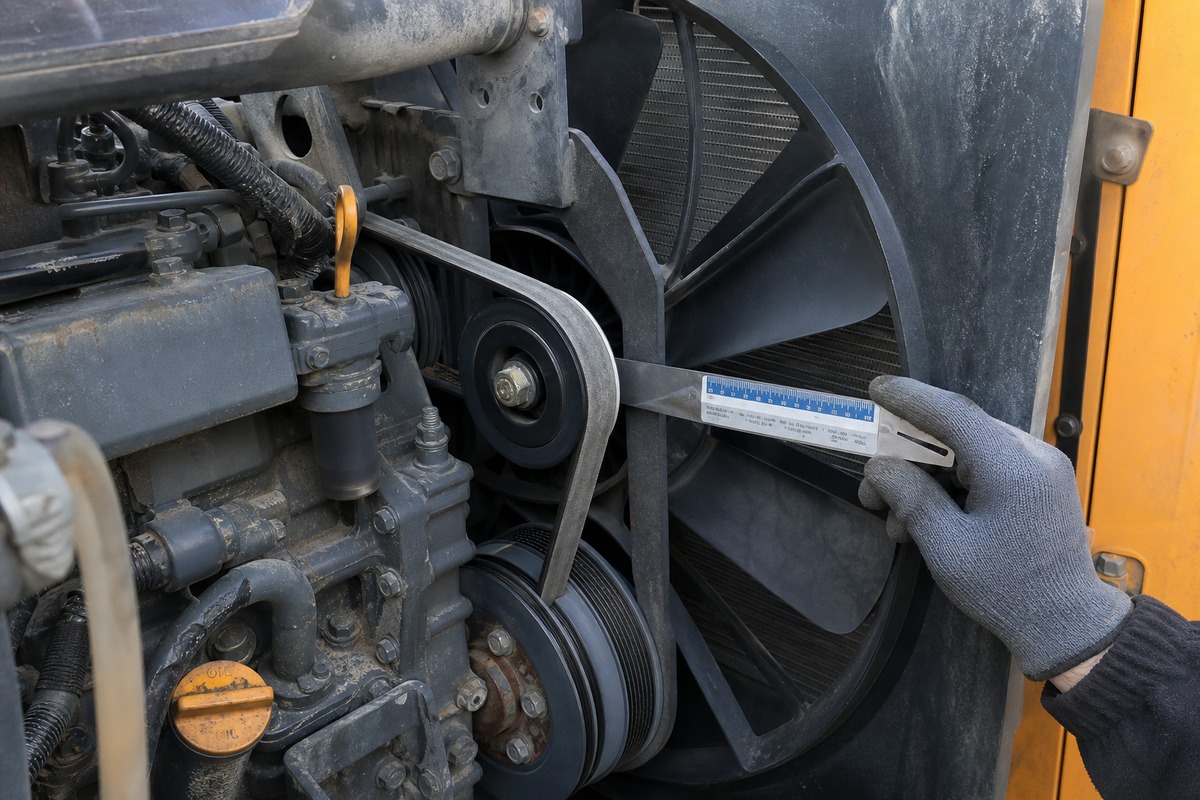
A new belt can fail quickly if the tensioner, idler, pulley bracket or bearing is worn. Buyers should photograph the belt path, tensioner arm, idler pulley, fan pulley and any abnormal tracking. A straightedge or belt tool photo is useful when alignment is suspected.
Gates preventive-maintenance guidance treats belt inspection as a drive-system check, not only a belt check. PRIMA should record whether the buyer is replacing only the belt or also the tensioner/idler group.
| Check | Evidence to save | Buyer value |
|---|---|---|
| Tension | Tensioner arm position, belt deflection and tool notes | Reduces slip or over-tension |
| Alignment | Pulley path and straightedge evidence | Reduces edge wear and jumping |
| Bearings | Idler/tensioner noise, wobble or roughness notes | Prevents repeat failure |
What cooling fan evidence belongs in the order file?
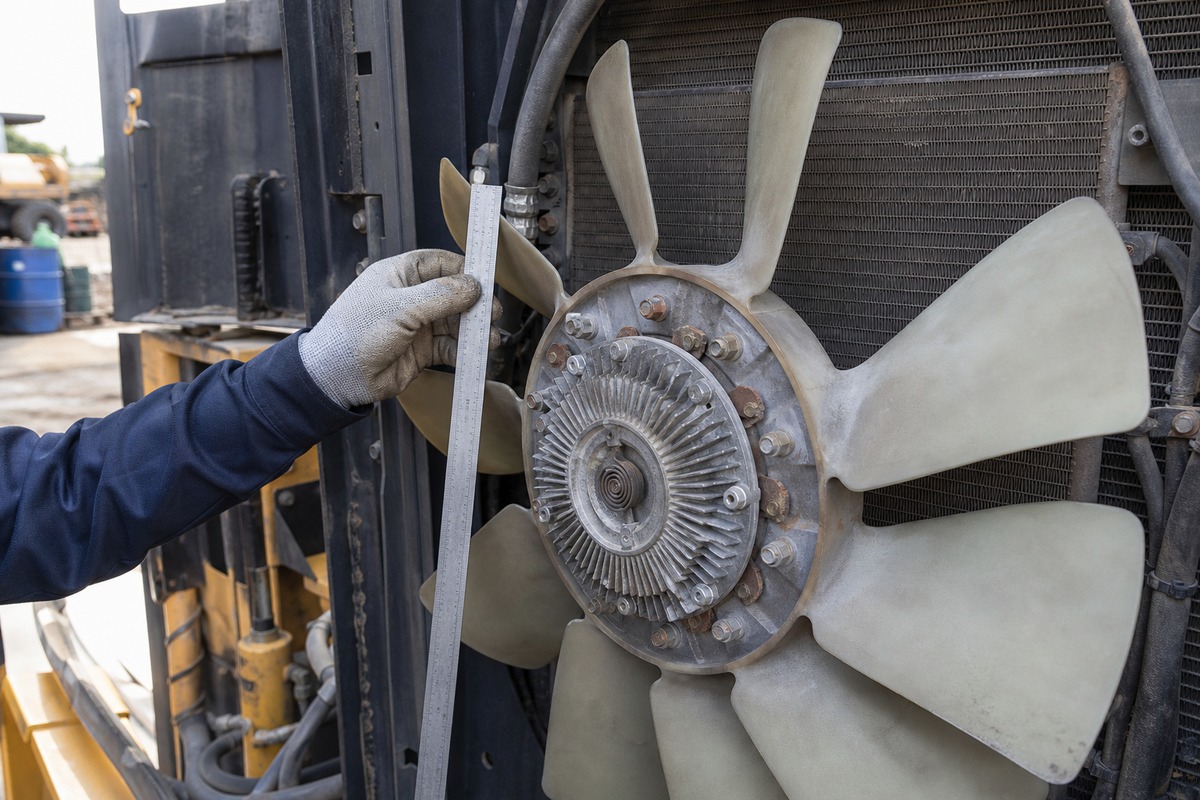
Cooling fan fitment depends on blade diameter, blade count, hub shape, bolt pattern, offset and shroud clearance. A fan with the wrong offset can hit the shroud or move too little air through the radiator stack. Buyers should photograph the old fan before removal and measure the hub area.
Cooling diagnosis should also include radiator and oil cooler airflow. If the fan belt and fan are correct but the cooling stack is blocked with dust or oil, the machine can still overheat after new parts are installed.
| Check | Evidence to save | Buyer value |
|---|---|---|
| Fan size | Diameter, blade count, hub and bolt pattern | Controls physical fit |
| Clearance | Fan shroud and radiator-stack spacing | Prevents contact or poor airflow |
| Airflow context | Radiator, oil cooler and screen condition | Separates root causes |
Which export packing proof protects belts and fans?
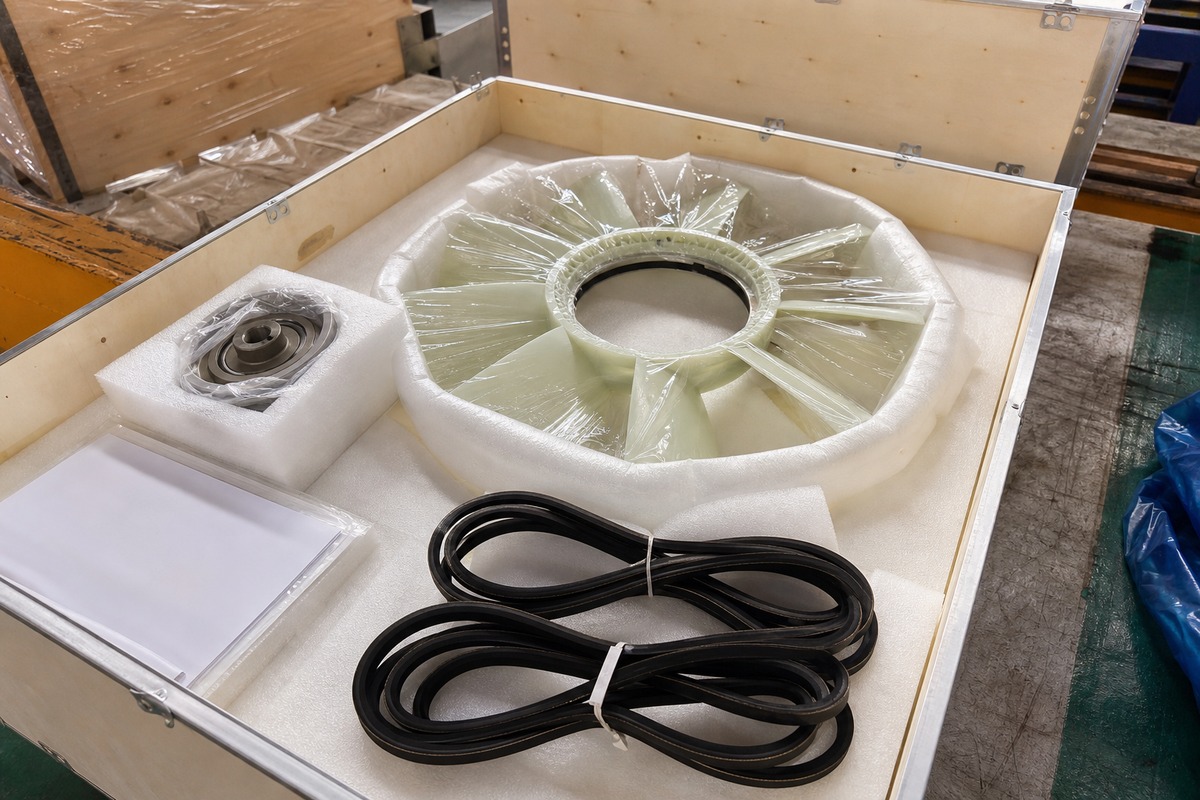
Belts should not be crushed, sharply folded or contaminated with oil. Fan blades and hubs should be wrapped so they cannot bend inside the carton. Tensioner pulleys and idlers should be protected from bearing impact.
The final packing file should show belts coiled correctly, fan blade edges protected, pulley/tensioner parts separated and documents tied to the quote. This helps the buyer check the shipment before installation.
| Check | Evidence to save | Buyer value |
|---|---|---|
| Belts | Loose coil, no sharp fold, clean bag | Protects rubber and ribs |
| Fan | Blade edge protection and hub support | Prevents bent fan blades |
| Pulleys | Foam around bearings and separate bags | Reduces impact damage |
Evidence Table
| Decision point | Evidence PRIMA should save | Risk controlled |
|---|---|---|
| Fitment | Old belt, pulley, tensioner, fan diameter, hub and shroud evidence | Wrong belt or fan |
| Diagnosis | Cracks, glazing, edge wear, noise, overheating and airflow notes | Replacing the wrong cooling part |
| Export | Protected belts, fan blades, pulley bearings and packing photos | Transit damage |
Key Facts For PRIMA Buyers
- Fan belt orders should include belt profile, pulley and tensioner evidence.
- Pulley misalignment and worn tensioners can destroy a new belt quickly.
- Cooling fan fitment depends on blade diameter, hub, bolt pattern and shroud clearance.
- Overheating can come from radiator blockage, water pump faults or hydraulic heat, not only the fan belt.
- Inspection should be done with the engine off and moving parts guarded.
Buyer FAQ
Can I order a fan belt by excavator model only?
It is risky. Use old belt photos, belt profile, rib count, length and pulley evidence.
Why does a new belt fail quickly?
Common causes include misalignment, weak tensioner, worn pulleys, bearing failure or oil contamination.
What should be checked on the cooling fan?
Measure fan diameter, blade count, hub bolt pattern, offset and shroud clearance.
Does overheating mean the fan is bad?
No. Radiator blockage, water pump faults, coolant issues, oil cooler blockage and hydraulic heat can also cause overheating.
How should belts and fans be packed?
Belts should not be folded sharply, and fan blades, hubs and pulley bearings should be protected.
Useful PRIMA Links
- Excavator radiator inspection guide
- Excavator water pump inspection guide
- Excavator oil cooler inspection guide
- Used excavator engine inspection guide
Conclusion
Fan belts and cooling fans should be ordered as part of a cooling evidence file. Buyers should save old belt and fan photos, pulley/tensioner notes, overheating symptoms and packing proof. PRIMA should separate true fitment from cooling-system diagnosis so the buyer does not replace one small part while the real airflow or belt-drive problem remains.