Industry News

Autonomous Mining Excavators: AI Technology Transforming Heavy Machinery 2026

Autonomous Mining Excavators: AI Technology Transforming Heavy Machinery 2026

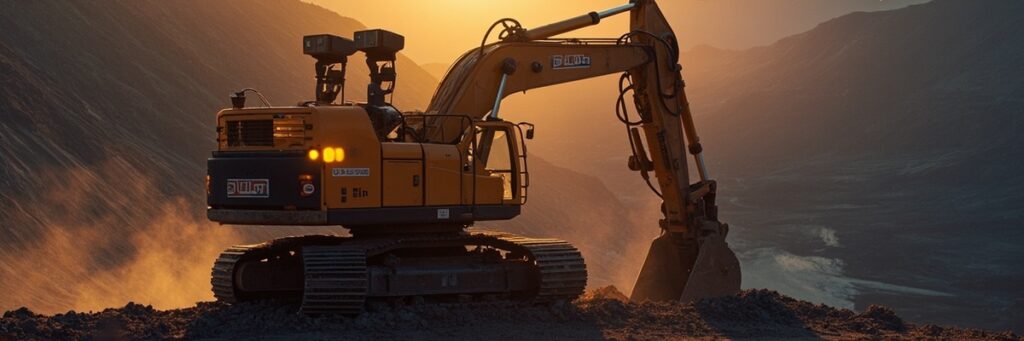
Autonomous mining excavators powered by embodied AI represent one of the most significant technological shifts in the heavy machinery industry. These machines can autonomously identify complex working conditions, plan digging paths independently, and interact with operators through verbal commands—transforming how mining companies approach excavation in challenging environments.

How Embodied AI Powers Autonomous Excavators

According to the 2026 Excavator Industry Report, embodied AI enables excavators to perceive their environment through integrated sensor systems, process that information in real-time to make operational decisions, and execute those decisions through precise hydraulic and mechanical control systems. This creates machines capable of adapting to changing conditions without constant human intervention.

Applications in Mining Operations

Autonomous excavators are particularly valuable in mining applications where:

  • Safety concerns: Removing operators from hazardous zones like unstable pit walls or high-dust environments
  • Continuous operation: Autonomous machines can work around the clock without fatigue, shift changes, or compliance breaks
  • Precision requirements: AI-guided excavation achieves consistent depth and angle accuracy difficult to maintain manually over extended periods
  • Data integration: Autonomous systems generate detailed operational data for fleet management and optimization

The Autonomous Excavator Technology Stack

Modern autonomous mining excavators combine multiple technology layers:

  • Computer vision: Multiple cameras and LiDAR sensors create 360-degree environmental awareness
  • Edge computing: Onboard AI processors analyze sensor data and make real-time decisions
  • Hydraulic precision: Advanced hydraulic systems execute AI-generated movement commands with sub-centimeter accuracy
  • Wireless connectivity: Fleet management systems coordinate multiple autonomous machines simultaneously
  • Verbal interaction: Natural language processing enables voice commands for operator oversight and intervention

Industry Impact and Growth Trajectory

The 2026 excavator market has seen record-breaking adoption of autonomous technologies, with the technology proving particularly valuable in surface mining applications where consistent, high-volume material movement drives profitability. Mining companies report significant improvements in operational efficiency and reductions in equipment damage from operator error.

Future Development Trajectory

Industry analysts expect autonomous capabilities to expand progressively from specialized mining applications into general construction excavation. As sensor costs decline and AI systems mature, expect to see more semi-autonomous features appearing in standard construction excavators—assisted digging modes, collision avoidance systems, and automatic grade control becoming increasingly common.

Conclusion

Autonomous mining excavators represent the leading edge of how AI is transforming heavy machinery. With embodied AI enabling machines to perceive, decide, and act independently, the mining industry is experiencing measurable productivity gains. For construction equipment buyers, these developments signal where the broader excavator market is heading—toward increasingly intelligent machines that reduce operator burden while improving output quality and safety.