
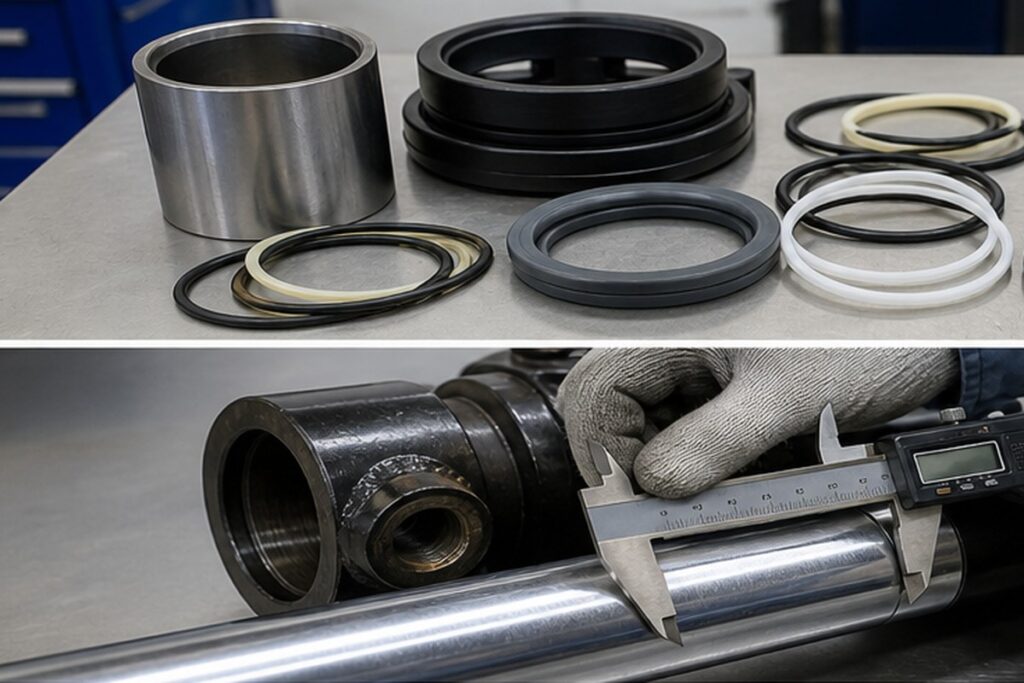
Buyers should check an excavator seal kit from China by confirming the exact machine model, cylinder position, cylinder serial or old seal photos, bore and rod dimensions, seal composition, hydraulic-fluid compatibility, rod condition, material boundary and final packing proof before approving the order.
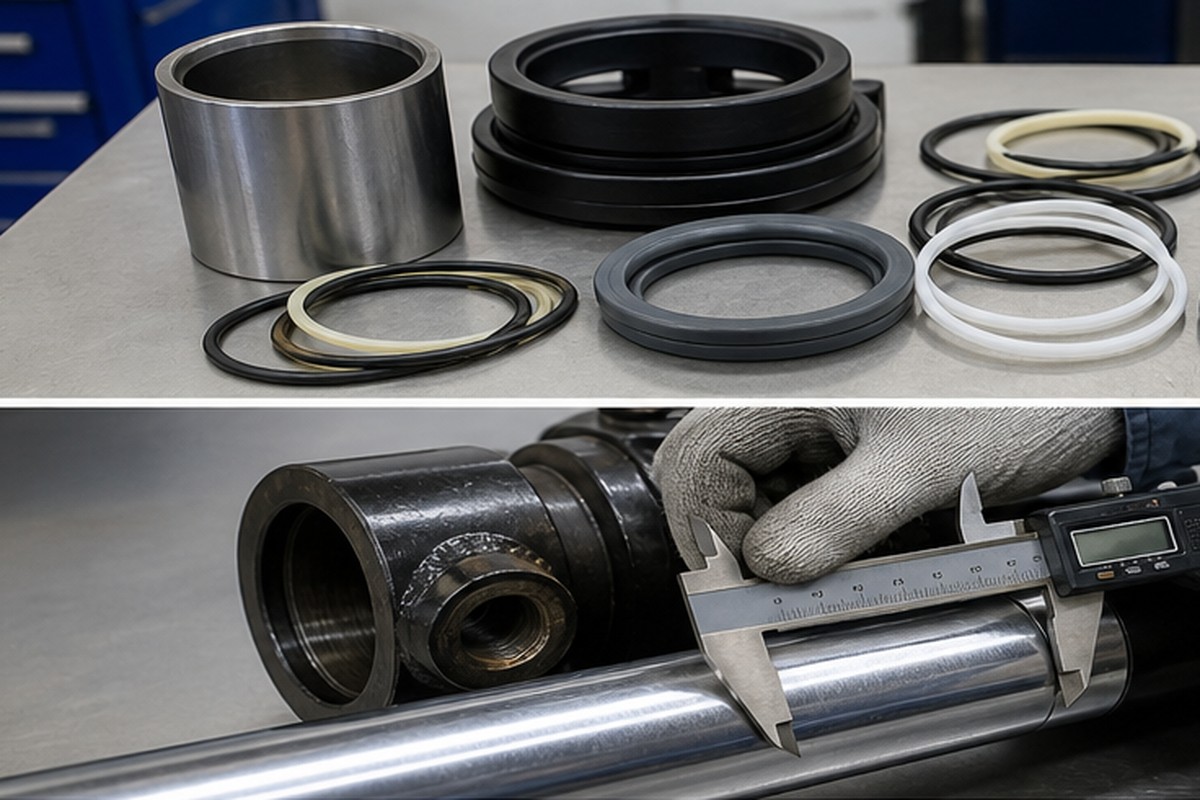
This PRIMA guide owns the excavator seal kit and oil seal support topic. It links to the hydraulic cylinder guide, hydraulic pump guide, part-number verification checklist and excavator parts supplier hub.
Quick answer: how should an excavator seal kit be verified?
An excavator seal kit should be verified against the exact cylinder or component, not only the excavator model. Buyers should send machine model, serial context, cylinder position, old seal or old cylinder photos, part number if available, rod diameter, bore-related dimensions, stroke or cylinder length when relevant, fluid type and failure symptoms. PRIMA should also check whether the rod is scored, rusty or bent, because a new seal kit may fail quickly if the metal surface is damaged. Packing proof should protect small seals from mixing, oil contamination and carton damage.
Buyer Summary
- Seal kits are fitment-sensitive small parts; model name alone is not enough.
- Rod scoring, rust or barrel wear can make a new seal kit fail quickly.
- Material and fluid compatibility should be checked before ordering.
- Packing proof should keep seal sets separated and protected.
Which identity data should be sent before quoting?
A seal kit belongs to a specific cylinder or component.
The buyer should provide machine model, serial context, cylinder position, old seal photos, old cylinder photos and any visible part number. Boom, arm, bucket, blade, swing, travel or center-joint seals may look similar but require different routing.
If no part number exists, PRIMA should ask for rod diameter, bore-related dimensions, groove photos or old seal samples before approving a kit.
| Check | Evidence | Buyer value |
|---|---|---|
| Machine and serial | Model and plate context | Initial routing |
| Cylinder position | Boom, arm, bucket or other component | Avoids wrong kit |
| Old seal evidence | Photos and dimensions | Fitment control |
What should be inside a complete kit?
A low-price kit may miss wear rings or backup rings.
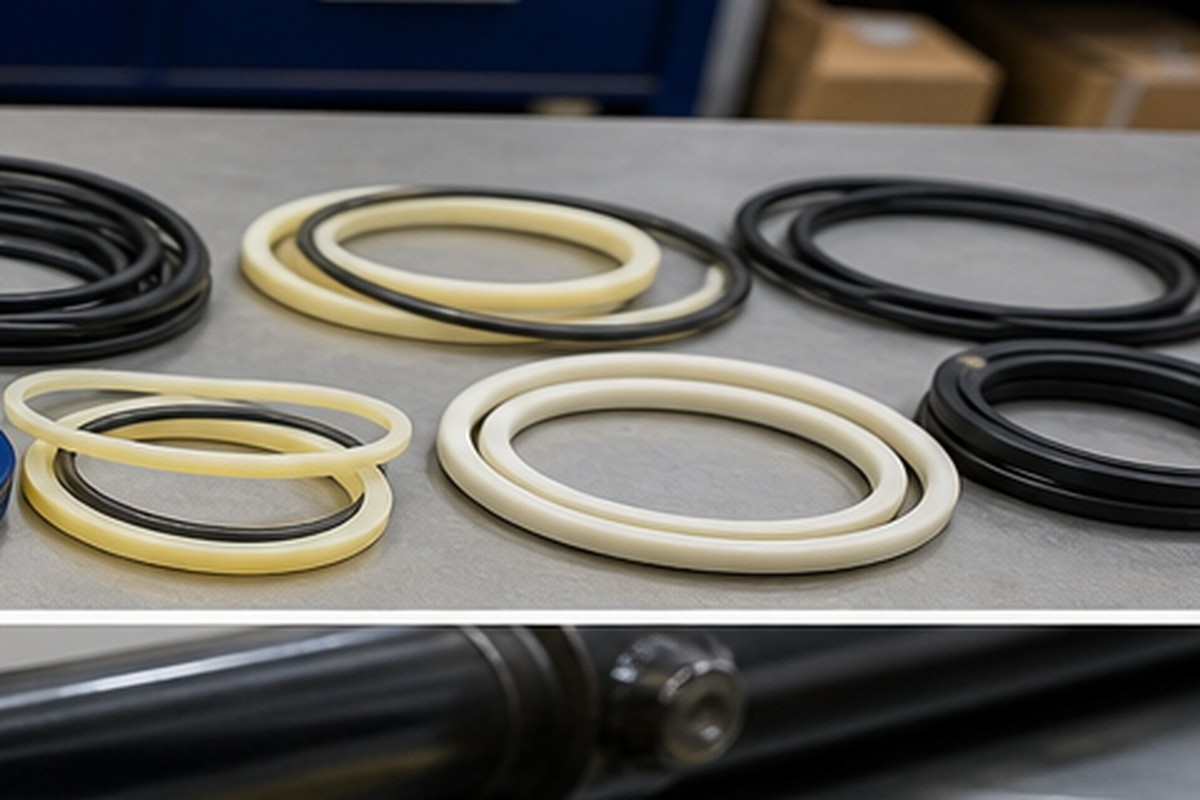
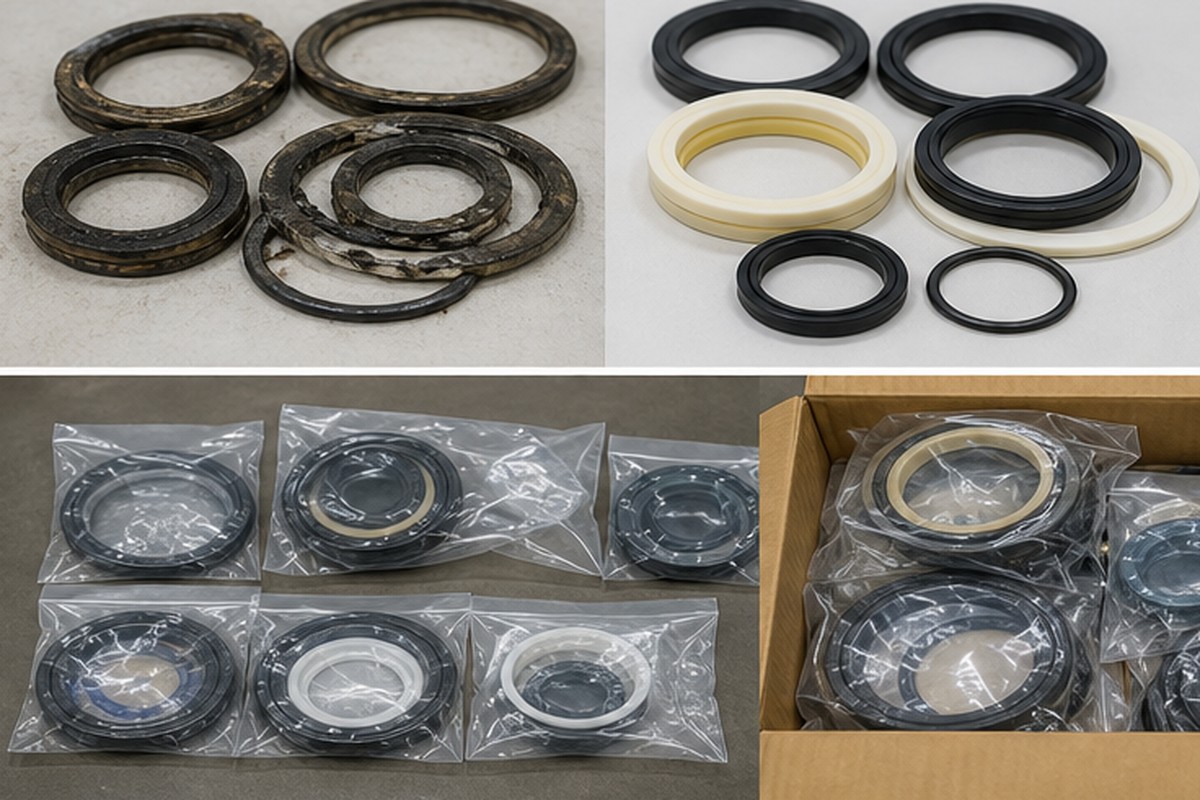
A complete kit may include rod seals, piston seals, wipers, O-rings, backup rings, buffer seals and guide or wear rings. The exact list depends on the component.
PRIMA should avoid promising a universal kit. The quote should state what is included, what is excluded and whether the buyer is replacing only external leakage parts or rebuilding the whole cylinder.
| Check | Evidence | Buyer value |
|---|---|---|
| Seal list | Itemized kit photo | No missing parts |
| Scope | External leak or full rebuild | Repair clarity |
| Quantity | Separated bags or sets | Receiving control |
When is a seal kit not enough?
The failed seal may be a symptom, not the root cause.
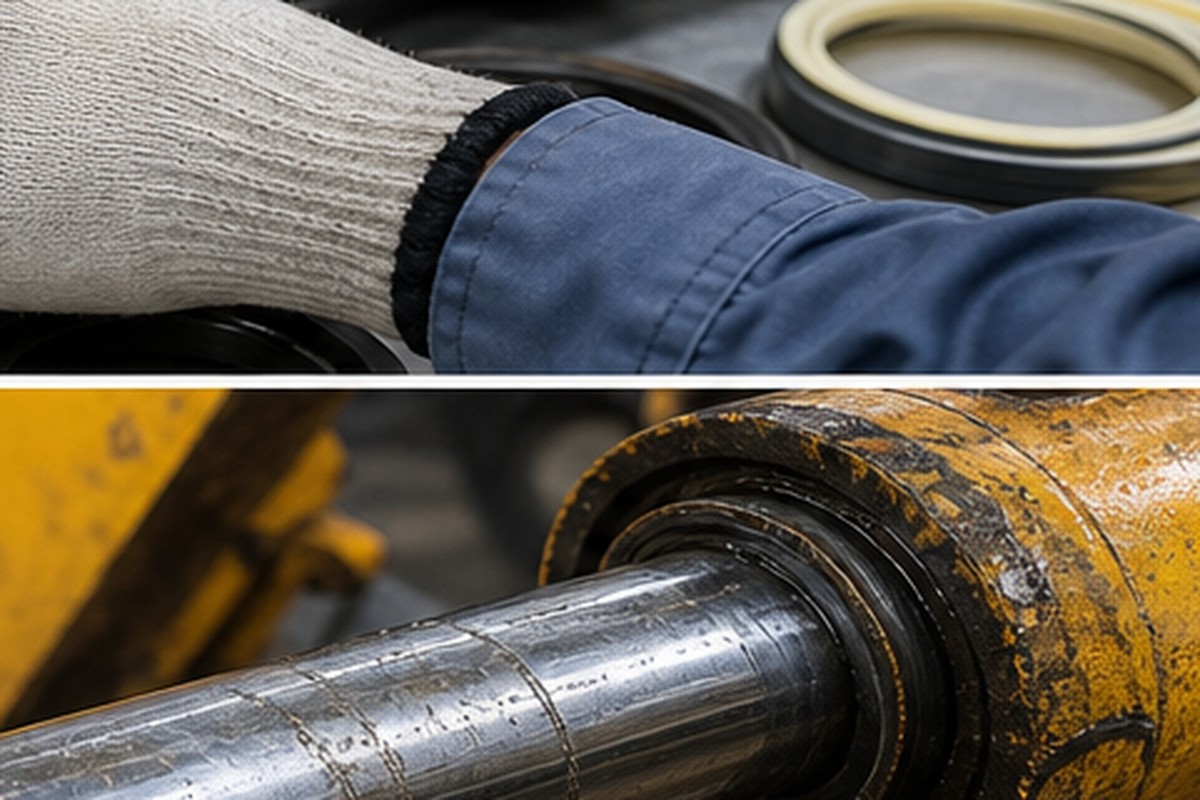
If the chrome rod is scratched, pitted, rusty or bent, a new seal can tear quickly. If the barrel is worn, contaminated oil is present or the hydraulic system overheats, leakage may return after replacement.
Buyers should send leak photos, rod close-ups, dust wiper condition and mechanic notes. PRIMA can suggest a kit, rebuilt cylinder or replacement cylinder only after the damage evidence is clear.
| Check | Evidence | Buyer value |
|---|---|---|
| Rod surface | Scratch, rust and scoring photos | Seal life |
| Oil condition | Milky, dirty or overheated oil notes | Root cause |
| Repair choice | Kit, rebuilt or replacement | Cost control |
How should seal kits be packed for export?
Small rubber parts are easy to mix or crush.
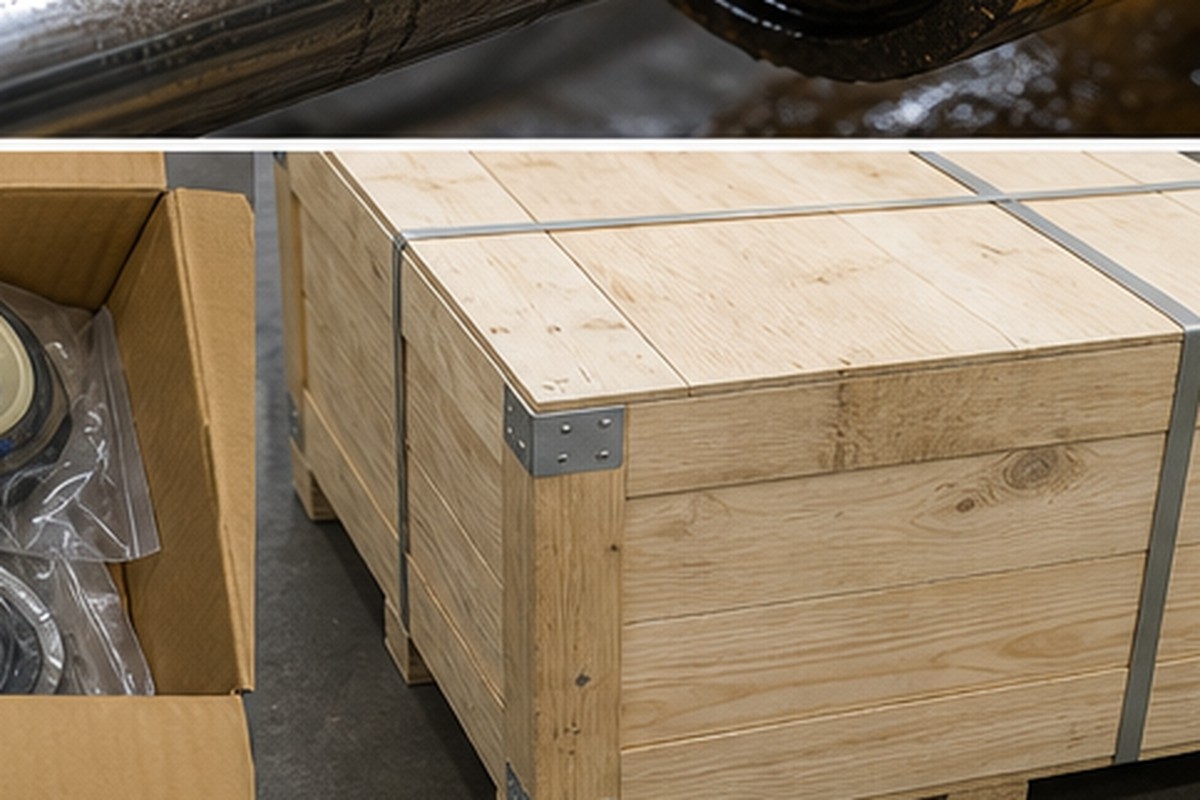
Each kit should be bagged, counted and packed away from sharp metal parts. Cartons or small crates should protect seals from oil contamination, compression and moisture.
The receiving team should compare quantity, kit grouping and component position with the approved quote before installation.
| Check | Evidence | Buyer value |
|---|---|---|
| Bags and grouping | Separated seal sets | Avoids mixing |
| Carton or crate | Clean protective packing | Prevents damage |
| Receiving check | Compare with quote | Installation control |
Evidence Table
| Buyer question | Evidence PRIMA should provide | Why it matters |
|---|---|---|
| What component owns the kit? | Cylinder position and serial/old seal photos | Avoids wrong kit |
| Are dimensions confirmed? | Rod, bore-related and groove evidence | Fitment control |
| Will the seal last? | Rod surface, oil and failure notes | Avoids repeat leakage |
| Is packing safe? | Separated bags and carton/crate proof | Receiving control |
Key Facts For PRIMA Buyers
- The 2026-06-01 PRIMA priority database includes excavator seal kit support intent.
- Seal kits can fail again if rod scoring or contamination is not repaired.
- Old seal photos and measurements are stronger than model name alone.
- Small parts need grouped packing evidence to avoid mixing.
Buyer FAQ
Can a seal kit be selected from the excavator model only?
It is risky. The buyer should confirm cylinder position, serial context, old seal photos and measurements.
Should the buyer send the old seal?
Photos and measurements are useful; for difficult variants, the old seal or detailed groove photos may be needed.
When should a buyer choose a rebuilt cylinder instead?
When the rod, barrel or mounting condition is damaged enough that a seal kit alone will not solve the failure.
Can PRIMA promise OEM seals?
Only when the exact current source and written evidence support that claim. Otherwise the condition and material boundary should be stated clearly.
Conclusion
An excavator seal kit order should be approved as an exact-component evidence file. PRIMA should verify old photos, dimensions, material boundary, root-cause risk and packing before shipping small hydraulic parts from China.
References
- UK HSE excavator safety notes: General excavator safety and handling context.