
![[2026] Used Excavator Price Guide: CAT 320D vs Komatsu PC200 Market Analysis](https://primaexcavator.com/wp-content/uploads/2026/05/prima-61-intro-1024x683.jpg)
The used excavator market in 2026 presents a clear value divergence between machines sourced from established international dealer networks and those available through direct channels from China. For equipment dealers and mining operators evaluating a CAT 320D or Komatsu PC200, understanding where to source — and at what price — can mean the difference between a profitable purchase and a capital-draining maintenance burden. We have been selling excavators from Baoding, Xuwater Section for years, and the price gap between our inventory and dealer-network pricing remains striking.
Table of Contents
Used CAT 320D excavators sourced from China typically range from $20,000 to $30,000 for 2018-2022 models with 2,000-4,500 hours — roughly one-third the cost of comparable equipment from Japanese or US dealer networks, which commonly price the same vintage at $55,000 to $75,000.
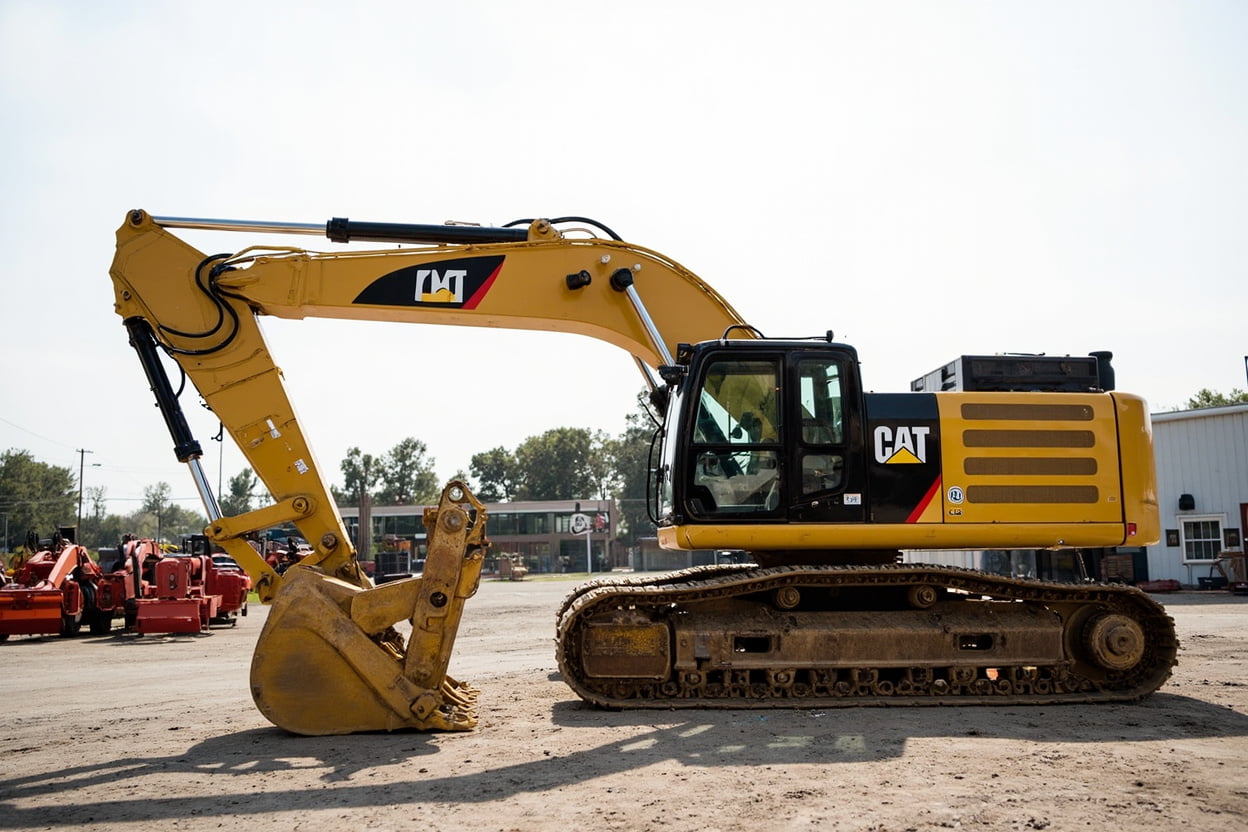
Here is how the CAT 320D and Komatsu PC200 compare in the current market, what drives the price differences, and how to evaluate which machine offers the better value for your specific operating conditions.
CAT 320D and Komatsu PC200 Dominate the Used Excavator Market in 2026
Two models consistently appear at the top of used excavator search queries and purchase orders: the Caterpillar 320D and the Komatsu PC200-8. The CAT 320D — particularly the D and D2 variants — has been the world’s best-selling 20-ton class excavator for over a decade, meaning parts availability, technician familiarity, and resale value all favor it over less common alternatives. The Komatsu PC200-8 offers comparable specifications at a slightly lower price point, making it popular among cost-conscious buyers who do not require the maximum durability ratings of CAT’s specification.
The CAT 320D and Komatsu PC200 dominate the used 20-ton excavator market because both offer proven reliability, abundant parts networks, and strong resale value. The key variable for buyers is not which machine is objectively better — it is which sourcing channel delivers the best price-to-condition ratio for machines of equivalent age and hour count.
Specification Comparison: What the Numbers Show
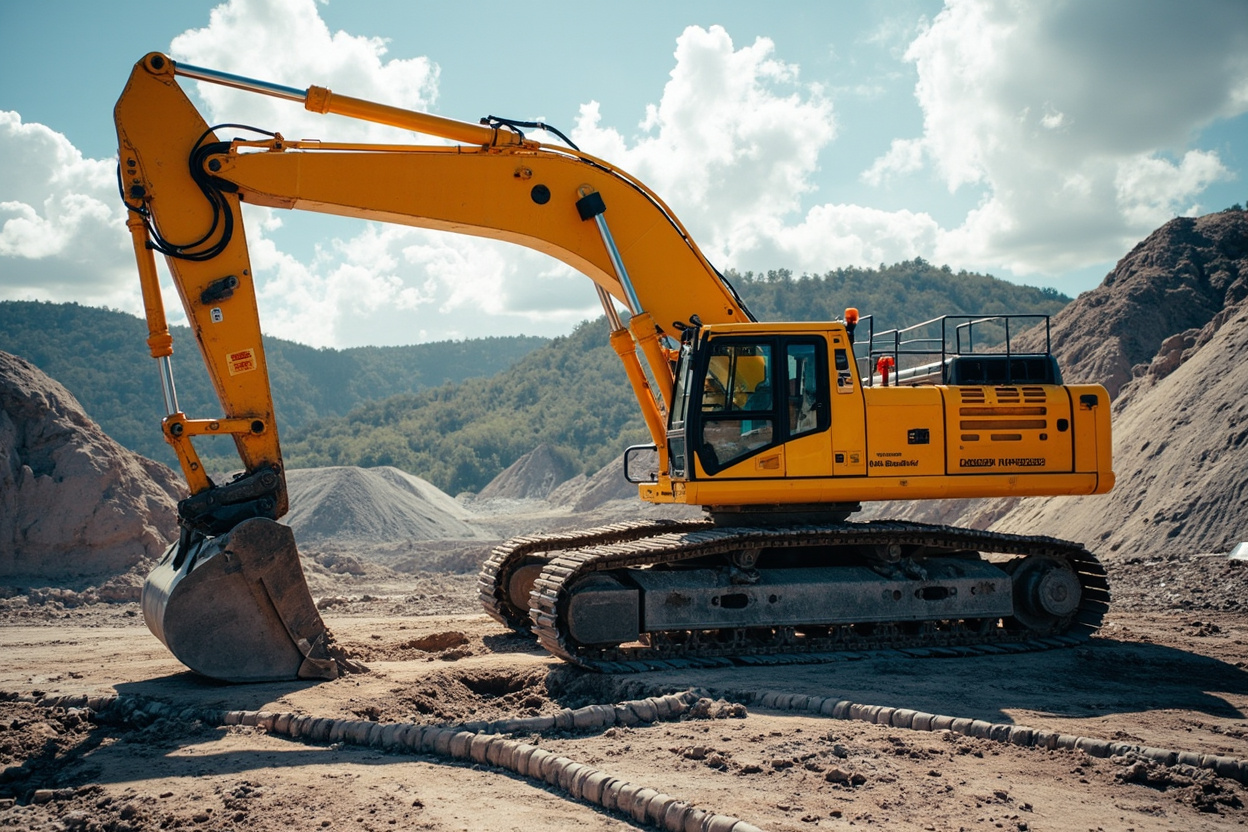
The CAT 320D operates with a Cat C6.4 ACERT engine producing 148 horsepower, a maximum dig depth of 6,680mm, and a bucket capacity ranging from 0.8 to 1.2 cubic meters depending on configuration. The Komatsu PC200-8 features a Komatsu SAA6D107E-2 engine at 157 horsepower, slightly greater dig depth at 6,920mm, and similar bucket capacity range. Both machines are widely regarded as durable under harsh operating conditions, with major differences appearing primarily in fuel efficiency under sustained heavy loading — where Komatsu’s hydraulic system tends toward marginally better consumption numbers.
Where to Source CAT 320D Excavators at the Best China Prices
The Baoding, Xuwater Section market is the largest concentration of used heavy equipment in Asia, with inventories spanning 2018 to 2025 model year machines from all major brands. The advantage of sourcing from this market versus through dealer networks in Japan or the United States is primarily structural: the domestic Chinese market for used construction equipment is highly competitive, with hundreds of dealers constantly vying for buyer attention. This competition keeps margins thin and prices transparent in ways that international dealer markets are not.
Our CAT 320D inventory in Baoding typically carries 2018-2023 model year units with 2,000-4,500 hours, priced between $20,000 and $30,000 depending on condition and hour count. The same machine — 2019 CAT 320D with 3,200 hours — sourced from a Japanese dealer network would cost $55,000 to $65,000 before international shipping and import duties.
What Pre-Shipment Inspection Actually Covers
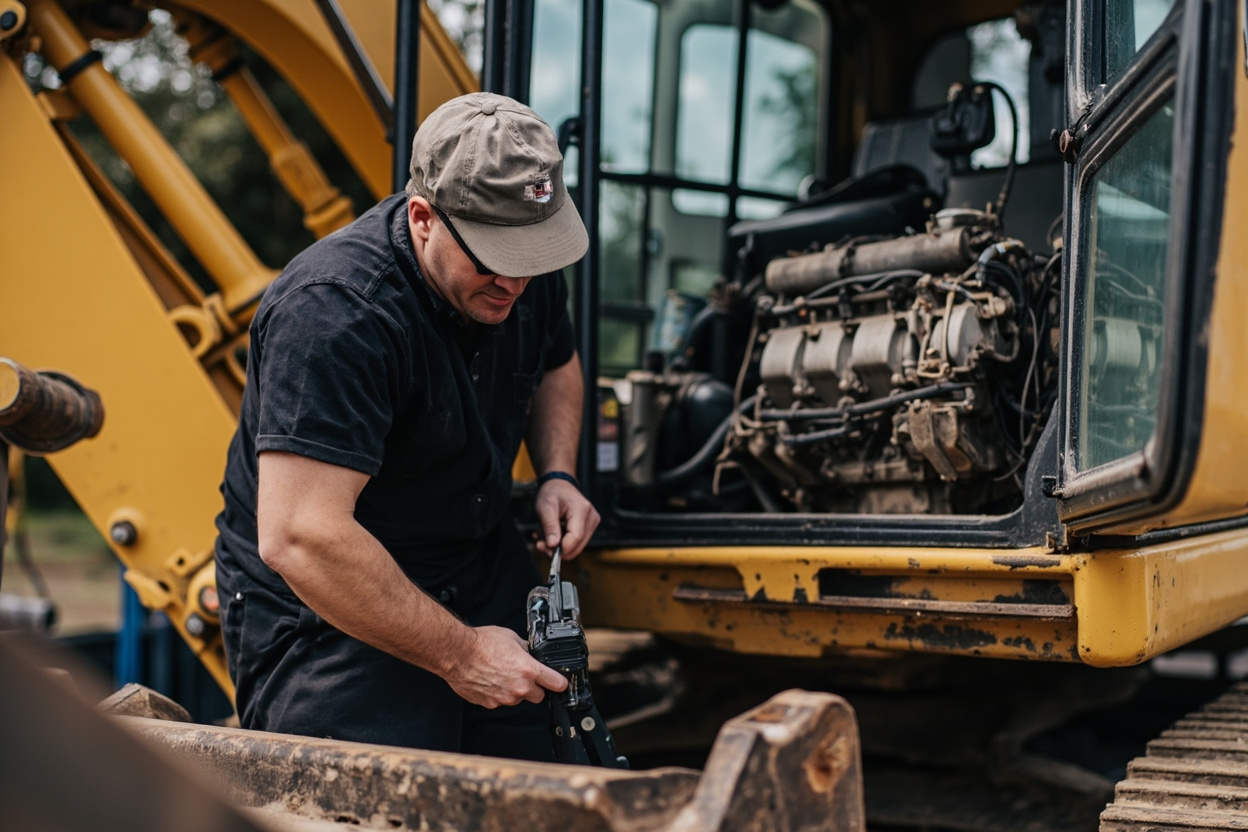
Every excavator we prepare for export undergoes a standardized inspection process managed by our technician supervisor, who has over a decade of experience with CAT and Komatsu equipment. The inspection covers hydraulic system response time, engine compression and oil consumption, undercarriage wear measurement, and electrical system diagnostics. Any machine that does not meet our preparation standards is serviced before shipping — not shipped as-is and left for the buyer to discover problems upon arrival.
Quality Inspection Checklist Before Buying Used Excavators from China
Whether you are buying from us or any other supplier, a structured inspection checklist is essential for evaluating used excavator quality. We recommend focusing on five critical areas that account for the majority of post-purchase problems in used equipment sourced from informal channels.
The five-point inspection priority for used CAT 320D and Komatsu PC200: hydraulic system response time, engine compression and oil consumption under load, undercarriage sprocket and chain wear measurement, final drive housing temperature under sustained operation, and bucket linkage play measurement. Any machine passing all five checks with acceptable tolerances will deliver reliable service for thousands of additional operating hours.
Understanding the Hour Meter: What Numbers Actually Tell You
Hour meter readings on used excavators require context. A machine showing 3,000 hours in excellent hydraulic condition is far preferable to one showing 1,500 hours with documented hydraulic problems. Our inventory transparency means we provide full service history where available and honest disclosure of any known issues. The 5,000-hour ceiling we maintain on export inventory is not a guarantee of perfect condition — it reflects our assessment that machines below this threshold, with proper preparation, still deliver reliable productive service.
Total Cost of Ownership: Spare Parts and Maintenance Economics
The purchase price of a used excavator is only the starting point for total cost calculations. Ongoing maintenance and parts consumption over a machine’s remaining service life frequently exceed the original purchase price, which is why sourcing decisions that seem price-advantageous at purchase can turn costly over a five-year operating horizon. CAT and Komatsu both have global parts networks, but the cost differential between genuine brand parts and alternative sourcing channels is significant.
Spare parts through our component network cost approximately 50% less than equivalent items through official CAT or Komatsu dealer parts counters. For a CAT 320D in continuous mining service — typically consuming $8,000 to $12,000 in parts annually — this differential represents $20,000 to $30,000 in savings over a three-year operating period, or roughly the cost of a second excavator bucket linkage assembly.
Environmental Regulations and Equipment Sourcing
Emissions regulations for non-road diesel engines vary significantly between jurisdictions, affecting which equipment models can be legally operated in certain regions. Understanding non-road emissions standards and their regional variations is an increasingly important consideration for equipment importers serving regulated markets.
Environmental Regulations and Equipment Sourcing
Emissions regulations for non-road diesel engines vary significantly between jurisdictions, affecting which equipment models can be legally operated in certain regions. Understanding non-road emissions standards and their regional variations is an increasingly important consideration for equipment importers serving regulated markets.
Fuel efficiency in hydraulic excavators is directly tied to engine load factors and hydraulic system design efficiency, factors that affect operating costs over the equipment lifespan.
For buyers comparing Caterpillar’s global dealer network versus independent importers, the choice involves tradeoffs between warranty support, parts availability, and upfront cost.
Conclusion
The CAT 320D and Komatsu PC200 remain the strongest choices in the 20-ton used excavator class for African and Latin American buyers. Sourcing from Chinese inventory through established export channels delivers purchase price advantages of 40-60% compared to traditional dealer networks — without sacrificing quality when the supplier performs proper pre-shipment preparation. Combined with 50% savings on spare parts through competitive sourcing networks, the total cost of ownership over a five-year horizon strongly favors direct-channel procurement from China.
| 1 | The CAT 320D series has been one of the most widely deployed 20-ton class excavators globally since its introduction, creating a robust ecosystem of parts suppliers, technician training, and service documentation. Learn about Caterpillar’s heavy equipment history and global dealer network. ↑ |
| 2 | Komatsu’s hydraulic system design prioritizes energy efficiency, which translates to measurable fuel savings in continuous operation compared to some competitors in the same weight class. Understand Komatsu’s position in the global construction equipment market. ↑ |