
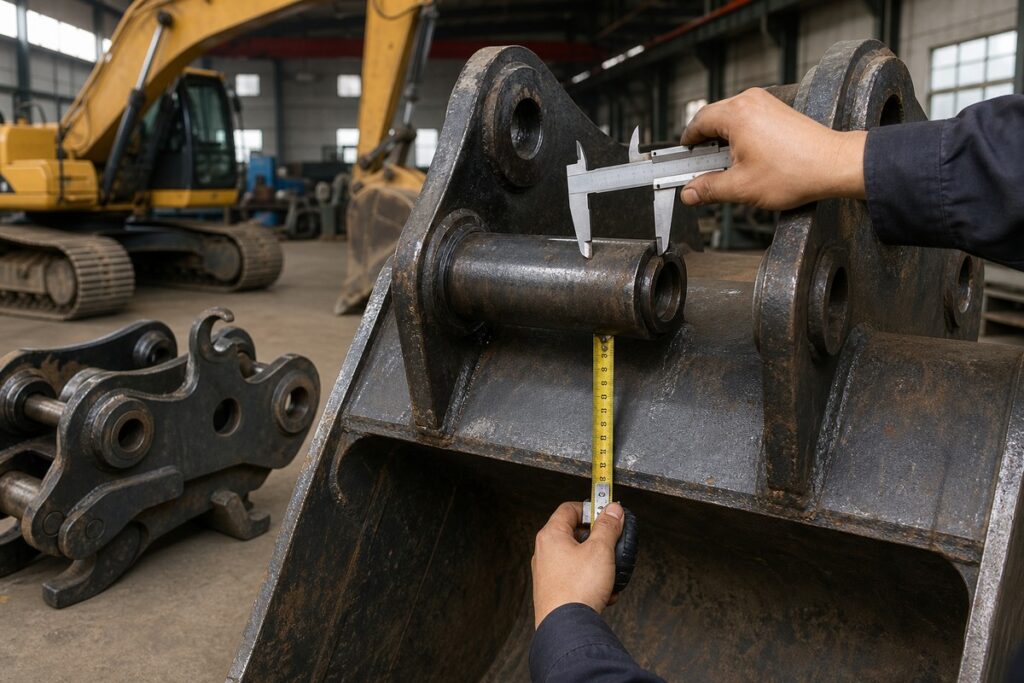
Before buying an excavator bucket, a buyer should confirm machine model and serial number, bucket width, pin diameter, pin-center distance, ear width, coupler type, tooth/adaptor style, wear condition, photos and export packing requirements.
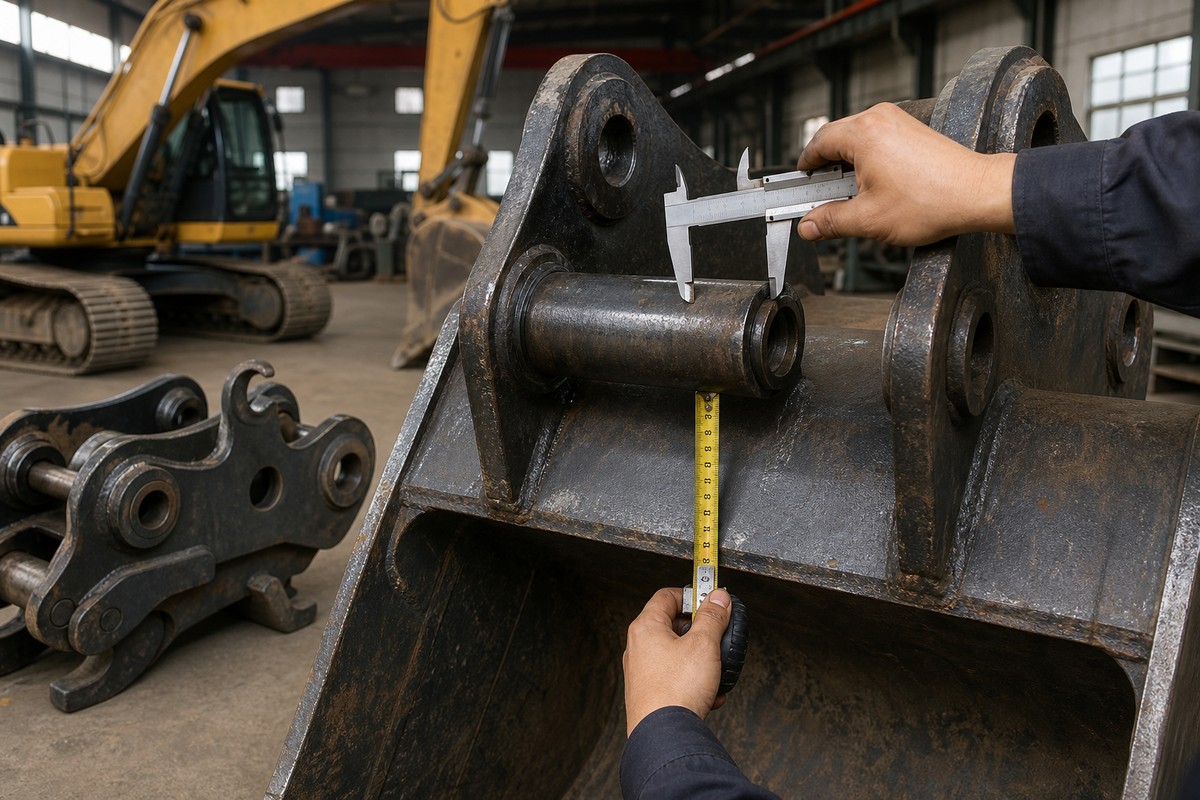
An excavator bucket looks simple, but fitment errors are common when buyers order only by machine model or bucket width. This PRIMA guide extends the excavator bucket teeth guide, the excavator parts supplier checklist and the used excavator inspection and shipping guide.
Buyer Summary
- Bucket width is not enough; pin diameter, pin-center distance, ear width and coupler type decide fitment.
- Bucket teeth, adaptors, side cutters and cutting edge should match the buyer's material and wear pattern.
- Used buckets need photos of shell wear, cracks, lugs, pins, teeth, floor plates and side plates before export.
- Packing evidence should show the actual bucket, protected teeth or edges, lifting points and loading method.
What bucket data should buyers send before price confirmation?
The safest quote starts with machine identity, bucket width, pin diameter, pin-center distance, ear width, coupler type and wear photos.
A bucket for a 20-ton excavator is not automatically interchangeable with every machine in that weight class. Stick width, coupler design, pin boss spacing and pin diameter can vary by model, configuration and previous modification. If a buyer only asks for an excavator bucket for sale by width, the supplier may quote a bucket that looks right in photos but cannot be installed without rework.
PRIMA should ask the buyer to send a simple evidence file before final price confirmation. The file should include the machine model and serial number, photos of the old bucket or coupler, pin measurements, desired bucket width, material type, destination port and whether the buyer needs new, used or rebuilt condition. This turns the quote from a generic attachment offer into a controlled fitment decision.
| Buyer data | Evidence to send | Risk controlled |
|---|---|---|
| Machine identity | Model and serial plate photo | Wrong excavator generation |
| Mounting fit | Pin diameter, center distance and ear width | Bucket cannot be installed |
| Application | Soil, rock, trenching or loading use | Wrong bucket style or tooth system |
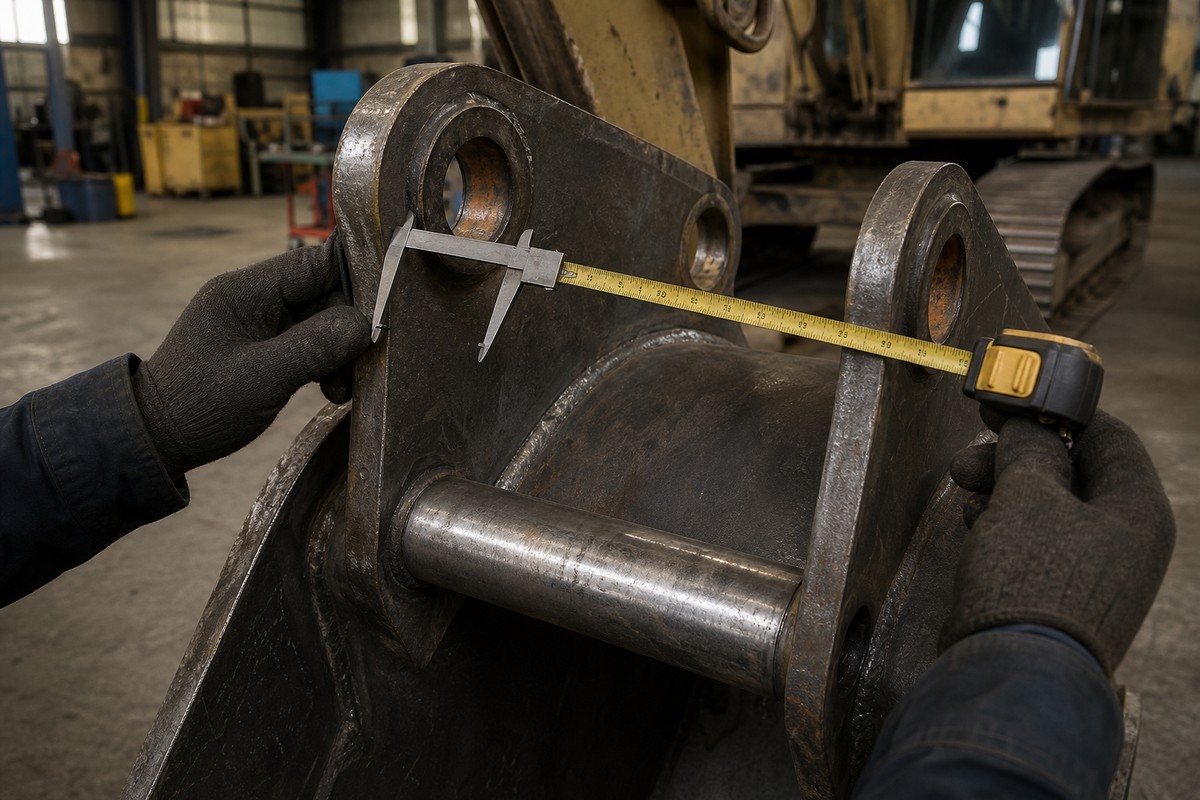
How to confirm pin size, ear width and pin-center distance
Fitment should be measured at the bucket lugs and coupler connection, not guessed from the model name.
The most important bucket measurements are pin diameter, distance between pin centers, inside ear width and the width of the dipper-stick or quick-coupler connection. Buyers should photograph the ruler or caliper in place, because written numbers can be transcribed incorrectly when several buckets are being compared.
For quick couplers, the buyer should also identify whether the coupler uses a pin-on, wedge, hydraulic quick hitch or brand-specific design. A bucket may match the excavator size but fail the coupler geometry. If the old bucket has been welded or modified, PRIMA should treat the measurement photos as more important than catalog assumptions.
| Measurement | Where to check | Why it matters |
|---|---|---|
| Pin diameter | Bucket pin or pin hole | Pin fit and bushing match |
| Pin-center distance | Center of front pin to rear pin | Linkage/coupler geometry |
| Ear width | Inside distance between lugs | Dipper-stick or coupler fit |
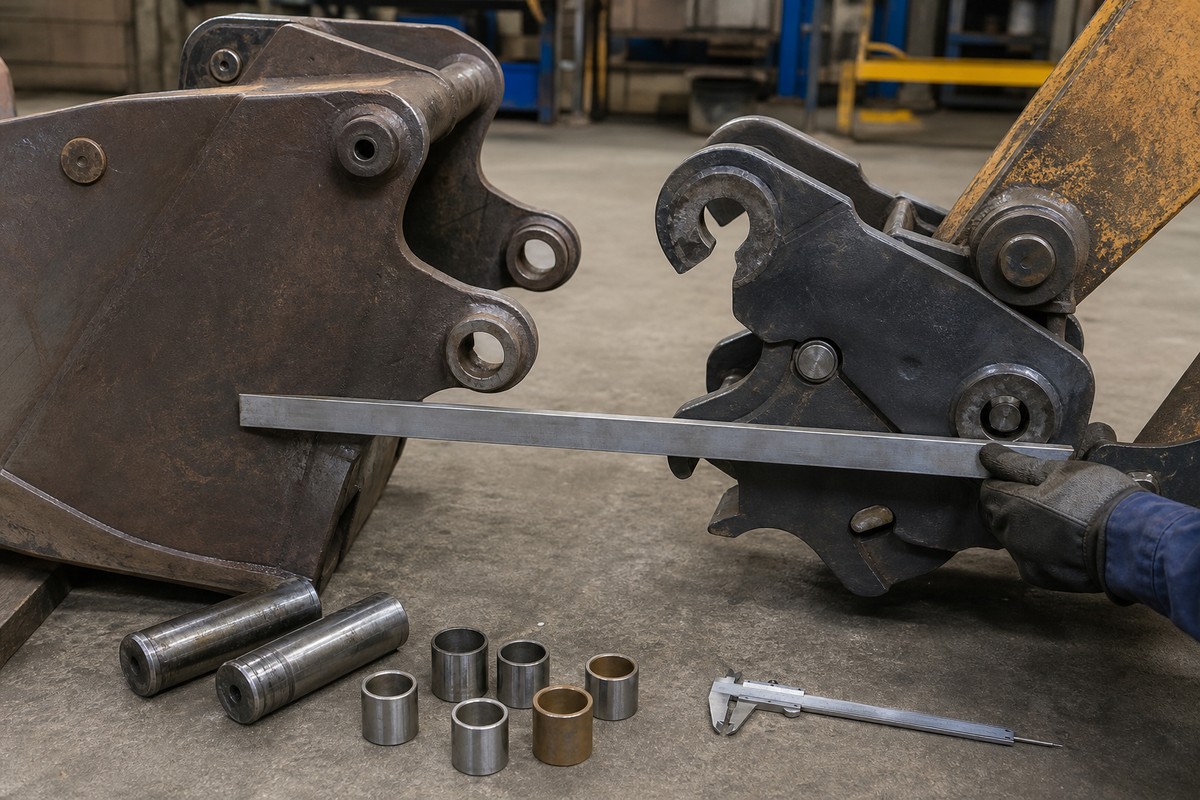
How to choose bucket teeth, adaptors and cutting-edge options
Bucket teeth and adaptors should match the bucket type, machine size and material, not only the lowest unit price.
A general digging bucket, rock bucket, trenching bucket and cleaning bucket may use different tooth layouts, plate thickness and wear protection. For parts buyers, the tooth system matters because a cheap tooth that does not match the adaptor creates downtime and loose fit. Buyers should confirm tooth model, pin/retainer style, adaptor condition and whether the bucket needs side cutters or extra wear strips.
PRIMA can separate the bucket body quote from the bucket-teeth quote when needed. That helps dealers and repair shops compare a complete bucket, a used bucket with new teeth, or a bucket shell that needs tooth/adaptor repair before shipping.
| Choice | Best evidence | Buyer decision |
|---|---|---|
| Bucket teeth | Old tooth/adaptor photos | Correct tooth system |
| Cutting edge | Wear and crack photos | Repair or replacement need |
| Side cutters | Side plate condition | Extra protection or standard build |
How to judge used bucket wear before export
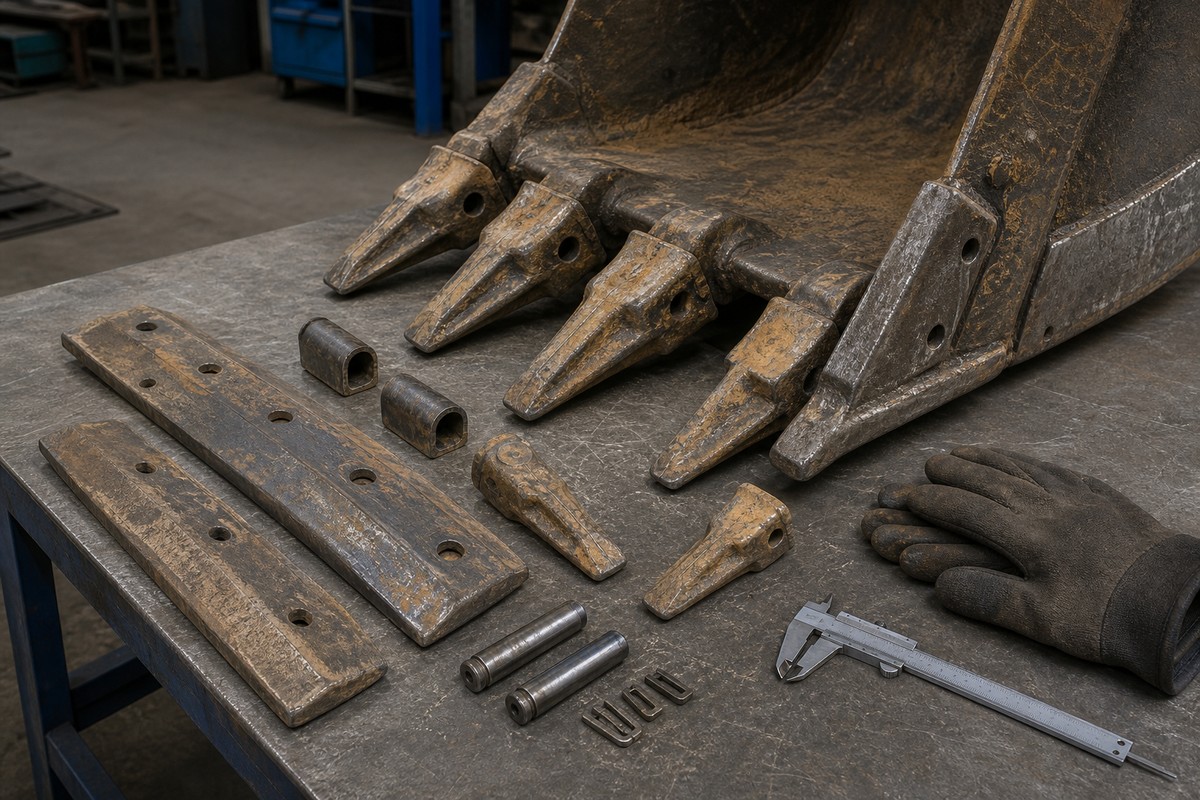
Used buckets can be good value, but the buyer needs clear photos of cracks, plate wear, lug wear and tooth condition.
A used excavator bucket should be inspected like a structural part. The shell, floor plate, side plates, heel area, lugs, bushings and weld repairs should be visible. A bucket with heavy plate wear may still be usable for light work, but the price and buyer expectation must match the condition. Photos should show both the working face and the mounting end.
For export buyers, condition grading is also a dispute-prevention tool. If the buyer accepts a used bucket with visible wear after reviewing photos, the transaction is clearer. If the bucket has cracks near the lugs or heavy deformation, PRIMA should either reject it or quote repair work explicitly instead of hiding the risk.
| Wear point | Photo needed | Why it matters |
|---|---|---|
| Lugs and bushings | Close-up of pin holes | Controls mounting looseness |
| Shell/floor | Inside and outside photos | Shows remaining service life |
| Weld repairs | Clear repair area photos | Shows structural risk |
How PRIMA prepares bucket packing and shipment evidence
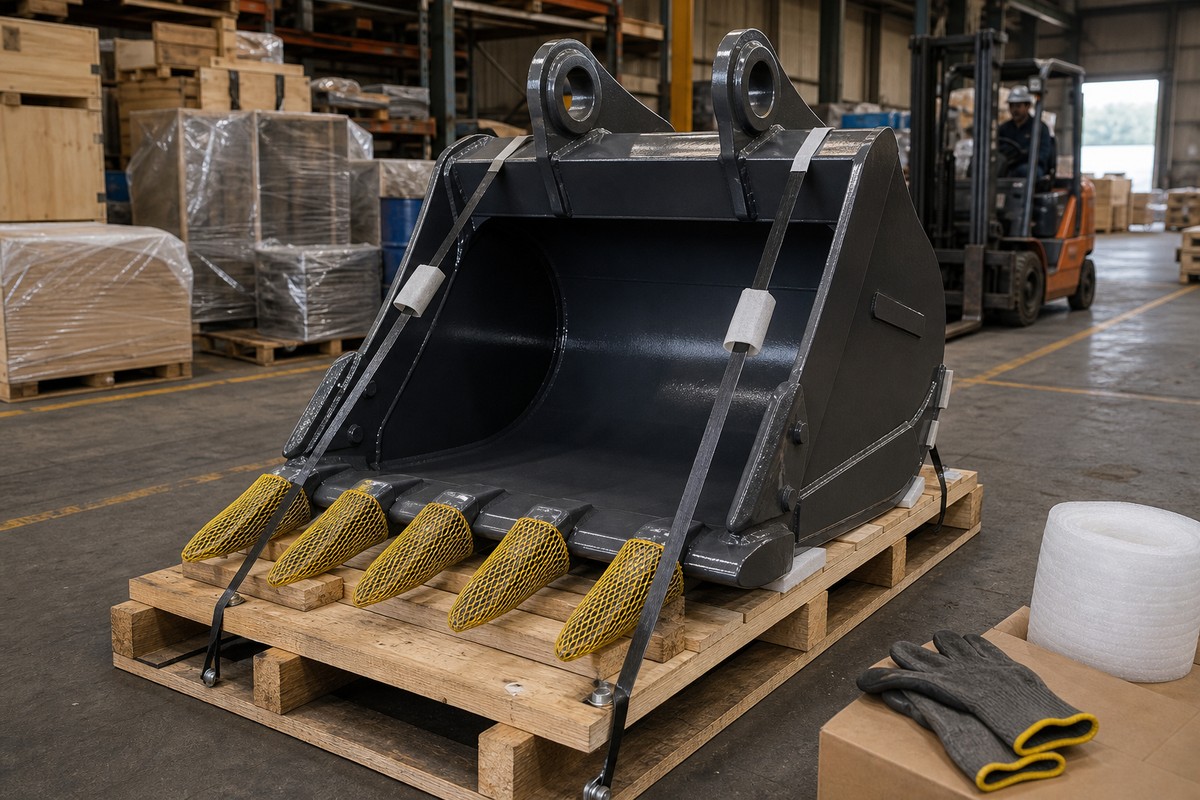
Bucket shipment evidence should show the actual bucket, protected sharp points, loading method and document file.
Buckets are heavy and awkward, so packing is more about securing the shape than hiding it inside a box. Teeth or cutting edges should be protected, and the bucket should be fixed so it cannot damage other cargo. If buckets are nested or shipped with other parts, buyers should receive batch photos before loading.
PRIMA can provide pre-shipment photos, videos and packing records when available. For bucket orders, the most useful evidence is the final bucket identity photo, measurement photo, packing or loading photo and document match. This helps importers, dealers and repair shops reduce installation surprises after arrival.
Evidence Table
| Buyer question | Evidence PRIMA should request | Value |
|---|---|---|
| Will the bucket fit? | Pin diameter, pin-center distance, ear width and coupler photos | Prevents wrong mounting |
| Is the wear acceptable? | Shell, lug, tooth, plate and repair photos | Matches price to condition |
| Can it ship safely? | Packing, loading and batch photos | Reduces damage and disputes |
Buyer FAQ
Can I order an excavator bucket by width only?
No. Bucket width helps, but pin diameter, pin-center distance, ear width and coupler type are needed before final confirmation.
What photos should I send before asking PRIMA for a bucket quote?
Send the machine serial plate, old bucket mounting area, pin measurements, coupler photos, desired bucket width, teeth/adaptor photos and destination.
Are used excavator buckets worth buying?
They can be good value when wear, cracks, lug condition and tooth/adaptor condition are clearly documented before shipment.
Conclusion
A safe excavator bucket order is a measurement-led order. PRIMA should confirm pin size, coupler geometry, tooth system, wear condition and packing evidence before treating the bucket price as final.
References
- I35 Equipment buckets: Reference for bucket fitment fields such as pin diameter and width.
- Caterpillar buckets: General reference for bucket attachment categories.
- ISO 9001: General supplier quality-system reference.
2026-06-01 repair: rock bucket fitment evidence path
This repair links the bucket checklist to the new excavator rock bucket guide and clarifies that buyers should check shell structure, side cutters, tooth adapters, pin dimensions, coupler fit and packing before approving a rock bucket order.
Buyer Summary
- Added reverse link to the rock-bucket support page.
- Strengthened bucket shell, side cutter and tooth-adapter evidence.
- Kept the page as a bucket support page, not a live-stock claim.
Repair Evidence Table
| Gap | Repair | Buyer value |
|---|---|---|
| Rock bucket detail | New reverse link and evidence block | Better heavy-duty bucket screening |
| Fitment risk | Pin and coupler evidence emphasized | Lower wrong-fit risk |
| Packing | Export packing proof linked | Dispute prevention |
Internal Link Updates
External Reference
2026-06-12 PRIMA evidence update
Adds a direct quick-coupler fitment and safety evidence path for bucket buyers.
2026-06-17 PRIMA evidence update
Adds cutting-edge and side-cutter measurement evidence to the bucket buying and packing path.