
Choosing an excavator attachment starts with the work and the carrier machine, not with the attachment name alone. A bucket, breaker, grapple, auger, ripper, thumb or compactor must match the excavator’s model and serial range, mounting geometry, coupler interface, allowable attachment weight and—when hydraulically powered—auxiliary oil flow, pressure and hose arrangement. Before a quotation, buyers should provide the machine model and serial/PIN, photos of the stick end and existing coupler, pin measurements, hydraulic specifications and the actual job material. This prevents a tool that appears suitable in a catalogue from arriving with the wrong pins, excessive weight, inadequate flow or an unsafe locking arrangement.
Buyer Summary
- Match the attachment to the work, material and required finish before comparing prices.
- Confirm model/serial, attachment weight, pin dimensions, coupler type and hydraulic flow/pressure.
- For used attachments, request current close-ups, measurements, wear/crack evidence and an operating test where applicable.
- Do not treat “fits a 20-ton excavator” or a similar class label as a fitment guarantee.
- Confirm current availability, condition, inclusions, packing and lead time for the exact unit before payment.
Quick answer: what determines attachment compatibility?
Excavator attachment compatibility is determined by a chain of checks: the job, carrier model and serial number, machine operating/lifting limits, pin diameter, pin-centre distance, ear width, coupler interface, attachment mass and centre of gravity. Powered tools add another layer: auxiliary hydraulic flow and pressure, one-way or two-way circuit requirements, return or case-drain needs, hose size and connector type. A correct name is not enough. The buyer should send a photo-and-measurement file, and the supplier should return a model-bounded fitment statement, current condition evidence, included pins/hoses/adapter details and packing information. Final installation, locking and operating procedures must follow the carrier, coupler and attachment manufacturers’ instructions.
Which types of excavator attachments match different jobs?
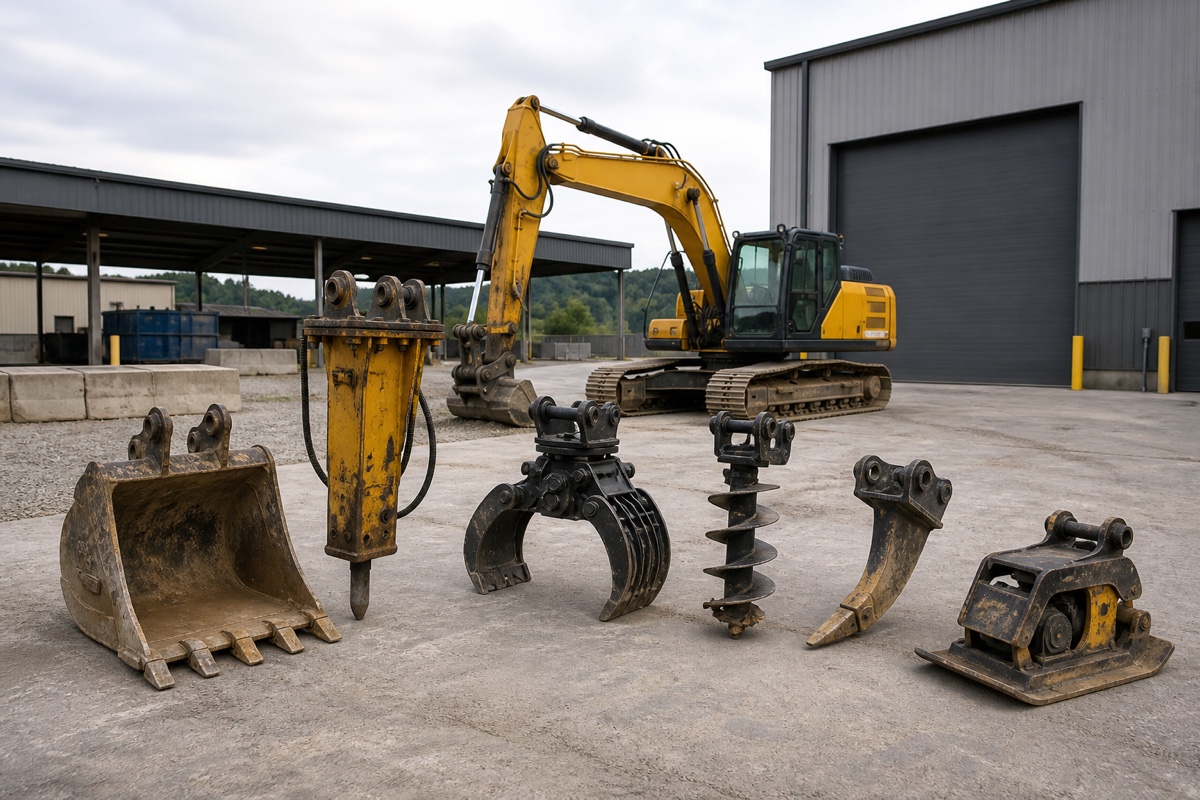
The main types of excavator attachments solve different work problems. A digging bucket is not automatically the right bucket for rock, grading or trench cleaning. A grapple or thumb handles irregular materials, while an auger drills and a ripper concentrates force into hard ground. Breakers and compactors depend heavily on the carrier’s hydraulic system. Quick couplers make tool changes easier, but they are interfaces rather than universal fitment adapters.
Searches for compact excavator attachments or mini excavator attachments for sale often mix product-shopping and selection intent. Buyers should narrow the request by task and carrier before asking for price. PRIMA’s public catalogue currently supports buckets and a small number of used quick-coupler records; availability for grapples, augers, rippers, thumbs, compactors or other tools must be confirmed for the specific inquiry.
| Attachment type | Typical buyer job | Critical checks before quotation |
|---|---|---|
| Digging, rock, trenching or grading bucket | Digging, loading, rock work or finish grading | Width, capacity, teeth/edge, pin geometry, material density and carrier class |
| Hydraulic breaker | Concrete or rock breaking | Tool weight, oil flow/pressure, hose/connector, back pressure and mounting bracket |
| Grapple or hydraulic thumb | Sorting logs, stone, scrap or demolition material | Opening range, cylinder/valve arrangement, mount geometry, hose routing and load limits |
| Auger | Drilling holes in soil or rock | Drive torque, bit diameter, ground type, flow range, pressure and reverse function |
| Ripper | Breaking compacted, frozen or fractured material | Shank geometry, tooth condition, carrier force, pins and job material |
| Vibratory plate or roller compactor | Trench or slope compaction | Operating weight, flow/pressure, vibration rating, width and ground condition |
What machine data is required for correct attachment fitment?
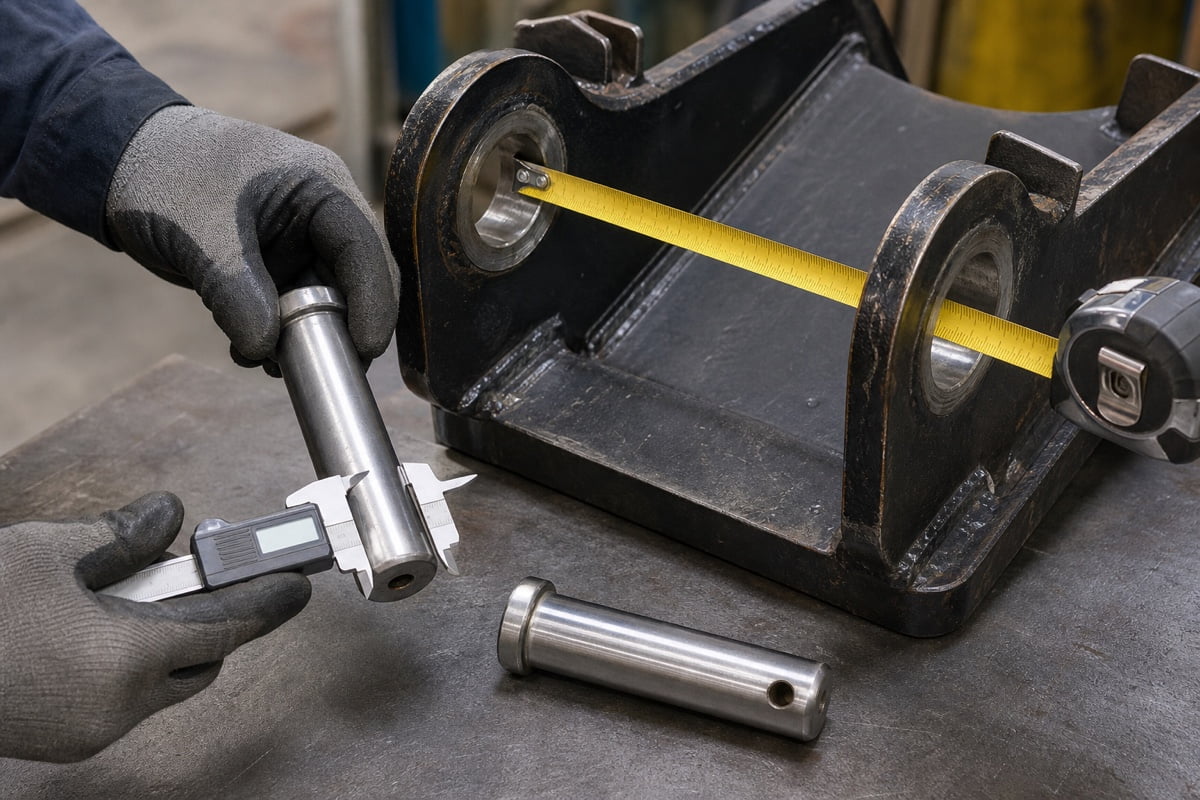
Start with the full carrier identity: brand, model, serial/PIN and machine configuration. Model names can cover different serial ranges, booms, sticks, auxiliary circuits and coupler options. Then record the mechanical interface. For a pin-on or pin-grabber arrangement, measure the front and rear pin diameters, centre-to-centre distance and the inside width between the attachment ears. Photograph the existing bucket or coupler from the side and front with the measuring tool visible.
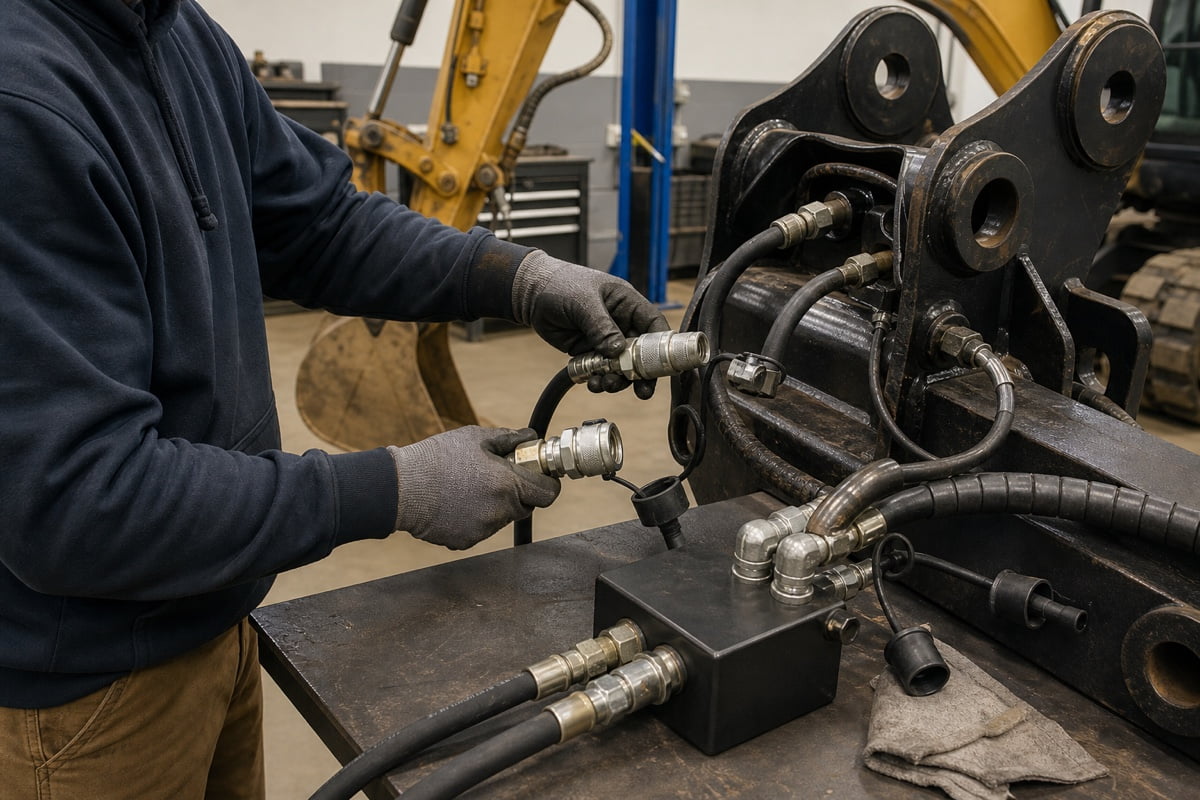
Powered tools require the machine’s auxiliary hydraulic specifications. Record available flow and pressure, whether the circuit is one-way or two-way, whether a separate return or case-drain line is required, and the hose and connector types. Caterpillar’s attachment-selection guidance likewise tells owners to confirm hydraulic flow and pressure, while Bobcat’s coupler guidance stresses model/serial identity and mounting dimensions. John Deere’s published auger ranges demonstrate why two visually similar tools can require different hydraulic flow.
| Buyer input | Why it matters | Acceptable evidence |
|---|---|---|
| Model and serial/PIN | Separates serial ranges and configurations | Clear machine plate photo plus typed number |
| Pin and ear measurements | Confirms physical mounting geometry | Dimensioned sketch and photos with ruler/caliper visible |
| Coupler brand/model/interface | Couplers are not universally interchangeable | Coupler plate, lock and hook/jaw photos |
| Auxiliary flow and pressure | Determines powered-tool performance and risk | Operator manual specification or verified machine settings |
| Attachment weight and dimensions | Affects stability, reach, lift and transport | Manufacturer plate/specification or measured unit record |
For a more general parts-order file, use PRIMA’s excavator spare-parts fitment checklist and the parts RFQ preparation guide.
How should buyers inspect a new or used attachment before ordering?
Condition evidence should match the exact quoted unit. Ask for current wide views, both mounting ears, all pins and bushings, cutting edges or working tools, weld areas, hoses, cylinders, valves, motor or gearbox where applicable, and the specification plate if one exists. For used excavator attachments, look for elongated pin bores, uneven wear, cracks near reinforced corners, fresh paint over repair areas, leaking cylinders, damaged hose covers and missing loose parts.
For powered attachments, request a function video only after the correct carrier or test setup is identified. A video that shows movement but not pressure, flow, mounting or the quoted unit reference is weak evidence. The supplier should state what is included: pins, hoses, bracket, adapter, tool bit, teeth, guard, controller or loose fittings. If a repair has been completed, request the repaired area and limitation rather than treating repainting as proof of condition.
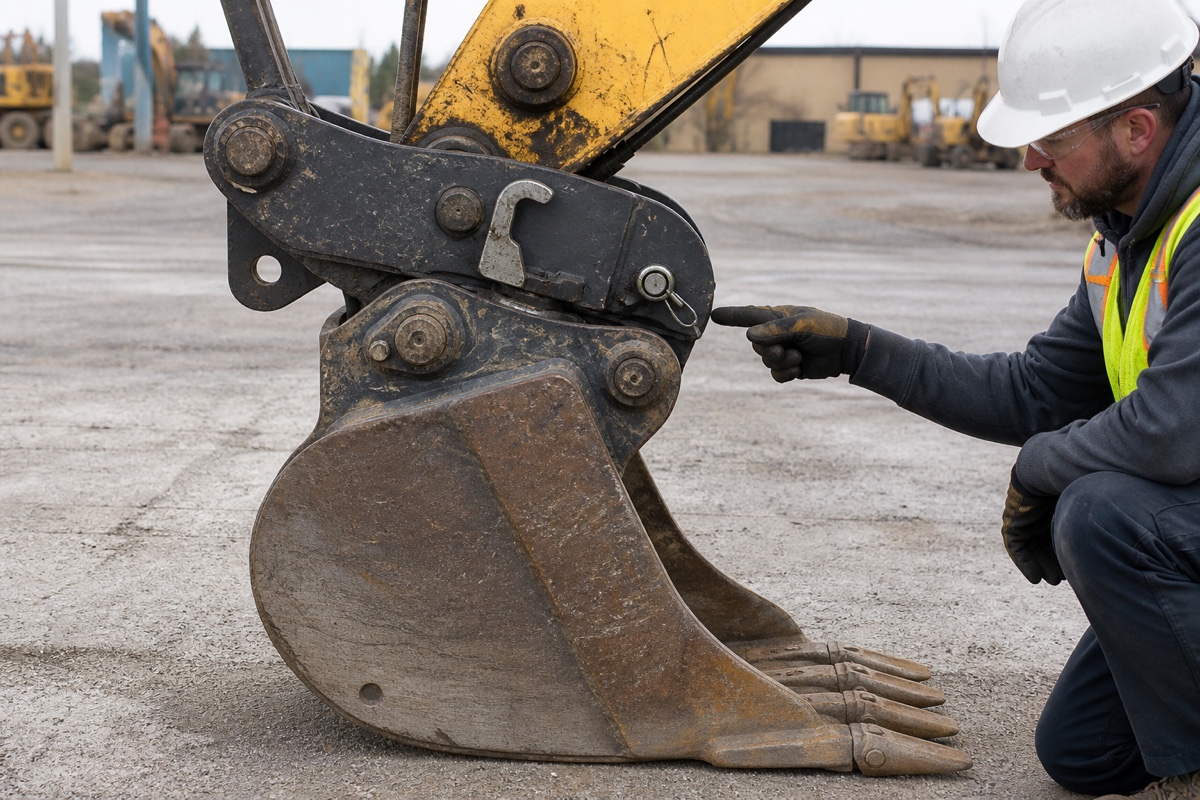
Quick-coupler safety requires special care. OSHA has documented fatal incidents involving unintended bucket release and advises employers to follow manufacturer installation, locking, testing, inspection and maintenance procedures. A sales page cannot replace those instructions. Before operation, the carrier, coupler and attachment must be connected and checked according to their manufacturers’ procedures, and no person should work under a suspended attachment.
PRIMA currently publishes a quick-coupler buyer guide, a bucket inspection guide and a hydraulic-hose guide for the narrower checks.
What should the quotation and packing file contain?
A usable quotation should identify the attachment type, exact unit or manufacturing route, intended carrier, model/serial boundary, mounting dimensions, condition, included accessories and any required adapter. Hydraulic attachments should include flow/pressure range and hose/return requirements when verified. Availability and lead time must be confirmed for the inquiry; neither a catalogue category nor an old photo proves current stock.
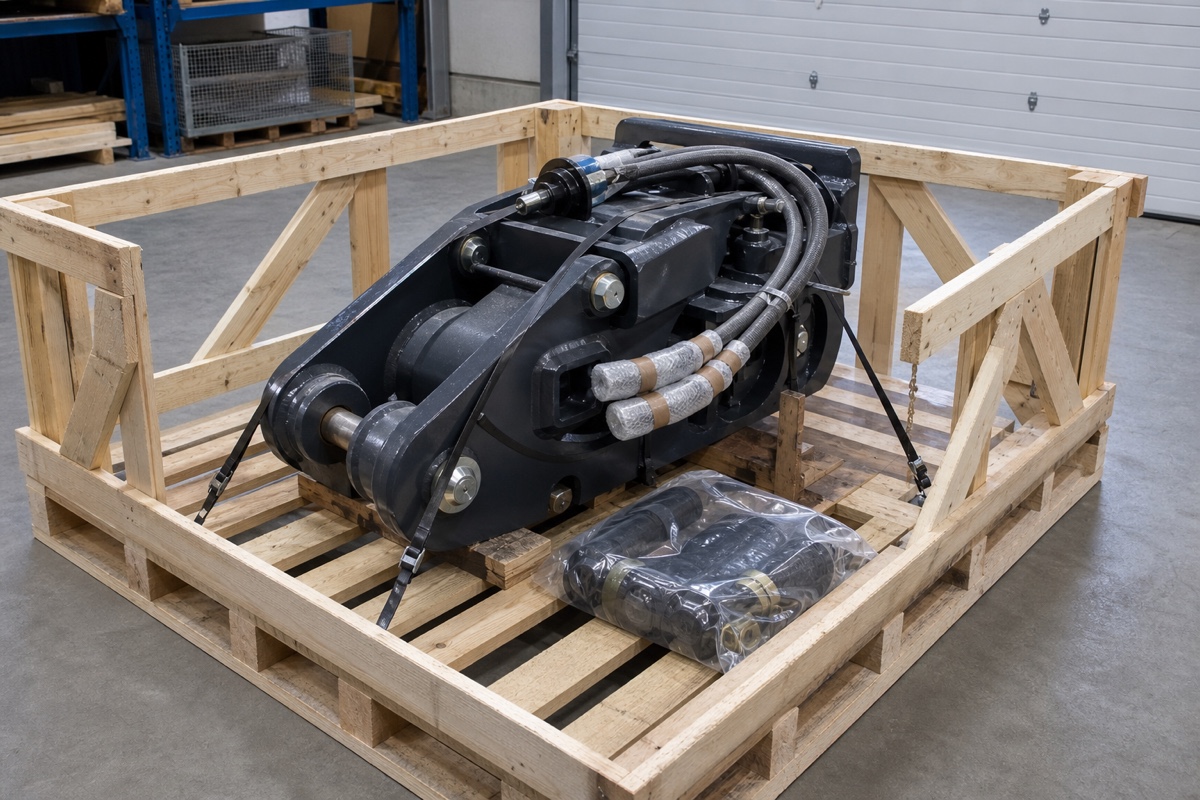
Packing depends on weight, shape, exposed pins, tools, cylinders and hoses. Ask for the packing method, gross dimensions and weight, lifting points, loose-parts list, hose/end protection, corrosion protection when relevant and pre-dispatch packing photos. Heavy or irregular attachments may need a pallet, steel frame or wooden crate with blocked movement and protected working edges. The buyer should also know whether pins, hoses and adapters are packed with the main unit or separately.
| Evidence item | What it should establish | Limitation |
|---|---|---|
| Model/serial and measurement file | The intended carrier and interface | Measurements support matching; final approval still follows manufacturer data |
| Current unit photos/video | Visible condition and quoted-unit identity | Does not prove hidden condition or future performance |
| Verified hydraulic requirements | Flow, pressure, return/drain and connectors | Machine settings and installation must be checked locally |
| Packing list and packed photos | Included parts and transport protection | Must correspond to the final dispatch, not a sample shipment |
Buyers can review the current bucket and attachment category or the broader excavator spare-parts archive. Send the machine and fitment file before requesting availability so PRIMA can check the supplier route, current condition options, lead time, packing and evidence for the specific quotation.
Buyer FAQ
Are excavator attachments universal?
No. Fit depends on the carrier model/serial, pin dimensions, ear width, coupler interface, attachment weight and hydraulic requirements. “Universal” wording should never replace a model-bounded fitment check.
What measurements are needed for a pin-on attachment?
Record front and rear pin diameter, pin-centre distance, inside ear width and any offset. Add clear photos of the stick/link, existing bucket or coupler and each measurement.
Can the same hydraulic attachment work on different excavators?
Sometimes, but only when the mounting interface, carrier capacity, oil-flow and pressure range, circuit direction, return/case-drain needs and connectors are compatible. An adapter may solve geometry but cannot solve an unsuitable hydraulic circuit or excess weight.
What should be checked on a used attachment?
Check pin bores, ears, welds, edges or tools, cylinders, hoses, valves/motors, missing parts and repair areas. Request current unit photos, measurements and a suitable function test where applicable.
Does a product photo prove current availability and fitment?
No. A photo may show a real attachment, but current availability, exact condition, included parts and fitment must be confirmed for the quoted unit and carrier before payment.
Conclusion
The best attachment decision is a documented match between the job, carrier, interface, hydraulics and evidence—not the lowest headline price. Build the RFQ around machine identity, measurements, hydraulic specifications, condition proof, inclusions and packing. Then require a model-bounded supplier response and follow manufacturer instructions for installation and safe operation. This approach supports a useful comparison whether the buyer is evaluating buckets, breakers, grapples, augers, rippers, compactors, quick couplers or another attachment class.