
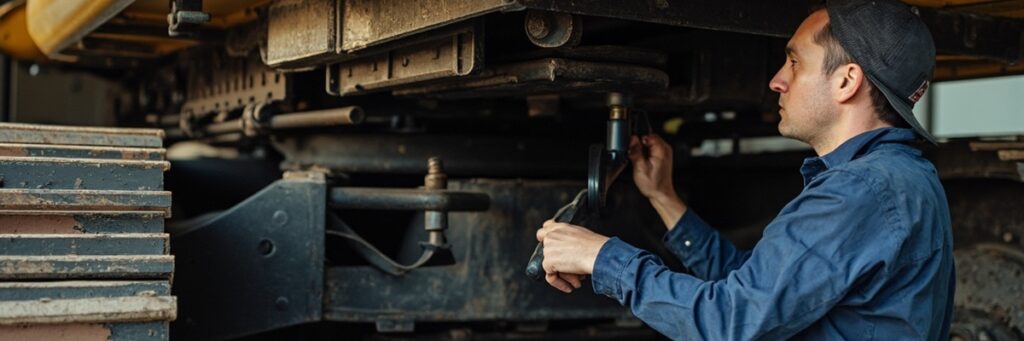
A used excavator looks fine on video. But videos do not tell you everything — which is why we built a systematic inspection process our team uses on every machine before it leaves our yard.
Why inspection Matters More Than Price
The used equipment market in china has a reputation problem. There are dealers who flip machines without proper checks, and buyers who have learned the hard way that what looks like a USD 25,000 bargain can turn into a USD 15,000 repair bill within weeks. We’ve been in this business long enough to know: the machine’s condition matters far more than the price tag. Our repair supervisor has 10+ years of experience with caterpillar, komatsu, SANY, and XCMG equipment, and every machine goes through his hands before export. If it does not pass our check, it does not ship.
Visual inspection: Start Here
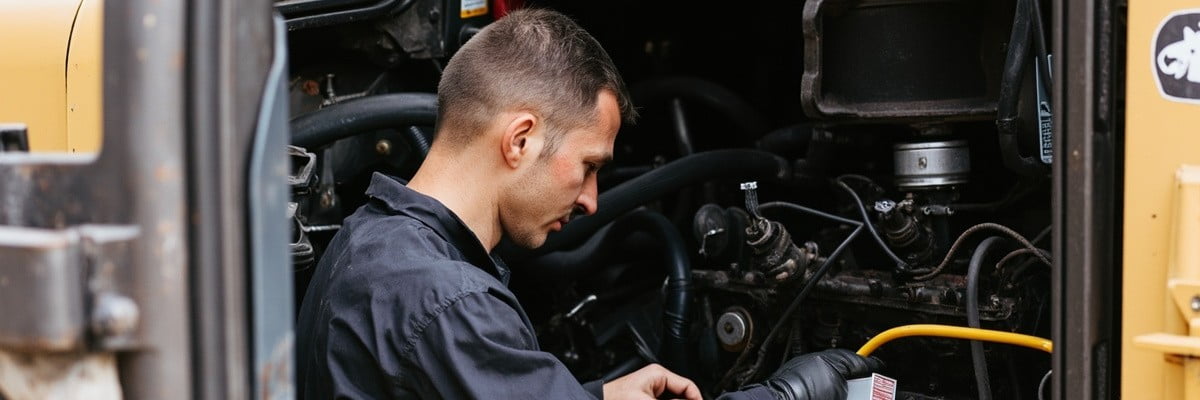
Walk around the machine and look for oil stains on the ground — these tell you whether the machine leaks and how bad. Check the boom and arm for cracks or welding repairs. Look at the track pads: uneven wear suggests alignment problems or undercarriage issues that cost thousands to fix. Document everything with photos and timestamps.
Open the engine compartment and look at the fluid colors. Engine oil should be golden brown, not black. Coolant should be green or pink — if it’s rusty brown, the cooling system needs work. hydraulic fluid should be amber and clean. Dark, smelly hydraulic fluid means the system has been running hot, which shortens component life significantly.
Engine and hydraulic System Checks
Start the engine cold and listen carefully. A healthy diesel engine settles into a steady rhythm within 30 seconds. Listen for knocking, tapping, or irregular firing patterns. Black or white smoke from the exhaust tells you something is wrong — black means the air-fuel mixture is rich (usually injectors), white means possible coolant entering the combustion chamber. Our team does a compression test and cylinder leak-down test on every machine we export — these tests reveal internal engine condition that no video can show.
Operate every hydraulic function slowly: boom, arm, bucket, swing, and track. Smooth, hesitation-free operation means the hydraulic pump and valves are healthy. Jerky movement or unusual noises point to internal wear. We test all functions at operating temperature before declaring a machine export-ready.
undercarriage and Track Assessment
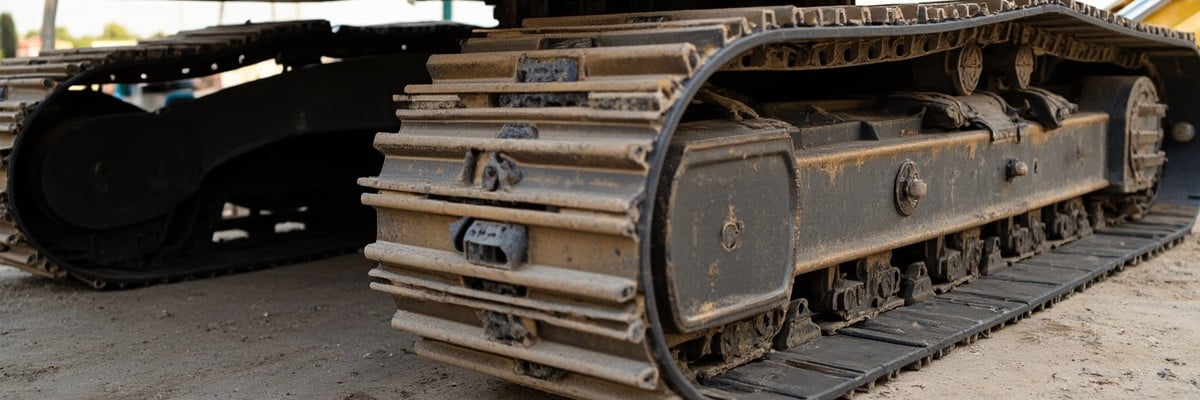
Track condition is one of the most expensive repairs on an excavator, so pay close attention here. Measure track pad wear against the manufacturer’s spec — if pads are 30%+ worn, factor in track replacement (USD 3,000-8,000 depending on machine size). Check track tension by measuring sag: too loose and you’ll hear clicking; too tight and you stress the entire system. Look at the carrier rollers, idlers, and track rollers for signs of wear or leakage. Our yard team measures and documents all undercarriage components before your machine ships.
What documents come with an exported excavator?
We provide the machine’s service history (if available from the previous owner), our pre-export inspection report, bill of lading, commercial invoice, packing list, export license, and certificate of origin. For your country’s import clearance, we work with your customs broker to ensure all required paperwork is properly documented on our end.
Can you send a video inspection before I buy?
Absolutely. Every serious buyer gets a video walk-around and operation demo before committing. We film the engine startup, all hydraulic functions, track movement, and undercarriage. If you need specific angles or close-ups, just ask. We want you to know exactly what you are buying.
What if the machine arrives and has problems?
We provide a 30-day mechanical protection period from the date your machine departs our yard. If a covered component fails during this period (not including track wear, damage from improper operation, or cosmetic issues), we coordinate repair parts and technical guidance at no additional cost. We also keep common replacement parts in stock — filters, hoses, belts — and ship them quickly if needed.
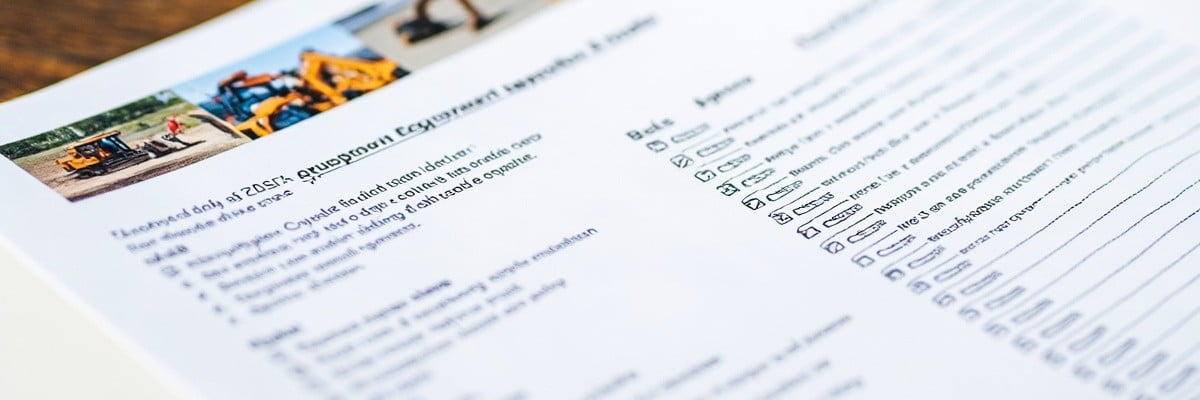
Before you buy from anyone, get an inspection checklist like this one and go through it point by point. The machine that passes every check is worth every dollar more than the one that does not.