
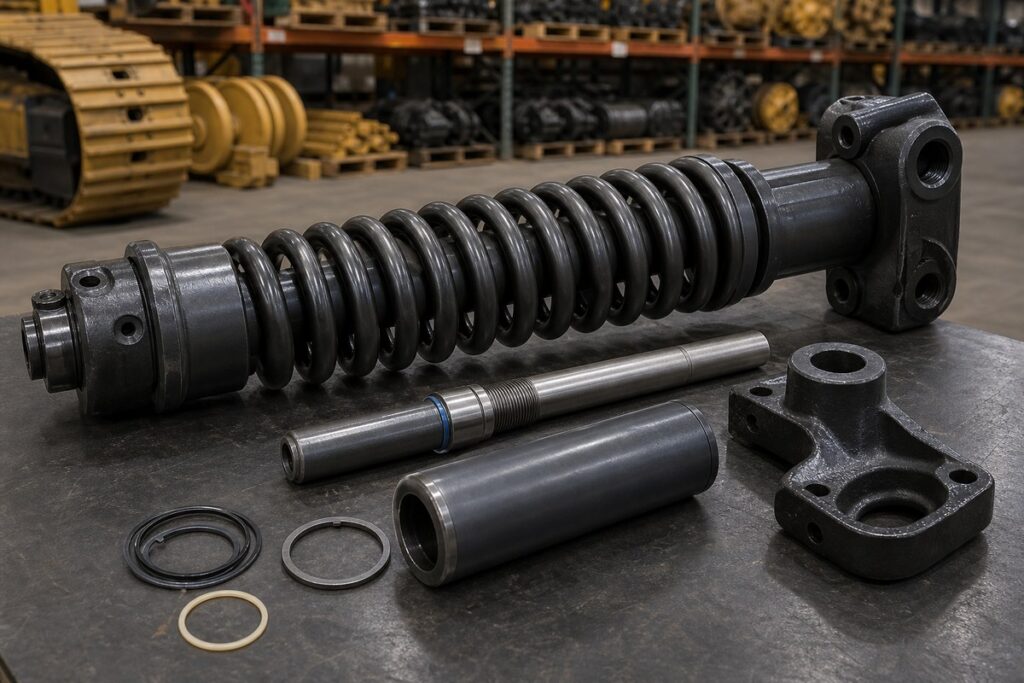
Buyers should check an excavator track adjuster before ordering from China by confirming the old adjuster assembly, excavator model, serial context, recoil spring assembly type, grease cylinder length, rod diameter, spring diameter, bracket mounting holes, idler-side connection, leak condition and export packing. Track adjusters involve stored spring force, so PRIMA should focus on visual evidence and fitment proof, not unsafe disassembly instructions.
The track adjuster, recoil spring and grease cylinder keep the crawler track tension within a workable range. When the assembly leaks or the spring/rod is damaged, the excavator may throw tracks, wear rollers and idlers faster, or become unsafe to operate.
This PRIMA guide supports the undercarriage cluster with links to the undercarriage parts hub, idler guide, track chain guide and carrier roller guide.
Buyer Summary:
- Best for buyers sourcing excavator track adjusters, recoil spring assemblies and grease cylinder replacements.
- Required evidence includes old assembly photos, overall length, spring diameter, rod condition, bracket holes and idler connection.
- The biggest buyer risk is ordering a similar adjuster with the wrong length, bracket or front-idler interface.
- The page avoids unsafe spring-disassembly guidance and focuses on procurement evidence and safe visual checks.
Quick answer: what evidence proves an excavator track adjuster will fit?
An excavator track adjuster quote should include old assembly photos, excavator model, serial context, track frame side, front idler connection, grease cylinder dimensions, rod condition, spring diameter, overall length, bracket holes and leak evidence. Buyers should not rely only on undercarriage model names because track adjuster length and bracket design can vary. PRIMA should request safe photos from outside the track frame and bench photos when the old assembly has already been removed. Before shipment, the assembly should be blocked inside a crate, with the rod, grease fitting and spring protected from impact and contamination.
Which old-part photos should buyers collect first?
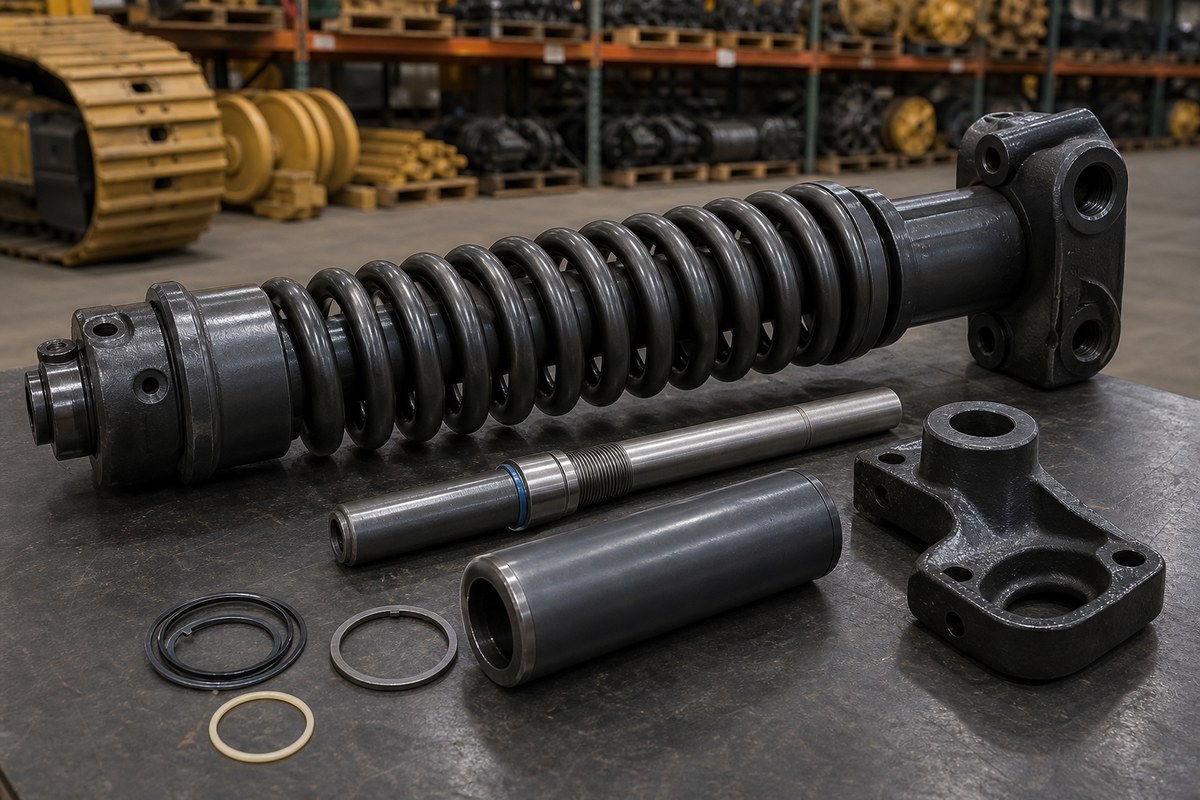
Buyers should photograph the track adjuster location before removal, showing the track frame, front idler, spring, grease fitting and visible bracket. If the old assembly has already been removed, bench photos should show all sides, the rod, spring, cylinder, mounting holes and any part marks.
PRIMA should ask whether the buyer needs only the grease cylinder, the recoil spring, the rod or the complete assembly. Many wrong shipments happen because the buyer names one part but expects a complete assembly. The quote should state exactly what is included.
Which measurements control track adjuster fitment?
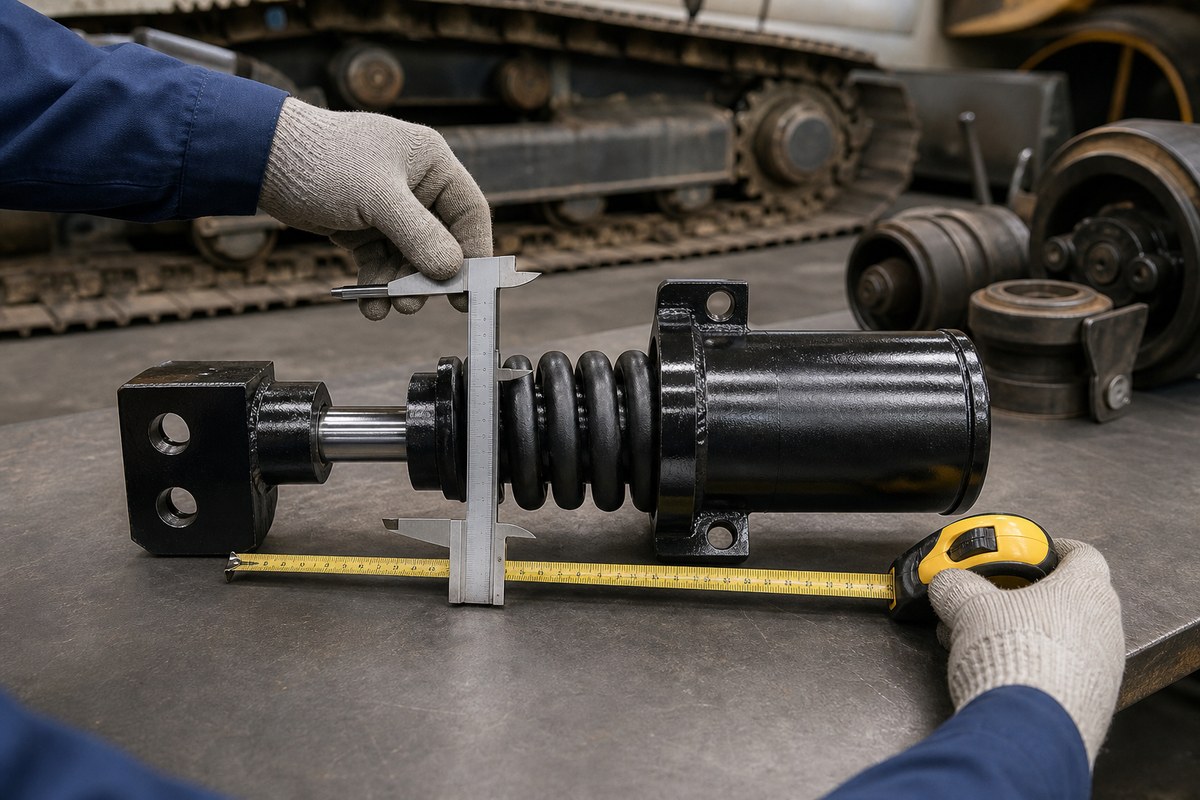
Important measurements include overall length, spring diameter, rod diameter, grease cylinder body diameter, bracket width, hole spacing and connection to the front idler. The buyer should compare these measurements against the old assembly rather than choosing by track shoe or roller size alone.
If the supplier proposes a substitute, PRIMA should record how the substitute matches the old assembly. A small bracket or length difference can affect track tension range, idler position and assembly inside the track frame.
How should leaks and spring condition be judged safely?
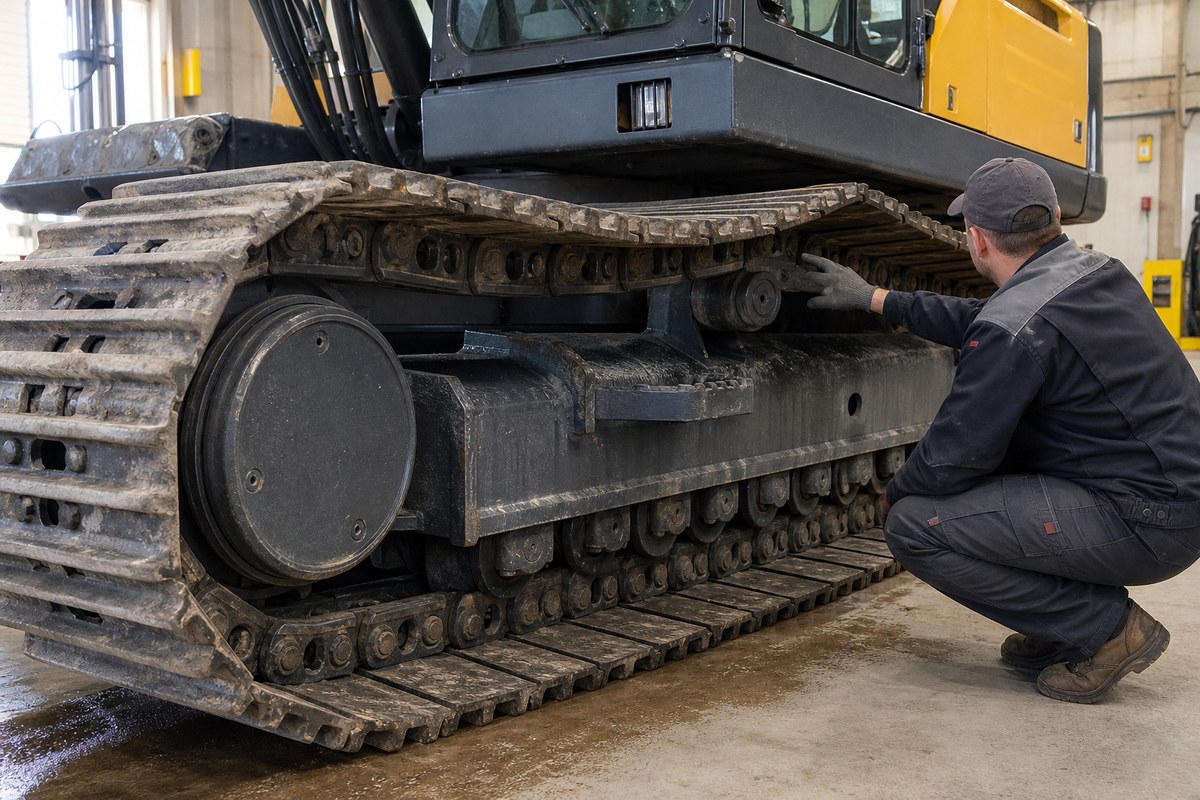
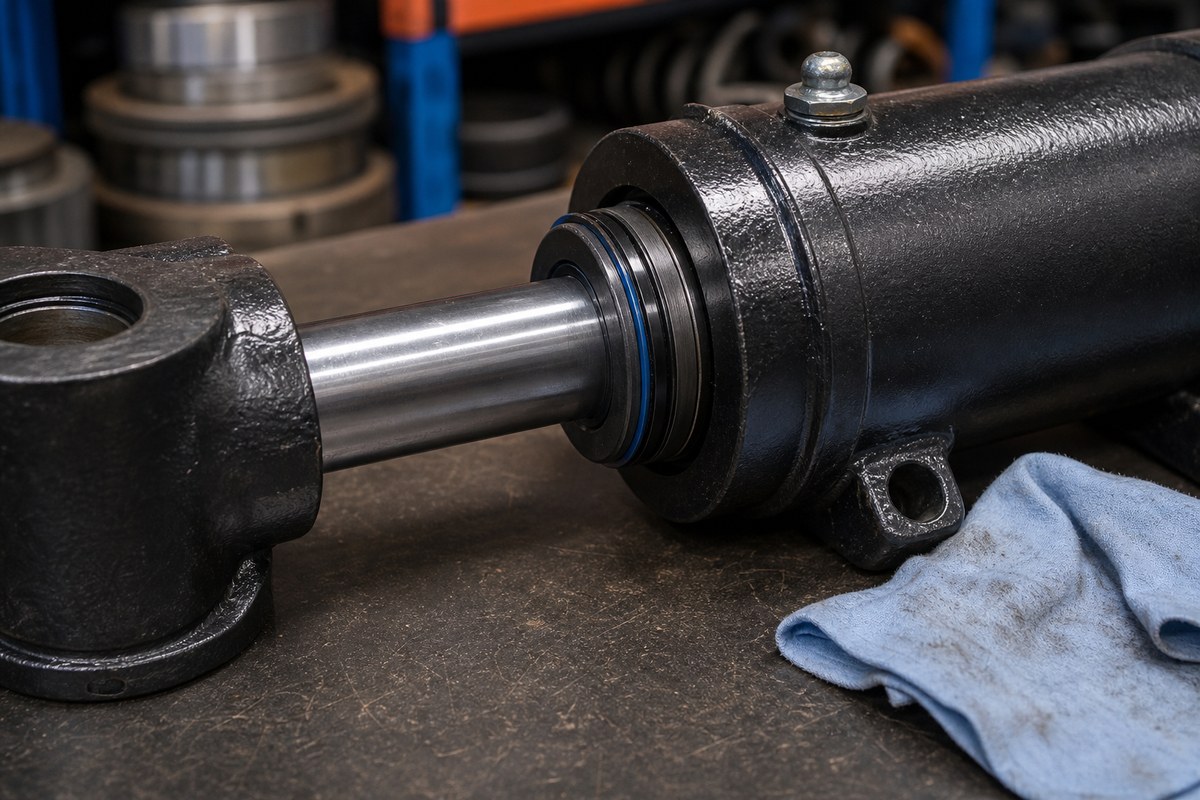
Track adjusters can store strong spring force. Buyers should not ask workers to disassemble a compressed spring for a procurement photo. Safer evidence includes external leak marks, grease fitting condition, rod scoring, bent parts, broken spring coils, bracket cracks and track-sag symptoms observed from a safe position.
If the machine throws tracks or the idler cannot hold position, the adjuster may be one part of the problem. Track chain pitch, idler wear, sprocket wear and frame damage can also contribute. PRIMA should connect the buyer to the wider undercarriage evidence file instead of treating the adjuster as the only possible cause.
What packing proof should be required before shipment?
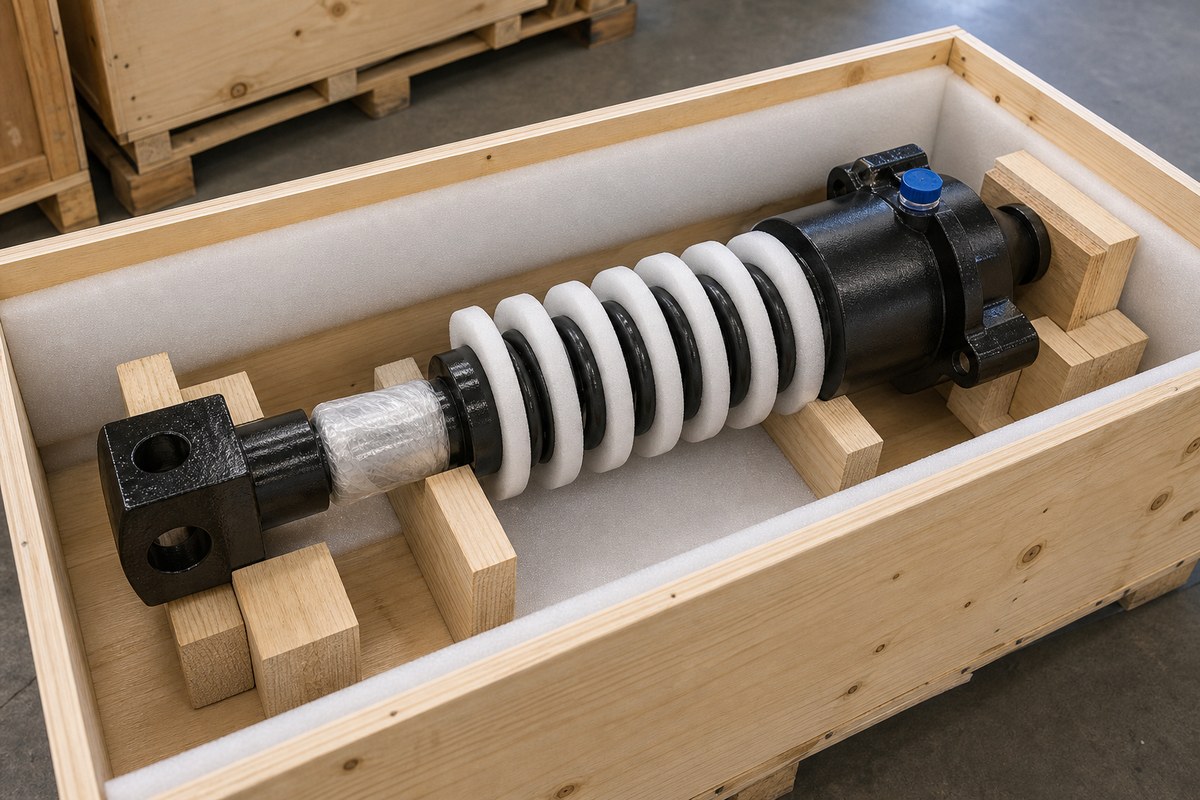
The adjuster should be blocked so the heavy spring assembly does not move inside the crate. The rod, grease fitting, seals and bracket ends should be protected from impact. Small seal kits or fittings should be packed separately and photographed.
Final packing photos are especially important for complete assemblies because they are heavy and awkwardly shaped. Buyers should compare the received assembly against the final photo file before installation.
Evidence Table
Key Facts For PRIMA Buyers
- Track adjuster fitment depends on assembly length, bracket holes and front-idler connection.
- A buyer should confirm whether the quote includes the complete assembly or only a cylinder/spring.
- Procurement checks should avoid unsafe compressed-spring disassembly.
- Track loss can also involve idler, sprocket, chain or frame condition.
Buyer FAQ
Is a track adjuster the same as a recoil spring assembly?
Buyer language often overlaps, but the quote should state whether it includes grease cylinder, rod, spring and brackets.
Can the buyer choose by excavator model only?
Model helps, but old assembly photos and measurements are safer.
Should workers disassemble the spring for photos?
No. Use safe external photos and bench photos only when the assembly is already safely removed.
What if the excavator keeps throwing tracks?
Check adjuster, idler, sprocket, track chain, rollers and track frame before blaming one part.
How should it be packed?
The assembly should be blocked in a crate with rod, grease fitting and brackets protected.
Useful PRIMA Links
Conclusion
The safest PRIMA order is the order tied to saved evidence: machine identity, old-part or machine photos, measurements, condition boundary, packing proof and a clear note about what remains uncertain. Buyers should compare the evidence file before payment, before shipment and again when the machine or part arrives.