
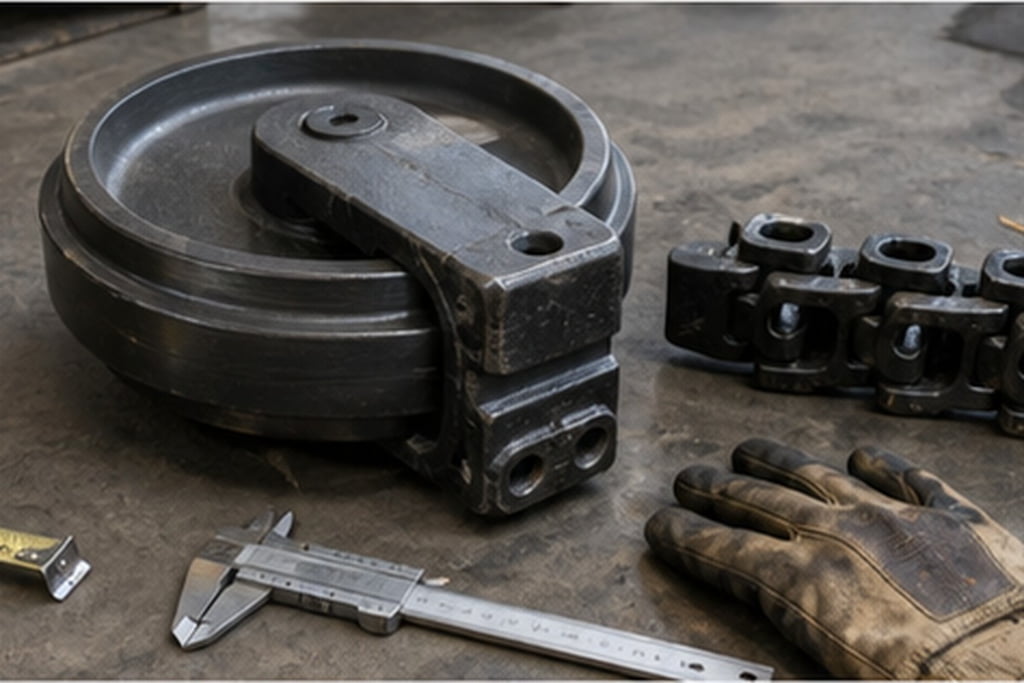
Ask PRIMA about new genuine excavator idlers. Start with your machine model or a part photo and the quantity you need. Before an order, confirm the proposed part identity, source, mounting dimensions, assembly contents and availability for your machine.
Ask about an idler. An idler wheel alone is not necessarily an assembly with shaft, brackets, bearings, seals or recoil/tensioner parts. List the included components and number of units for each side explicitly.
An excavator idler looks simple, but it sits inside a whole undercarriage system. If a buyer replaces only the idler while ignoring track tension, recoil adjuster, chain pitch or roller alignment, the new part can fail early. This guide supports the excavator undercarriage parts guide, the CAT undercarriage guide and the track-chain link-count guide.
Buyer Summary
- Idler sourcing needs dimensions, shell wear, shaft or bushing evidence and complete machine identity.
- Track tension, recoil adjuster condition and track-frame alignment can decide whether the idler alone is the right repair.
- Our priority is new genuine idlers; source, condition and fitment require separate confirmation.
- Export packing should protect heavy idlers against impact, rust and movement inside the crate.
Information for an idler quote
The quote file should include model, serial number, old-idler photos, dimensions, side, wear symptoms and destination.
A front idler can vary by model range, track frame, shoe width and previous undercarriage repair history. Buyers should send photos of the installed idler, removed idler if available, track frame area, recoil adjuster, link chain and sprocket. The key measurements are outside diameter, width, shaft or bore details, mounting style and visible part numbers if present.
Start an enquiry with the information available; missing dimensions can be clarified before an order. If you need parts for multiple machines, separate each machine and requested quantity so similar-looking items are not mixed.
Use safely accessible photos and existing records first. A qualified technician must handle lifting, removal, track tension and recoil-system work according to the machine manufacturer’s procedures. Do not open pressurized adjusters or recoil assemblies to obtain a quotation photo. Photographs can flag questions but do not establish a fault diagnosis or service-life estimate.
| Data | Evidence | Purpose |
|---|---|---|
| Machine identity | Model and serial photo | Confirms range |
| Old idler | Photos and dimensions | Matches replacement geometry |
| System condition | Track tension and frame photos | Finds related causes |
How to check idler shell, shaft, bushings and side wear
Idler wear should be judged from the rolling surface, side flanges, shaft/bore area and grease or oil leakage signs.
A worn idler shell can develop uneven side wear, cracks, flat spots or a narrowed rolling surface. Shaft, bushing or bearing issues may show looseness, noise, heat marks or leakage. Buyers should photograph both sides and the rolling face, not only the cleanest angle. If the old idler is still installed, photos should show how the chain sits on the idler.
PRIMA can compare these photos with the track chain and roller condition. If the old chain is stretched or the sprocket is badly hooked, an idler replacement alone may not solve the problem. The quote should explain whether the buyer should consider a broader undercarriage set.
| Wear point | Photo needed | Possible meaning |
|---|---|---|
| Shell surface | Rolling face close-up | Wear or impact damage |
| Side flange | Left and right side photos | Misalignment or side loading |
| Shaft/bushing | Bore and seal area | Internal wear or leakage |
How track tension, recoil adjuster and alignment affect idler choice
The idler works with the recoil/tensioner, track frame and chain, so surrounding evidence matters before final confirmation.
Loose track tension can let the chain ride badly on the idler. Over-tight tension can overload the idler, rollers and sprocket. A stuck or weak recoil adjuster can make the same new idler wear quickly. Track-frame damage or misalignment can create side wear that buyers may incorrectly blame only on the idler.
Before PRIMA confirms an idler, the buyer should send photos of the track sag, grease adjuster, recoil spring area if visible, sprocket, chain and rollers. If the machine has been working in rock, demolition or muddy sites, the supplier should pay more attention to side wear and impact damage.
| Related area | Check | Risk if ignored |
|---|---|---|
| Track tension | Sag and adjuster position | Early idler or chain wear |
| Recoil adjuster | Grease cylinder and spring area | Cannot hold correct tension |
| Alignment | Chain path and side wear | New idler wears unevenly |
Verify the source and the exact assembly contents
For a new genuine idler, review the actual item and packaging, readable part markings and available source documentation. A part number, logo or “OEM quality” label alone does not prove genuine origin. PRIMA is an independent supplier, not an authorized dealer unless separately documented.
Compare the proposed dimensions and mounting interface with the applicable machine reference. Confirm whether the offer is for the wheel, an idler assembly or a larger tensioner/recoil assembly; agree shaft, brackets, bearings, seals and fasteners included or excluded. State units for the left and right sides and total quantity. Genuine origin does not by itself establish fitment.
Review part-number and source verification. Any alternative condition or non-genuine option must be identified separately. Availability, dispatch timing and the applicable warranty provider, coverage and exclusions belong in the written quotation.
How PRIMA protects idlers for export packing and shipment
Idlers are heavy and can damage other cargo if they move, so crate fixing and rust protection are part of the quote.
A front idler should be cleaned, photographed, protected against rust and fixed inside a crate or on a pallet. Machined surfaces should not rub against other steel parts. If multiple undercarriage parts ship together, idlers should be separated from smaller rollers or bolts so impact does not damage surfaces.
Before shipment, PRIMA can provide photos of the actual idler, dimensions, crate, labels and loading preparation. These photos help the buyer verify that the shipped part matches the quote file and reduce disputes after arrival.
| Packing point | Evidence | Buyer value |
|---|---|---|
| Heavy fixing | Crate or pallet photos | Prevents movement |
| Surface protection | Padding and rust prevention | Protects machined areas |
| Document match | Labels and packing list | Connects quote to shipment |
Evidence Table
| Buyer question | Evidence to review | Value |
|---|---|---|
| Will the idler fit? | Model, serial, dimensions and old-idler photos | Prevents wrong size |
| Is the idler the real failure? | Track tension, recoil adjuster and chain photos | Avoids partial repair |
| Can it ship safely? | Crate, rust protection and label photos | Reduces damage |
Ask PRIMA about your idler
Send your model or a part photo, a brief requirement and a reply contact. Add the quantity and delivery country if known; you do not need every measurement for a first enquiry.
Buyer FAQ
These answers distinguish component identification from order approval.
Is an excavator idler the same as a track roller?
No. The idler guides and tensions the track at the front or rear of the frame, while track rollers support the lower chain path.
Can I buy an idler by excavator model only?
Model helps, but dimensions, old-idler photos, serial number and undercarriage condition should be checked before final confirmation.
Should sprocket and track chain be checked when replacing an idler?
Yes. Chain stretch, sprocket wear and alignment problems can cause a new idler to wear early.
Conclusion
Excavator-idler sourcing should start with the whole undercarriage, not just one part photo. PRIMA can reduce wrong-fit and early-wear risk by checking idler dimensions, track tension, recoil adjuster, chain condition and export packing evidence together.
References
- CAT undercarriage reference: General reference for idler and undercarriage-system context.