
Every month, at least one buyer in our order queue makes the same expensive mistake: they purchase a standard construction excavator for a mining application, or vice versa, and spend the next two years dealing with premature component failures, excessive maintenance costs, and production shortfalls that far exceed the original purchase price difference.
Table of Contents
Table of Contents
Table of Contents
Mining excavators and construction excavators look similar from the outside. Under the skin, they are engineered for fundamentally different operating environments, and confusing them is one of the costliest errors in heavy equipment procurement.
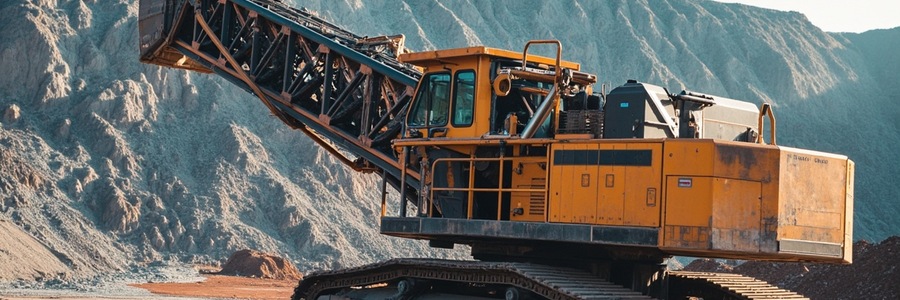
In this guide, I explain the engineering differences that matter most, show exactly where cost differences come from, and give you a framework for matching excavator class to application before you commit to a purchase.
What Structural Differences Separate Mining Excavators from Construction Machines?
The visible differences are subtle. The critical differences are hidden in the structural engineering.
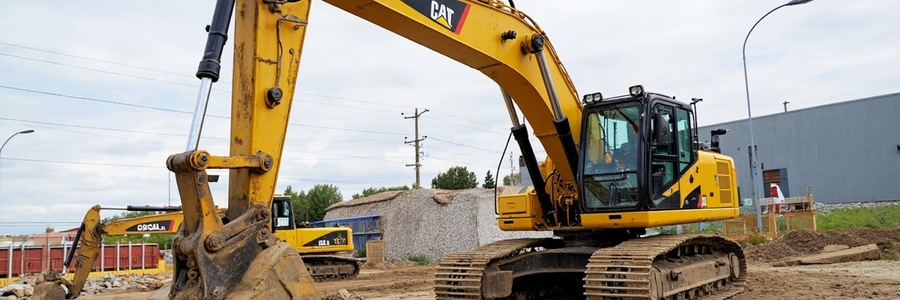
Mining excavators feature reinforced boom and arm structures with 40-60% thicker wall thicknesses than construction machines, designed to handle continuous high-load operations that would crack a construction excavator frame within months.
Undercarriage Engineering Differences
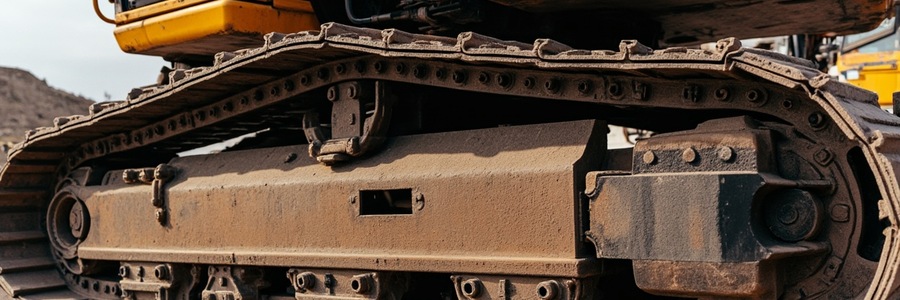
Mining excavators use extra-wide, reinforced track frames with sealed and lubricated track chains designed for continuous operation on abrasive mine floors without track adjustment every 200-300 hours. Construction excavator undercarriages, even heavy-duty variants, require more frequent track tension adjustment and are not designed for the constant abrasion of mineral-laden mine floors.
The track pads on mining excavators are 30-50% thicker than construction equivalents, with deeper grouser bars that provide longer wear life in abrasive conditions. This is not cosmetic difference — it directly affects your maintenance costs and machine availability. A construction excavator undercarriage in a mining application will typically require complete undercarriage rebuild at 3,000-5,000 hours, versus 10,000-15,000 hours for a genuine mining undercarriage.
Idler and carrier roller designs also differ significantly. Mining machines use fully sealed, lifetime-lubricated rollers with hardened steel components designed for the high-track tension loads of mining applications. Construction rollers use lighter seals and materials appropriate for the lower track tensions of standard applications.
How Do Hydraulic System Specifications Affect Machine Selection?
Hydraulic system sizing and architecture is where the operational difference between machine classes becomes most apparent under actual working conditions.
Mining excavators typically operate at 5-10% lower hydraulic pressure than construction machines while delivering 20-30% higher hydraulic flow rates, producing the characteristics needed for efficient mass excavation: slower but more powerful movements that move more material per unit of fuel consumed.
Hydraulic Component Durability
Mining excavator hydraulic cylinders use chromed piston rods of larger diameter with superior surface hardness, designed for the continuous side-loading that occurs in rock loading applications. Construction excavator cylinders, while reliable in their intended application, experience accelerated seal wear and rod scoring when subjected to the continuous lateral forces of rock loading.
The main hydraulic pump on a mining excavator is sized for continuous operation at maximum flow, not intermittent peak demand. This means the pump life in a mining application is measured in 15,000-20,000 hour rebuild intervals versus 8,000-10,000 hours for a construction-class pump subjected to equivalent utilization.
Bucket and attachment circuit hydraulic pressure settings also differ. Mining excavators typically have dedicated attachment circuits with higher flow rates for powering hydraulic hammers, grapples, and rock breakers. A construction excavator configured without these circuits cannot efficiently operate rock breakers, making it unsuitable for the drilling and blasting cycles common in mining applications.
What Component Life Differences Should Drive Your Purchase Decision?
The total cost of ownership difference between machine classes is not subtle once you account for component life in mismatched applications.
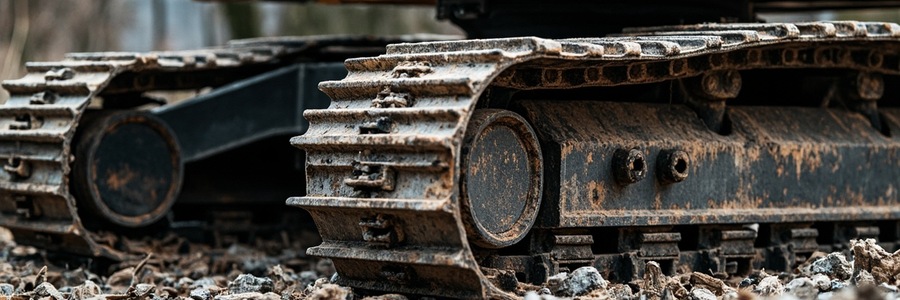
Used mining excavators operating in construction applications typically outlast the application requirements by 2-3x, making them economical over long ownership periods. Used construction excavators in mining applications typically fail catastrophically within 3,000-5,000 hours, with individual component failure modes that make repair economically unjustifiable.
Engine and Powertrain Life in Mismatched Applications
Construction excavator engines are typically sized for the intermittent high-load demands of digging in variable soil conditions. They are not designed for the continuous rated-load operation of mining applications, where the machine runs at 85-100% of rated load for 15-20 hours per day. In mining applications, construction-class engines typically require major rebuild at 8,000-12,000 hours versus 15,000-20,000 hours for mining-spec engines.
The final drive and swing gearboxes on mining excavators are substantially heavier duty than construction equivalents, with larger bearings, stronger gear teeth, and higher torque capacity. Operating a construction excavator final drive in a mining application typically produces gear tooth wear and bearing failure within 2,000-4,000 hours, at which point the repair cost approaches the original purchase price.
Conclusion
Mining excavators and construction excavators are fundamentally different machines disguised by similar appearances. The purchase price premium for a genuine mining excavator — typically 30-50% above comparable-size construction machines — is almost always recovered through lower component failure rates, longer service intervals, and higher residual values at resale. The one situation where a construction excavator in mining applications might be acceptable is very short-term projects where the machine will be disposed of before major components reach failure threshold.
| 1 | Hydraulic excavator engineering specifications. Wikipedia |
| 2 | Mining equipment technology. Wikipedia |
| 3 | Undercarriage systems for heavy equipment. Wikipedia |
| 4 | Excavator selection guide. Excavator selection guide |
| 5 | Excavator fuel consumption guide. Excavator fuel consumption guide |