
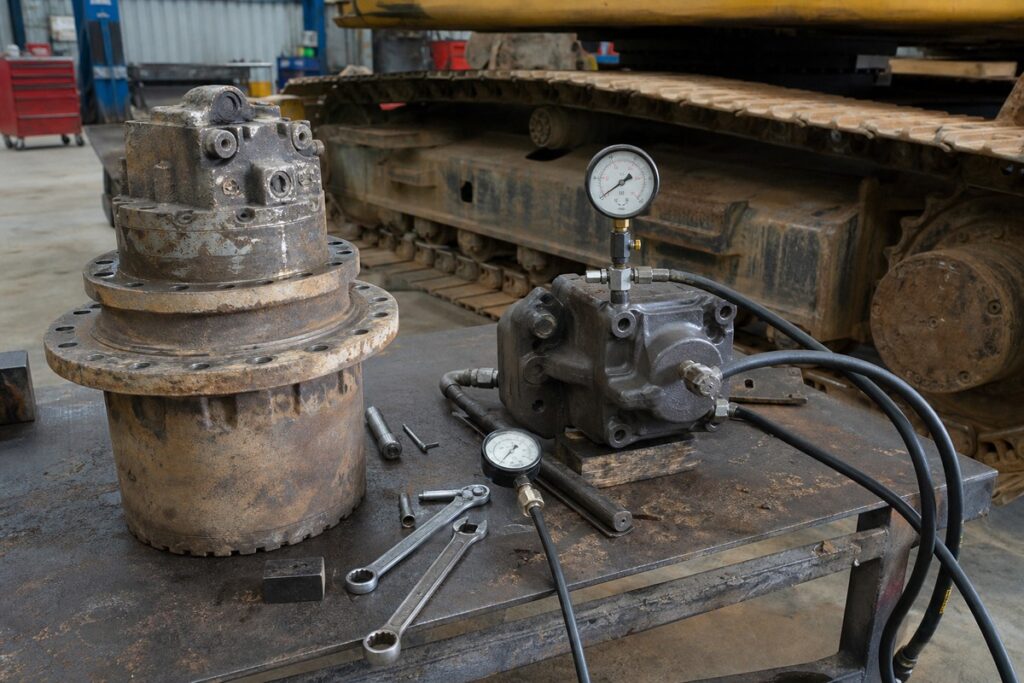
Weak excavator travel should be diagnosed by comparing relief pressure, actual flow, pilot or charge pressure, brake-release pressure, final-drive oil condition, case-drain flow and travel motor evidence before ordering a final drive.
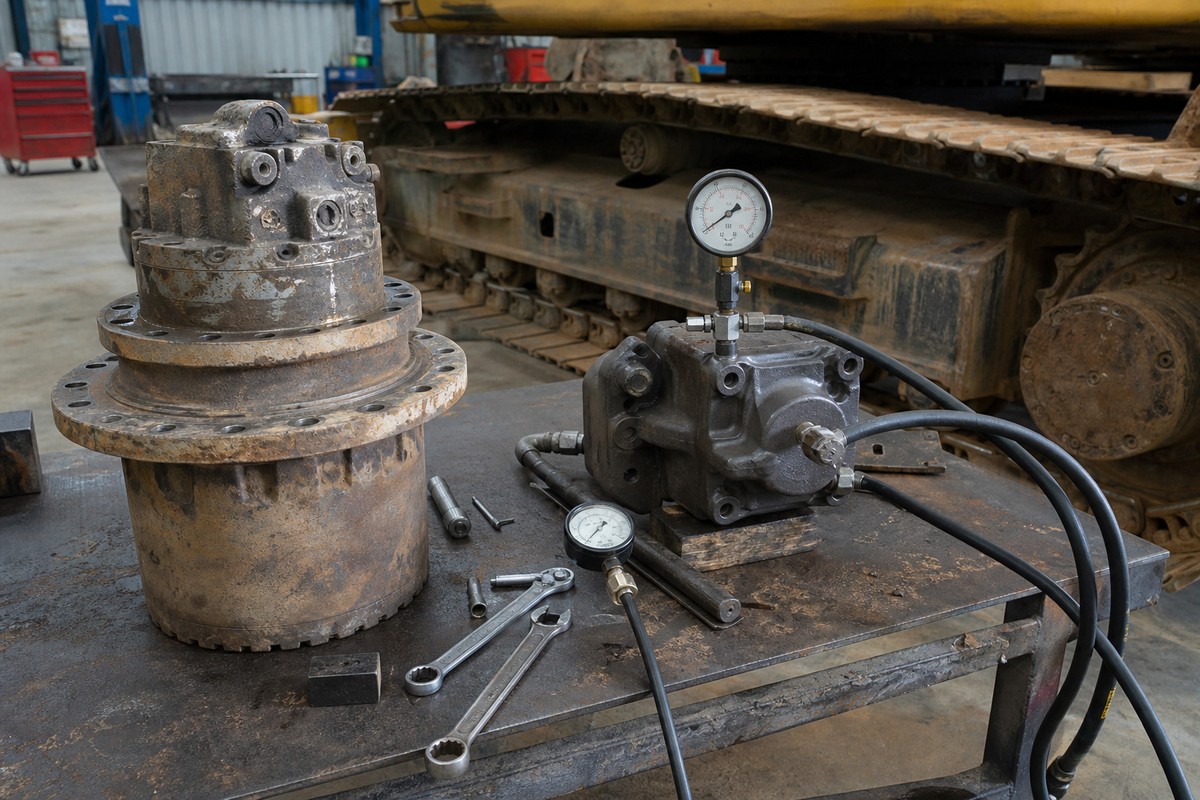
Weak travel can be mistaken for a final-drive failure when the real issue is brake release, charge pressure, flow loss or hydraulic control. This guide supports PRIMA resources on excavator final drive sourcing and travel gearbox fitment.
Buyer Summary
- Relief pressure alone is not enough to diagnose weak travel.
- Flow, speed, brake-release pressure, charge pressure and case drain should be compared.
- Final-drive replacement requires mounting, shaft, port and gear-condition evidence.
- Oil condition and metal debris can change the repair decision.
Why relief pressure is not the whole diagnosis
A circuit can show pressure but still lack useful flow or speed.
Relief pressure checks are useful, but they do not prove the travel motor and final drive are receiving enough flow. A machine can build pressure against resistance and still travel weakly because of leakage, pump flow issues, brake drag or control problems.
| Test | What it shows | What it does not show |
|---|---|---|
| Relief pressure | Maximum circuit pressure | Actual flow under load |
| Speed comparison | Relative travel weakness | Exact failure source |
| Case drain | Motor leakage | Mechanical gearbox condition |
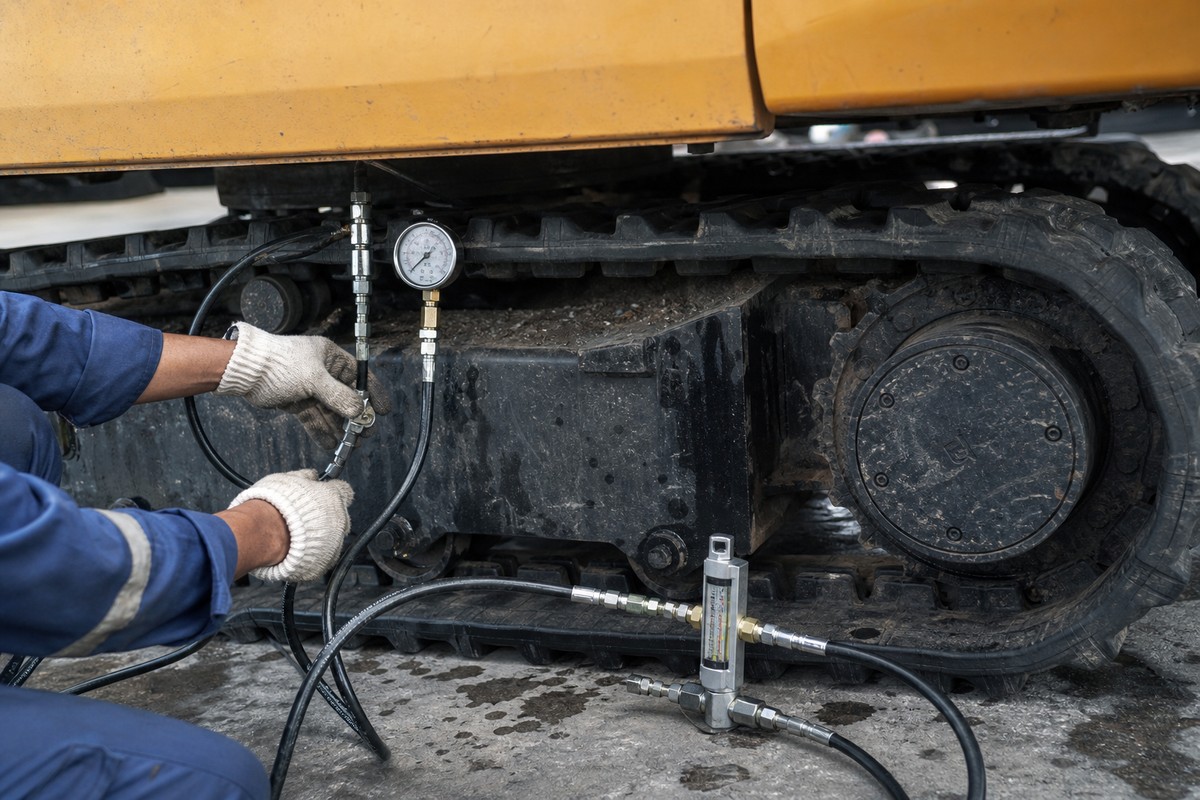
How to check brake release and charge pressure
A dragging brake can make a final drive look weak even when hydraulic pressure appears normal.
Many travel systems need pilot, charge or brake-release pressure to fully release the brake. If the brake does not release, the machine may move slowly, heat up or feel weak. Buyers should ask mechanics to document brake-release pressure before ordering a replacement unit.
| Check | Evidence | Risk controlled |
|---|---|---|
| Brake release | Pressure reading at release line | Avoids replacing good motor |
| Charge/pilot | Gauge under travel command | Confirms control supply |
| Oil temperature | Heat pattern | Detects dragging or leakage |
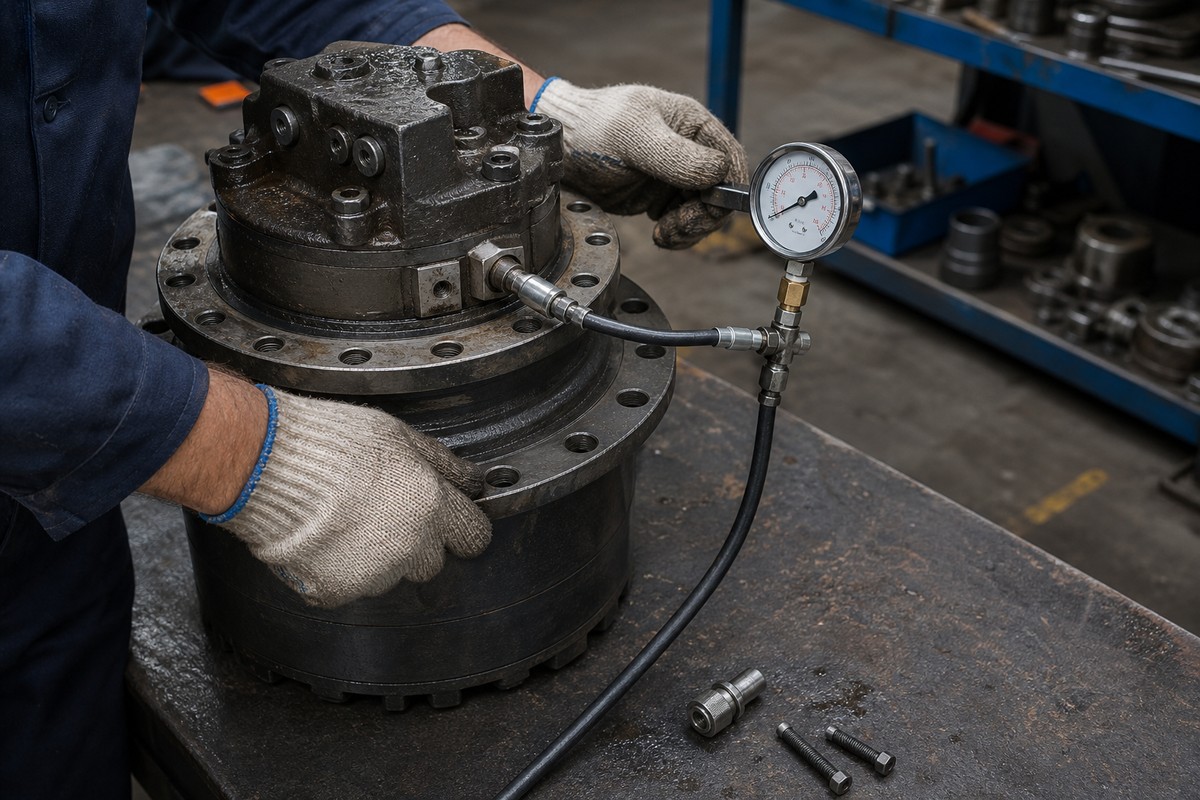
What case drain and oil condition can reveal
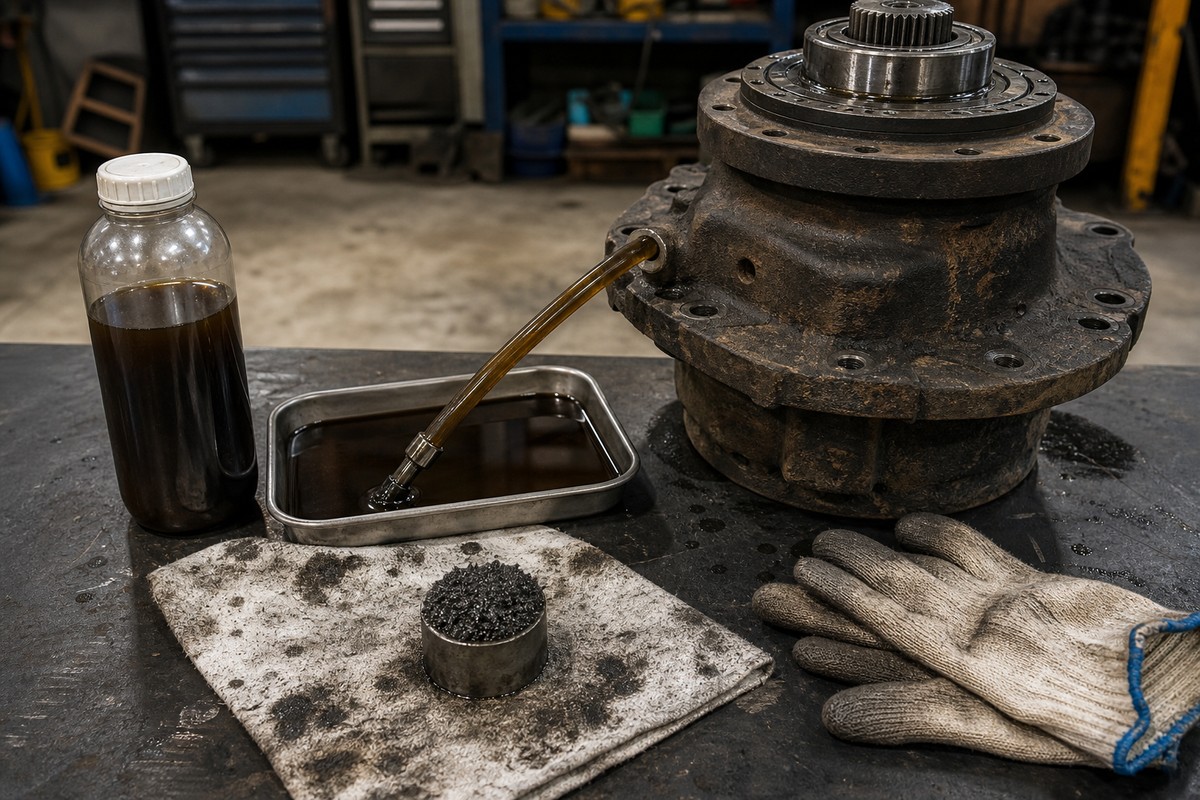
High case drain, metal debris or burnt oil can support a motor or gearbox failure diagnosis.
Case drain flow helps reveal internal leakage in the travel motor. Oil with metal particles can point toward gearbox wear. These checks help decide whether a motor, gearbox, seal kit or complete final drive is the right sourcing direction.
What evidence is needed for replacement sourcing
A final-drive quote should include photos of mounting face, shaft, ports, old unit, part number and machine serial number.
Final drives can look similar but differ in bolt pattern, shaft, port layout and gear ratio. PRIMA should request clear photos before confirming OEM, aftermarket, used or rebuilt options.
| Replacement data | Evidence | Why it matters |
|---|---|---|
| Mounting face | Front/rear photos | Installation fit |
| Shaft/spline | Connection photos | Drive compatibility |
| Ports | Port layout photos | Hydraulic connection |
How PRIMA helps reduce weak-travel repair risk
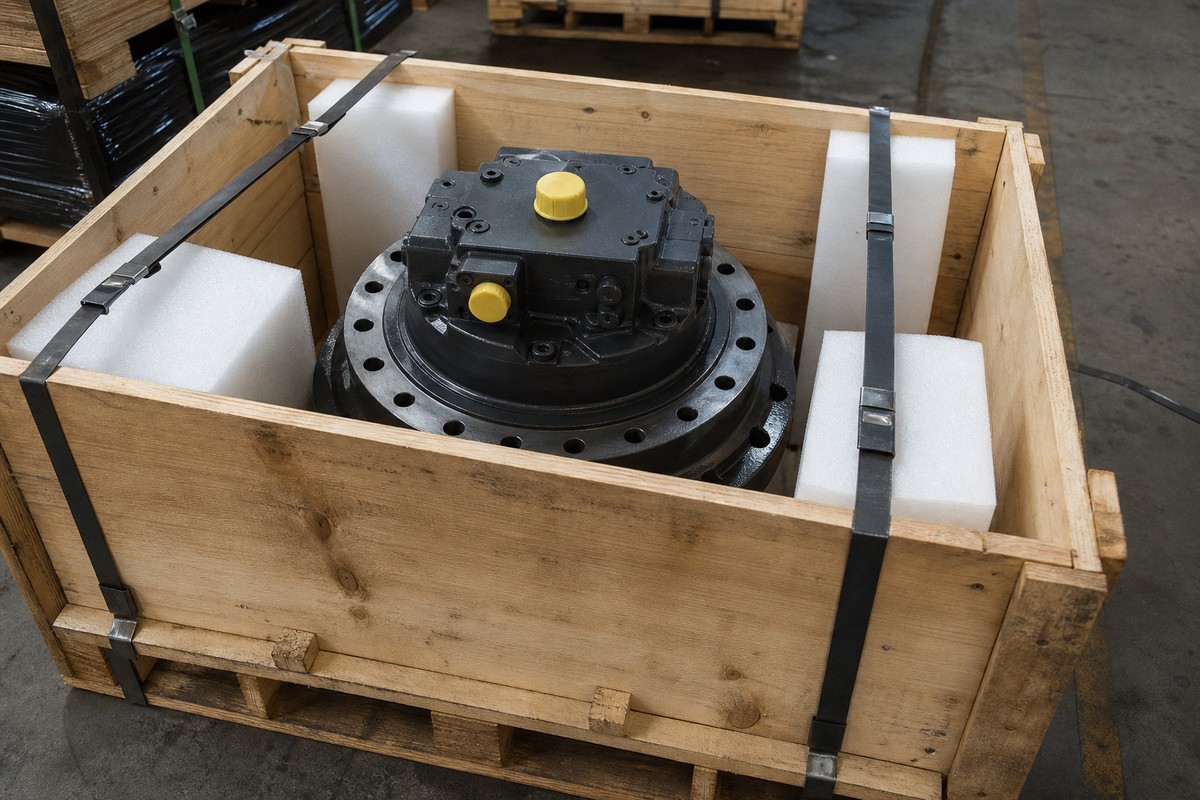
PRIMA should connect diagnostic evidence with the correct part choice and export packing proof.
For final drives, the cheapest offer can become expensive if the issue was brake release or flow rather than the drive itself. A structured file of readings, photos, oil evidence and packing proof makes the purchase safer.
Evidence Table
| Weak travel question | Evidence to request | Why it matters |
|---|---|---|
| Is it hydraulic or mechanical? | Pressure, flow, brake release and case drain | Targets the right repair |
| Will the replacement fit? | Mounting, shaft and port photos | Prevents mismatch |
| Is the gearbox damaged? | Oil condition and metal debris | Guides motor vs complete drive decision |
Buyer FAQ
Can relief pressure prove the final drive is bad?
No. Relief pressure should be compared with flow, brake release, case drain and oil evidence.
What should I send before buying a final drive?
Send model, serial number, old-unit photos, mounting face, shaft, ports, part number, failure symptoms and oil evidence.
Is a used final drive acceptable?
It can be acceptable when condition photos, oil checks and warranty boundaries are clear.
Conclusion
Weak travel should be diagnosed before parts are ordered. PRIMA can help buyers connect pressure, flow, brake release, case drain and fitment evidence to a safer final-drive sourcing decision.
References
- Caterpillar final drives: General reference for parts identification logic.
- Bosch Rexroth hydraulics: General hydraulic system reference.
- ISO 9001: General supplier quality-system reference.