

For construction contractors in emerging markets, acquiring heavy equipment often represents the single largest capital investment in their business. excavator financing for emerging markets has evolved significantly in 2026, with new lenders, digital platforms, and flexible structures making it increasingly accessible for contractors to acquire the equipment they need to compete for larger projects—without requiring the full capital outlay that equipment ownership traditionally demands.
The Evolving excavator financing Landscape in 2026
The construction equipment financing industry has undergone substantial transformation as digital lending platforms have expanded access to credit in underserved markets. Traditional bank lending for equipment has been supplemented by specialist equipment financiers, manufacturer captive financing arms, and peer-to-peer platforms—all competing to serve contractors in latin America, china-used-excavators-gaining-ground-africa-market-2026/”>africa, southeast Asia, and other emerging markets.
According to industry research on construction equipment finance industry trends, the sector is experiencing robust growth driven by infrastructure development in developing economies and the expansion of digital lending platforms that can assess creditworthiness more accurately than traditional banks.
Key market developments include:
• Digital Credit Assessment: Lenders now use satellite imagery, project data, and mobile payment history to assess borrower creditworthiness, expanding access beyond those with formal banking relationships
• Manufacturer Financing Programs: Major excavator brands including SANY, XCMG, and komatsu have expanded captive financing arms offering competitive rates to buyers of their equipment
• Equipment-as-Collateral Innovation: New financing structures allow the excavator itself to serve as primary collateral, reducing down payment requirements
• Micro-Lending Expansion: Smaller financing amounts ($15,000-50,000) for compact excavators are now accessible through mobile lending platforms targeting small contractors
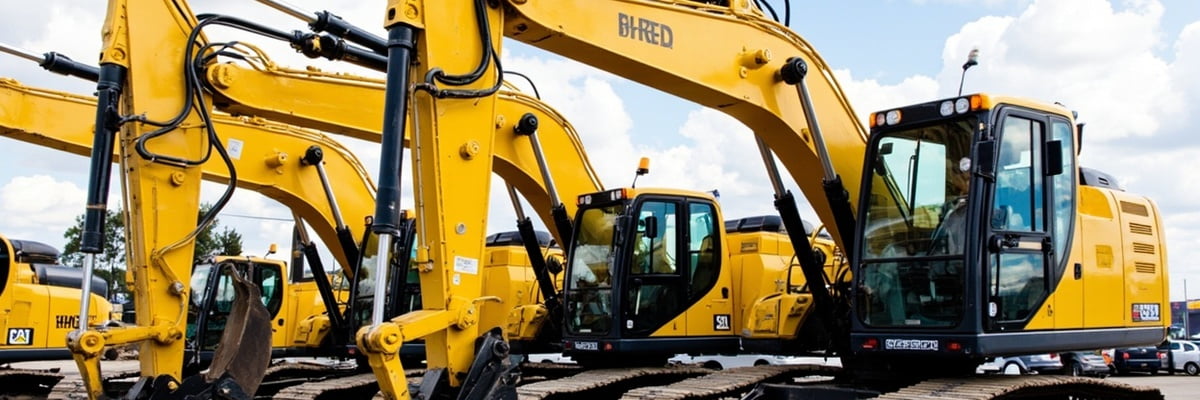
Financing Options Available for Excavator Acquisition
Contractors have multiple financing structures available when acquiring excavators for emerging market operations:
Equipment Loans: Traditional term loans where the excavator serves as collateral. Loans typically run 3-5 years with interest rates varying based on credit profile and market conditions. This structure offers the lowest total cost of financing for qualified borrowers.
Finance Leases: A lease structure where the contractor pays monthly installments with the option to purchase at the end of the lease term. Finance leases are popular in markets where tax treatment favors lease structures over loans.
Operating Leases: For contractors who prefer not to own equipment, operating leases provide access to excavators with monthly rental payments. This structure suits contractors with project-based work who want to avoid equipment ownership risks and maintenance responsibilities.
Rent-to-Own Arrangements: Some dealers offer structured programs where a portion of rental payments apply toward eventual purchase. These programs provide flexibility but typically carry higher total costs than traditional financing.
For emerging market contractors, specialized equipment financiers often provide better terms than general-purpose banks, as they understand equipment values and resale markets.

Qualifying for Excavator Financing in Emerging Markets
Lenders use several criteria when evaluating excavator financing applications. Understanding these criteria helps contractors prepare strongest applications:
Credit History: Traditional credit scores remain important, but alternative data sources increasingly supplement or replace conventional credit histories. Mobile payment histories, utility payment records, and business revenue documentation can all support applications.
Down Payment Capacity: Most lenders require 15-30% down payments for excavator financing. Contractors with larger down payments access better interest rates and terms.
Project Backlog: Lenders want assurance that contractors have sufficient work to generate cash flow for payments. Contract documentation and project pipelines strengthen applications.
Equipment Utilization Plan: Understanding how the excavator will generate revenue—whether through specific contracts, daily rental rates, or utilization projections—demonstrates borrower sophistication and repayment capacity.
Operator Experience: Contractors with experienced excavator operators and maintenance capabilities present lower risk to lenders, as proper operation and maintenance protect equipment values.
Understanding Total Cost of Financing
Comparing financing offers requires understanding total cost beyond simple interest rates. The complete financing cost picture includes:
Interest Rate vs. APR: Annual Percentage Rate (APR) includes interest plus fees and provides the accurate comparison basis between financing offers. Always compare APR when evaluating multiple offers.
Loan Term Impact: Longer loan terms reduce monthly payments but increase total interest paid over the life of the loan. A 5-year loan at 12% APR costs more total interest than a 3-year loan at the same rate.
Fees and Charges: Origination fees, documentation charges, insurance requirements, and early repayment penalties all affect total financing cost. Negotiate or minimize fees where possible.
Mandatory Insurance: Lenders typically require comprehensive insurance coverage, which adds $2,000-5,000 annually to operating costs for excavators in emerging markets.
Strategic Considerations for Equipment Financing
Before entering financing arrangements, contractors should evaluate several strategic factors:
Cash Flow Matching: Structure financing to match project payment cycles. If your contracts pay monthly, ensure loan terms align with cash flow patterns.
Interest Rate Risk: For longer-term financing, consider whether variable or fixed rates better suit your risk tolerance and market expectations.
Equipment Lifespan vs. Financing Term: An excavator typically remains productive for 10-15+ years with proper maintenance. Financing terms should be shorter than equipment lifespan to ensure equity build-up exceeds depreciation.
Exit Strategy: Understand prepayment penalties and consider what happens if projects dry up and you need to sell the equipment. Financing structures that allow equipment return or lease assignment provide valuable flexibility.

What credit score is typically needed for excavator financing?
Requirements vary by lender and market, but most equipment financiers look for credit scores of 650 or higher from traditional credit bureaus. However, many emerging market lenders use alternative credit assessment methods that can approve contractors with limited conventional credit history if they demonstrate strong business fundamentals, project revenue, and down payment capacity.
How much down payment is typically required for excavator financing?
Most equipment financiers require 15-30% down payments. Well-qualified borrowers with strong credit profiles and substantial project backlogs may access financing with 10-15% down, while first-time equipment buyers or those with weaker credit profiles may face 25-30% requirements. Larger down payments also typically secure better interest rates.
What happens if I default on excavator financing?
Default consequences vary by financing structure and jurisdiction. In most cases, the lender can repossess the excavator to recover their losses. Deficiency balances—the gap between equipment sale proceeds and outstanding loan balance—may still be collectible depending on jurisdiction and loan structure. Before entering financing, understand the specific default consequences and negotiate favorable terms where possible.
## Conclusion
Excavator financing in 2026 offers emerging market contractors unprecedented access to equipment acquisition capital. Success requires understanding the full range of financing options, preparing strong applications with documented business fundamentals, and carefully evaluating total financing costs beyond simple interest rates. With proper planning and realistic assessment of cash flow capacity, contractors can use financing to acquire equipment that enables business growth and larger project competition—accelerating development of their construction businesses while managing capital efficiency effectively.