
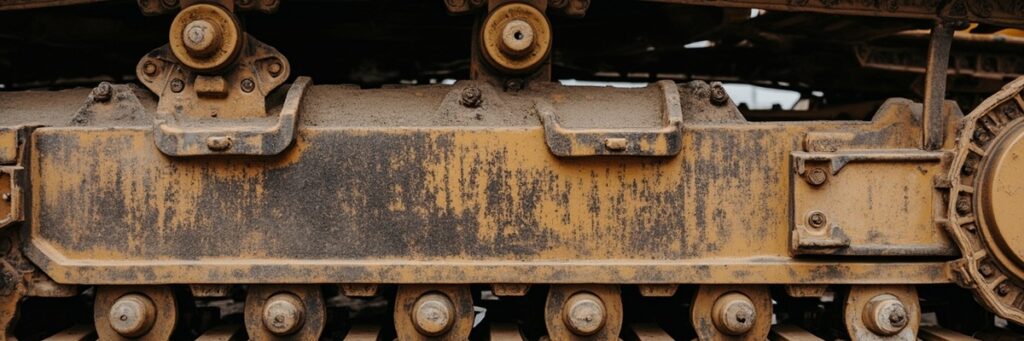
Before buying a used excavator, ask for a documented undercarriage inspection of the exact machine. Identify the track type, photograph both sides, record visible wear and have any measurements interpreted against the correct machine manual. Photographs help you decide what needs checking; they do not establish remaining life, repair cost or a safe adjustment limit.
Buyer Summary
- Match photographs and inspection findings to the exact machine and inspection date.
- Separate visible observations from measured values and the applicable manual limits.
- Use qualified personnel for inspection, travel demonstrations and any adjustment.
- Compare itemised repair scope; do not assume a photograph proves remaining life or price.
Why the Undercarriage Matters More Than You Think
Track chains, rollers, idlers, sprockets and shoe hardware work as a system. A purchase comparison should include the condition of that system, not only an attractive upper-body photograph. Repair scope and cost depend on the identified machine, component specification, parts grade, labour and delivery location. Obtain a current itemised quotation rather than relying on a universal dollar range.
Start by linking the evidence to the machine plate or serial/PIN, inspection date and proposed sale record. Ask which components were inspected, how they were measured and which areas were inaccessible. PRIMA supports real photos, video demonstrations, on-site visits and buyer-arranged third-party inspection. Agree the scope for the particular machine; do not treat this article as proof that a listed unit has passed inspection.
Safety boundary: This is a buyer’s evidence checklist, not a workshop procedure. Have a qualified person follow the exact machine’s operating and service instructions. Do not put hands near moving tracks, crawl under an unsupported machine, improvise a track-tension test with a pry bar, or attempt to release adjuster pressure from instructions in a buying article.
Step 1: Check Track Links, Rollers and Hardware
Request clear photographs of both track assemblies, shoes, links, pin and bushing areas, lower rollers, carrier rollers and visible fastening hardware. Look for visible cracks, missing or damaged hardware, uneven wear and leakage; use these as questions for the inspector, not as a photograph-only diagnosis. Identify steel track chains separately from rubber tracks.
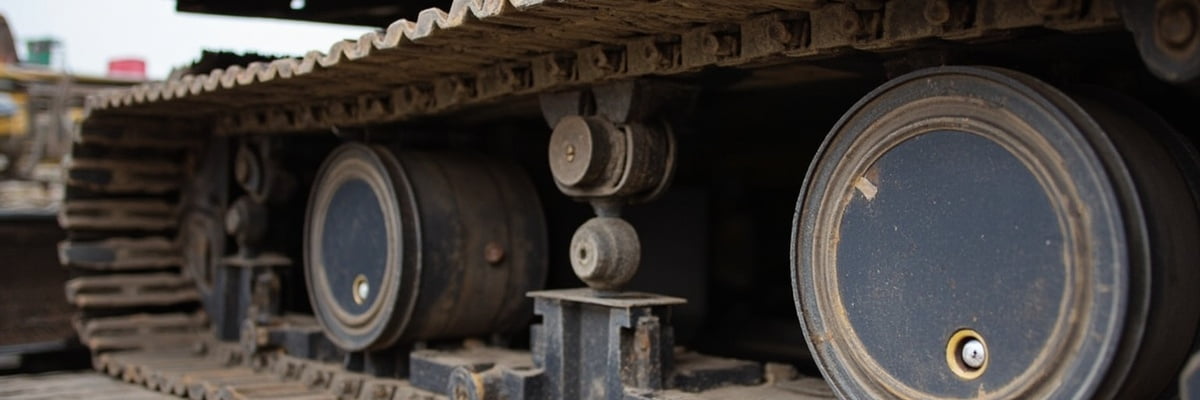
Do not assess roller serviceability by grabbing each roller and applying a universal play limit. Where measurements are needed, ask the technician to record the component, method, measured value and applicable manufacturer limit. A displayed hour-meter reading alone is not a remaining-life calculation. Keep bottom rollers and carrier rollers identified correctly in any repair quotation.
Step 2: Verify Track Tension Against the Correct Manual
There is no single track-sag number for every used excavator. The model, track system and specified measurement procedure matter. Ask the inspector to use the correct Operation and Maintenance Manual, record the setup and measurement points, and compare the result with the specified range for that machine. A loose-looking track alone does not prove which component has failed.
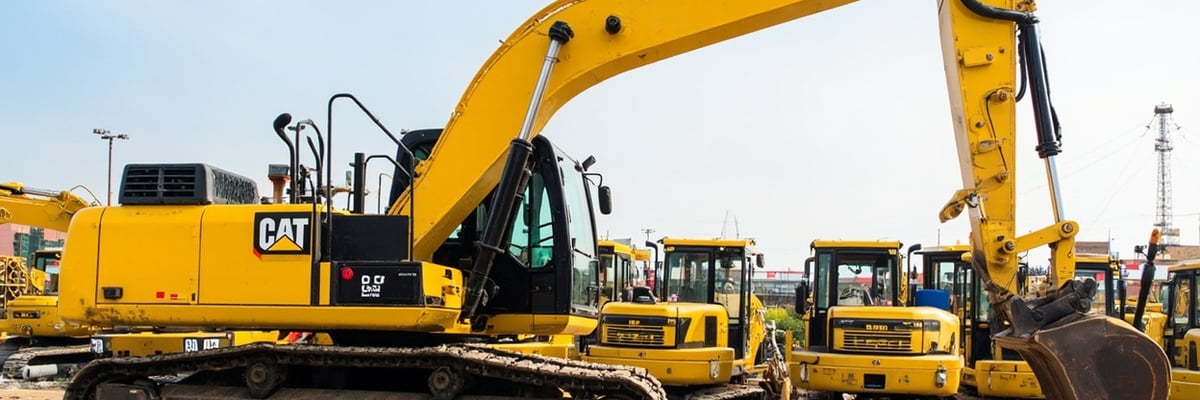
Caterpillar’s undercarriage maintenance guidance discusses joints, hardware, sprockets and tension, and directs owners to their machine manual. It is general guidance, not a specification for every CAT, SANY or Doosan machine. Inspection, diagnosis and any adjustment should be handled separately and safely by qualified personnel.
Step 3: Inspect the Sprocket and Idler
Ask for close-ups of sprocket teeth, the matching chain, idler running surfaces and visible alignment, damage or leakage. Confirm the actual track design before interpreting the pictures. A steel-track idler is not generally assessed by looking for a rubber covering; rubber-track components require their own identification. Visible wear does not, by itself, establish a single cause or require replacement of every component.
How can I remotely assess undercarriage condition before buying?
Request dated, machine-specific photographs of both sides, component close-ups and an inspection record. Ask for a controlled travel demonstration performed by a competent operator where safe. Match the evidence to the machine identity, and record what the seller cannot show. Use the used-excavator inspection checklist for the broader engine, hydraulic and structural checks. If the evidence is insufficient, arrange an on-site or third-party inspection before accepting the condition assessment.
How much does undercarriage repair cost?
Request a current quotation for the components actually needing repair. Record the complete model, relevant serial range, part numbers or measurements, new/genuine or separately identified alternative, quantities and whether the price is per component, per side or for a defined set. Clarify packing, freight, labour, installation and written after-sales scope. The two-quotation comparison worksheet helps align those fields; it is not a live price list.
Conclusion
Choose by the documented condition of the exact machine and a clearly defined repair scope. Send PRIMA the model and whichever plate photos, undercarriage photographs, inspection findings and destination you already have through the PRIMA contact page. Incomplete information is welcome; unresolved measurements, availability and repair costs should remain identified as unconfirmed until checked.