
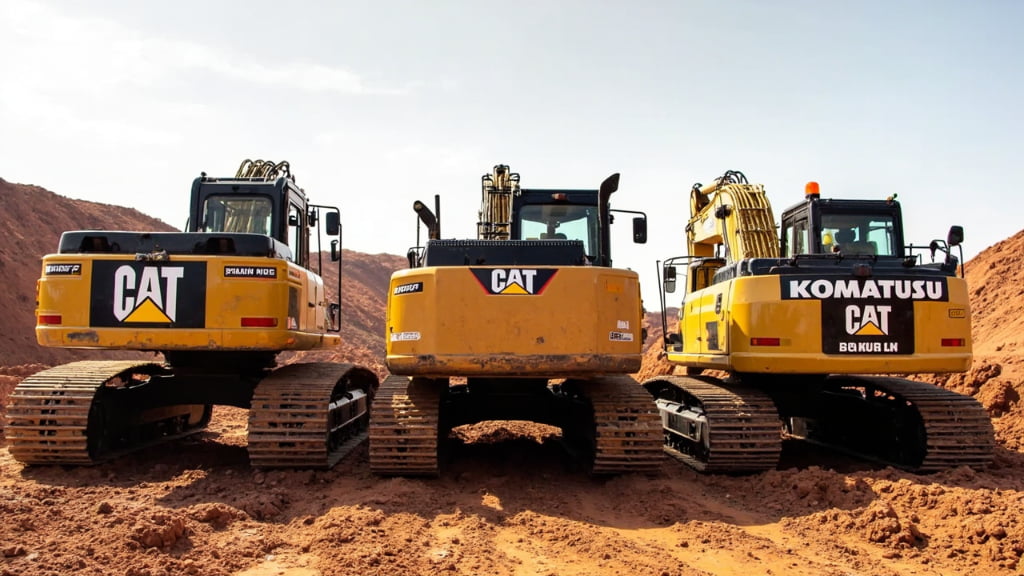
If you are running an excavator fleet, fuel and operating costs are not just line items—they are the variables that determine whether your fleet makes money at the end of the month. Over a 5-year ownership horizon, fuel alone can cost more than the original purchase price of the machine. That makes fuel consumption data critical when choosing which used excavators to buy from China.
Across 2,000 operating hours per year, the fuel gap between a Caterpillar 320 and a SANY SY215C can mean $13,500 in annual savings—enough to pay for a major service overhaul. Here is the real operating cost breakdown for CAT, Komatsu, and SANY excavators.
Table of Contents
The industry measures fuel consumption in gallons per hour (gph) or liters per hour (lph) during typical digging cycles. Here is how the three major players actually stack up in 2026.
- Fuel Consumption Numbers: What the Data Actually Shows
- Beyond Fuel: The Real Operating Cost Breakdown
- Parts Pricing: The Hidden Cost Escalator
- Total Cost of Ownership: The 5-Year Numbers
- Conclusion
Fuel Consumption Numbers: What the Data Actually Shows
Caterpillar 320 (20-ton class): 5.0-6.5 gph (19-25 L/h) under normal working conditions. Cat’s ACERT technology helps, but these machines are fuel hogs when pushed hard. Their older 320D models often hit 7+ gph in tough material.
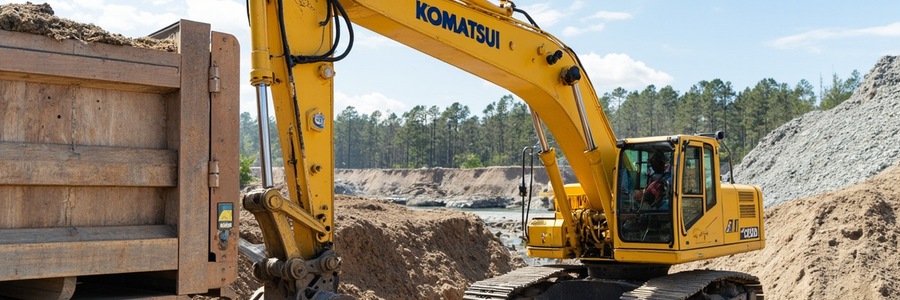
Komatsu PC200-11: 4.5-5.5 gph (17-21 L/h). Komatsu has invested heavily in their Green Diesel technology and it shows. The PC200 consistently beats Cat on fuel economy, though the difference narrows under heavy loads.
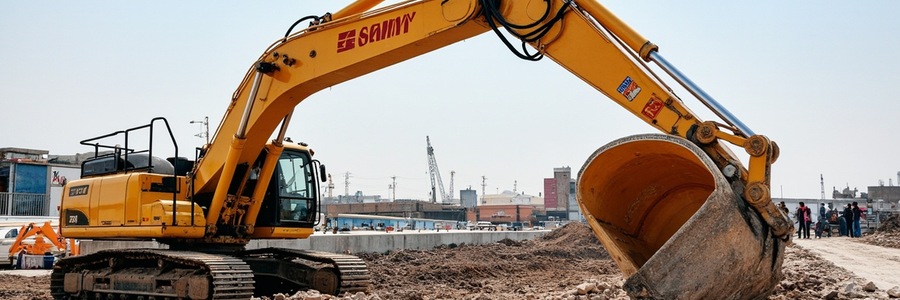
SANY SY215C: 4.0-5.0 gph (15-19 L/h). SANY‘s hydraulic systems are optimized for the Chinese market where fuel costs hit operators harder. The result is a machine that sips fuel while maintaining solid digging forces.
Over 2,000 operating hours per year, that 1.5 gph difference between a Caterpillar 320 and a SANY SY215C means 3,000 gallons of diesel. At $4.50 per gallon, you are looking at $13,500 annually just in fuel. FleetOwner confirms these fuel cost patterns across regional markets. savings by choosing SANY over Cat. That is real money that stays in your business.
Beyond Fuel: The Real Operating Cost Breakdown
Fuel is just the opening act. Anyone who has managed an excavator fleet knows that maintenance, repairs, and parts costs can dwarf fuel expenses over time. Here is where the brands really diverge.
Caterpillar recommends oil changes every 500 hours with Tier 4 Final requirements adding complexity. A typical 2,000-hour service package—oil, filters, fluids, belt inspection—runs $2,800-3,500 at a Cat dealer.
Komatsu has slightly longer 1,000-hour service intervals on their newer models. Their diesel particulate filter maintenance is simpler than Cat’s setup. Expect to pay $2,200-2,800 for comparable service packages.
SANY takes a practical approach with 500-hour intervals but uses more accessible component designs. Service costs at certified SANY dealers typically run $1,400-1,800 for equivalent packages. Parts are cheaper and labor times are faster due to better service access.
Parts Pricing: The Hidden Cost Escalator
This is where brand loyalty really hurts your wallet. OEM parts for Caterpillar and Komatsu have increased 30-45% over the past five years. A hydraulic cylinder seal kit that costs $180 for a SANY runs $420 for the Cat equivalent. Main control valves that are $2,100 for Komatsu hit $3,400+ for Cat.
At Prima, parts pricing runs 50%+ cheaper than OEM dealer rates. Our maintenance supervisor has 10+ years of experience with Chinese excavators, and we have built supplier relationships that let us pass those savings on to customers. When you are running multiple machines, that parts discount adds up to tens of thousands of dollars annually.
The parts cost differential is not theoretical. Prima has quote records showing $2,800-3,200 for a CAT final drive rebuild versus $1,400-1,600 equivalent through their parts network. That $1,400-1,600 savings per major component is real money in your operating budget.

Total Cost of Ownership: The 5-Year Numbers
Running a 5-year ownership scenario for a 20-ton excavator at 2,000 hours per year (10,000 hours total):
| Brand | Purchase | Fuel | Maintenance | Parts | 5-Year Total |
|---|---|---|---|---|---|
| Caterpillar 320D | $95K-115K | $123,750 | $45K-55K | $28K-35K | $291K-328K |
| Komatsu PC200-11 | $85K-105K | $112,500 | $38K-48K | $22K-28K | $257K-289K |
| SANY SY215C | $65K-85K | $90,000 | $28K-35K | $15K-20K | $198K-240K |
The SANY SY215C delivers $53,000-88,000 in total 5-year savings versus the Caterpillar 320D, and $59,000-49,000 savings versus Komatsu. That is the difference between a machine that pays for itself and one that merely keeps you busy.

Conclusion
Fuel consumption, maintenance intervals, and parts pricing are not abstract numbers—they directly determine your operating margins. The data shows SANY excavators delivering 30-40% lower total cost of ownership over 5 years versus Caterpillar equivalents. For international buyers sourcing from China, Prima stocks all three brands at competitive prices with 50%+ cheaper parts and technical support to help you choose the right machine for your actual operating conditions.
| 1 | Caterpillar 320 fuel consumption specifications and ACERT technology are documented on CAT’s official product pages. Caterpillar 320.↑ |
| 2 | Komatsu’s fuel-efficient hydraulic systems and PC200 specifications are documented in their product literature. Komatsu.↑ |
| 3 | SANY Heavy Industry is one of China’s largest construction equipment manufacturers with global export operations. SANY Heavy Industry.↑ |
| 4 | IMF data on diesel fuel pricing trends by region informs operating cost projections for heavy equipment. IMF Primary Commodity Prices.↑ |
| 5 | Total cost of ownership calculations for heavy equipment are supported by industry fleet management research. Fleet Owner Magazine.↑ |