
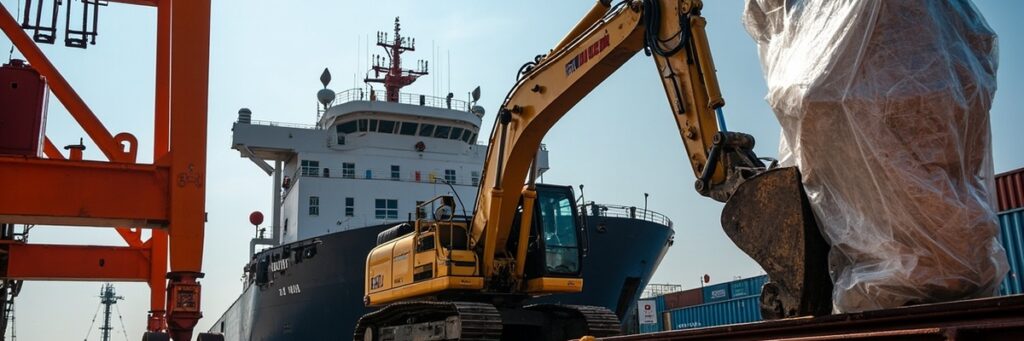
Shipping a used excavator from China to international markets involves coordinating multiple logistics providers, managing complex documentation, and navigating customs procedures that can make the difference between a smooth delivery and a costly nightmare. For buyers purchasing quality used excavators from China, understanding the shipping process and associated costs is essential for accurate budgeting and risk management.
Shipping Methods: RORO vs. Container
Two primary shipping methods transport excavators internationally. Roll-on/Roll-off (RORO) shipping loads equipment directly onto specialized vessels designed for wheeled and tracked vehicles, with securing charges typically included in freight rates. RORO offers cost advantages for single machines and faster loading and unloading times, but provides less protection from weather and handling damage compared to container shipping.
Container shipping places excavators inside standard 20-foot or 40-foot containers, providing superior protection from salt air, weather, and cargo handling impacts. Container shipping costs approximately 20-40% more than RORO but is recommended for high-value equipment or shipments to ports with limited RORO infrastructure. RORO versus container shipping decisions should weigh equipment value, destination port capabilities, and budget constraints.
For dismantled or partially disassembled excavators, flat rack containers offer flexible loading options while maintaining weather protection. Some shippers recommend pressure-washing and treating undercarriage components before containerization to meet biosecurity requirements at destination ports, particularly for shipments to Australia, New Zealand, and certain African ports with strict quarantine protocols.
Shipping Cost Breakdown from China
Sea freight rates from major Chinese ports vary based on destination, season, and fuel costs. Rates from Shanghai or Tianjin to East African ports (Mombasa, Dar es Salaam) typically range from $2,500-5,000 per excavator for 20-foot container or RORO space. West African destinations through Lagos or Durban generally cost $3,000-7,000 per machine due to longer transit routes and additional port handling requirements.
Beyond ocean freight, buyers must budget for inland China trucking from supplier locations to departure ports ($300-800), port handling and documentation fees ($200-500), export customs clearance ($100-300), and marine insurance typically costing 0.3-0.5% of equipment value. Total shipping costs from China to Africa typically range from $4,000-10,000 per excavator depending on size, destination, and shipping method selected.
Documentation and Customs Requirements
International excavator shipments require comprehensive documentation including the original bill of lading, commercial invoice detailing equipment specifications and transaction value, packing list, export declaration, and phytosanitary certificate if required by destination country. Missing or incorrect documentation causes significant delays and additional storage charges at ports of arrival.
Customs import procedures vary dramatically by country. African nations typically require import licenses for heavy equipment, with duties ranging from 5% to 25% depending on equipment type and country of origin. China-Africa trade agreements may provide preferential duty rates for equipment imports, and buyers should verify applicable tariff rates before finalizing purchase decisions. Professional customs brokers at destination ports facilitate clearance processes and help avoid costly compliance errors.
### What is the typical shipping time from China to Africa?
Shipping time from Chinese ports to major African destinations ranges from 20-35 days depending on origin port, destination port, and carrier routing. East African destinations via direct services from Shanghai or Tianjin offer the fastest transit times. West African routes often involve transshipment through Singapore or Dubai, adding 5-10 days to transit times.
### Do I need insurance for my excavator shipment?
Marine insurance is strongly recommended for all international equipment shipments. Coverage typically costs 0.3-0.5% of the equipment value and protects against total loss scenarios, partial damage during handling, and water damage in transit. Verify coverage limits and exclusions carefully before purchasing policies, as some policies exclude certain types of cargo handling damage.
### Can I track my excavator shipment in transit?
Major shipping lines provide online tracking portals where you can monitor vessel location and estimated arrival times using bill of lading numbers. Some logistics providers offer more detailed tracking including port arrivals and departures. Request tracking information and port schedules from your shipping provider to plan equipment collection and customs preparation in advance of arrival.
Conclusion
Successfully shipping excavators from China requires careful coordination of logistics providers, thorough documentation preparation, and proactive customs planning. Work with experienced freight forwarders who understand equipment export procedures and destination country requirements. Budget total shipping costs at 25-35% above machine purchase prices to account for freight, insurance, handling, and duties. Building relationships with reliable logistics partners reduces shipping complexity and provides valuable support when issues arise during transit.