
The 20-ton excavator spec sheet looks the same whether the machine is destined for a construction site in Chile or a copper mine in Zambia. Same bucket capacity. Same hydraulic flow. Same horsepower rating. But mining and construction workforces operate machines differently — and specs that look identical on paper perform very differently in practice. Here is what experienced buyers look for when matching excavator specifications to real working conditions.
The difference between a mining excavator and a construction excavator is not cosmetic — it’s structural. Mining-spec machines have reinforced undercarriages, upgraded hydraulic components designed for continuous heavy loading, heavy-duty articulation points, and cooling systems designed for 24/7 operation at high ambient temperatures. These differences add cost but they also determine whether your machine survives a 3-year mining contract or fails catastrophically at 18 months.
In this guide, I explain exactly what separates mining and construction excavator specifications, how to identify which spec level you actually need, and what questions to ask your supplier so you don’t overpay for unnecessary mining spec on a construction machine — or worse, buy a construction machine for a mining application and pay for it in downtime.
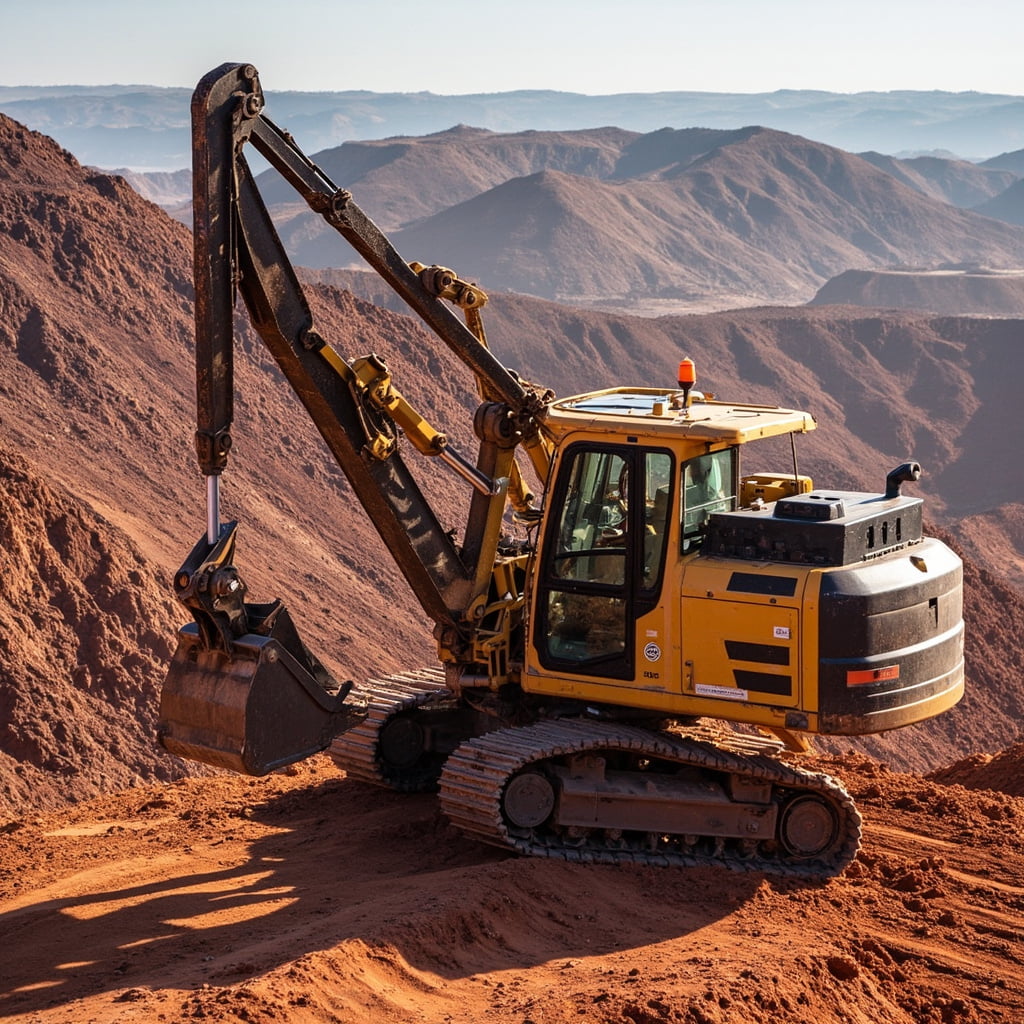
Undercarriage: The Most Critical Factor in Mining Excavator Selection
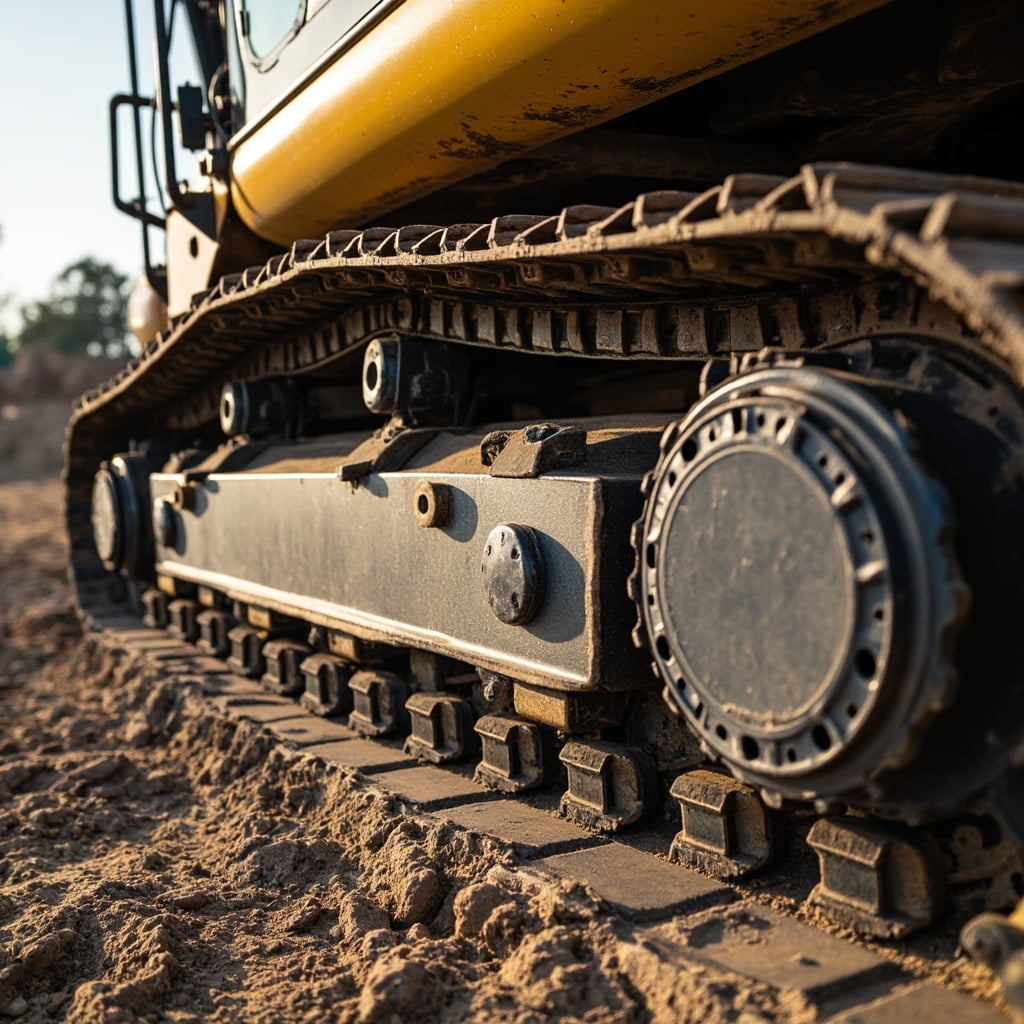
The undercarriage is where mining and construction excavators diverge most visibly. A construction excavator typically uses a standard-width track gauge, standard track links, and standard carrier rollers and idlers designed for 8 to 10 hours per day of operation on relatively soft ground. A mining excavator uses wider track gauges for stability, heavier track links with more robust connection pins, upgraded carrier and track rollers rated for continuous operation, and reinforced track adjusters designed to handle the constant high-load stress of rock breaking and heavy digging.
A standard construction excavator undercarriage under continuous mining-level stress will experience track link fatigue cracking within 3,000 to 5,000 hours. A properly specced mining undercarriage handles the same workload for 8,000 to 12,000 hours before requiring rebuild. The undercarriage rebuild cost — typically $15,000 to $30,000 for a 20-ton excavator — makes the spec decision one of the highest-leverage purchasing choices you can make.
Related Reading: Africa infrastructure excavator demand · Complete guide buying used excavators China · SANY Holcim deal mining equipment
Track Width and Ground Pressure: Why It Matters for Mining Applications
Mining operations typically work on uneven, rocky, and abrasive ground that punishes narrow gauge tracks. Wider tracks spread the machine’s weight over a larger ground contact area, reducing ground pressure (typically 0.6 to 0.8 kg/cm² for mining spec vs. 0.9 to 1.1 kg/cm² for construction spec). Lower ground pressure means better stability on soft or uneven surfaces, reduced sinkage in muddy conditions, and significantly reduced track wear from lateral scrubbing on sharp rock.
For African mining applications in particular — where pit floor conditions vary dramatically between dry season and wet season — the wider track gauge and lower ground pressure of a mining-spec undercarriage is not an optional upgrade, it’s a operational requirement. A construction excavator on a Zambian copper mine pit floor during wet season is a machine that’s constantly fighting its own stability.
Mining vs Construction Hydraulic Systems: Key Differences in Practice
Construction excavators are designed for intermittent loading — digging, swinging, dumping, repositioning. The hydraulic system is sized for peak demand during the dig cycle, with rest periods during swing and reposition that allow system pressure to recover. Mining excavators operate in loading configurations where the machine is doing near-continuous heavy digging with minimal repositioning — truck loading at a rock face, or continuous rock breaking — which places sustained demand on the hydraulic system that a construction spec machine is not designed to handle.
Mining-spec hydraulic systems use larger displacement pumps, upgraded control valves with higher flow capacity, and reinforced hydraulic cylinder mounting. The additional cost in the hydraulic system accounts for roughly $15,000 to $25,000 of the price premium between a construction and mining-spec 20-ton excavator. In applications where continuous digging is the norm, this premium pays back within the first 1,000 operating hours through reduced maintenance and longer component life.
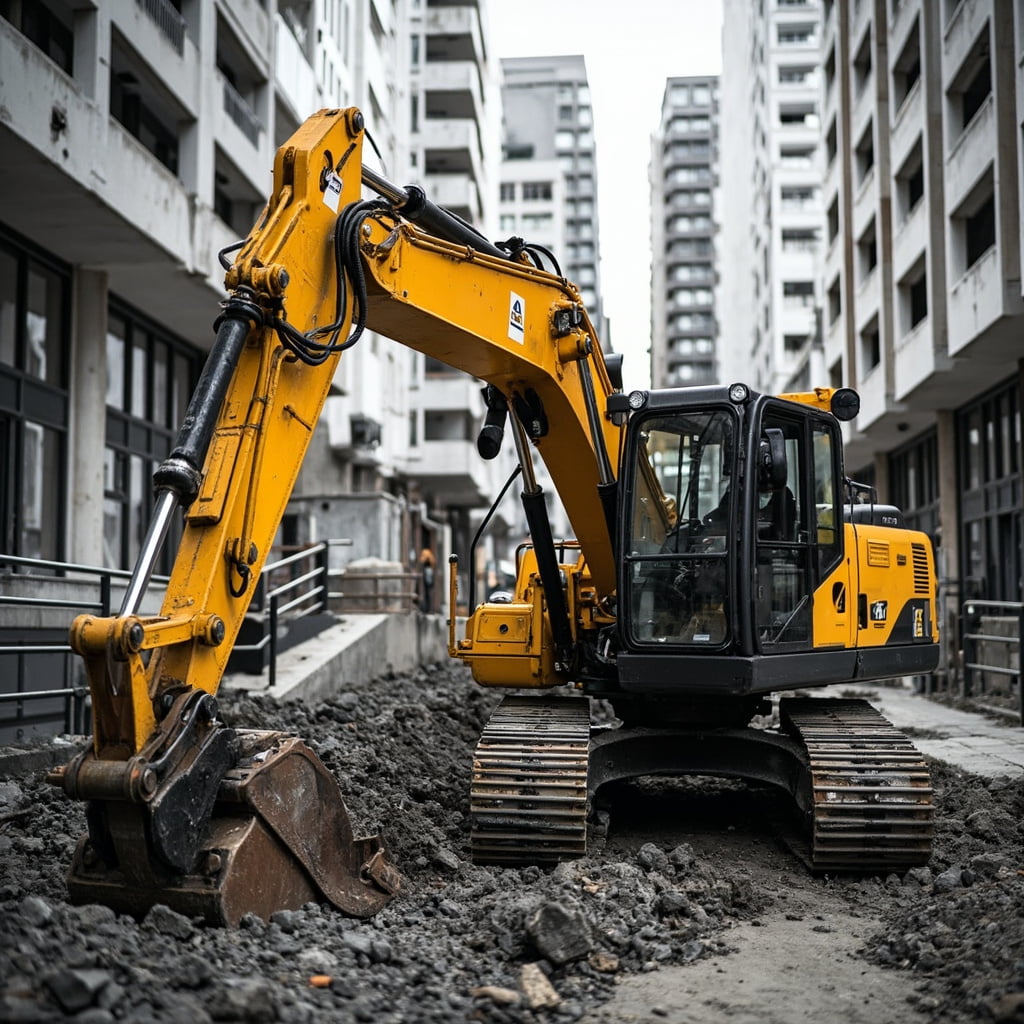
Bucket and Arm Geometry: Mining vs. Construction Optimizations
Mining excavators typically use shorter arm configurations with higher hydraulic pressure settings for breaking and loading. The shorter arm provides more breakout force — critical for rock breaking and face loading. Construction excavators use longer arm configurations optimized for reach and depth over breakout force. The bucket is also different: mining buckets are heavier, have thicker wear plates, and use different tooth configurations than construction buckets. Putting a construction bucket on a mining machine leads to accelerated wear and premature failure. Putting a mining bucket on a construction machine reduces reach and efficiency unnecessarily.
The Cooling System: The Most Overlooked Spec in Mining Excavators
Construction excavator cooling systems are designed for moderate ambient temperatures and intermittent operation. When ambient temperature exceeds 40°C (104°F) — common in African and Middle Eastern mining applications — a construction-spec cooling system reaches thermal limit and the machine derates (reduces power output) to prevent engine overheating. In practical terms: a construction excavator derating at 40°C ambient in a DRC copper mine loses 15 to 20% of its rated hydraulic power, which translates directly to reduced digging force and slower cycle times.
Mining-spec cooling systems are designed for continuous operation at 50°C ambient without derating. The additional cooling capacity comes from larger radiator cores, upgraded fan designs (sometimes variable-speed fan drives for better thermal management), and auxiliary oil coolers for the hydraulic system. For mining applications in tropical or desert climates, the mining-spec cooling system is not optional — a construction machine in a hot climate mining application will thermally derate during the first hot season, and the thermal stress cycles will accelerate component wear throughout the machine.
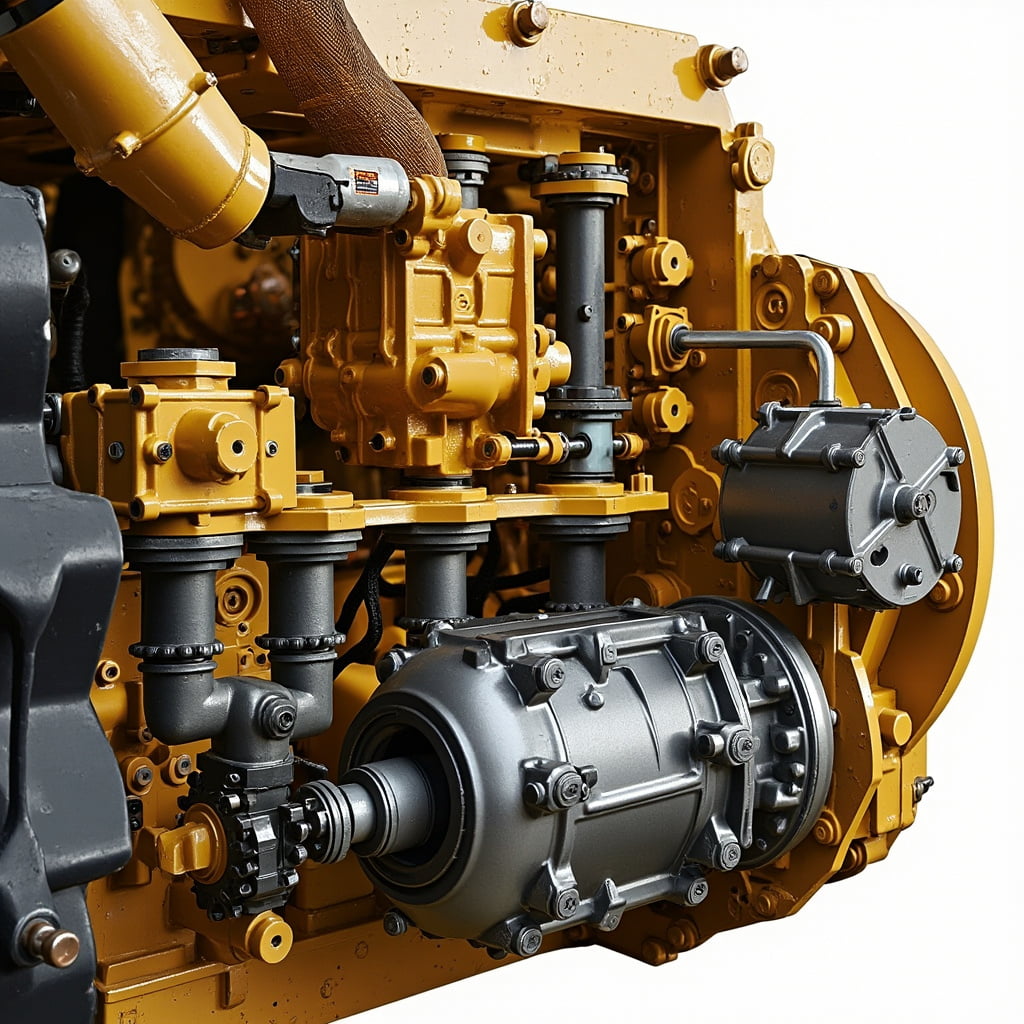
The 50°C Rating: What It Means in Practice
A machine rated for 50°C continuous operation has been tested under controlled conditions at that temperature. In practice, this means the machine will maintain full rated power output in ambient temperatures up to 50°C without derating. For African mining applications — where pit floor temperatures in direct sun regularly exceed 45°C — this specification is the difference between a machine that performs to spec and a machine that loses 15 to 20% of its rated capability during the hottest months of the year.
Choosing the Right Excavator Spec for Your Application
The decision between construction and mining spec doesn’t need to be complicated. Three questions give you the answer with reasonable confidence.
Question 1: How many hours per day will this machine operate? Under 10 hours = construction spec is fine. 10 to 16 hours = consider mining spec or at minimum a heavy-duty construction spec. Over 16 hours = mining spec required — the continuous loading design is non-negotiable for machine longevity.
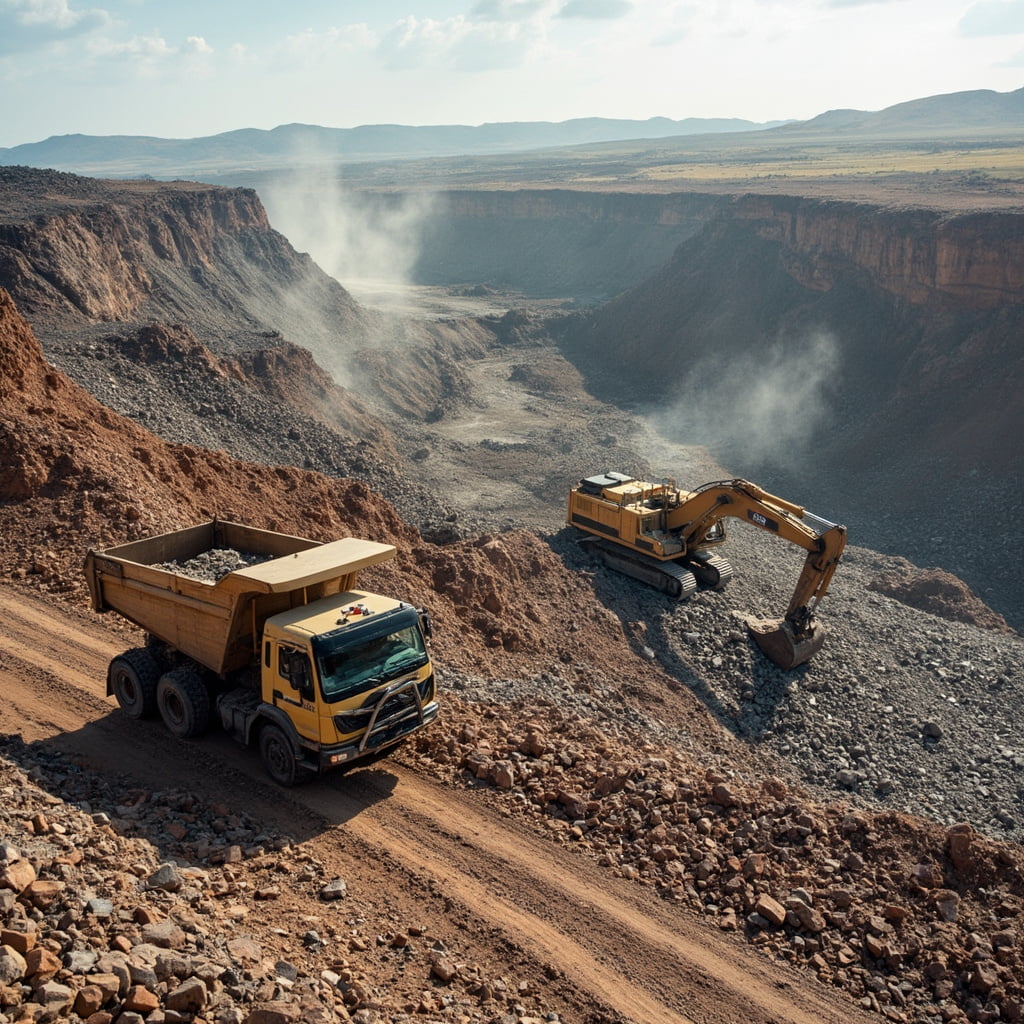
Question 2 and 3: Application Type and Ambient Temperature
Question 2: What are you moving? Rock and ore = mining spec. Soil and aggregate = construction spec. The difference is the sustained breakout force required and the abrasive nature of the material.
Question 3: What is the maximum ambient temperature in your operating location? Above 40°C = mining spec cooling required. Below 35°C = construction spec cooling sufficient, though heavy-duty construction spec is still advisable for high-hour applications.
Conclusion
The distinction between mining and construction excavator specifications is one of the most consequential purchasing decisions — and one of the most commonly misunderstood. A construction machine purchased for a mining application will fail prematurely and cost multiples of the spec premium in downtime and early rebuild. A mining machine purchased for a construction application is an unnecessary capital expense that will never recover its additional cost through productivity gains in lighter applications. The three-question framework — daily hours, material type, ambient temperature — gives you a reliable first-pass answer. When in doubt, spec up. The cost of over-specifying is a smaller profit margin on the job. The cost of under-specifying is a failed machine and a stranded project.
| 1 | Excavator undercarriage systems: track chain fatigue life depends on material quality, track tension management, and operating ground conditions. Excavator undercarriage systems on Wikipedia. ↑ |
| 2 | Hydraulic system design for heavy-duty excavators involves larger displacement pumps and reinforced cylinders designed for continuous operation. Hydraulic excavator drive systems on Wikipedia. ↑ |
| 3 | Prima’s Baoding Xushui inventory focuses on 2018-2025 model year excavators with 5,000 hours or less, for African, Middle Eastern, and Southeast Asian market applications. Prima Excavator official site. ↑ |
Sources: Caterpillar Wikipedia · Komatsu Wikipedia · Hydraulic Drive Wikipedia · Excavator Wikipedia · SANY Wikipedia
References:
| 1 | Wikipedia entry on hydraulic drive systems covering excavator hydraulic pump and motor technology, load sensing systems, and continuous vs intermittent loading differences.Hydraulic Drive – Wikipedia. |
| 2 | Wikipedia entry on Caterpillar Inc covering the company’s heavy equipment history, global dealer network, CAT 320D specifications and excavator support infrastructure worldwide.Caterpillar Inc – Wikipedia. |
| 3 | Wikipedia entry on excavator classifications covering technical specifications that distinguish mining from construction equipment, undercarriage design, and hydraulic system requirements.Excavator – Wikipedia. |
| 4 | Wikipedia entry on Komatsu covering Japanese excavator manufacturing quality standards, PC200 series specifications, and global distribution network for after-sales support.Komatsu – Wikipedia. |
| 5 | Wikipedia entry on SANY heavy equipment covering Chinese excavator manufacturing capabilities, SY215C specifications, international expansion and dealer network development.SANY – Wikipedia. |
Sources: Caterpillar Wikipedia · Komatsu Wikipedia · Hydraulic Drive Wikipedia · Excavator Wikipedia · SANY Wikipedia
References:
| 1 | Wikipedia entry on hydraulic drive systems covering excavator hydraulic pump and motor technology, load sensing systems, and continuous vs intermittent loading differences.Hydraulic Drive – Wikipedia. |
| 2 | Wikipedia entry on Caterpillar Inc covering the company’s heavy equipment history, global dealer network, CAT 320D specifications and excavator support infrastructure worldwide.Caterpillar Inc – Wikipedia. |
| 3 | Wikipedia entry on excavator classifications covering technical specifications that distinguish mining from construction equipment, undercarriage design, and hydraulic system requirements.Excavator – Wikipedia. |
| 4 | Wikipedia entry on Komatsu covering Japanese excavator manufacturing quality standards, PC200 series specifications, and global distribution network for after-sales support.Komatsu – Wikipedia. |
| 5 | Wikipedia entry on SANY heavy equipment covering Chinese excavator manufacturing capabilities, SY215C specifications, international expansion and dealer network development.SANY – Wikipedia. |