
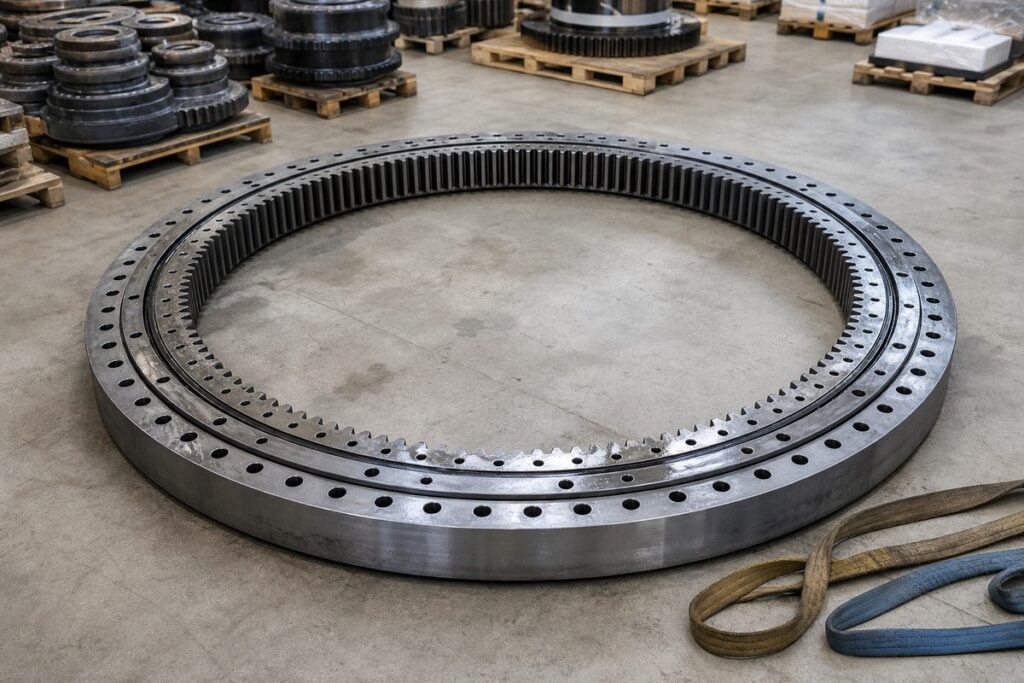
Buyers should check an excavator slewing ring before ordering from China by confirming the machine model, serial context, old bearing dimensions, inner and outer diameter, height, bolt hole count, bolt circle, gear type, tooth condition, raceway and seal condition, mounting face quality and export packing. A slewing ring is large, heavy and expensive to return, so PRIMA should not treat a similar circular bearing as confirmed until the old-bearing measurements and supplier comparison are documented.
A slewing ring, also called a swing bearing or turntable bearing, carries the upper structure of the excavator. It must match diameter, bolt pattern, gear teeth and mounting faces; otherwise installation becomes expensive or impossible.
This guide connects PRIMA swing-system sourcing with the swing motor guide, final drive guide and excavator parts supplier guide. It focuses on buyer evidence, not brand authorization claims.
Buyer Summary:
- Best for buyers replacing excavator slewing rings, swing bearings and turntable bearings.
- Required evidence includes old bearing measurements, bolt circle, gear teeth, raceway, seal and mounting-face photos.
- The biggest risk is approving a bearing with the wrong bolt hole circle, gear type, height or damaged raceway.
- Export packing must protect gear teeth, raceway surfaces and circular shape during long-distance transport.
Quick answer: what proves an excavator slewing ring is the correct bearing?
An excavator slewing ring should be verified with measurement evidence and old-bearing comparison before purchase approval. Buyers should collect machine model, serial context, old bearing photos, inner diameter, outer diameter, height, bolt-hole count, bolt circle, gear tooth style, internal or external gear position, seal condition, raceway condition and mounting-surface photos. If a replacement is used or rebuilt, the buyer also needs condition photos and a written boundary for wear, backlash and return risk. PRIMA should pack the bearing with oil protection, face protection, pallet support and edge protection because a damaged raceway or gear tooth can make the bearing unusable.
Which measurements should be collected before quotation?
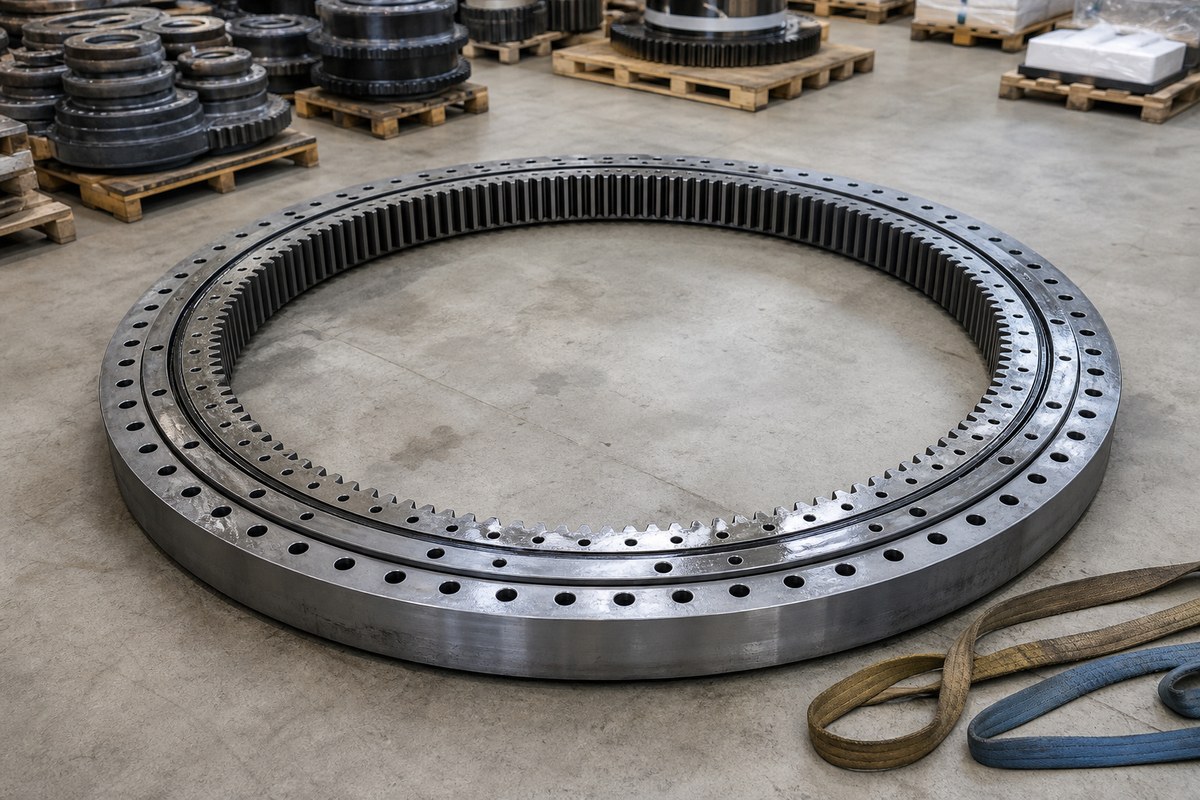
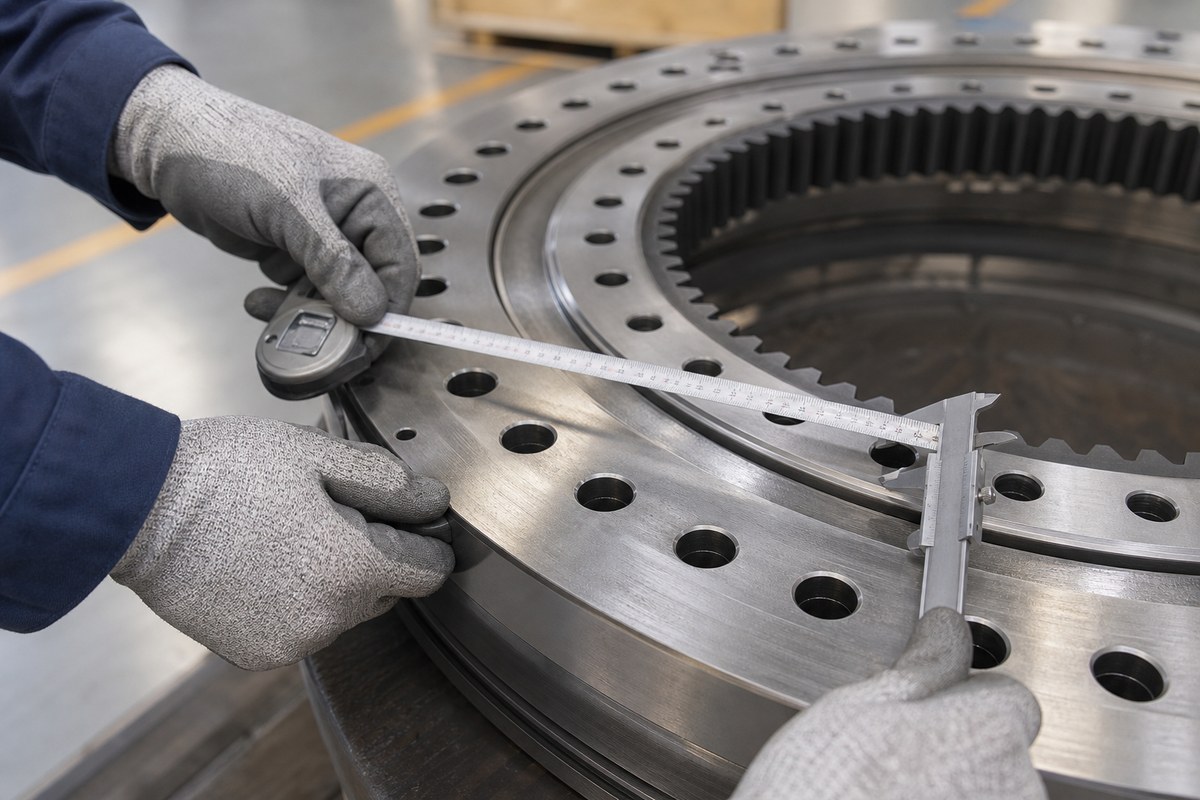
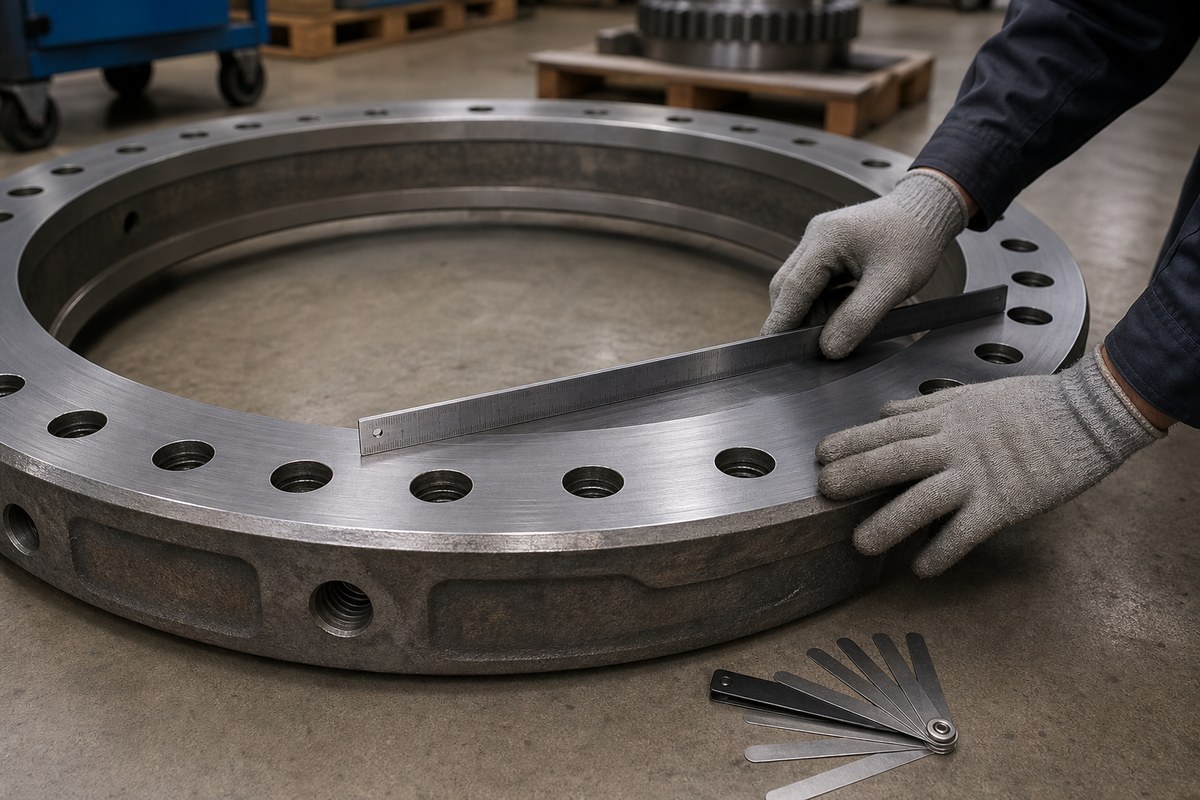
The safest quote starts with the old bearing measured on a clean floor. Buyers should record inner diameter, outer diameter, total height, bolt hole count, bolt diameter, bolt circle and gear position. If the bearing is still on the machine, the buyer should still photograph the model plate, machine serial area and visible bearing gear teeth.
A bearing that is only close in diameter can still fail because bolt holes do not align. PRIMA should request measurement photos, not only typed numbers, and keep the quote conditional when old-bearing dimensions are incomplete.
How should gear teeth and raceway condition be checked?
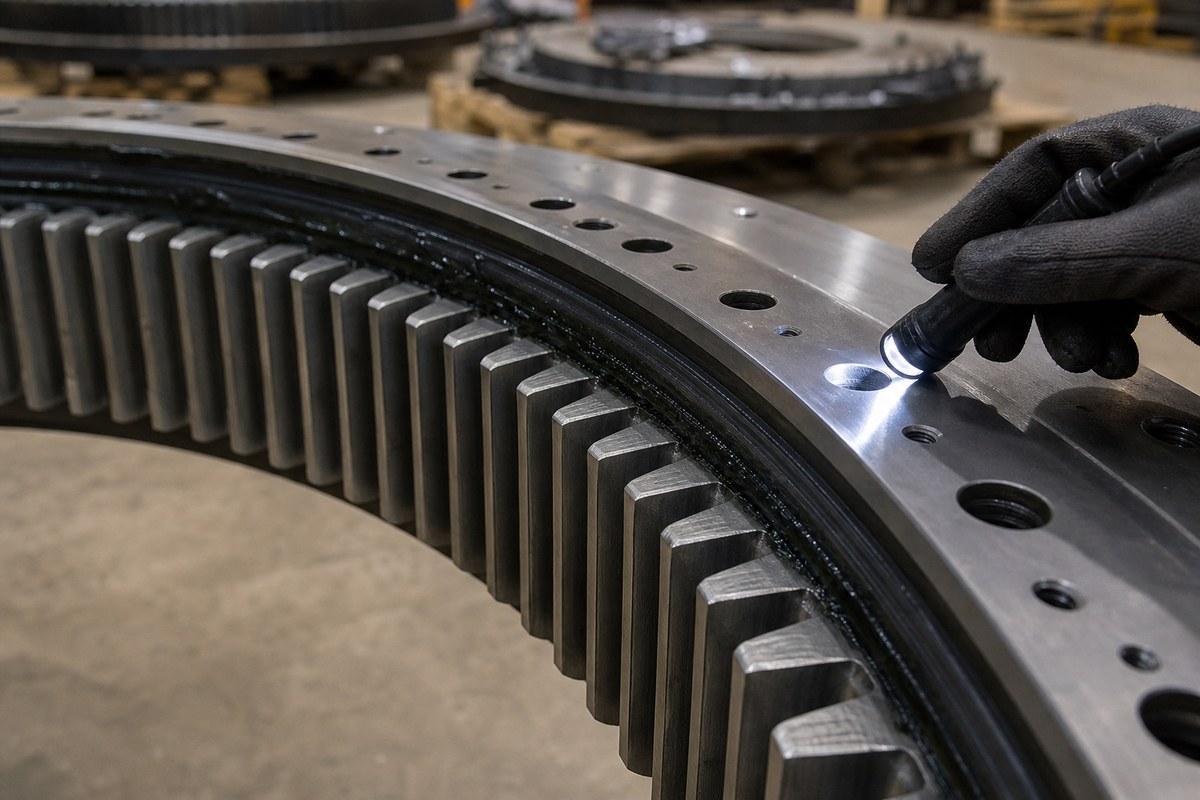
Slewing rings may use internal gear, external gear or no gear depending on machine design. Buyers should compare tooth direction, tooth count where practical, gear position, tooth wear and grease condition. A chipped tooth or damaged raceway can create noise, backlash and early failure.
For used or rebuilt options, condition evidence should be more conservative. The buyer needs photos of gear teeth, raceway, seal area and any wear marks. PRIMA should not describe a used bearing as like new unless current evidence supports that exact item.
What mounting-surface evidence prevents installation failure?
The top and bottom mounting faces must be flat, clean and free of impact damage. Buyers should inspect whether the machine mounting surface is also damaged, because a new bearing can fail if it is installed on an uneven or contaminated base.
PRIMA’s quote file should remind buyers to compare bearing faces, bolt holes and gear mesh area before installation. The part sale should not become an unsupported promise that it solves structural frame damage, swing gearbox damage or poor installation practice.
How should a slewing ring be packed for export?
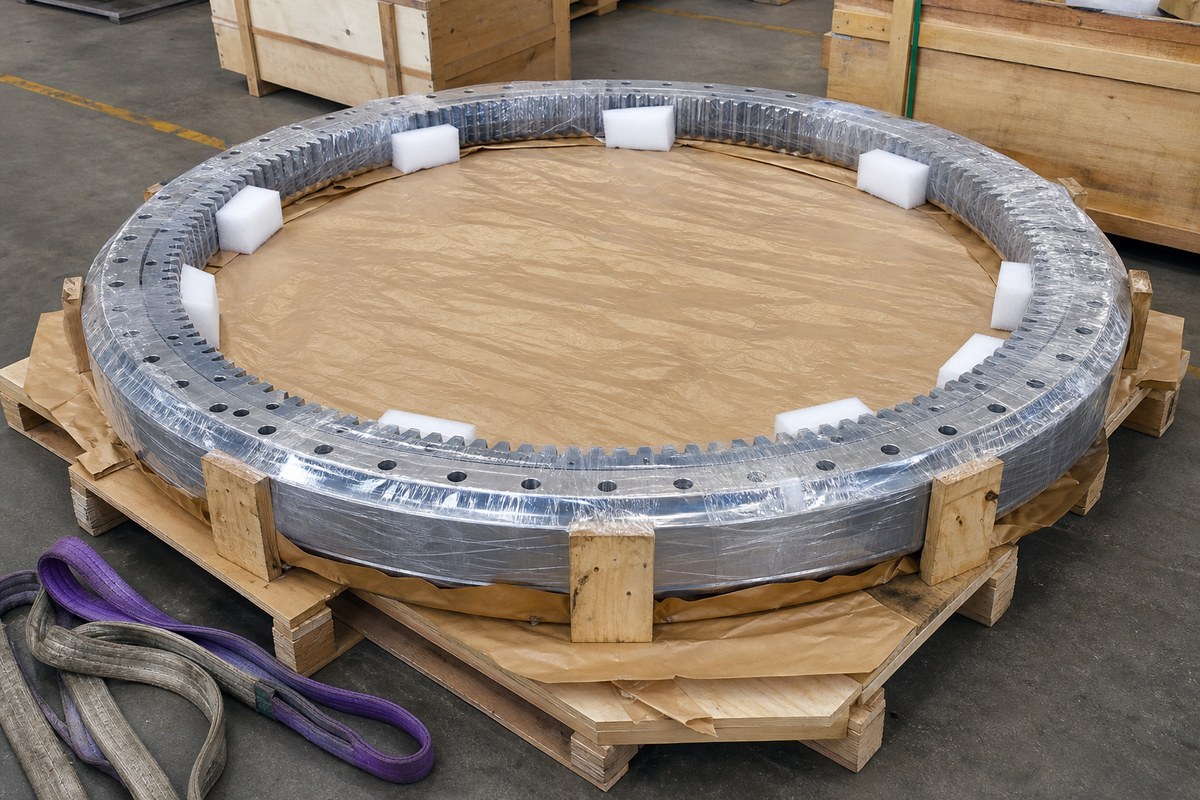
A slewing ring is heavy but also sensitive. Gear teeth, raceway surfaces and seals should be protected with oil paper, foam, plastic wrap and pallet support. The bearing should be blocked so the ring cannot shift during handling.
The final photo should show the full ring, pallet, straps, protective wrapping and crate structure. Buyers should keep the packing photos with their import file so arrival inspection can compare condition before installation.
Evidence Table
Key Facts For PRIMA Buyers
- Slewing ring fitment depends on dimensions, bolt circle and gear style.
- A similar round bearing is not enough evidence for approval.
- Used or rebuilt slewing rings require conservative condition proof.
- Packing should protect raceway surfaces, gear teeth and circular shape.
Buyer FAQ
Is slewing ring the same as swing bearing?
In buyer language they often refer to the same turntable bearing, but the quote should still confirm dimensions and gear style.
Can buyers order by excavator model only?
No. Model name should be supported by old bearing measurements and photos.
What is the most expensive mismatch?
Wrong bolt circle, gear style or bearing height can make installation impossible.
Should used slewing rings be accepted?
Only with conservative condition evidence and a clear risk boundary.
What packing proof matters?
Oil protection, face protection, pallet support and photos of the actual bearing before shipment.
Useful PRIMA Links
Conclusion
The safest PRIMA order is the order tied to saved evidence: machine identity, old-part or machine photos, measurements, condition boundary, packing proof and a clear note about what remains uncertain. Buyers should compare the evidence file before payment, before shipment and again when the machine or part arrives.