
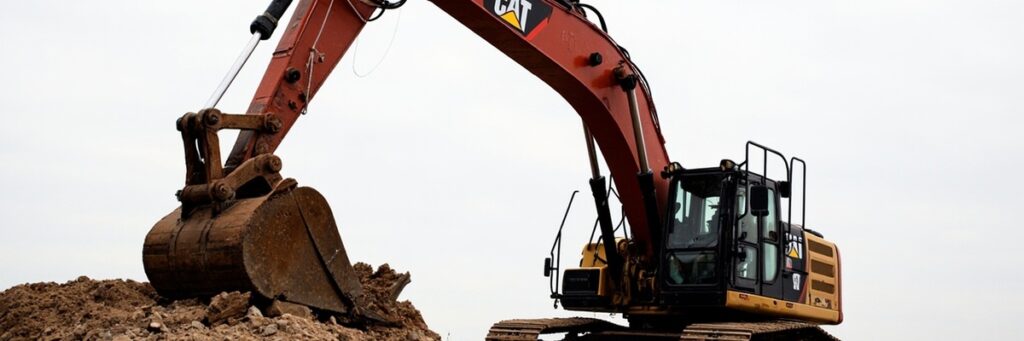
Direct answer: A CAT 320D is not automatically a better used excavator than a Komatsu PC200, and the reverse is also true. The safer decision comes from comparing two exact machines: model suffix and serial/PIN, verified configuration, current condition, attachment requirements, local parts and diagnostic support, landed cost and matched resale evidence. A well-documented PC200 can be the stronger purchase than a worn or poorly documented 320D; a well-supported 320D can be the lower-risk choice than a PC200 with no practical parts or service route at the destination.
Buyer Summary
- Do not compare model names alone. CAT 320D and Komatsu PC200 labels cover multiple suffixes, markets and configurations.
- Condition can outweigh brand. Cold-start behavior, hydraulics, undercarriage, structure, faults and evidence continuity belong in the comparison.
- Remote support must be tested. An official locator is a starting point; written parts, lead-time, diagnostic and field-support answers are the decision evidence.
- Resale needs local matched records. A universal resale percentage or brand premium is not reliable without same-market, same-series, similar-hour and similar-condition completed-sale evidence.
- Compare one commercial file. Match machine price, repairs, inland transport, export, freight, insurance, destination charges and first-service parts under the same date and Incoterm.
Why CAT 320D and Komatsu PC200 Names Are Not Enough
Caterpillar’s official non-current 320D records show that regional and production variants exist, while Caterpillar’s parts guidance asks buyers to use an equipment serial number for relevant manuals and parts information. Komatsu’s official PC200/PC220-8M0 brochure states working-range data for a defined arm and configuration. These are useful reference points, but they do not identify the machine in a seller’s photos.
| Current primary reference | What it can establish | What it cannot establish |
|---|---|---|
| Caterpillar 320D non-current regional record | A dated official model-family and engine reference for the named regional version. | The year, suffix, condition, hours or configuration of a candidate machine. |
| Komatsu PC200/PC220-8M0 official brochure | Specifications and working ranges for the documented variant and stated setup. | Whether a used candidate matches that setup or passes inspection. |
| Caterpillar Parts serial/manual guidance | Why the equipment serial number matters for manuals and parts lookup. | Whether a third-party part, repair or seller statement is correct. |
| Caterpillar dealer locator and Komatsu dealer locator | Current official starting points for destination-specific contact checks. | Stock, price, response time, field coverage or support for a specific imported used machine. |
Reference check: 29 August 2026. Product and support pages can change. Reconfirm the exact market, serial/PIN and written local response before purchase.
Compare Two Exact Machines with One Ten-Part Evidence File
| Evidence block | Request for each machine | Hold condition |
|---|---|---|
| 1. Identity | Uncropped model plate, PIN/serial, engine plate and a dated wide view tying the plate to the same machine. | Plate hidden, cropped, unreadable or inconsistent with the quote. |
| 2. Configuration | Exact suffix/market, engine, emissions package, boom, stick, bucket, shoe width, counterweight, piping, coupler and attachments. | Seller supplies only “320D” or “PC200” without configuration. |
| 3. Hours | Meter close-up, controller/ECM reading when accessible, start-cycle context and wear consistency. | A dashboard photo is the only hour evidence. |
| 4. Cold start | Uncut dated video from cold engine through start, idle, throttle, exhaust and dashboard alarms. | Machine is already warm or the sequence is edited. |
| 5. Hydraulics and travel | Boom, arm, bucket, swing and both travel sides under a repeatable load; visible leaks, drift, noise and fault status. | Only a walk-around or no-load movement is supplied. |
| 6. Undercarriage | Measured chain/link, bushing, shoe, sprocket, idler, roller, tension and frame evidence from both sides. | Fresh paint or distant photos replace measurements. |
| 7. Structure and attachment fit | Boom/arm welds, slew area, bucket linkage, pins/bushings and required auxiliary flow, pressure, return and coupler details. | Attachment compatibility is inferred from model name. |
| 8. Service and parts path | Destination contacts, diagnostic access, mechanic capability and dated quotes/lead times for a short critical-parts list tied to the serial. | A logo, map pin or generic “parts available” statement is the only proof. |
| 9. Commercial and export file | Machine ID, included repairs/items, quote validity, Incoterm, loading method, route, insurance choice and invoice/packing/export-document scope. | Quote cannot be tied to the inspected machine. |
| 10. Resale evidence | Same-country completed sales with comparable series, year, hours, condition, configuration and documents; record asking and sold status separately. | A universal percentage or unmatched online asking price is used. |
How Should Remote Buyers Compare CAT 320 and Komatsu PC200 Support Networks?
Do not decide from a global brand-network claim. Start with the official locator for the destination, then send the same written request to each reachable outlet, independent specialist and parts source. Use the exact serial/PIN and ask whether they can support that particular series and regional configuration.
- Can you identify the exact machine and parts catalogue from this PIN/serial?
- Can you diagnose the engine and controller generation on this candidate?
- What are the current price and lead time for filters, seal kits, sensors, undercarriage wear parts, final-drive components and one hydraulic-risk item?
- Is field service available at the jobsite, or must the machine travel to a workshop?
- Which items are genuinely stocked and which are special order?
- Will you support an independently imported used machine, and what documents are required?
A brand has the stronger destination support file only when current written answers are more usable for that exact candidate. A locator result alone is not a winner.
How Should Buyers Estimate Resale after Seven Years or 8,000 Hours?
There is no defensible universal CAT-versus-Komatsu resale percentage. Build a destination-specific matched set instead. Separate asking listings from completed transactions, and do not compare a documented, recently repaired machine with an unknown-condition unit.
| Match first | Then adjust for |
|---|---|
| Destination country and sale channel | Tax-paid status, registration/import documents and buyer access. |
| Exact series/suffix and configuration | Boom/stick/bucket, shoe width, piping, attachments and emissions package. |
| Year and verified-hour band | Hour confidence, rebuilds, service documentation and controller faults. |
| Engine, hydraulics, structure and undercarriage condition | Measured repair backlog and the cost to make the machine sale-ready. |
Evidence-bounded method: use the range of matched completed local sales, then adjust only with documented condition, configuration, repair and transaction differences. If completed-sale evidence is unavailable, label resale as unknown rather than inventing a premium.
Use the Job and Evidence to Choose, Not a Universal Winner
| Buyer situation | Evidence that decides | Do not assume |
|---|---|---|
| General earthmoving | Cycle test, bucket/arm setup, fuel log under matched duty, condition and operator fit. | One brand is always faster or cheaper. |
| Breaker or auxiliary attachment | Exact auxiliary flow/pressure, return circuit, cooling, coupler and attachment match. | Every 320D or PC200 has the required circuit. |
| Remote project | Serial-based parts response, diagnostic route, mechanic capability, field support and critical-parts lead time. | Global network size equals local support. |
| Quarry or severe duty | Application configuration, guarding, cooling, undercarriage, structural inspection, attachment limits and duty-cycle evidence. | A standard 20-ton configuration is automatically suitable for mining. |
| Resale-sensitive fleet | Matched local completed sales plus documentation and repair backlog. | A fixed brand premium applies in every country. |
Build One Landed-Cost and First-Year Cost File
Compare both candidates on the same date, route and Incoterm:
Machine quote + inspection and agreed repairs + China inland transport + export/loading charges + international freight + insurance + destination duty/tax + port/clearance/inland delivery + first service and critical parts + evidence-based repair reserve.
Do not insert a generic fuel-saving or parts-cost percentage. If fuel matters, run the same duty cycle with a defined load, operator, attachment, soil, idle time and measurement method. If maintenance matters, price the same serial-linked parts basket from sources that can actually deliver to the destination.
Stop the Comparison When the Evidence File Breaks
- Identity, suffix or serial/PIN does not match the quote.
- The seller will not provide an uncut cold start and functional test.
- Hour claims cannot be compared with controller data or physical wear.
- Undercarriage and structural condition cannot be measured.
- Attachment requirements are not tied to hydraulic configuration.
- Destination support is described only with a logo or generic promise.
- Price, resale, warranty, service history, parts kit or included repair claims are not written into the exact commercial file.
Continue the Buyer-Evidence Path
- Choose a used excavator brand and model by jobsite.
- Use the PRIMA used-excavator inspection checklist.
- See a CAT 320D2 evidence-file example—an evidence-structure example, not proof of a current candidate.
- Verify Komatsu PC200-family parts by exact fitment evidence.
- Evaluate a China used-excavator supplier.
- Build the shipping and document file.
- Review only record-complete candidate inventory; current availability must be reconfirmed.
Request a Two-Machine Comparison File
For a useful comparison, send:
- two candidate URLs or the exact model suffix and serial/PIN for each machine;
- destination country, nearest port and final jobsite;
- job material, expected daily hours and required attachments;
- maximum transport dimensions or weight limits;
- local mechanic, diagnostic and parts-access situation;
- preferred Incoterm and target purchase timeline.
WhatsApp: +86 138 2031 8813
Email: [email protected]
Independent Exporter Disclosure
PRIMA uses Caterpillar, CAT, Komatsu, 320D and PC200 descriptively to identify used-equipment families and buyer search intent. PRIMA is an independent exporter and does not claim to be Caterpillar, Komatsu or an authorized dealer. Any current machine, inspection, repair, warranty, support or commercial statement must be tied to the exact written candidate file.
Buyer FAQ
Which is better, a used CAT 320D or Komatsu PC200?
Neither is universally better. Choose the candidate with the stronger identity, condition, job-fit, destination-support, landed-cost and document evidence file.
Which model has better support in a remote region?
Use official locators as a starting point, then obtain serial-based written answers for parts, diagnostics, mechanic capability, lead time and field coverage. Global brand reputation is not sufficient local evidence.
Does a CAT 320D always have higher resale value than a Komatsu PC200?
No universal premium should be assumed. Compare matched completed sales in the destination market and adjust for exact series, year, verified hours, configuration, condition, documentation and repair backlog.
Can published specifications identify the exact used machine?
No. Published specifications describe a defined model or configuration. Confirm the candidate’s serial/PIN, suffix, engine plate, boom/stick, bucket, shoe width, piping and market configuration.
Can PRIMA confirm current CAT 320D or Komatsu PC200 inventory from this guide?
No stock is claimed by this guide. Current availability is confirmed only after a record-complete candidate is tied to identity, condition, commercial and publication-safe evidence.