
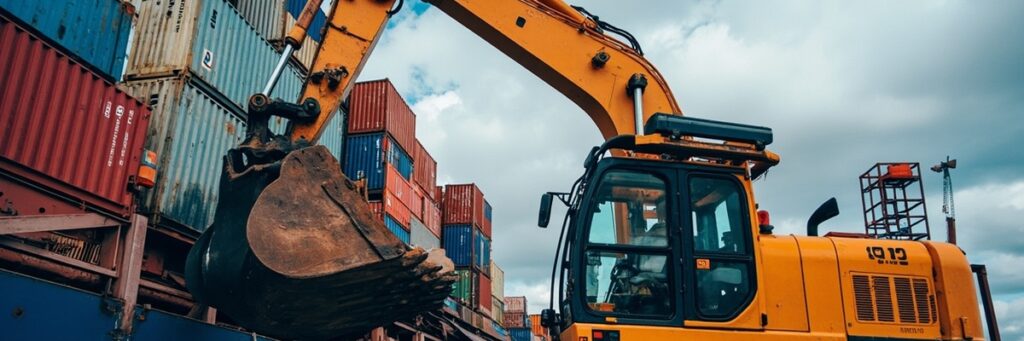
Shipping excavators from China to Africa requires careful planning of logistics, costs, and documentation. Understanding port-to-port transit times, container requirements, and import regulations ensures smooth delivery of construction equipment to African project sites.
Shipping Methods: Container vs Roll-on/Roll-off
Two primary methods exist for shipping excavators from China to Africa: container shipping and roll-on/roll-off (RORO) vessels. Container shipping suits mini excavators and compact equipment that fits within 20ft or 40ft containers. RORO shipping is preferred for large crawler excavators that cannot be containerized, offering simpler loading and unloading processes at destination ports.
Shipping costs depend significantly on the excavator’s size and weight. A 20-ton crawler excavator typically costs between $1,500 to $3,000 for ocean freight from major Chinese ports to East African destinations, while larger 30-50 ton machines may require RORO vessel booking at premium rates. Buyers should obtain quotes from multiple freight forwarders specializing in heavy equipment shipments.
Transit Times to Major African Destinations
Port-to-port transit times from China to African destinations vary by route and port of arrival. Shipping to East Africa (Mombasa, Kenya; Dar es Salaam, Tanzania) typically takes around 20 days under ideal conditions. West African destinations (Lagos, Nigeria; Accra, Ghana) generally require 25-35 days depending on carrier routing and port congestion.
Key Chinese export ports include Shanghai, Qingdao, Tianjin, and Shenzhen. Major African import ports receiving construction equipment include Durban (South Africa), Mombasa (Kenya), Lagos (Nigeria), and Djibouti (Ethiopia). Buyers should factor in additional inland transportation costs from port to final project site, which can be substantial in landlocked countries.
Documentation and Import Requirements
Proper documentation is critical for successful excavator imports to African countries. Essential paperwork includes the bill of lading, commercial invoice, packing list, certificate of origin, and import license where required. Many African nations require phytosanitary certificates and fumigation documentation for equipment arriving in wooden packaging materials.
Import duties and taxes vary significantly across African nations. Nigeria applies significant import duties on construction equipment, while Kenya and Ethiopia maintain varying tariff structures. Buyers should engage local customs brokers familiar with construction equipment imports to navigate documentation requirements efficiently. The buying guide covers additional procurement considerations for international buyers.
Total Cost Breakdown for African Importers
Beyond the machine purchase price, African importers should budget for ocean freight (USD 1,500-5,000 depending on size and method), port handling fees ($500-1,500), import duties (5-25% depending on country and equipment classification), inland transportation to project site ($500-3,000), and customs clearance fees. Total landed costs typically exceed the machine’s FOB price by 20-40%.
For equipment sourcing strategies including shipping cost optimization, review the Africa infrastructure boom analysis which covers market demand factors affecting total project equipment budgets.
FAQ
How long does it take to ship an excavator from China to Africa?
Shipping to East African ports (Mombasa, Dar es Salaam) takes approximately 20 days port-to-port. West African destinations (Lagos, Accra) require 25-35 days. Additional time for customs clearance and inland transportation should be factored into project timelines.
What is the most cost-effective shipping method for excavators?
Container shipping offers cost advantages for mini excavators and compact equipment under 15 tons. RORO vessels are necessary for larger crawler excavators but typically command premium rates. Comparing total costs across shipping methods is essential for budget optimization.
What African countries have the most favorable import regulations for excavators?
South Africa, Kenya, and Tanzania offer relatively straightforward import procedures with established ports and customs processes. Nigeria has more complex requirements but represents the largest market. Local customs brokers can provide current regulatory guidance for specific countries.
Are there hidden costs when importing excavators to Africa?
Beyond obvious costs, budget for port storage fees if clearance is delayed, currency fluctuation risks, and potential equipment modifications required to meet local emissions or safety standards. Comprehensive project planning helps identify these factors early.
Conclusion
Successfully shipping excavators from China to Africa requires understanding logistics options, realistic cost budgeting, and proper documentation preparation. Transit times of 20-35 days to major ports represent one component of overall project planning. Engaging experienced freight forwarders and customs brokers familiar with construction equipment imports can prevent costly delays and ensure equipment arrives ready for immediate deployment to African construction projects.