
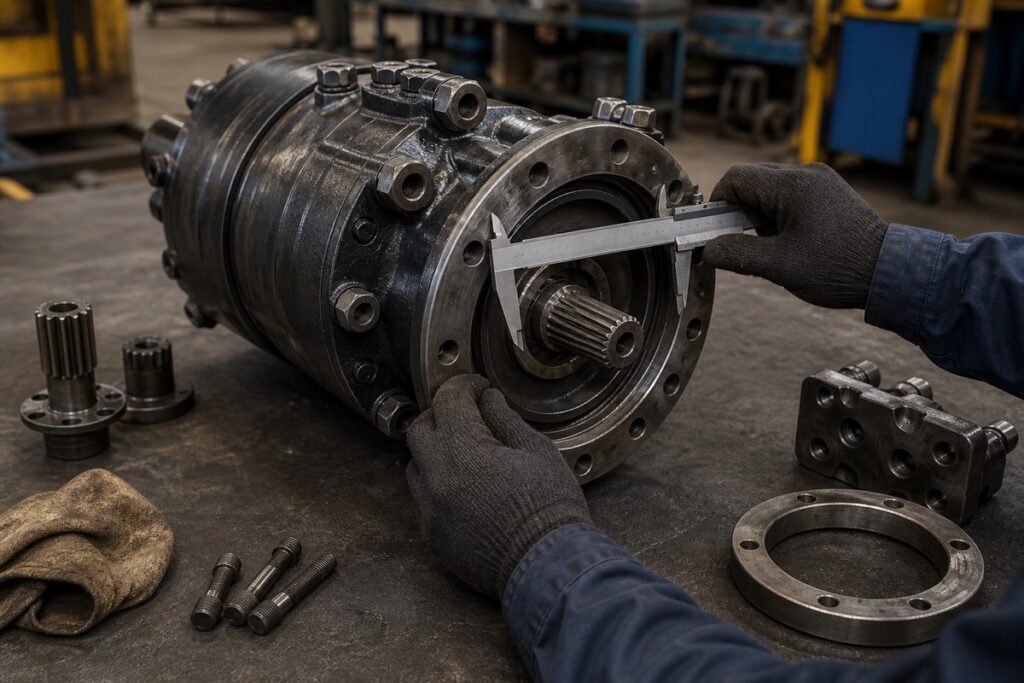
Before buying an excavator swing motor, buyers should separate swing motor, swing gearbox and control problems, then document case-drain leakage, external oil leaks, gear oil condition, mounting face, shaft or pinion, ports, model/serial data and packing requirements.
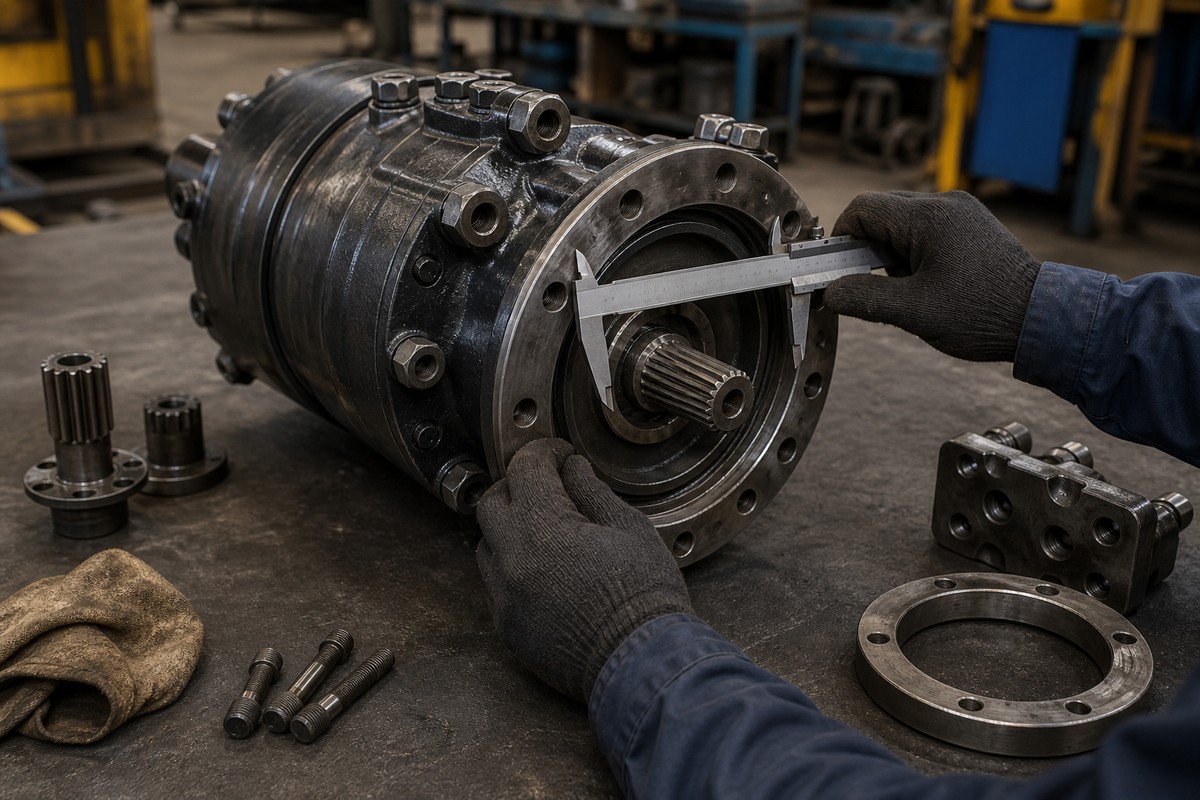
Swing problems can be misdiagnosed because buyers may use the terms swing motor, swing gearbox and swing drive interchangeably. This guide connects PRIMA hydraulic sourcing with the hydraulic pump buyer guide, the final drive buyer guide and the slow hydraulics diagnostic page.
Buyer Summary
- Swing motor, swing gearbox and complete swing drive should be separated before quotation.
- Case drain, leakage, gear oil and swing speed symptoms help decide whether the motor is really the failed part.
- Replacement sourcing needs mounting face, shaft or pinion, port layout, part number and machine serial evidence.
- Used, rebuilt, aftermarket and OEM options should carry different evidence and warranty expectations.
What is the difference between a swing motor, swing gearbox and swing drive?
The swing motor is the hydraulic motor, the swing gearbox is the reduction gearbox and the swing drive may refer to the combined assembly.
Many buyers ask for an excavator swing motor when the failed part may be the gearbox, brake, bearing, seal, control circuit or complete swing assembly. If the supplier does not clarify the meaning, the buyer can receive a part that fits one section of the assembly but does not solve the failure.
PRIMA should ask the buyer to identify whether the old unit is being replaced as a motor only, gearbox only or complete swing drive. Photos should show the whole assembly first, then close-ups of the ports, mounting face, shaft or pinion, nameplate or casting numbers and any leakage area. The quotation should use the same terminology as the evidence file.
| Term | Usually means | Evidence needed |
|---|---|---|
| Swing motor | Hydraulic motor section | Ports, case drain, motor plate |
| Swing gearbox | Reduction gearbox section | Gear oil, shaft/pinion, mounting |
| Swing drive | Combined assembly | Full unit photos and dimensions |
What symptoms point to case drain, leakage or internal wear?
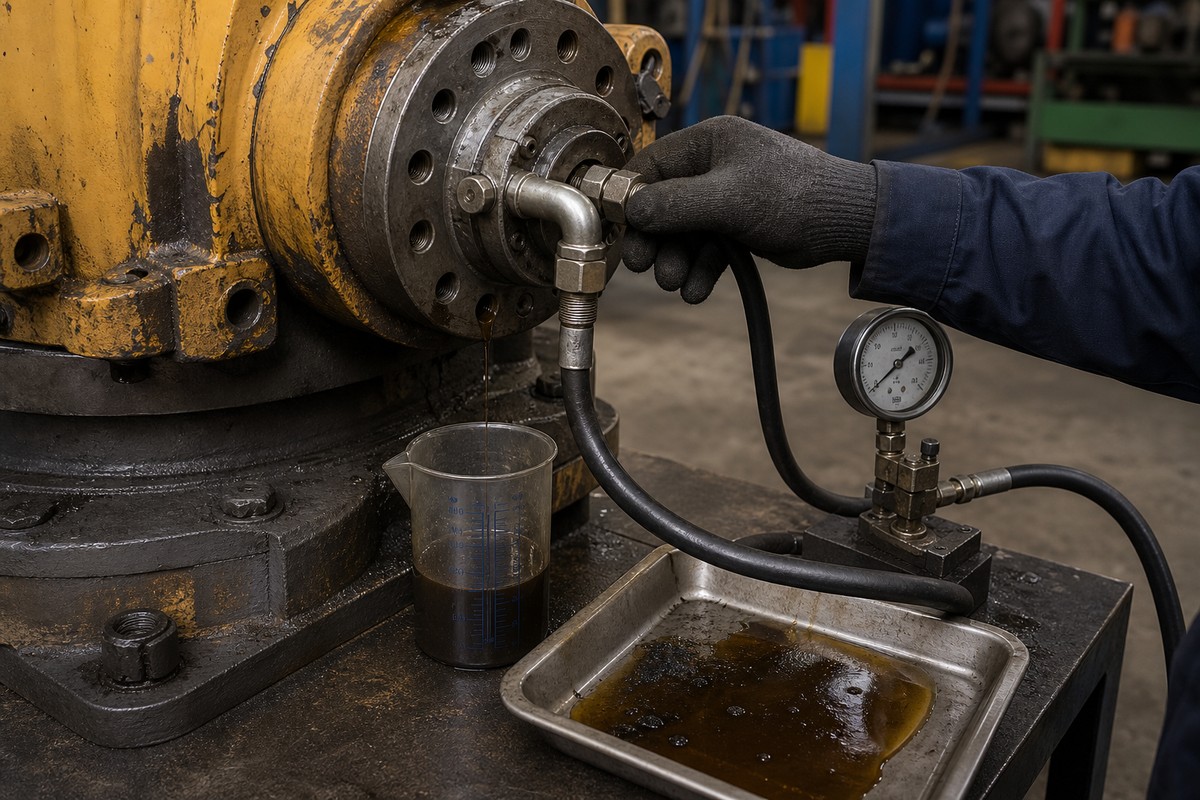
Weak swing, drift, noise, overheating, oil leaks and high case-drain flow can point in different directions.
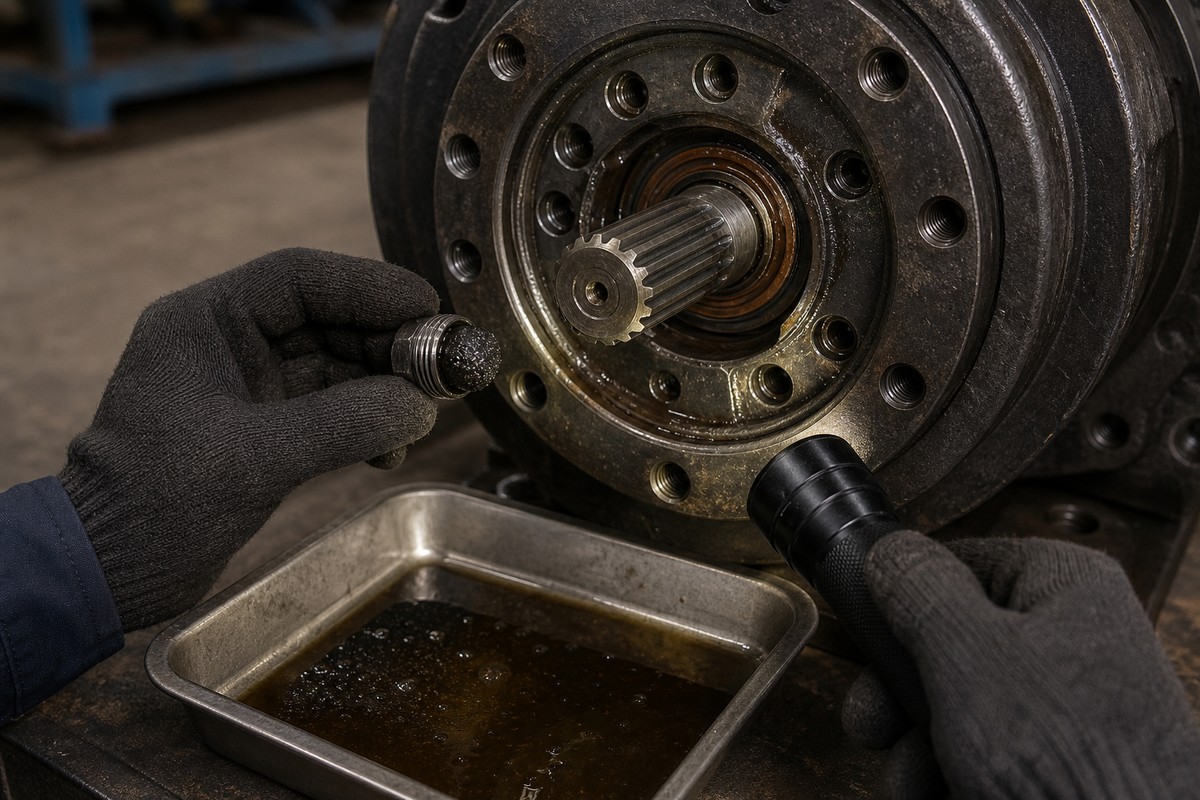
A swing motor with high internal leakage may show excessive case-drain flow, weak swing or overheating. A gearbox problem may show metal in gear oil, abnormal noise or mechanical looseness. A brake or control issue may make the machine hesitate or fail to hold position even when the motor itself is not the main fault.
Buyers should not rely on one symptom alone. PRIMA can ask for failure history, whether the problem appears in both swing directions, case-drain readings if available, oil condition, external leak photos and any recent hydraulic work. This diagnostic context helps choose used, rebuilt, aftermarket or OEM replacement without guessing.
| Symptom | Useful evidence | Possible direction |
|---|---|---|
| Weak or slow swing | Pressure/flow and case-drain check | Motor leakage or control issue |
| Oil leak | Leak location photos | Seal, hose or housing issue |
| Noise or metal debris | Gear oil and pinion photos | Gearbox wear |
What evidence is needed before quoting a replacement swing motor?
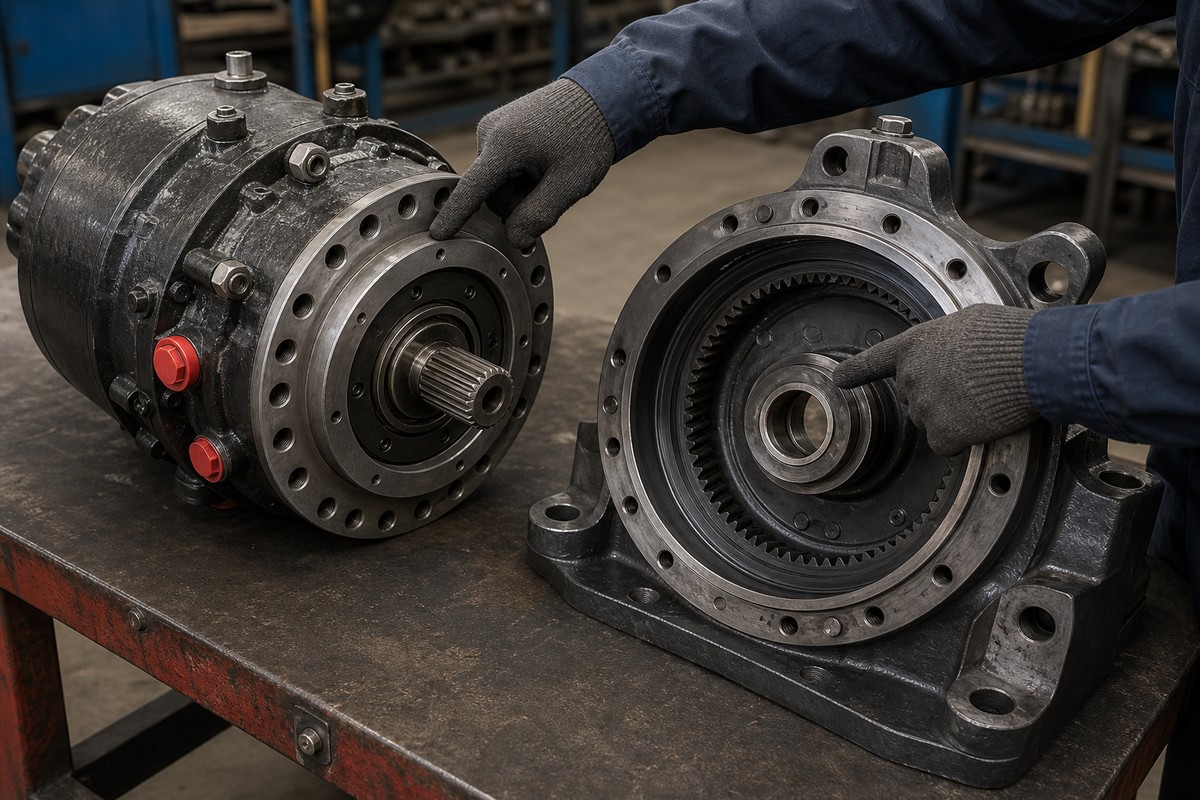
The quote file should show machine identity, old-unit photos, port layout, mounting face, shaft or pinion and visible part numbers.
A replacement swing motor may look similar across several excavator models but differ in ports, displacement, brake arrangement, shaft connection or mounting geometry. Buyers should photograph the old unit before disassembly if possible, then again after removal if the key surfaces are hidden.
For a strong quote, PRIMA should request model and serial number, old-unit photos from all sides, port positions, case-drain connection, mounting bolt pattern, shaft or pinion interface, nameplate or casting number and destination. If the buyer only sends a blurry photo or a model name, the quote should remain provisional until the evidence is complete.
| Replacement data | Evidence | Why it matters |
|---|---|---|
| Machine identity | Model and serial plate | Confirms excavator variant |
| Hydraulic connection | Port and case-drain photos | Prevents hose mismatch |
| Mechanical connection | Shaft/pinion and mounting photos | Prevents installation failure |
When should buyers consider used, rebuilt, aftermarket or OEM options?
Condition choice should match machine value, urgency, warranty need and the quality of available evidence.
An OEM or original option may be safest for high-value machines or long-term fleet use, especially when warranty and downtime risk matter. A rebuilt swing motor may be practical if the supplier can show test or inspection evidence. A used option may solve urgent budget constraints, but the buyer should accept that condition, warranty and service life are more variable.
PRIMA should not present all condition grades as equal. The buyer should know whether the unit is OEM, aftermarket, used or rebuilt, what photos are from the actual part, what warranty boundary applies and what packing evidence will be provided. Original parts may have longer warranty expectations, while consumable or used components may carry shorter or more limited terms.
| Option | Best fit | Evidence needed |
|---|---|---|
| OEM/original | Critical machine or long-term use | Part number and warranty |
| Rebuilt | Cost-control with evidence | Inspection/test notes |
| Used | Urgent or budget repair | Actual photos and condition grade |
How PRIMA packs and verifies swing-motor replacement parts
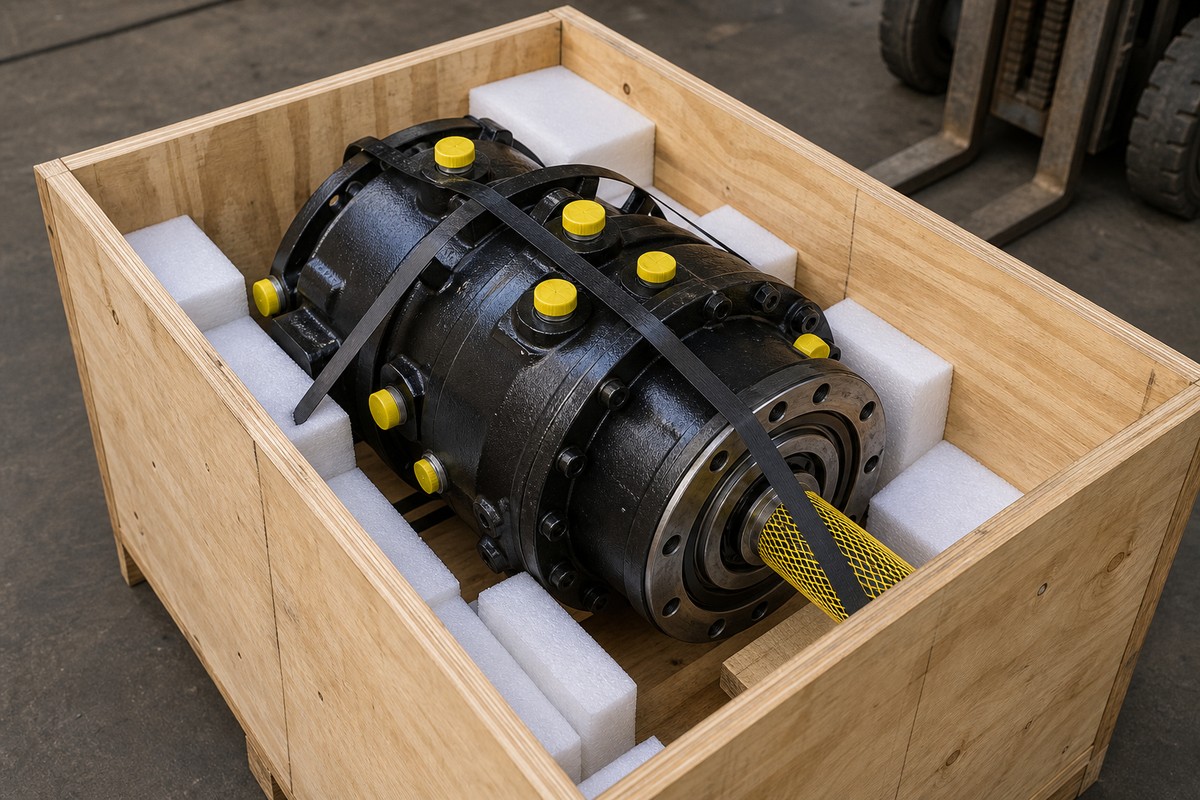
Swing motors and gearboxes need protected ports, fixed shafts or pinions, impact padding and actual packing photos.
A swing motor is a precision hydraulic component, and a swing gearbox is heavy enough to damage itself or other cargo if it moves during transport. Ports should be capped, machined faces protected and the unit fixed inside the crate. If a shaft or pinion is exposed, it should be protected from impact.
Before shipment, PRIMA can provide photos of the actual unit, port caps, mounting face, packing material, crate and document match. For buyers who manage multiple repairs, this evidence helps connect the delivered unit to the quoted failure file and reduces disputes after arrival.
Evidence Table
| Buyer question | Evidence PRIMA should request | Value |
|---|---|---|
| Which part failed? | Symptoms, case drain, leakage and gear oil evidence | Separates motor, gearbox and control issues |
| Will the replacement fit? | Ports, mounting, shaft/pinion and part-number photos | Prevents mismatch |
| Is the condition acceptable? | Actual unit photos, condition grade and warranty boundary | Matches price to risk |
Buyer FAQ
Is a swing motor the same as a swing drive?
Not always. Some buyers use swing drive for the complete assembly, while swing motor may mean only the hydraulic motor section.
What should I send before asking for a swing motor quote?
Send model, serial number, old-unit photos, port layout, case drain, mounting face, shaft or pinion, part number and failure symptoms.
Can a used swing motor be acceptable?
Yes, when actual photos, condition grade, leakage evidence and warranty boundaries are clear enough for the buyer's risk level.
Conclusion
Swing-motor sourcing should start with diagnosis and evidence. PRIMA can reduce wrong-part risk by separating motor, gearbox and control problems before confirming fitment, condition grade and export packing.
References
- Pro Construction Parts swing drive overview: Reference for swing-drive function and terminology.
- FinalDrive.eu swing motor leak FAQ: Reference for swing motor leakage context.
- Bosch Rexroth hydraulics: General hydraulic-system reference.