
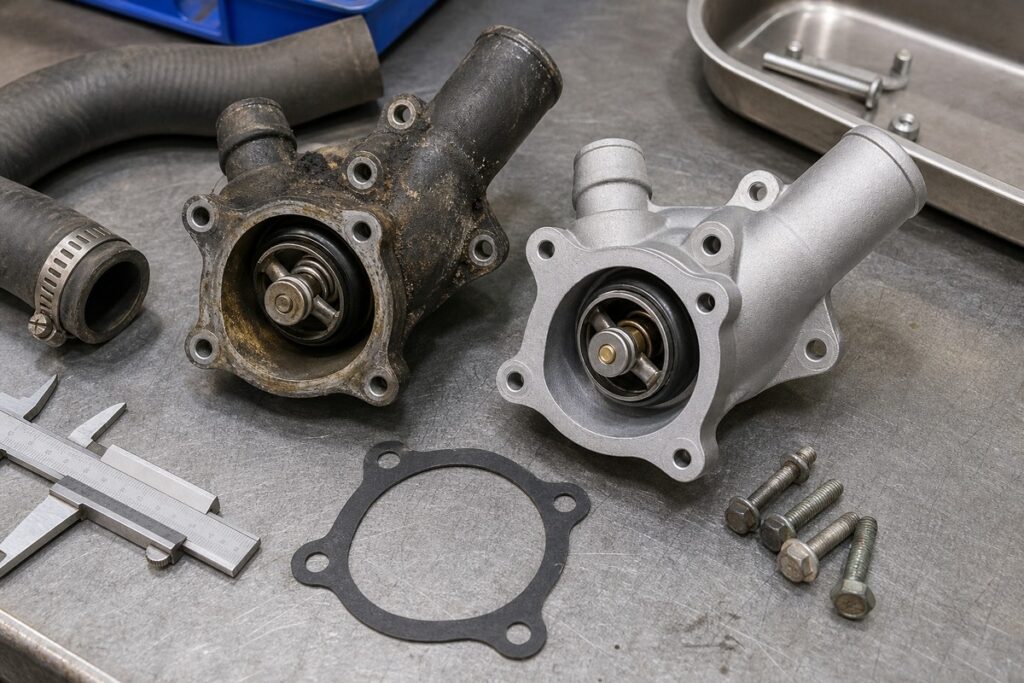
Buyers should check excavator thermostat housing and coolant hoses before ordering from China by confirming the engine model, machine model, old housing photos, hose neck direction, hose inner diameter, clamp style, gasket face, mounting holes, leak marks, overheating symptoms and packing method. Cooling-system parts often look simple, but a wrong hose angle, gasket shape or thermostat housing outlet can create leaks or installation delays. PRIMA should keep the quote conditional until the buyer sends old-part evidence and cooling-symptom notes.
Thermostat housing and coolant hoses connect small parts to a high-cost machine stop. Buyers who only ask for a water-line part may miss hose direction, clamp size, gasket face or previous engine repairs.
This page supports PRIMA’s engine parts quote checklist and fan belt and cooling fan checklist. It fills the cooling-support gap without duplicating the existing water pump guide.
Buyer Summary
- Best for buyers replacing thermostat housing, coolant hose sets, clamps or gasket-related cooling parts.
- Require old-part photos, engine model, hose neck direction, hose diameter, clamp style and gasket face.
- Separate housing or hose leaks from radiator, fan, belt, coolant and thermostat diagnosis.
- Confirm gasket kit, hose protection and boxed packing before export shipment.
Quick answer: what proves thermostat housing and coolant hoses are safe to order?
A safe thermostat housing and coolant hose order starts with old-part photos and engine context. Buyers should send machine model, engine model, serial context if available, photos of the old thermostat housing, hose routing, hose neck angle, hose inner diameter, clamp type, gasket face, mounting holes and the leak or overheating symptom. PRIMA should check whether the buyer needs the housing only, thermostat, gasket, hose set, clamps or a wider cooling-system repair. Before shipment, the file should show protected hose ends, flat gasket packing, separated clamps and firm carton or crate protection.
Which housing and hose details should come before price?
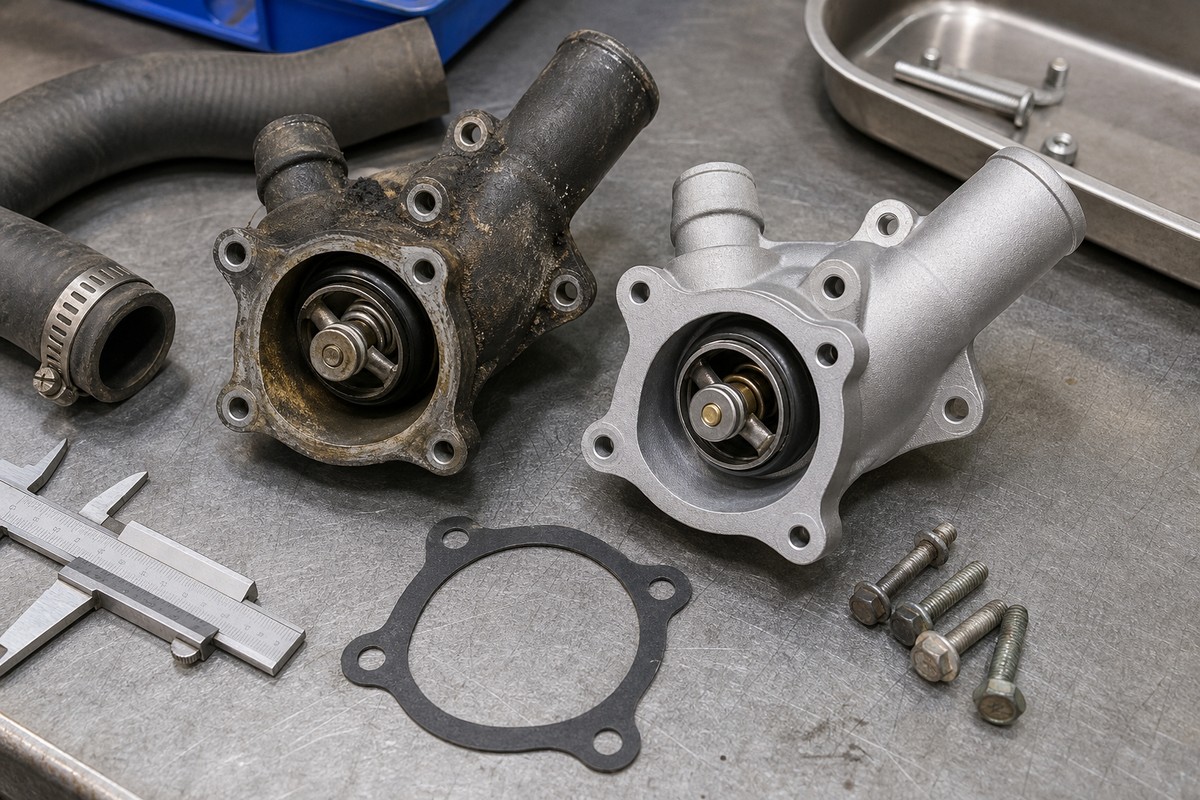
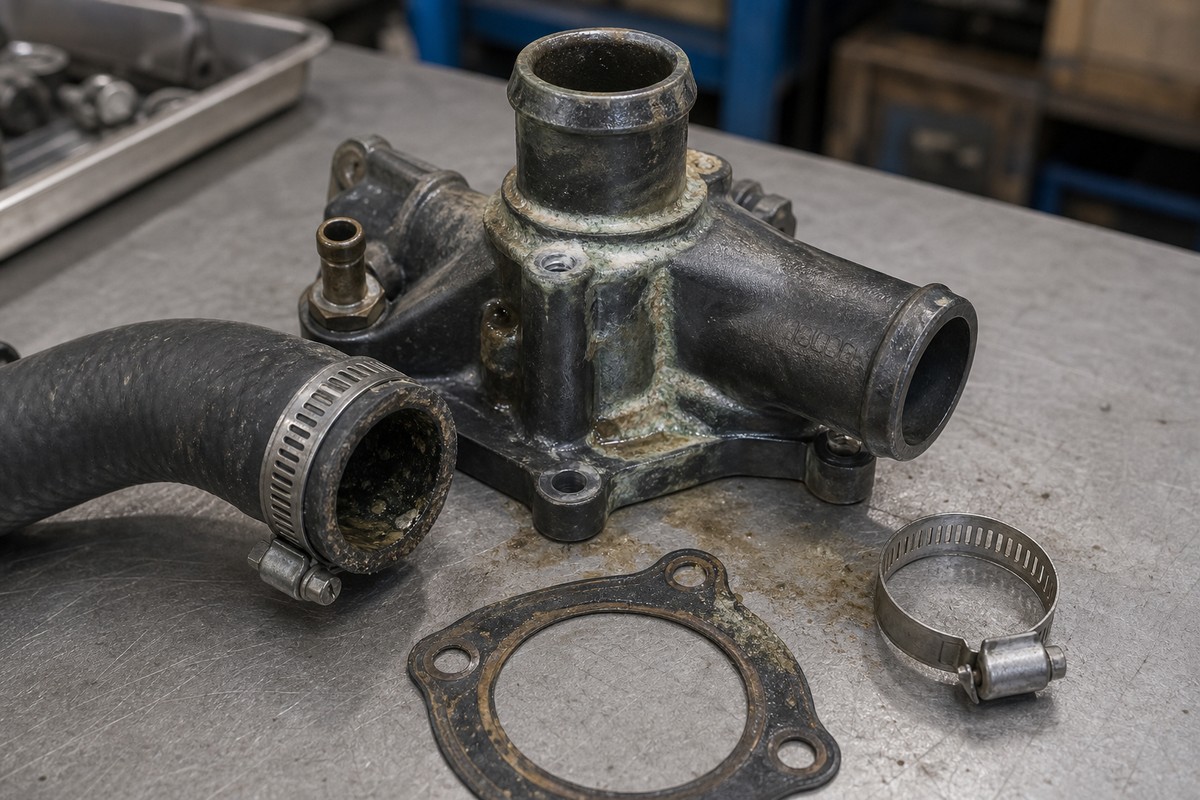
The old thermostat housing and hoses should be photographed before dismantling loses orientation. Front, side, hose-neck, gasket-face and mounting-hole photos help PRIMA match the replacement and explain what is included.
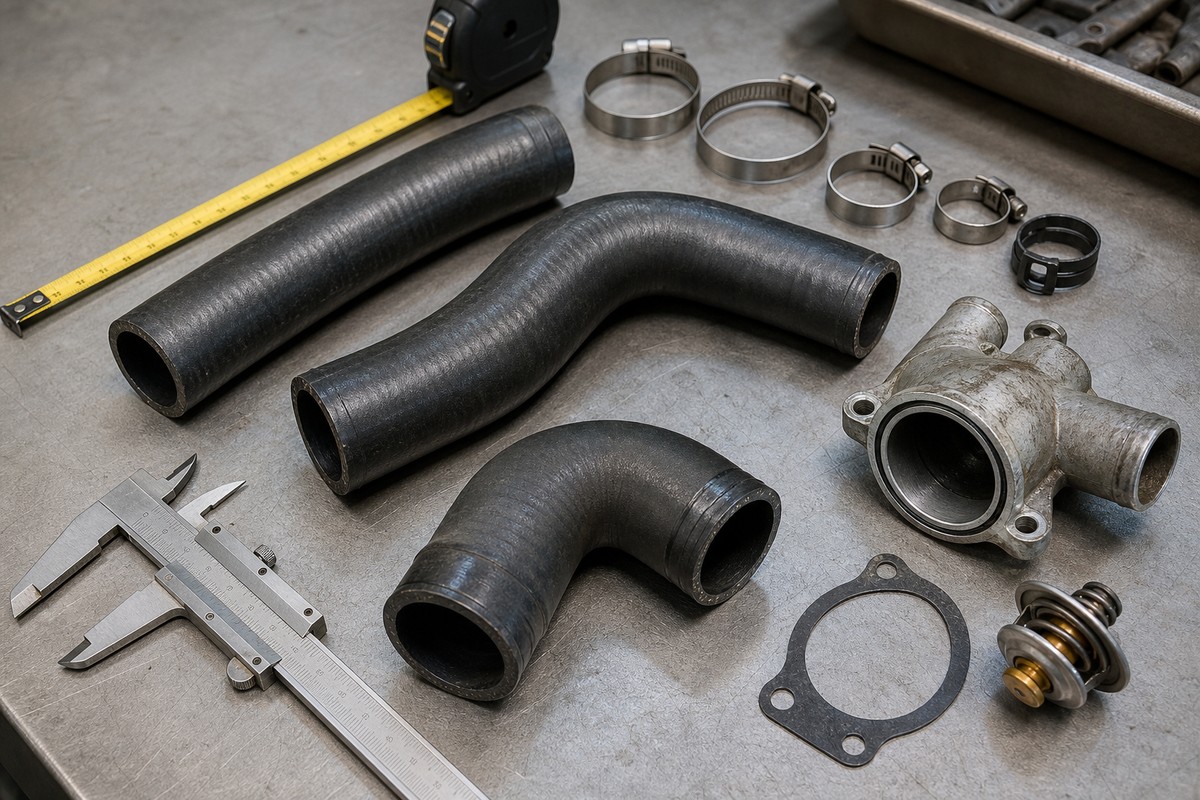
A hose can be correct in diameter but wrong in bend angle or length. A housing can look close but still fail when the outlet direction, bolt pattern or gasket shape is different. The quote should show the evidence that controlled the match.
| Check | Evidence to save | Buyer value |
|---|---|---|
| Engine context | Engine model, machine model and serial context | Narrows the correct cooling-part family |
| Hose routing | Old hose path, inner diameter and bend angle | Prevents hose rubbing or kinking |
| Housing face | Gasket shape, bolt holes and outlet direction | Confirms installation fit |
How should buyers separate leaks from overheating diagnosis?
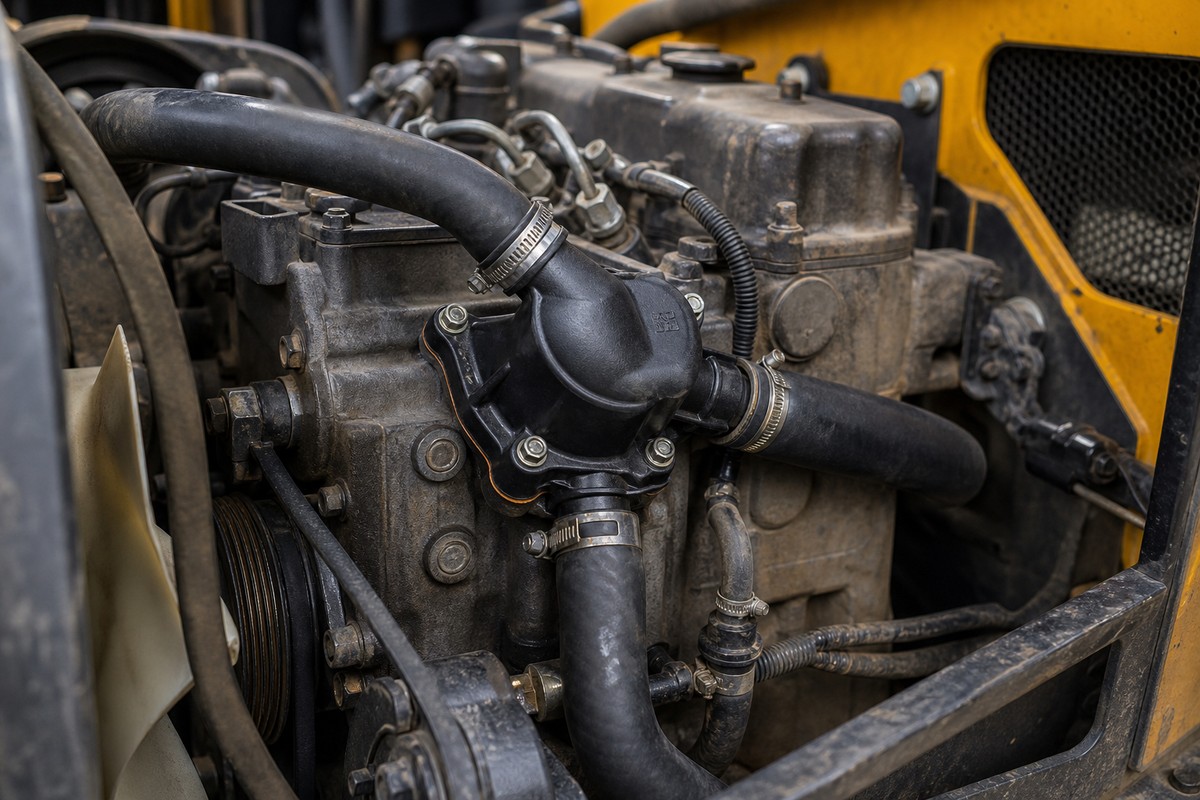
Coolant loss may come from a cracked hose, loose clamp, damaged gasket, warped housing, radiator leak or water pump issue. Overheating may come from coolant level, fan, belt, radiator blockage, thermostat or engine load.
Buyers should record where coolant appears, whether pressure builds quickly, whether hoses collapse and when temperature rises. These notes help PRIMA avoid turning every cooling complaint into the same parts quote.
| Check | Evidence to save | Buyer value |
|---|---|---|
| Leak location | Hose end, clamp, gasket edge or housing crack photos | Shows the likely failure point |
| Overheating pattern | Cold start, load, idle or hot-day symptom notes | Separates system causes |
| Related parts | Radiator, fan belt, water pump and thermostat notes | Avoids incomplete repair |
What should be included in the quote file?
The quote should state whether PRIMA is supplying housing only, hose only, a gasket kit, clamps or a complete small cooling kit. Buyers should not discover after arrival that clamps or gaskets were not included.
If the old hose is swollen, cracked or oil-contaminated, the buyer should photograph those marks. If the housing is corroded or pitted at the gasket face, the replacement decision should be recorded as a sealing-risk control.
| Check | Evidence to save | Buyer value |
|---|---|---|
| Included parts | Housing, hose, gasket, clamps and thermostat listed | Prevents missing installation items |
| Condition evidence | Cracks, swelling, corrosion and leak stains | Explains why replacement is needed |
| Fitment comparison | Old and new shown in similar orientation | Makes buyer approval auditable |
What packing proof protects cooling parts?
Thermostat housings have gasket faces and hose necks that can be chipped. Hoses can be flattened or bent if they are tied too tightly. Clamps and gaskets can be lost in loose packing.
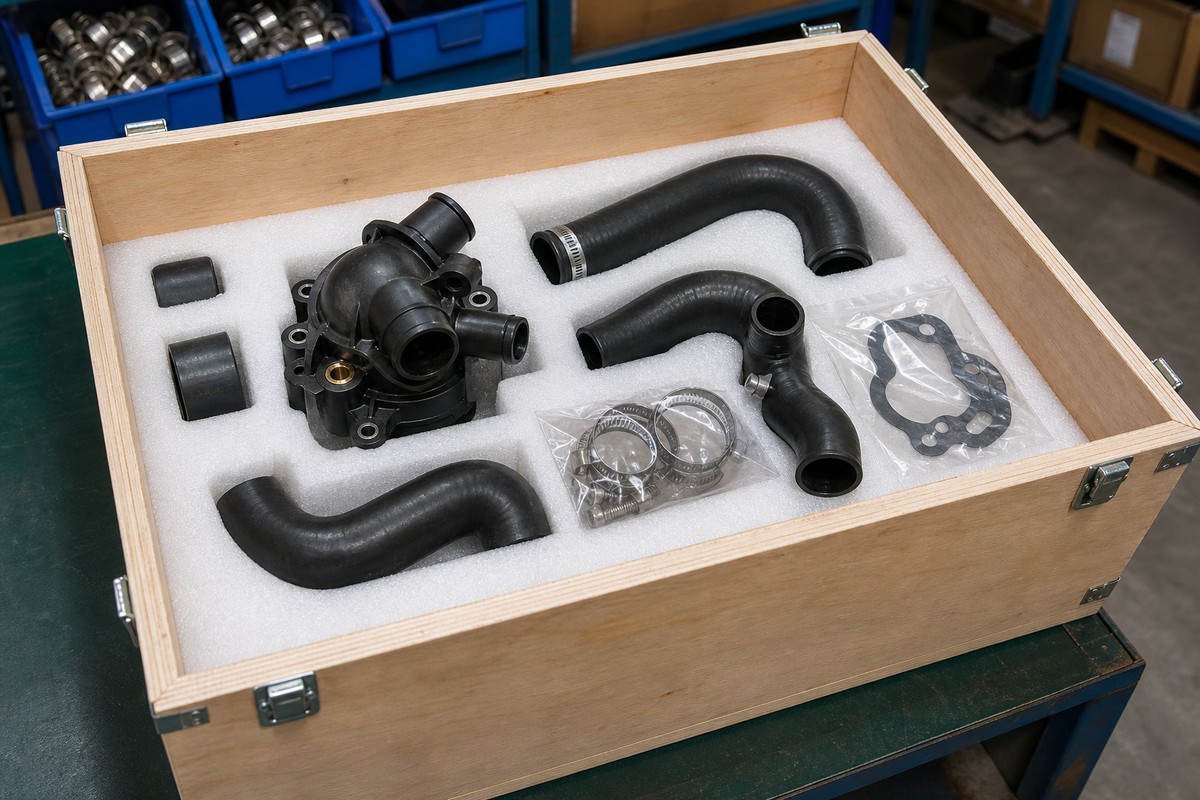
Before shipment, the buyer should request photos showing separated clamps, flat gasket packing, protected hose ends and a carton or crate that prevents crushing. This is simple evidence, but it prevents many receiving disputes.
| Check | Evidence to save | Buyer value |
|---|---|---|
| Gasket | Packed flat and visible | Prevents sealing delay |
| Hose ends | Protected from crushing or sharp bends | Preserves installation shape |
| Small parts | Clamps and bolts bagged separately | Prevents missing hardware |
Evidence Table
| Decision point | Evidence PRIMA should save | Risk controlled |
|---|---|---|
| Fitment | Engine model, old photos, hose angle, gasket face and bolt pattern | Wrong housing or hose |
| Diagnosis | Leak location, overheating pattern and related cooling notes | Replacing the wrong cooling item |
| Export | Gasket, clamps, hose protection and carton proof | Transit damage or missing parts |
Key Facts For PRIMA Buyers
- Thermostat housing fitment depends on outlet direction, gasket face and mounting pattern.
- Coolant hose fitment depends on inner diameter, length, bend angle and clamp style.
- Overheating should be checked against radiator, fan, belt, thermostat and water pump evidence.
- Packing should keep gaskets flat, clamps separated and hose ends protected.
Buyer FAQ
Can I order thermostat housing by excavator model only?
It is safer to send engine model, old housing photos, hose routing, gasket face and bolt-pattern evidence.
What hose details matter most?
Inner diameter, bend angle, length, hose-neck direction and clamp style matter before price approval.
Can a hose leak look like water pump failure?
Yes. Coolant stains near the hose neck or clamp should be checked before blaming the pump.
Should clamps and gasket be included?
Confirm it in the quote and photograph them before shipment.
What packing proof should I request?
Ask for flat gasket packing, protected hose ends, separated clamps and firm carton or crate packing.
Useful PRIMA Links
- Excavator engine parts quote checklist
- Excavator fan belts and cooling fans guide
- Excavator water pump guide
- Excavator parts supplier buyer guide
Conclusion
Thermostat housing and coolant hose orders should be built from old-part photos, engine context and cooling-symptom evidence. Buyers should save hose angle, gasket face, clamp style, leak location and packing proof. PRIMA should define the included kit clearly so the buyer does not receive a correct housing but miss the gasket, clamps or hose needed to install it.