
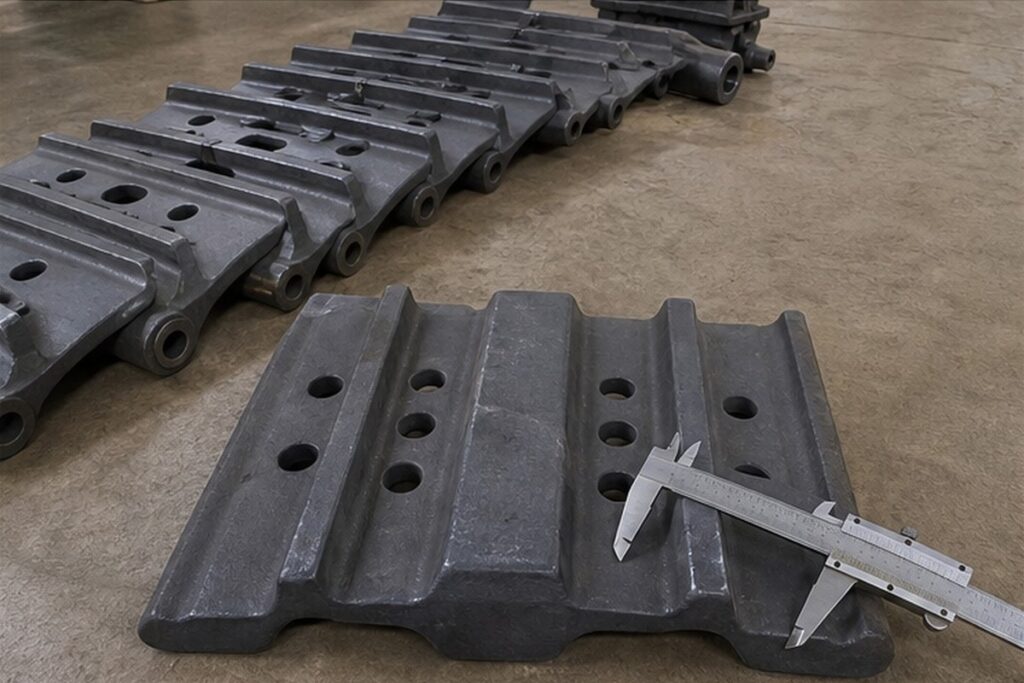
Buyers should check excavator track shoes by confirming shoe width, bolt-hole pattern, grouser height, material and heat-treatment evidence, track-chain pitch, link count, sprocket match, side and quantity, old-shoe photos, machine model, serial context and export packing before approving a China order.
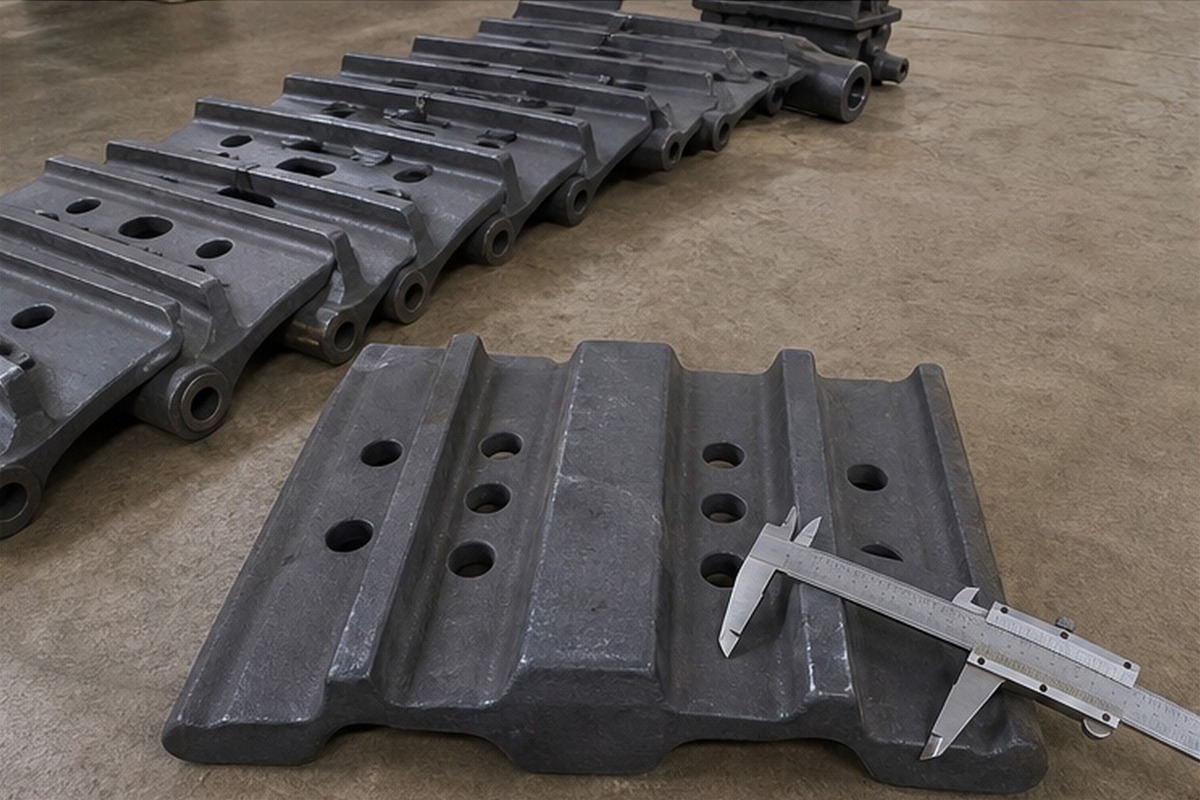
This PRIMA guide supports the US excavator track shoes opportunity and links the shoe-width question to the track chain fitment guide, undercarriage parts hub, track roller guide and CAT undercarriage support page.
Quick answer: what evidence matters for excavator track shoes?
An excavator track-shoe order should be checked with old-shoe photos, shoe width, bolt-hole spacing, hole count, grouser profile, track-chain pitch, link count, sprocket match, machine model, serial context, side, quantity and application. PRIMA should not confirm fitment from a model name alone because the same excavator family can use different shoe widths and undercarriage variants. Buyers should ask for measurement photos, material or hardness boundary where available, pallet weight, packing photos and final quantity proof before shipment.
Buyer Summary
- Track shoes should be matched to the chain, sprocket, machine size and working ground.
- Shoe width and bolt pattern are stronger evidence than a generic undercarriage label.
- Old-shoe photos help prevent ordering a similar but wrong shoe.
- Packing proof matters because heavy shoes can shift, rust or mix during export handling.
Which track-shoe measurements should be confirmed first?
Start with the old shoe and the chain it will mount to.
PRIMA should ask for shoe width, grouser height, hole count, bolt-hole spacing, bolt diameter, chain pitch, link count and a photo showing how the old shoe sits on the track chain. When the old shoe is missing, the buyer should send the chain, sprocket and machine serial context.
A model name can be useful for routing, but it is not enough for approval. Wide shoes, narrow shoes and different bolt patterns can appear across machine variants, aftermarket chains and prior repairs.
| Check | Evidence | Risk controlled |
|---|---|---|
| Shoe width | Ruler photo across the shoe | Wrong ground-pressure choice |
| Bolt pattern | Hole count and spacing | Cannot install |
| Chain match | Pitch and link context | Chain or sprocket mismatch |
How should wear and material evidence be judged?
A track shoe is a wear part, so the buyer should know what is being compared.
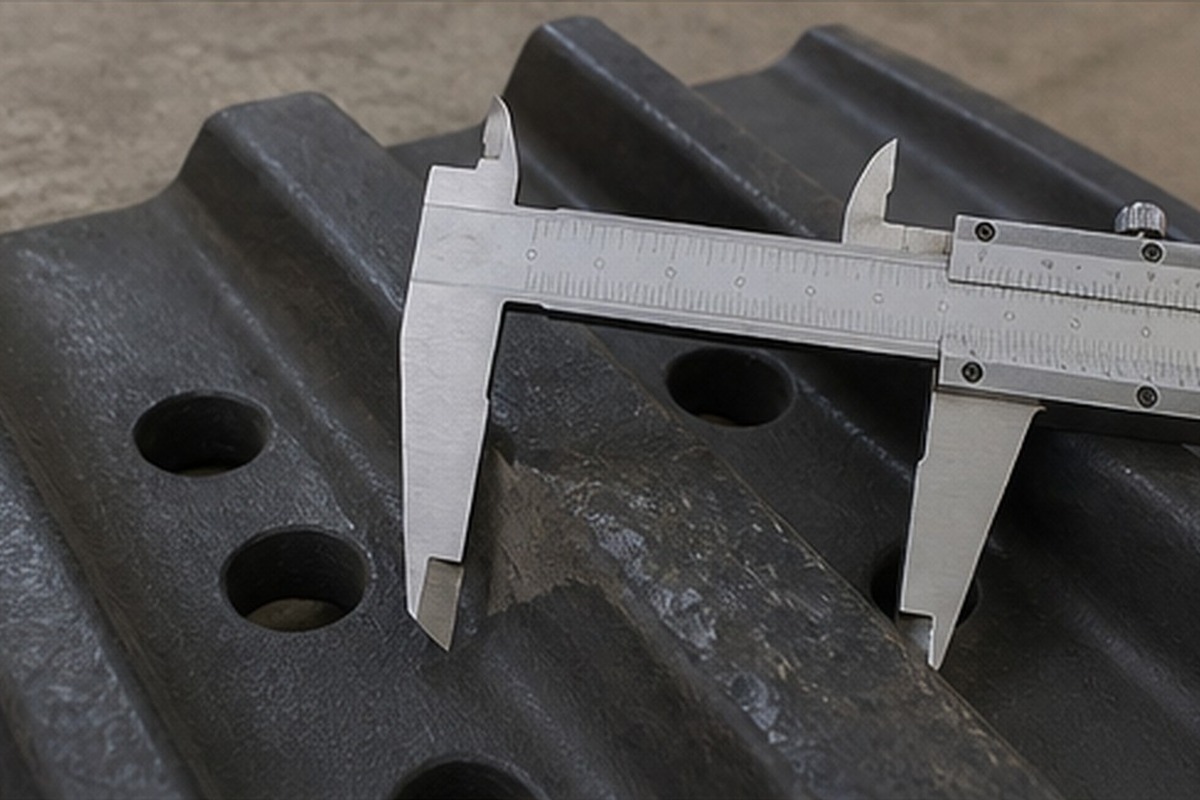
For new shoes, the quote should show product photos, dimensions and the stated material or hardness boundary when the supplier can support it. For used shoes, actual-unit photos and wear depth matter more than a polished description.
The buyer should compare grouser height, cracks, bent shoes, hole wear and shoe-pad contact surfaces. If one side of the machine wears faster, the undercarriage alignment or roller condition may also need attention.
| Wear point | Visible proof | Decision value |
|---|---|---|
| Grouser wear | Close-up measurement | Predicts traction life |
| Hole wear | Bolt area photo | Controls looseness |
| Cracks or bending | Side and underside views | Avoids failure risk |
What packing and receiving proof should be required?
Heavy steel shoes need count control and pallet strength.
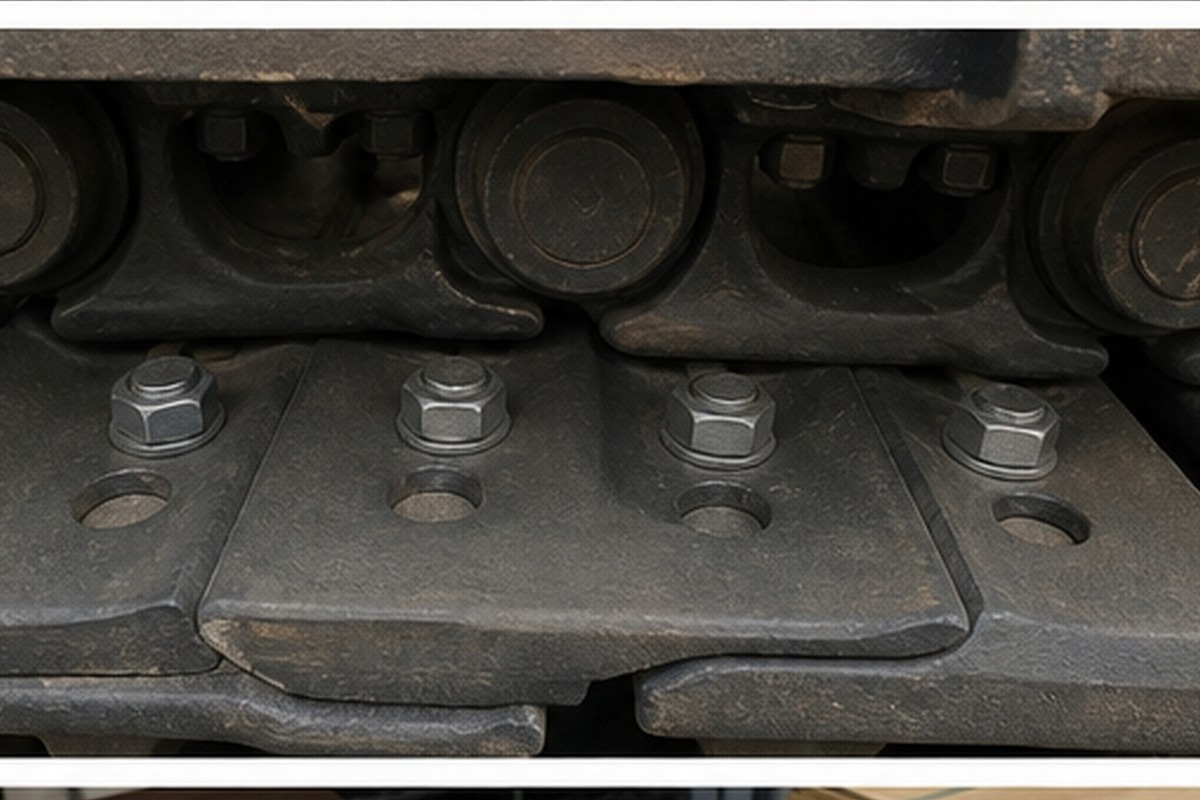
Before export, PRIMA should provide pallet photos, bundle count, wrapping, crate or pallet protection and a packing list that matches the approved quantity. Mixed undercarriage orders should separate shoes, bolts, rollers and chain items clearly.
The receiving team can compare the final photo file with the arrived pallets. This reduces disputes about missing pieces, mixed sizes, rust exposure or damage during handling.
| Export step | Proof | Buyer value |
|---|---|---|
| Before payment | Fitment file | Wrong-order prevention |
| Before shipment | Pallet and quantity photos | Receiving control |
| After arrival | Compare against approved file | Dispute reduction |
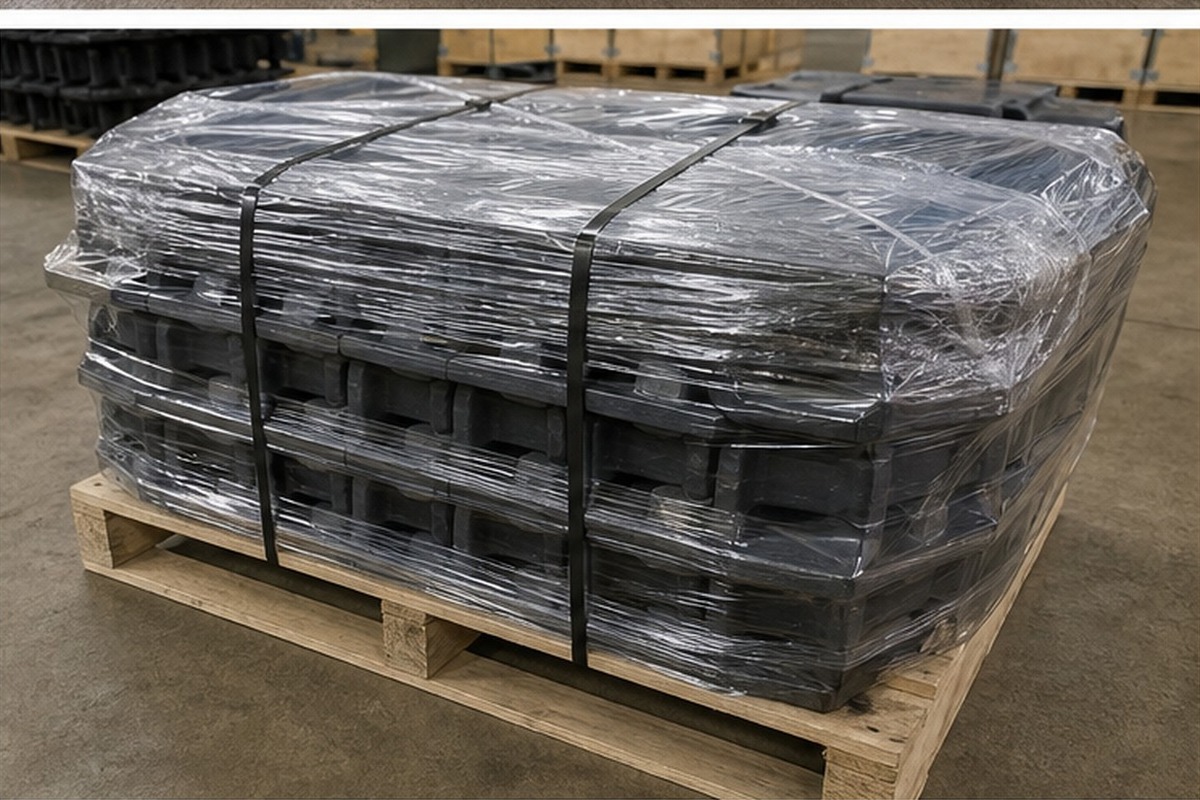
Final Track-Shoe Packing Proof Before Shipment
Before approval, buyers should also save the final inspection and pallet file so the selected track shoes, quantities and packing proof can be checked against the shipment.
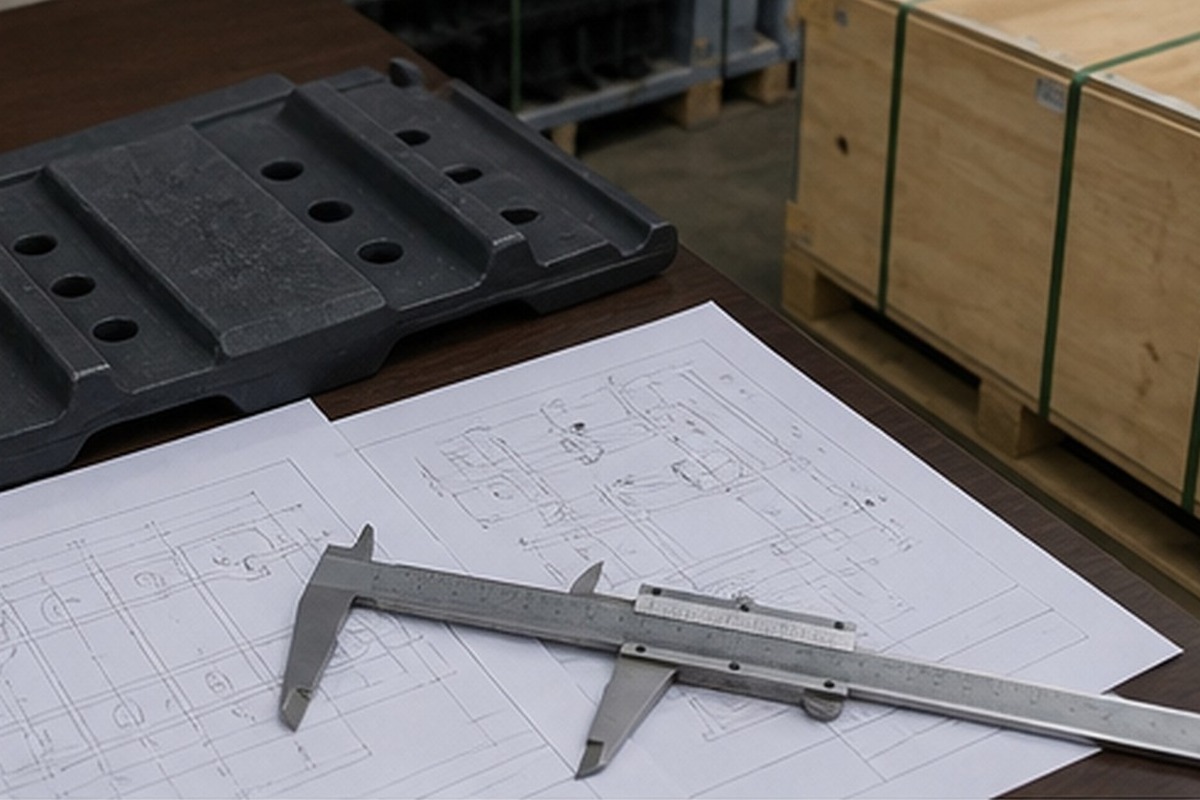
Evidence Table
| Buyer question | Evidence PRIMA should provide | Why it matters |
|---|---|---|
| Will the shoe fit the chain? | Width, bolt pattern, pitch, link count and old-shoe photos | Prevents wrong installation |
| Is the shoe condition acceptable? | Grouser wear, cracks, hole wear and material boundary | Predicts service life |
| Is the order complete? | Quantity, side, pallet count and packing photos | Controls receiving disputes |
| Are related parts checked? | Roller, idler, sprocket and chain context | Avoids replacing only one symptom |
Key Facts For PRIMA Buyers
- The 2026-06-01 PRIMA priority CSV lists US P0 excavator track shoes evidence.
- Track-shoe fitment depends on chain pitch, bolt pattern and shoe width.
- Wide shoes can reduce ground pressure but can also increase undercarriage stress in some applications.
- Final pallet photos help connect the inspected shoes to the shipped order.
Buyer FAQ
Can buyers order track shoes from the excavator model alone?
No. Shoe width, bolt pattern, chain pitch and old-shoe photos are still needed.
Should track shoes be checked with sprockets and rollers?
Yes. Chain, sprocket, roller and idler wear can affect shoe life and installation.
Does PRIMA claim official brand authorization for track shoes?
No. Brand names are used only for descriptive fitment context when needed.
What should packing photos show?
Pallet strength, bundle count, protection, quantity and the approved shoe type.
Conclusion
Track-shoe sourcing should be handled as an undercarriage fitment file. PRIMA should verify shoe width, bolt pattern, pitch, wear evidence and packing before a buyer approves shipment from China.
References
- U.S. CBP importer guidance: Import-document responsibility reference.
- UK HSE excavator safety notes: General excavator safety and handling context.