
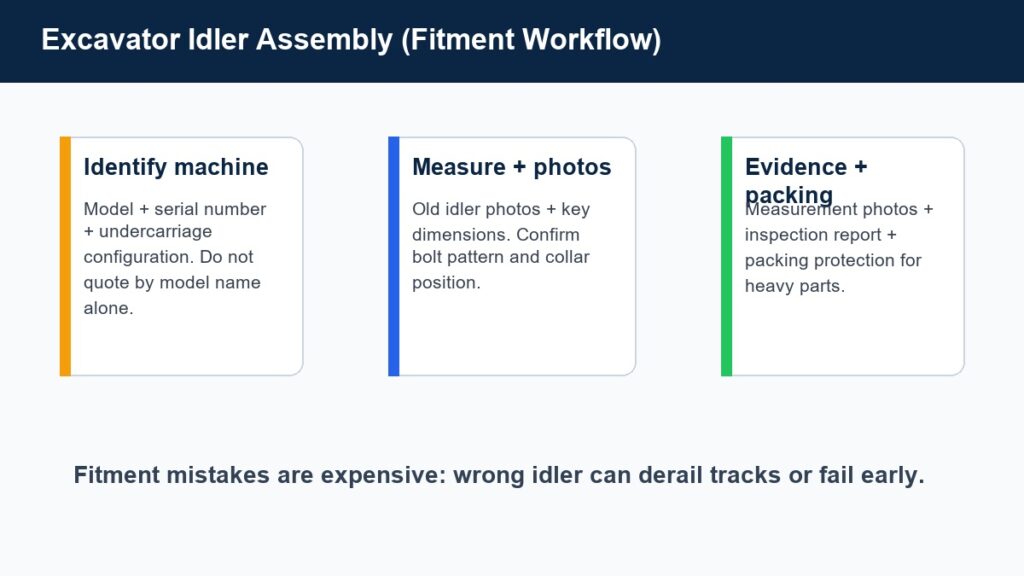
Idler assembly orders fail for one reason: buyers quote by model name only, then discover hidden differences in mounting style, width, or configuration. With undercarriage parts, fitment data matters more than brand name claims.
This buying guide shows what importers should measure and confirm before ordering an excavator idler assembly, how to choose OEM/aftermarket/used options, and what evidence reduces wrong-fitment and packing-damage claims.
What fitment data matters most for an idler assembly?
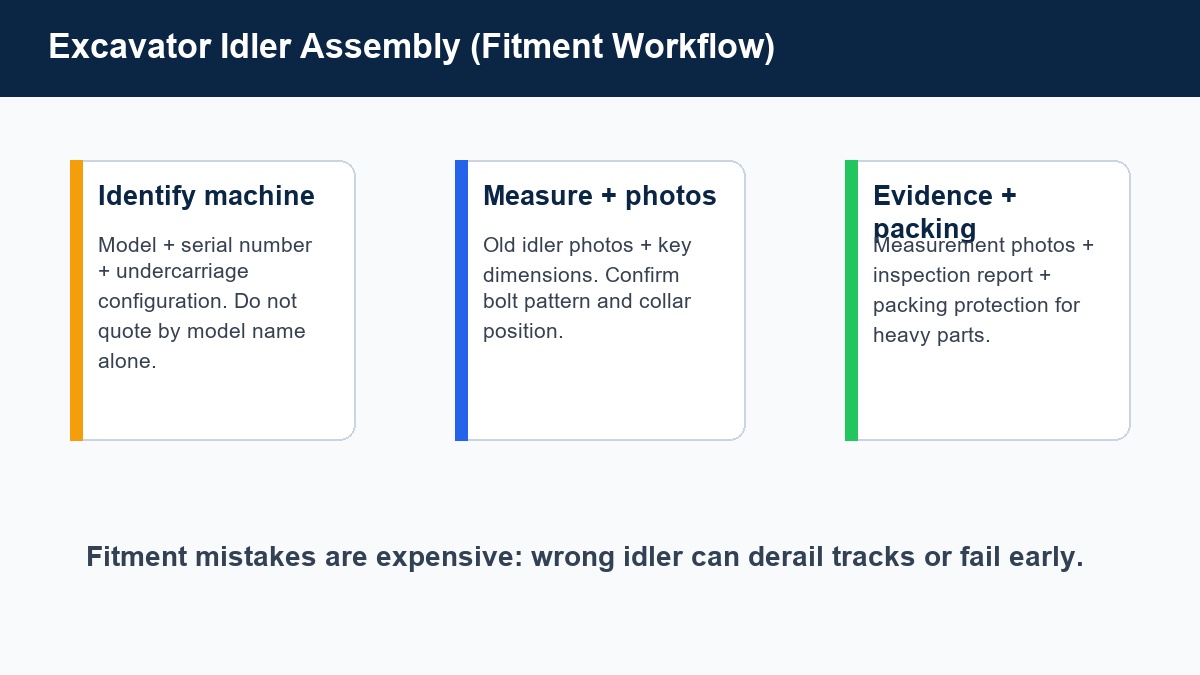
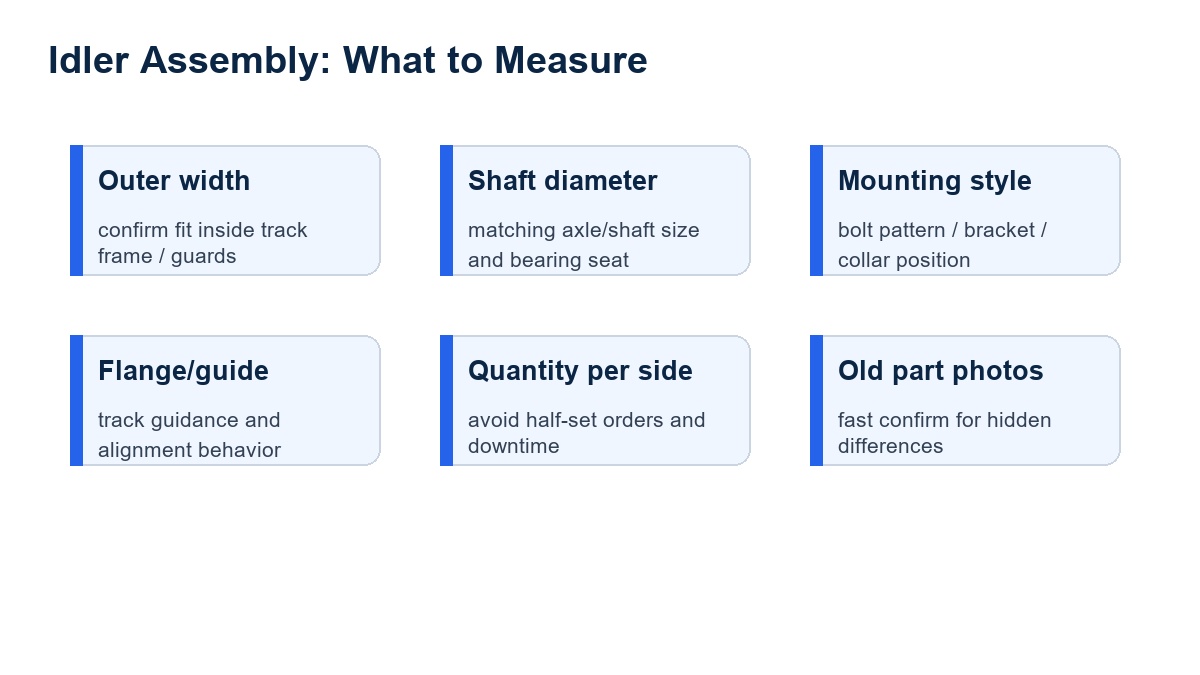
Start with machine model + serial number, then confirm old-part photos and key dimensions (width, shaft diameter, mounting style/bolt pattern) and quantity per side. This is the shortest path to avoid “correct model, wrong part”.
| Fitment input | Buyer check | Mistake prevented |
|---|---|---|
| Serial number / configuration | Confirm serial range and any undercarriage changes. | Wrong part for a similar-looking model. |
| Old idler photos | Front/back, mounting area, and any markings. | Hidden mounting-style mismatch. |
| Key dimensions | Width, shaft diameter, mounting style/bolt pattern. | Cannot install / misalignment. |
| Quantity per side | Count left/right needed for the job. | Half-set orders and downtime. |
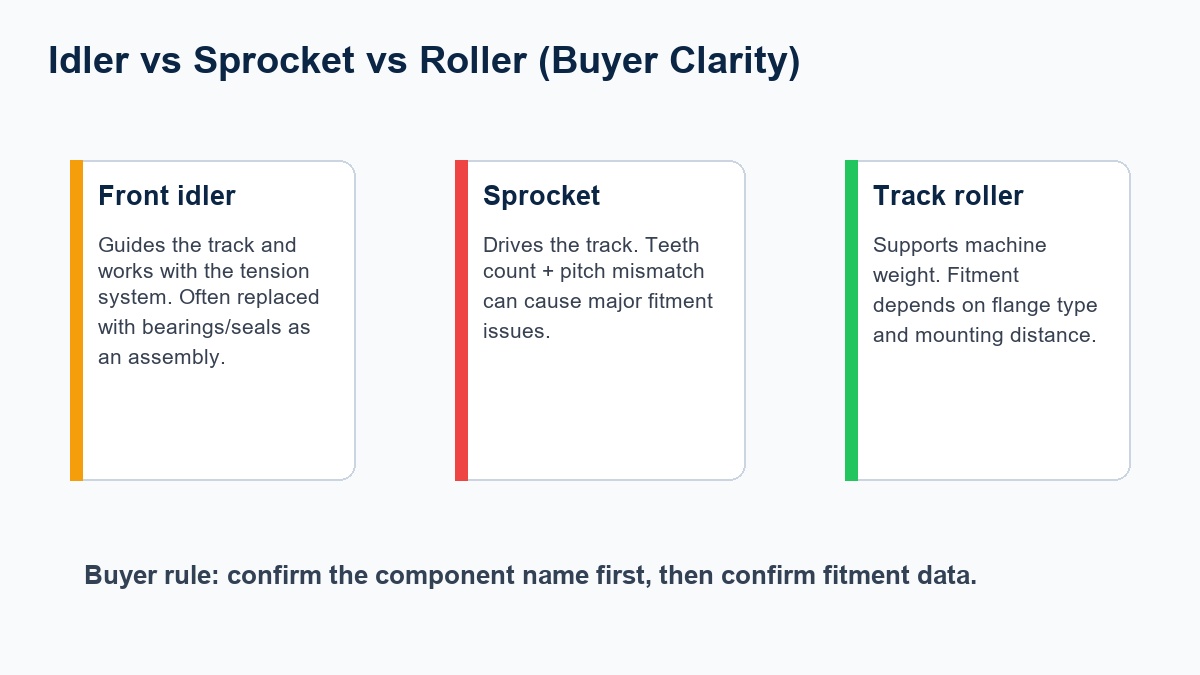
How do buyers avoid confusing idlers with sprockets or rollers?
Confirm the component name in plain language first. Idlers guide the track and work with tension; sprockets drive the chain; rollers carry weight. Each one uses different fitment checks, so a wrong “part name” becomes a wrong “part shipped”.
OEM vs aftermarket vs used idler assemblies: which one is safer?
The “safest” option is the one that matches your downtime cost and verification strength. If evidence and measurement photos are standard, aftermarket can be repeatable. If downtime cost is high, buyers often prefer original-grade options.
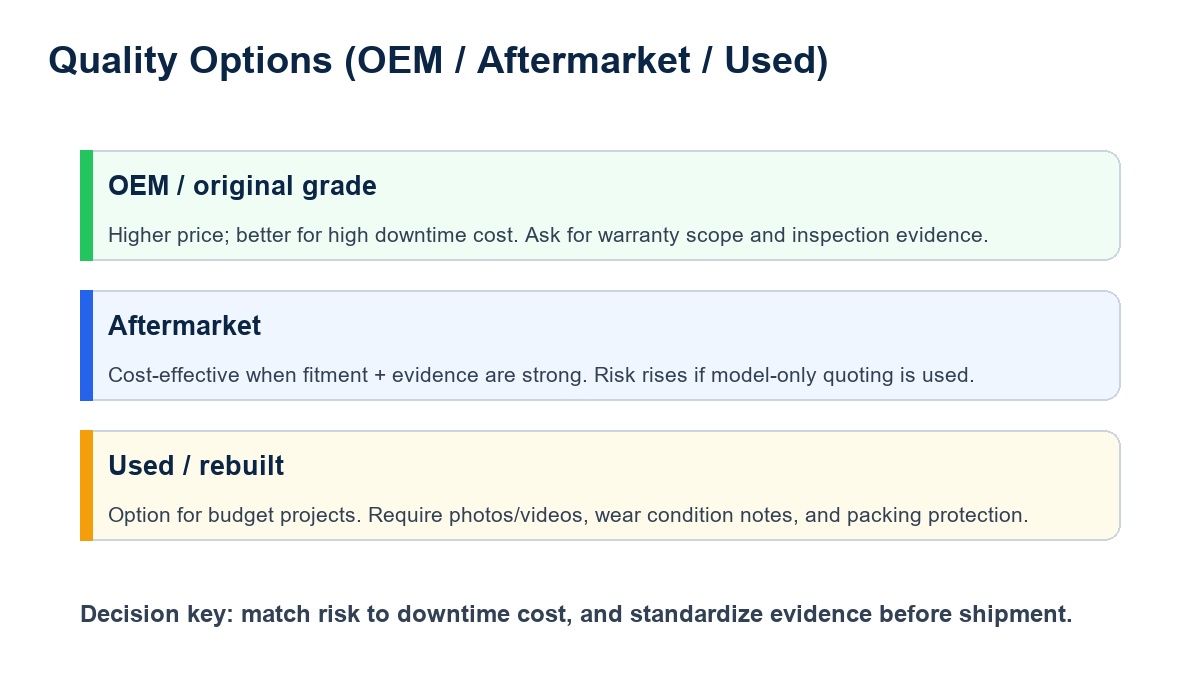
| Option | Buyer fit | Buyer safeguard |
|---|---|---|
| OEM / original grade | High downtime cost projects. | Confirm warranty scope + inspection evidence. |
| Aftermarket | Cost-sensitive, repeatable orders. | Standardize measurement photos + pre-shipment evidence set. |
| Used / rebuilt | Budget projects or urgent replacements. | Require wear photos/videos + packing protection. |
What evidence reduces wrong-fitment and packing-damage claims?
Ask for a small evidence set: measurement photos, pre-shipment photos/videos, and packing protection proof (wooden box/pallet when needed). This is especially important for heavy undercarriage parts.
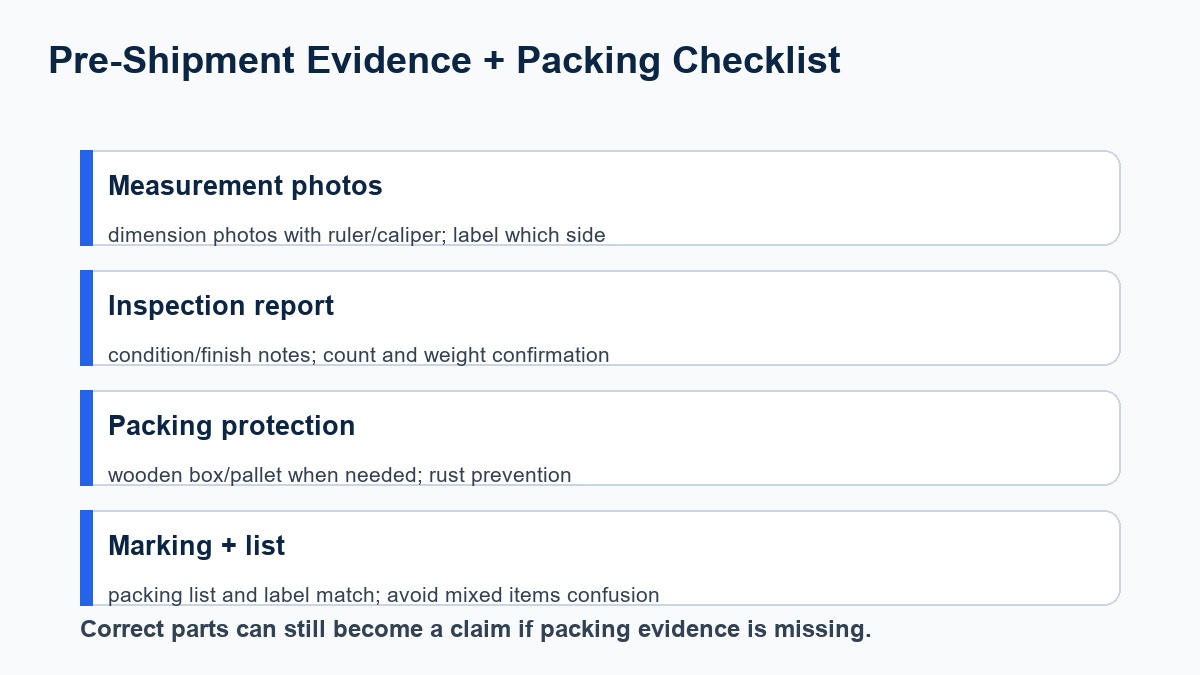
Evidence Table (what you can request)
| Evidence item | What it proves | When to request |
|---|---|---|
| Measurement photos | Fitment inputs match the quoted part. | Before final payment / dispatch confirmation. |
| Pre-shipment photos/videos | Condition + quantity + correct component. | After packing, before shipment booking. |
| Packing proof (box/pallet) | Heavy parts protected in export transit. | Before loading. |
Conclusion
An idler assembly order is “safe” when fitment data is confirmed before quoting: serial number, old part photos, key dimensions, and quantity per side. If you’re ordering a full undercarriage package, use the core buyer guide and cross-check idler decisions with sprocket/chain and track roller fitment pages.