
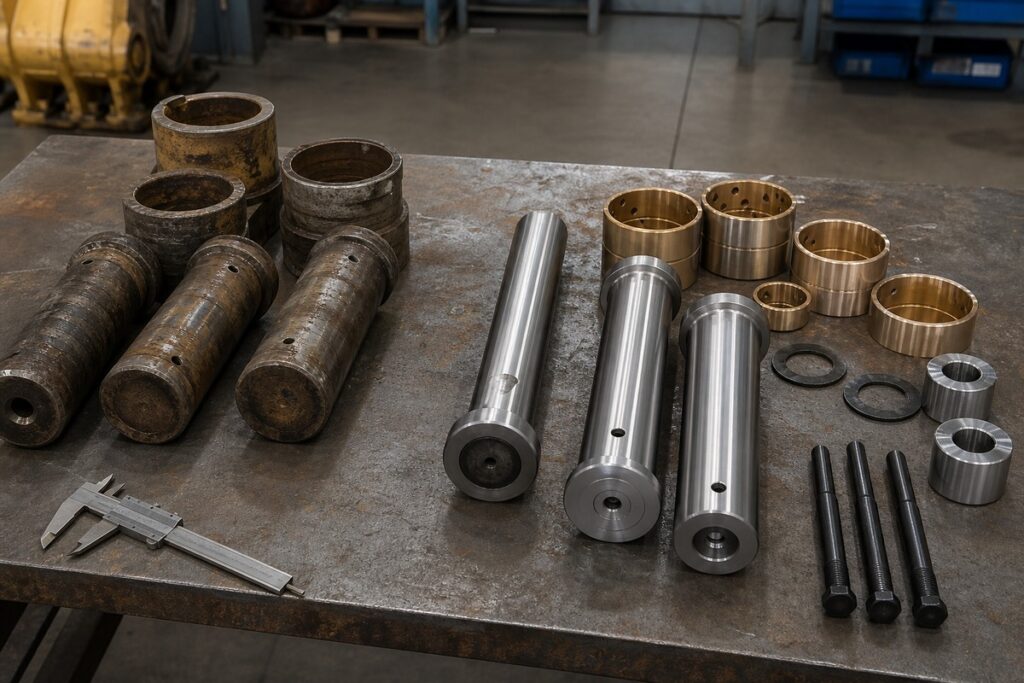
Buyers should check excavator pins and bushings before ordering from China by confirming the linkage position, old pin photos, pin diameter, pin length, bushing inside and outside diameter, grease groove, retaining collar or bolt style, bucket-ear width, bore condition and packing proof. Pins and bushings often look interchangeable, but a small diameter or length error can create looseness, difficult installation or rapid wear. PRIMA should require measurement evidence before quoting replacement linkage parts.
Pins and bushings carry impact load at the bucket, arm, boom and linkage. If the buyer sends only a machine model, the supplier may miss linkage family, previous repair, bucket ear width or retained hardware style.
This page connects PRIMA’s excavator bucket teeth guide with broader excavator parts supplier checks. It focuses on quote-file evidence that helps prevent fitment disputes.
Buyer Summary
- Best for buyers replacing bucket pins, arm pins, boom pins, linkage bushings, collars or retaining hardware.
- Require old part photos, pin diameter, total length, bushing ID/OD, grease groove and linkage position.
- Check bore ovality and bucket-ear wear before blaming the new pin or bushing.
- Pack heavy pins with anti-rust protection and separated retaining parts.
Quick answer: what proves excavator pins and bushings will fit?
A safe pins-and-bushings order needs linkage evidence, not just a part name. Buyers should send photos of the old pin, bushing, linkage position, bucket ears, retaining collar or bolt, grease nipple position and bore condition. Measurements should include pin diameter, pin length, bushing inside diameter, outside diameter, width and any grease groove or oil hole. PRIMA should ask whether the buyer is repairing a loose bucket, replacing worn bushings, changing a bucket, fitting a coupler or rebuilding a whole linkage. Before shipment, the file should show anti-rust wrapping, separated collars, washers and bolts, and a crate that keeps heavy pins from striking each other.
Which dimensions should be measured first?
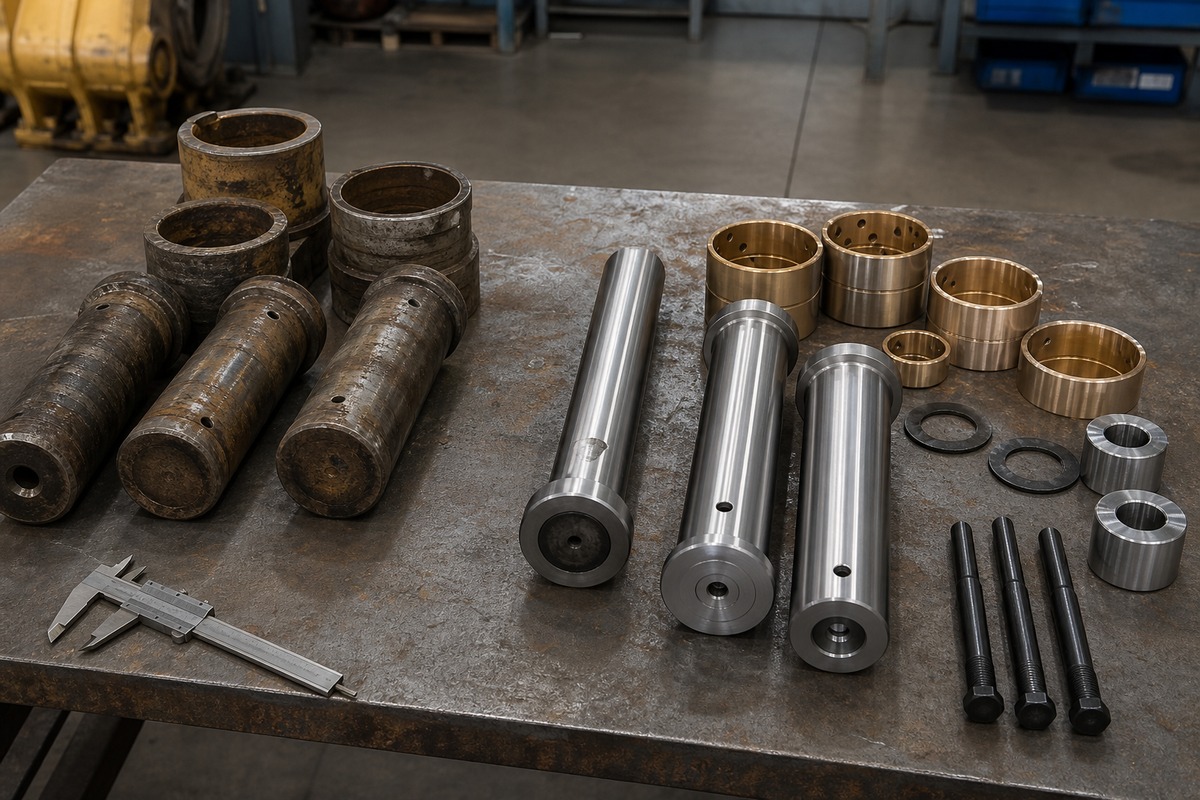
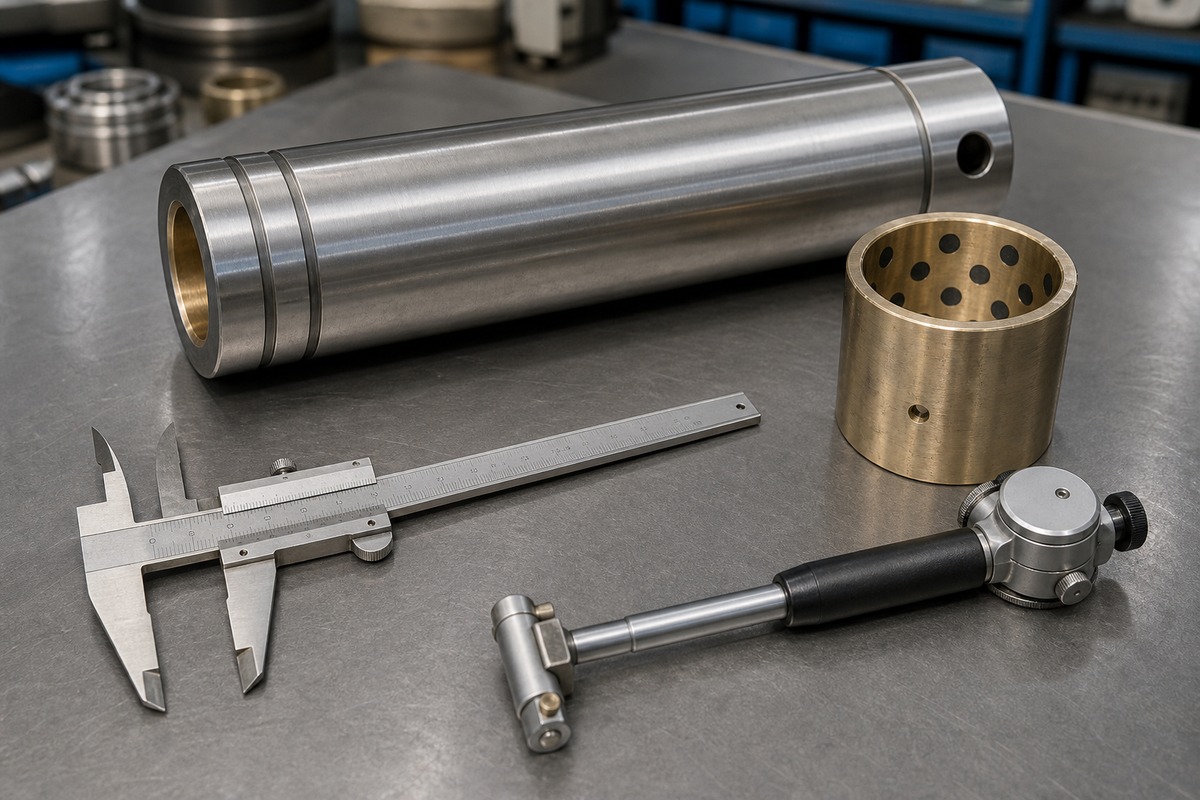
The minimum evidence is pin diameter, total length, bushing inside diameter, bushing outside diameter and bushing width. Buyers should measure the old part and the linkage bore if the old bushing is badly worn. A worn part may measure smaller than the original specification, so photos and machine context still matter.
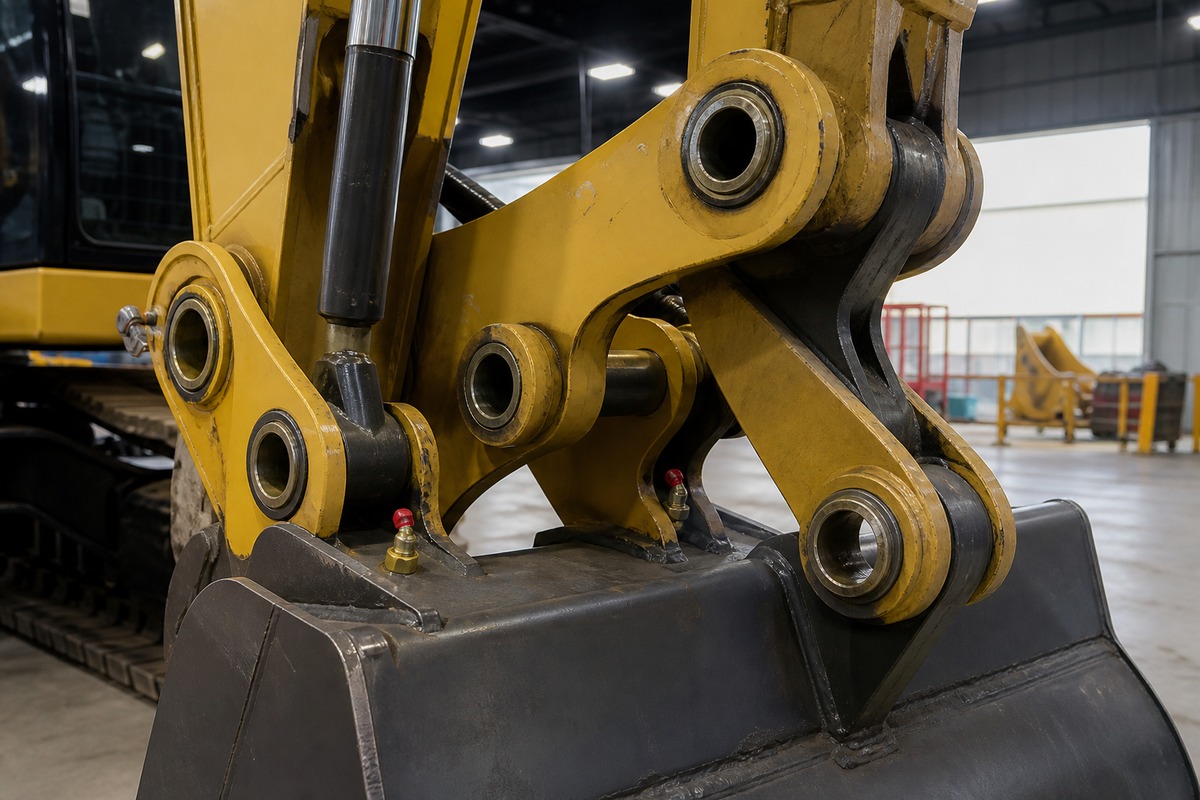
The linkage position should be named clearly: bucket-to-link, bucket-to-arm, arm cylinder, boom foot or quick-coupler position. Mixing positions is a common cause of wrong quote files.
| Check | Evidence to save | Buyer value |
|---|---|---|
| Pin | Diameter, length, retainer groove and end style | Prevents loose or too-long pin |
| Bushing | ID, OD, width, grease groove and oil hole | Prevents difficult press fit |
| Linkage | Position, ear width and bore condition | Prevents wrong linkage family |
How should bore wear and ovality be checked?
If the bore is oval or the bucket ears are stretched, new bushings may not solve looseness. Buyers should photograph the bore, bushing seat, grease fitting and any welded repair. A pin that failed quickly may be a symptom of a worn bore rather than a bad replacement part.
PRIMA should separate quote evidence from repair diagnosis. If the buyer needs machining, line boring or welding, the parts quote should clearly say that installation depends on the repaired bore condition.
| Check | Evidence to save | Buyer value |
|---|---|---|
| Bore shape | Roundness, cracks and welded areas | Controls installation success |
| Grease path | Grease nipple, groove and blocked channels | Controls service life |
| Retainer | Bolt, collar, washer or lock plate style | Controls field assembly |
What should buyers compare between old and new parts?
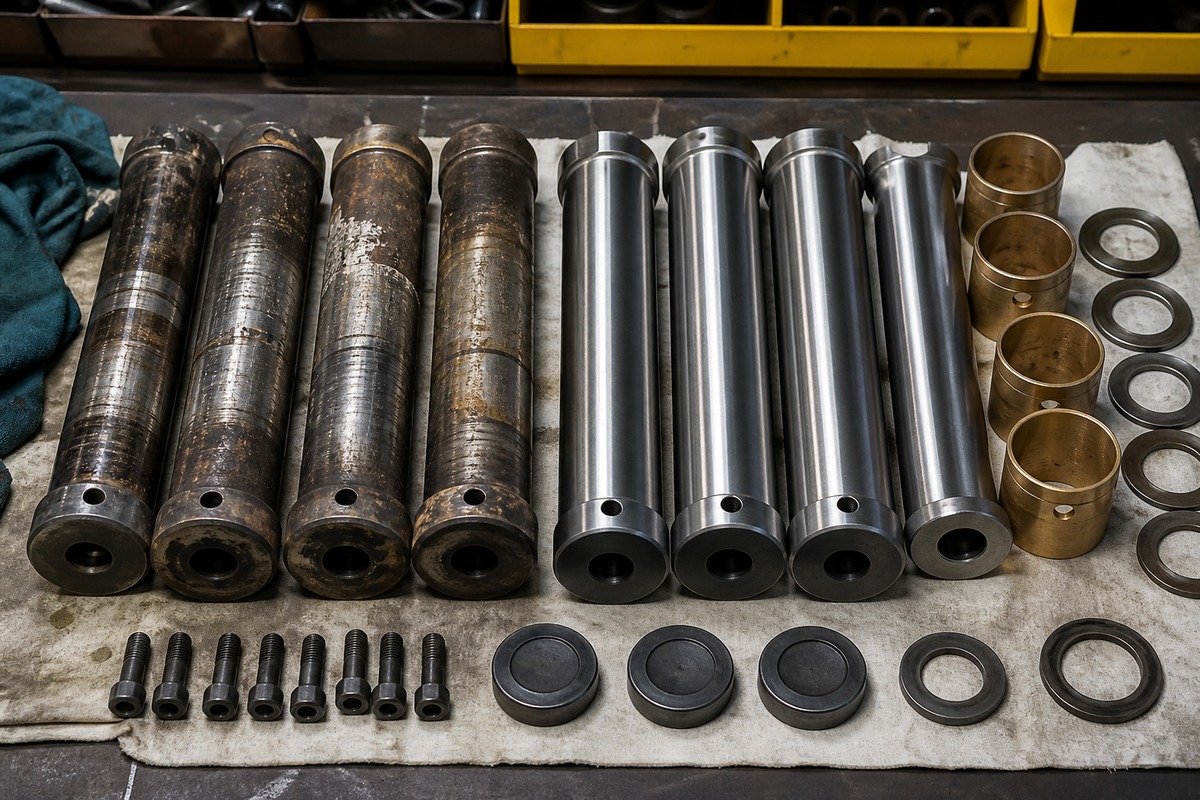
Old and new parts should be placed side by side before shipment. The photo should show diameter, length, grease groove, retainer details and bushing width. If the buyer wants a set, the quote should list every pin, bushing, collar, washer and bolt.
This comparison protects both sides. The buyer can reject a mismatch before international freight, and PRIMA can show that the shipped set followed the agreed evidence file.
| Check | Evidence to save | Buyer value |
|---|---|---|
| Side-by-side photos | Old and new pin/bushing comparison | Confirms visible match |
| Set list | Pins, bushings, collars, washers and bolts | Prevents missing small parts |
| Condition boundary | New, used, rebuilt or custom-machined | Controls warranty expectations |
How should pins and bushings be packed for export?
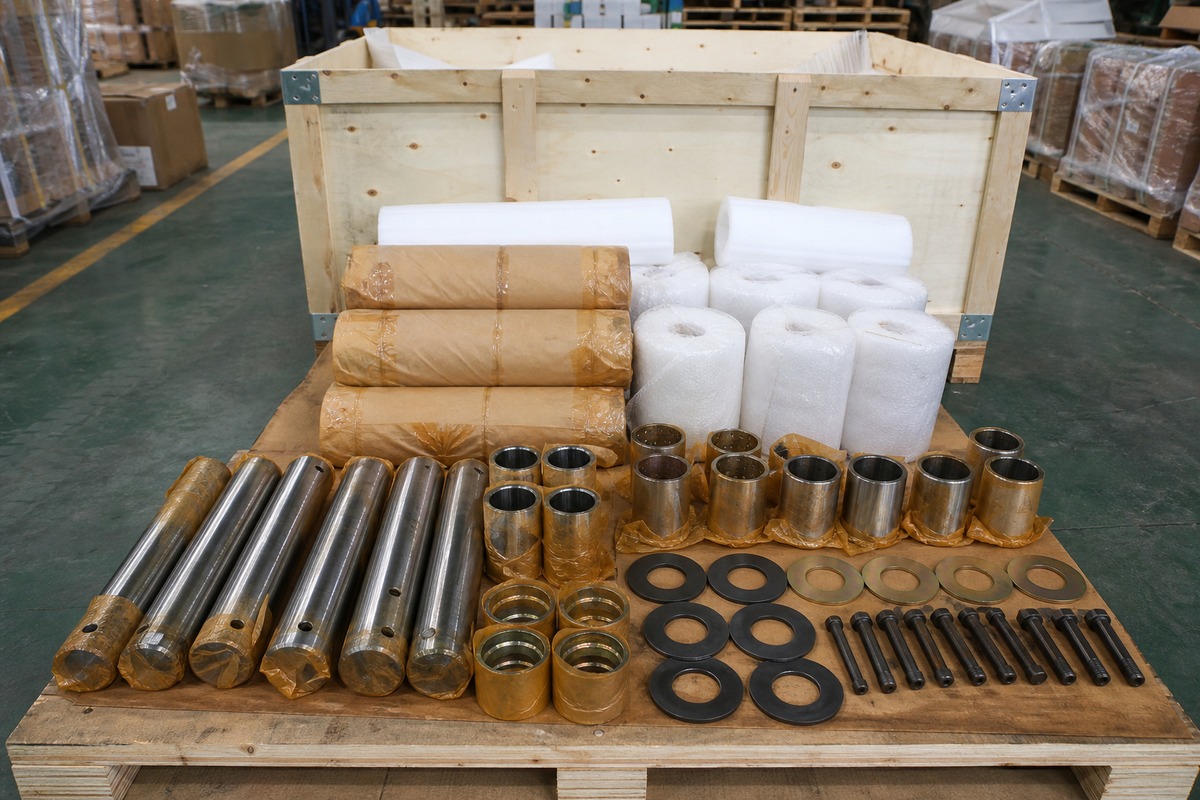
Pins are heavy, polished and easy to damage if they strike other parts in transit. Bushings need anti-rust protection and separators. Retaining bolts, collars and washers should be bagged and labeled in the quote file, even if the physical bag has no customer-facing text.
The packing proof should show anti-rust paper, foam, strapped bundles and a wooden crate. PRIMA should keep photos before closing the crate because receiving disputes often involve missing collars or scratched surfaces.
| Check | Evidence to save | Buyer value |
|---|---|---|
| Anti-rust | Oil film, paper wrap and sealed bags | Prevents corrosion |
| Separation | Foam or cardboard between heavy parts | Prevents impact scratches |
| Small parts | Collars, bolts and washers bagged | Prevents missing installation pieces |
Evidence Table
| Decision point | Evidence PRIMA should save | Risk controlled |
|---|---|---|
| Fitment | Pin diameter, length, bushing ID/OD, linkage position and retainer style | Wrong pin or bushing set |
| Repair diagnosis | Bore ovality, grease path and bucket-ear wear | Blaming parts for worn linkage |
| Export | Anti-rust wrap, separators, small-part bags and crate photos | Rust, scratches or missing retainers |
Key Facts For PRIMA Buyers
- Excavator pin and bushing fitment depends on linkage position and dimensions, not model name alone.
- Bore wear or ovality can make a correct bushing fail after installation.
- Retaining collars, washers and bolts must be included in the quote file when required.
- Heavy pins need anti-rust wrapping and physical separation during export packing.
Buyer FAQ
Can I order pins and bushings with only the excavator model?
It is risky. Send linkage position, old part photos and measurements first.
Which dimensions are most important?
Pin diameter, pin length, bushing ID, bushing OD, bushing width and retainer style.
What if the bore is oval?
The machine may need bore repair or line boring before new bushings will hold properly.
Should collars and bolts be included?
Yes when the old hardware is worn, missing or part of the retaining design.
How should these parts be packed?
Use anti-rust wrap, foam separators, small-part bags and a wooden crate.
Useful PRIMA Links
- Excavator bucket teeth buyer guide
- Excavator bucket fitment checklist
- Excavator quick coupler inspection guide
- Excavator parts supplier buyer guide
Conclusion
Pins and bushings should be ordered from a measured linkage file. Buyers should save old part photos, dimensions, linkage position, bore condition, retainer style and packing proof. PRIMA should not treat a loose bucket as only a parts problem until bore wear and grease-path condition are checked, because correct parts still fail when the linkage seat is already damaged.