
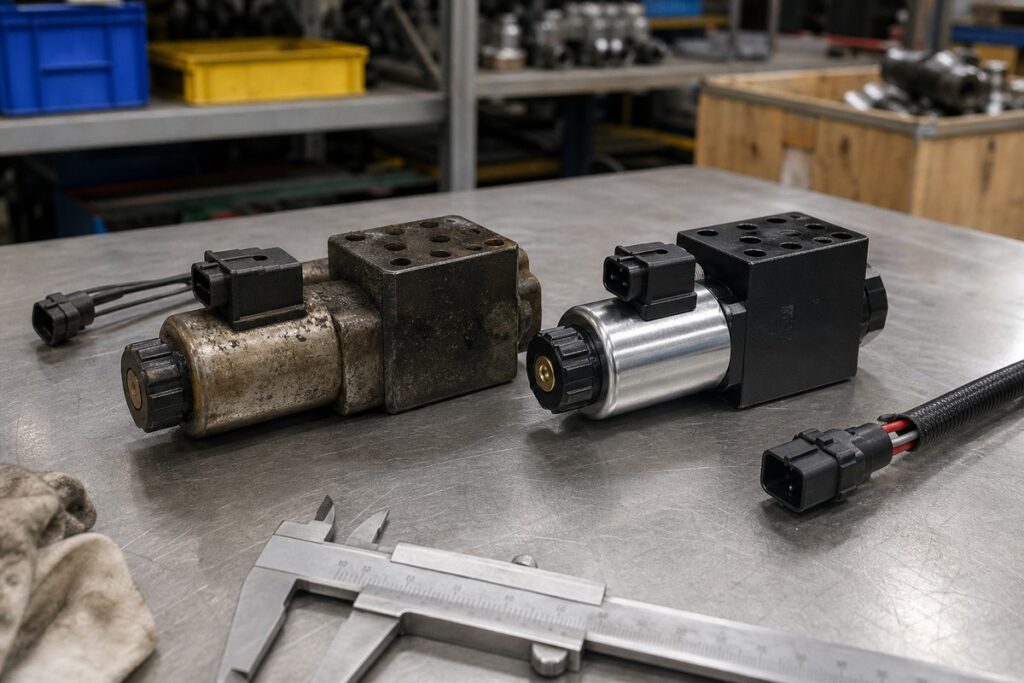
Buyers should check excavator solenoid valves before ordering from China by confirming the old valve photos, machine model, part number if available, coil voltage, connector shape, valve body size, port or mounting pattern, spool function, machine symptom and packing method. A solenoid valve can look close but still fail if the coil voltage, connector pins, valve block, spool type or hydraulic function is different. PRIMA should keep the quote conditional until the buyer sends enough old-part evidence and symptom notes to separate an electrical issue from a hydraulic-valve issue.
Solenoid valves sit at the meeting point of hydraulics and electrical control. A buyer who sends only an excavator model may miss connector changes, voltage differences, previous repairs or valve-block variations.
This guide supports PRIMA’s excavator parts supplier guide and the main control valve checklist. It focuses on practical evidence that can be checked before payment and before shipment.
Buyer Summary
- Best for buyers replacing excavator hydraulic, pilot, travel, swing or attachment-control solenoid valves.
- Require old valve photos, voltage, connector type, mounting face, valve-body dimensions and symptom notes.
- Separate coil failure, wiring failure, stuck spool and hydraulic contamination before ordering.
- Confirm capped ports, protected connectors and foam packing before export shipment.
Quick answer: what proves an excavator solenoid valve order is safe?
A safe excavator solenoid valve order starts with the removed valve and the machine symptom. Buyers should send machine model, serial context if available, old valve photos from every side, part number or casting marks, coil voltage, connector shape, pin count, mounting face, valve-body size and the symptom that led to replacement. PRIMA should check whether the buyer needs only the coil, the complete solenoid valve, a pilot valve, a proportional valve or a block assembly. Before shipment, the file should show the same connector style, protected sealing surfaces, capped ports and foam or crate packing.
Which solenoid valve details should come before price?
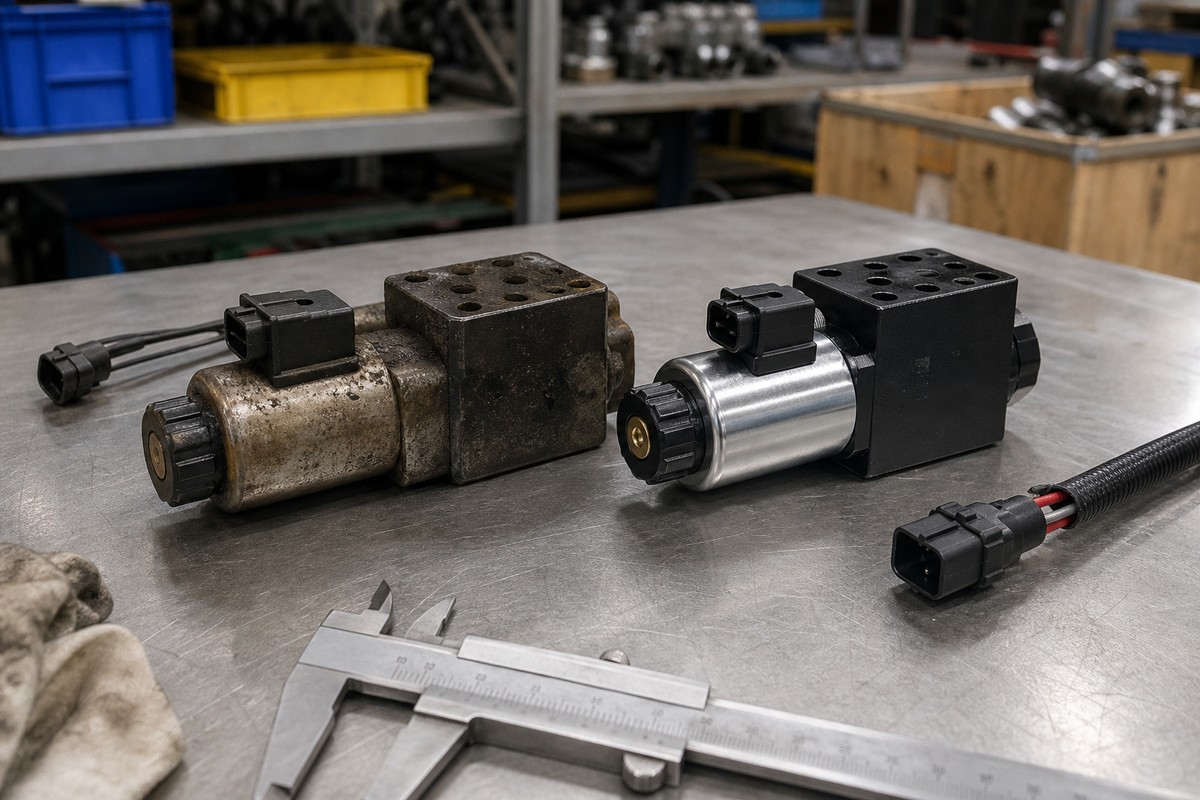
The first proof is the old valve. Buyers should photograph the coil, connector, valve body, mounting face, ports and any part-number area before cleaning or dismantling. The same excavator model can use different valves depending on hydraulic package, market version or previous repair.
PRIMA should not treat connector shape as a small detail. A two-pin connector, different plug key, different voltage or different coil length can stop installation even when the valve body looks similar in a small photo.
| Check | Evidence to save | Buyer value |
|---|---|---|
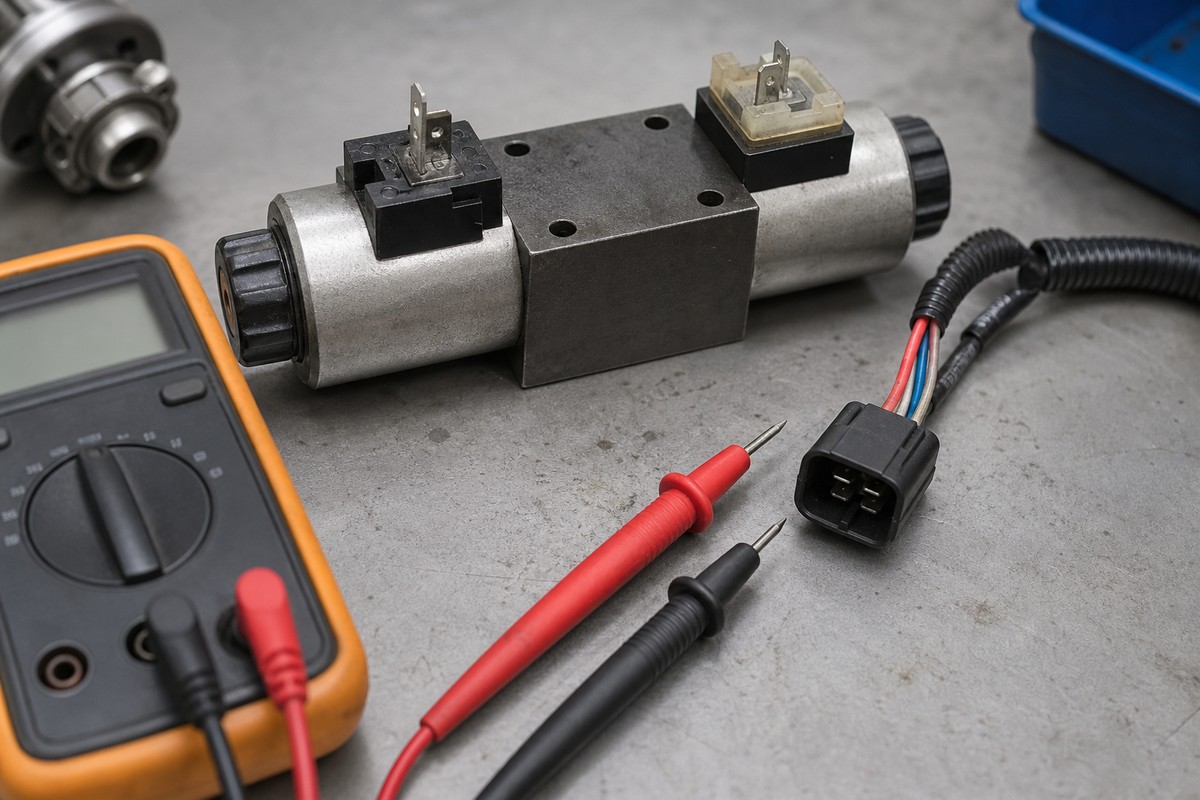
| Coil and voltage | Old coil photo, voltage mark and connector view | Prevents electrical mismatch |
| Valve body | Length, thread or mounting face and port pattern | Confirms physical fitment |
| Function | Machine symptom and valve location | Avoids replacing the wrong control part |
How should buyers separate electrical and hydraulic causes?
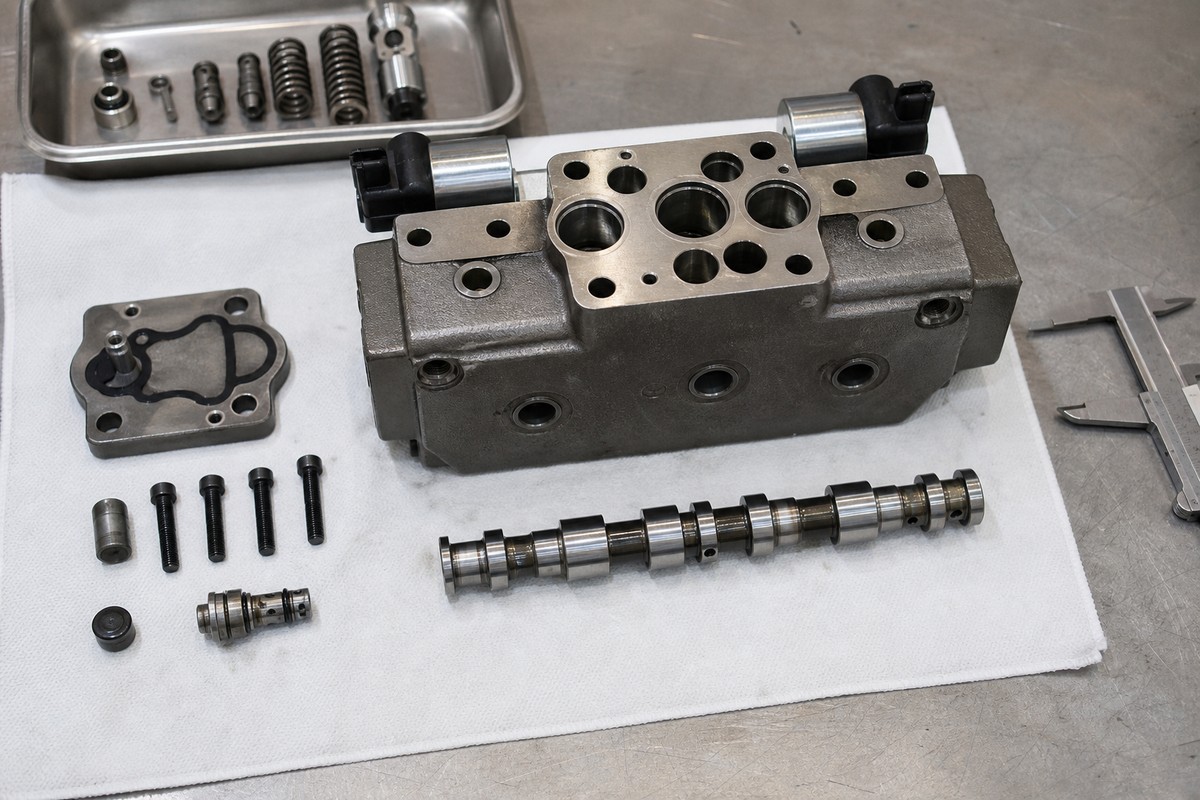
A failed function is not always a failed solenoid valve. Wiring, fuse, controller output, low pilot pressure, dirty oil, a stuck spool or a damaged valve block can create similar symptoms. Buyers should record whether the function is intermittent, totally dead, weak under load or only fails after the machine heats up.
If the buyer can safely test coil resistance, voltage at the connector or manual override behavior, that evidence helps. If not, clear photos and symptom notes still help PRIMA avoid guessing from the model name alone.
| Check | Evidence to save | Buyer value |
|---|---|---|
| Electrical side | Connector, wiring, voltage and coil test notes | Checks whether the coil is truly failed |
| Hydraulic side | Oil condition, spool movement and pressure symptom | Separates contamination from part mismatch |
| Machine behavior | Dead, weak, intermittent or hot-failure symptom | Guides the replacement decision |
What fitment evidence should be saved in the quote file?
A useful quote file should show the old valve and the proposed valve in the same orientation. The buyer should compare connector, coil length, valve body, sealing face, mounting holes and port direction. For proportional or pilot valves, the control function should be written clearly.
This is especially important for mixed fleets where a mechanic may call several different components a solenoid valve. PRIMA should name the function in buyer language: travel speed, swing brake, pilot lock, attachment control, pump control or main-valve control.
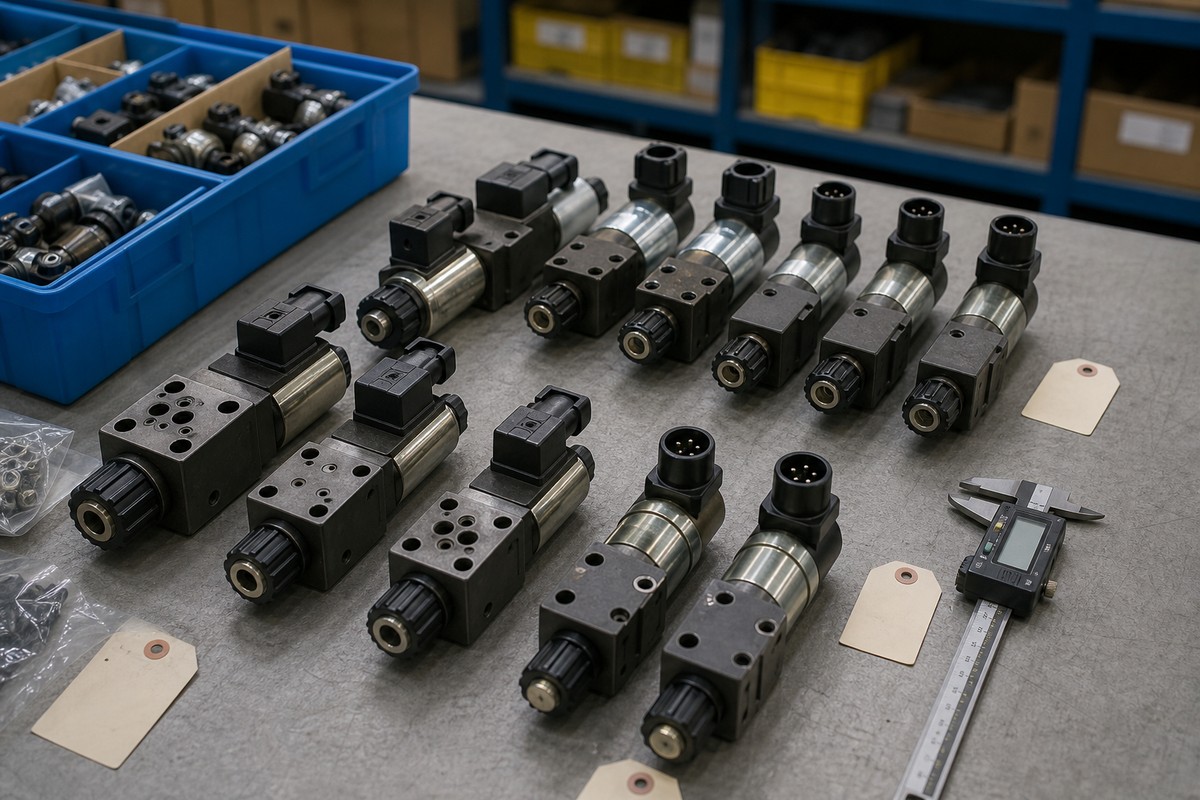
| Check | Evidence to save | Buyer value |
|---|---|---|
| Orientation | Old and replacement valve shown from the same side | Makes comparison auditable |
| Connector match | Pin count, plug shape and wire direction | Prevents installation failure |
| Function name | Travel, swing, pump, pilot or attachment control | Prevents ordering the wrong valve type |
What packing proof matters for solenoid valves?
Solenoid valves are small but sensitive. Connector pins, sealing surfaces, threads and ports can be damaged by loose packing. Buyers should request photos before the foam, plastic bag or crate is closed.
The packing file should show capped ports, protected connectors, separated small parts and a dry carton or crate. This evidence is useful when the buyer checks the package immediately after arrival.
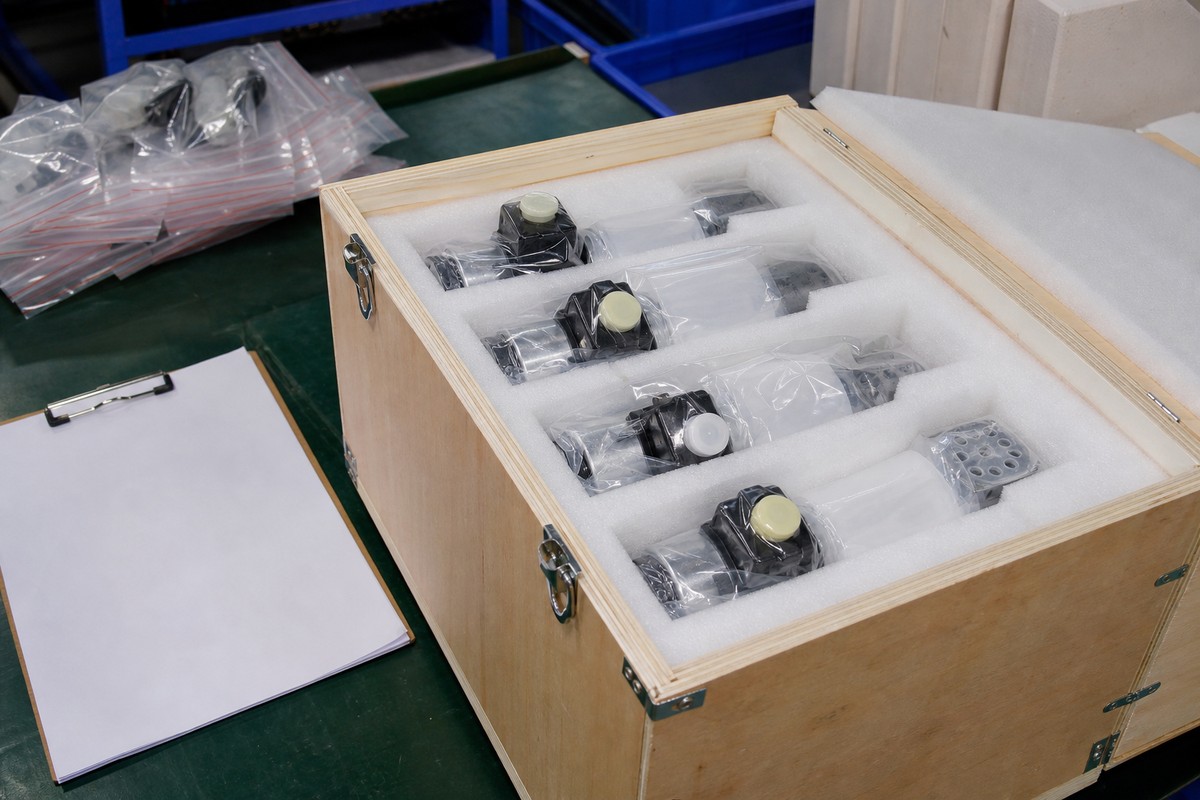
| Check | Evidence to save | Buyer value |
|---|---|---|
| Ports | Caps or plugs on hydraulic openings | Prevents dust and contamination |
| Connector | Foam or sleeve protection | Prevents bent pins or broken plugs |
| Small parts | O-rings, bolts or adapters packed separately | Prevents missing installation parts |
Evidence Table
| Decision point | Evidence PRIMA should save | Risk controlled |
|---|---|---|
| Fitment | Old valve photos, voltage, connector, body and mounting face | Wrong part or connector |
| Diagnosis | Machine symptom, test notes and valve location | Replacing a good valve |
| Export | Capped ports, protected connector and foam packing | Transit damage or contamination |
Key Facts For PRIMA Buyers
- Solenoid valve fitment depends on coil voltage, connector shape and valve-body function, not model name alone.
- A machine symptom may come from wiring, controller output, hydraulic pressure or contamination.
- The quote should name whether the buyer needs a coil, complete valve or valve block.
- Packing photos should show protected ports and connectors before shipment.
Buyer FAQ
Can I order an excavator solenoid valve by model only?
It is risky. Send old valve photos, voltage, connector type, valve location and machine symptoms first.
What if the connector looks similar?
Still check pin count, plug key, wire direction and voltage before payment.
Do I need the coil or the whole valve?
That depends on the failure evidence. Coil-only replacement is unsafe when the spool or valve body is damaged.
Should PRIMA claim official brand supply?
No. Brand names should be used for identification only unless current written authorization exists.
What packing proof should I request?
Ask for capped ports, protected connector pins, foam pockets and small-part bags before shipment.
Useful PRIMA Links
- Excavator parts supplier buyer guide
- Excavator main control valve checklist
- Excavator hydraulic pump buyer guide
- Excavator wiring harness checklist
Conclusion
Solenoid valve orders should be built from evidence, not from a part name alone. Buyers should save old valve photos, voltage, connector type, mounting face, function name, symptom notes and packing proof. PRIMA should describe brand names only for identification and keep the quote conditional until the fitment and diagnosis evidence is strong enough.