
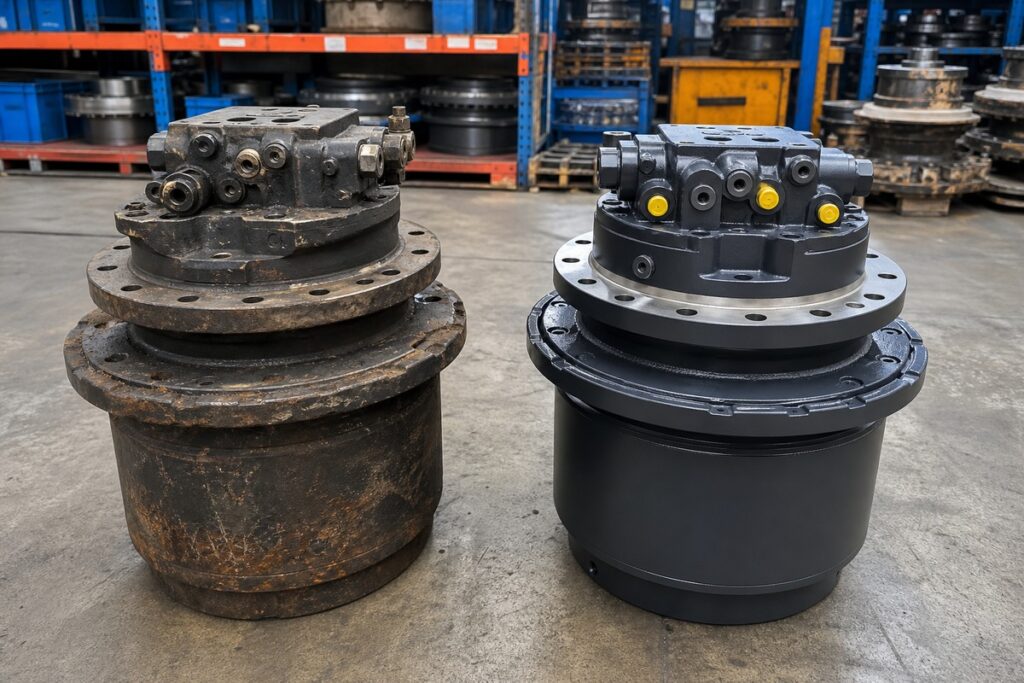
Buyers should check excavator travel motor ports and flange before ordering from China by confirming the old unit, machine model, final drive or travel motor code, flange bolt pattern, pilot diameter, hydraulic port layout, drain and brake ports, sprocket mounting side, shaft or seal area, leakage symptoms, travel weakness, noise and test-bench or pressure evidence. A travel motor is expensive and heavy, so a wrong port layout or flange pattern creates a costly return problem. PRIMA should request photos and measurements before quoting a new, used or rebuilt unit.
Excavator travel motors connect hydraulic power with track movement. The buyer may call the part final drive, track motor, travel device or hydraulic travel motor, so the quote file should define exactly which assembly is being supplied.
This page supports PRIMA’s final drive buyer guide and hydraulic pump buyer guide. It focuses on fitment and test evidence before international shipping.
Buyer Summary
- Best for buyers replacing a travel motor, final drive motor, track motor, rebuilt travel device or complete final drive assembly.
- Require old unit photos, motor code, port layout, flange bolt pattern, sprocket mount side and symptom notes.
- Separate travel motor failure from hydraulic pump, relief valve, brake, hose, swivel joint and track-chain problems.
- Ask for test evidence, capped ports, oil protection and wooden-crate packing before shipment.
Quick answer: what proves excavator travel motor ports and flange will fit?
A safe excavator travel motor ports-and-flange order starts with the removed unit and a clear failure description. Buyers should send machine model, serial number if available, old travel motor photos, motor or final-drive code, hydraulic port layout, drain and brake port positions, flange bolt pattern, pilot diameter, sprocket mount side, shaft or seal photos, leakage location, weak-travel symptom, noise notes and whether one side or both sides are affected. PRIMA should ask whether the buyer wants a complete final drive, hydraulic motor section, reducer section, used unit or rebuilt unit. Before shipment, the file should show test-bench evidence when available, capped ports, clean oil protection, lifting-eye safety and wooden-crate packing.
Which identity details should come before quotation?
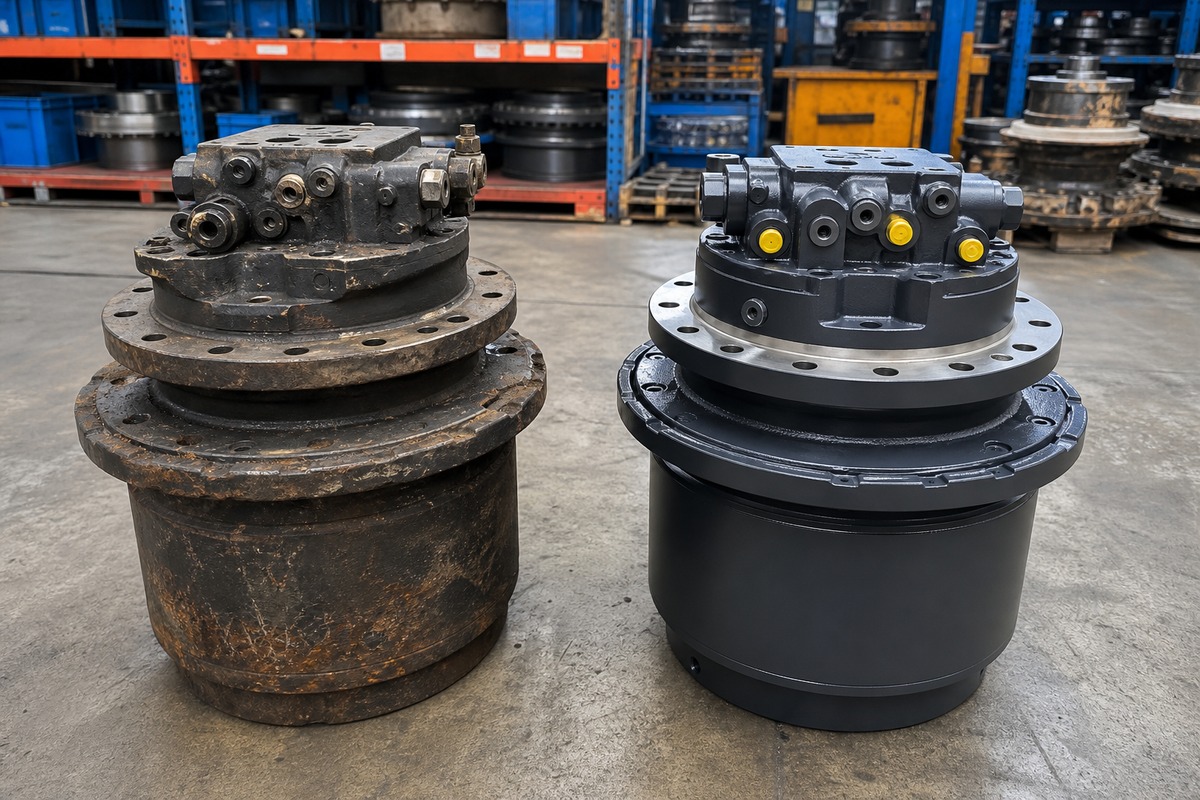
The old travel motor is the strongest evidence. Buyers should photograph the complete assembly from the port side, sprocket mount side and nameplate or casting-code area. If the code is unreadable, bolt pattern, flange size and port orientation become more important.
PRIMA should define whether the supply is a complete final drive assembly or only the hydraulic motor section. These terms are often mixed in buyer messages, and a misunderstanding can double the freight cost.
| Check | Evidence to save | Buyer value |
|---|---|---|
| Old unit | Full photos from port, flange and sprocket sides | Confirms assembly type |
| Code | Motor code, casting code or final drive code | Helps identify replacement family |
| Scope | Complete unit, motor section, reducer section or rebuilt unit | Avoids quote mismatch |
How should ports, flange and sprocket side be checked?
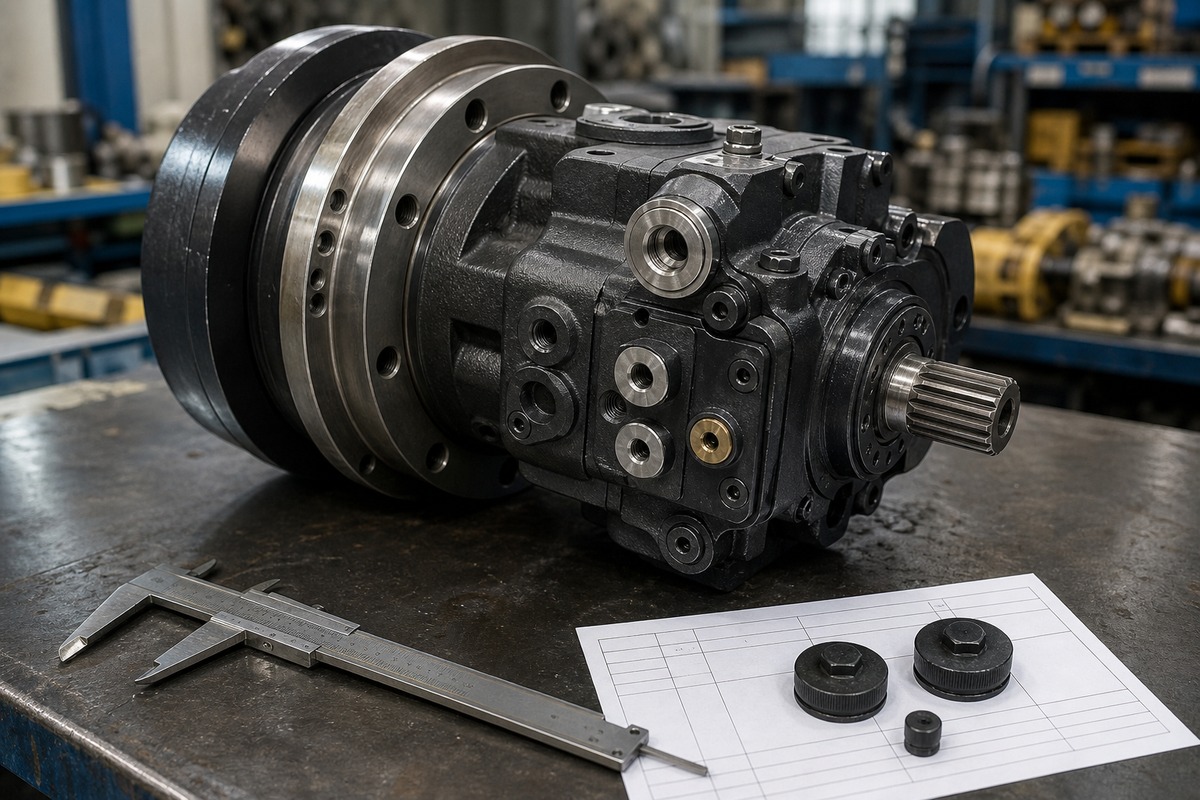
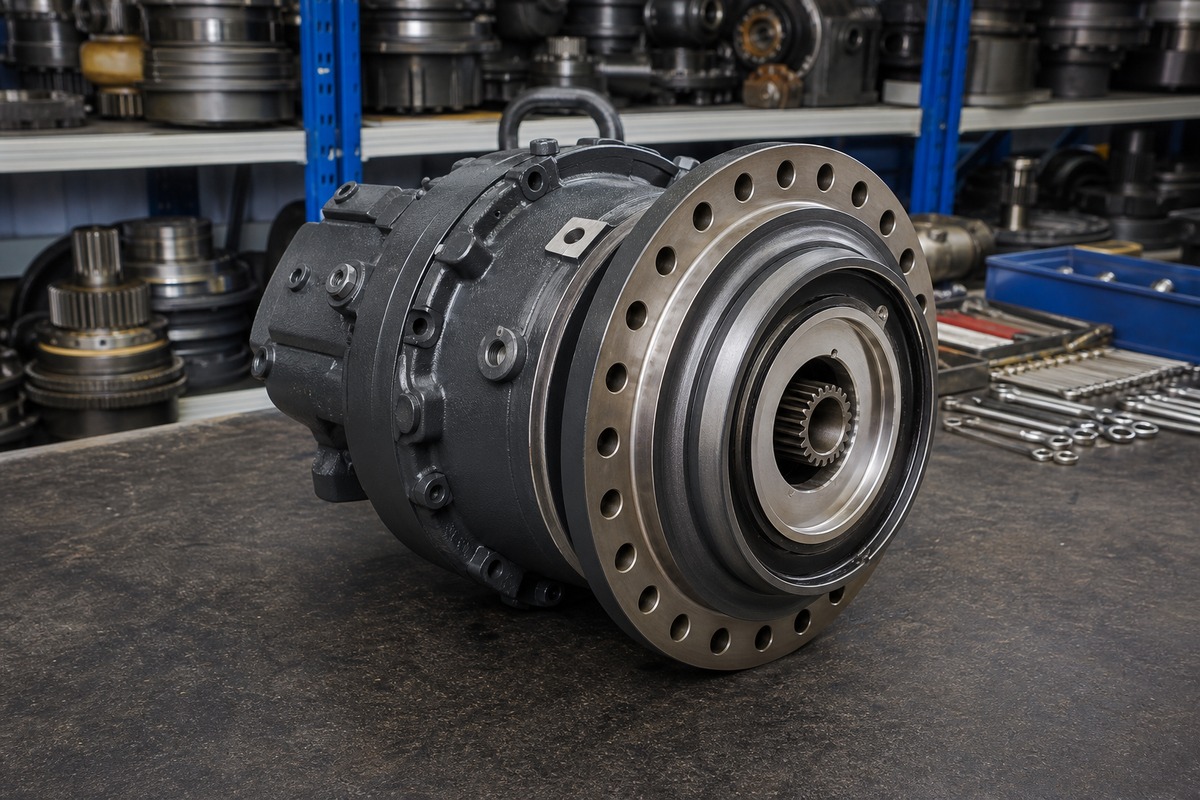
Port layout and flange bolt pattern decide whether the travel motor can be installed. Buyers should send photos with caps removed only when safe and clean; otherwise, port positions and plug caps should be photographed clearly. The sprocket mounting side should show bolt circle, seal area and hub condition.
A similar-looking motor can have different port direction, brake port, drain port or mounting pattern. Measurements reduce the chance of sending a unit that cannot connect to the hoses or sprocket.
| Check | Evidence to save | Buyer value |
|---|---|---|
| Ports | Main ports, drain, brake port and plug positions | Controls hose connection |
| Flange | Bolt circle, pilot diameter and mounting face | Controls installation |
| Sprocket side | Hub, seal area, bolt holes and wear marks | Controls drive-side match |
What diagnosis should be separated from travel motor failure?
Weak travel can come from the travel motor, final drive reducer, hydraulic pump, control valve, relief valve, swivel joint, brake pack, hose restriction or track-chain binding. Buyers should record whether the symptom affects one side or both sides and whether the machine has noise, leakage, overheating or slow travel.
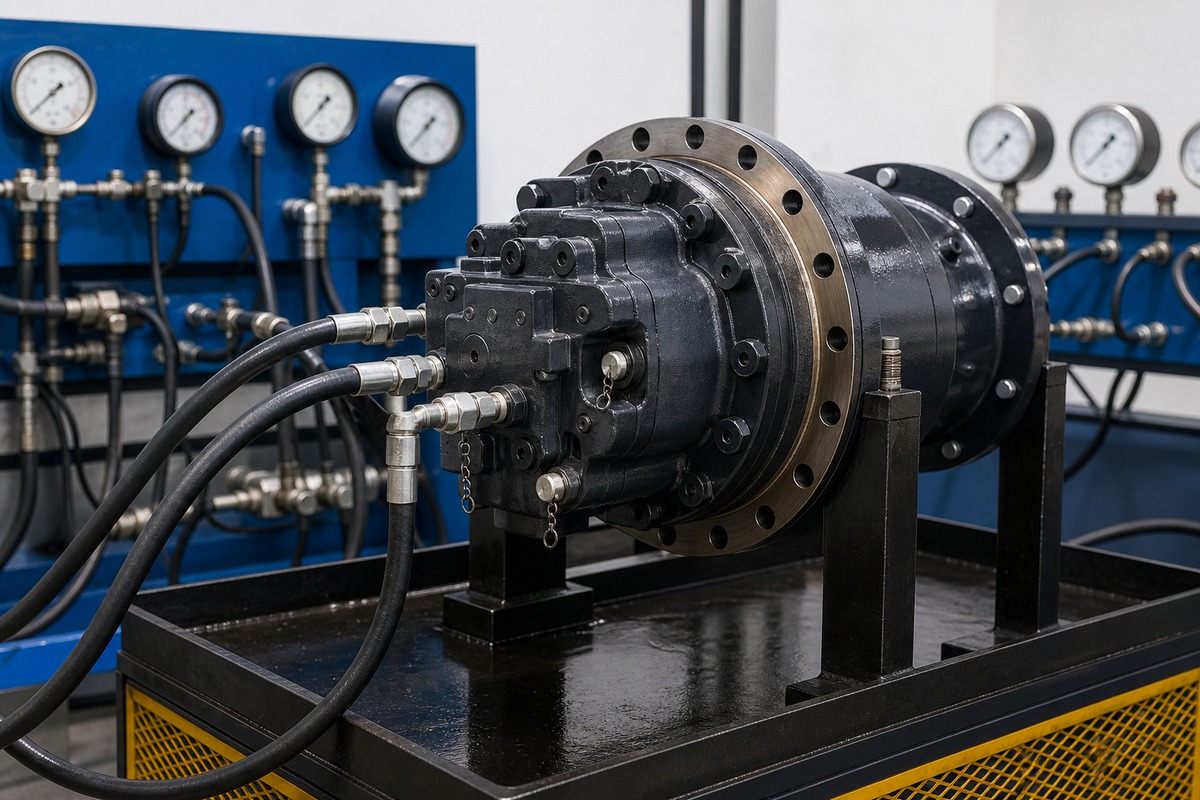
When test-bench evidence is available, it is valuable. When it is not available, the quote should at least include symptom notes, oil condition, visible leakage, port photos and comparison with the opposite side.
| Check | Evidence to save | Buyer value |
|---|---|---|
| Symptom | Weak travel, no travel, noise, leakage or overheating | Separates diagnosis |
| One side or both | Compare left and right travel behavior | Identifies system vs component issue |
| Test evidence | Bench test, pressure notes or leakage inspection | Supports rebuilt-unit confidence |
Which packing proof protects a travel motor?
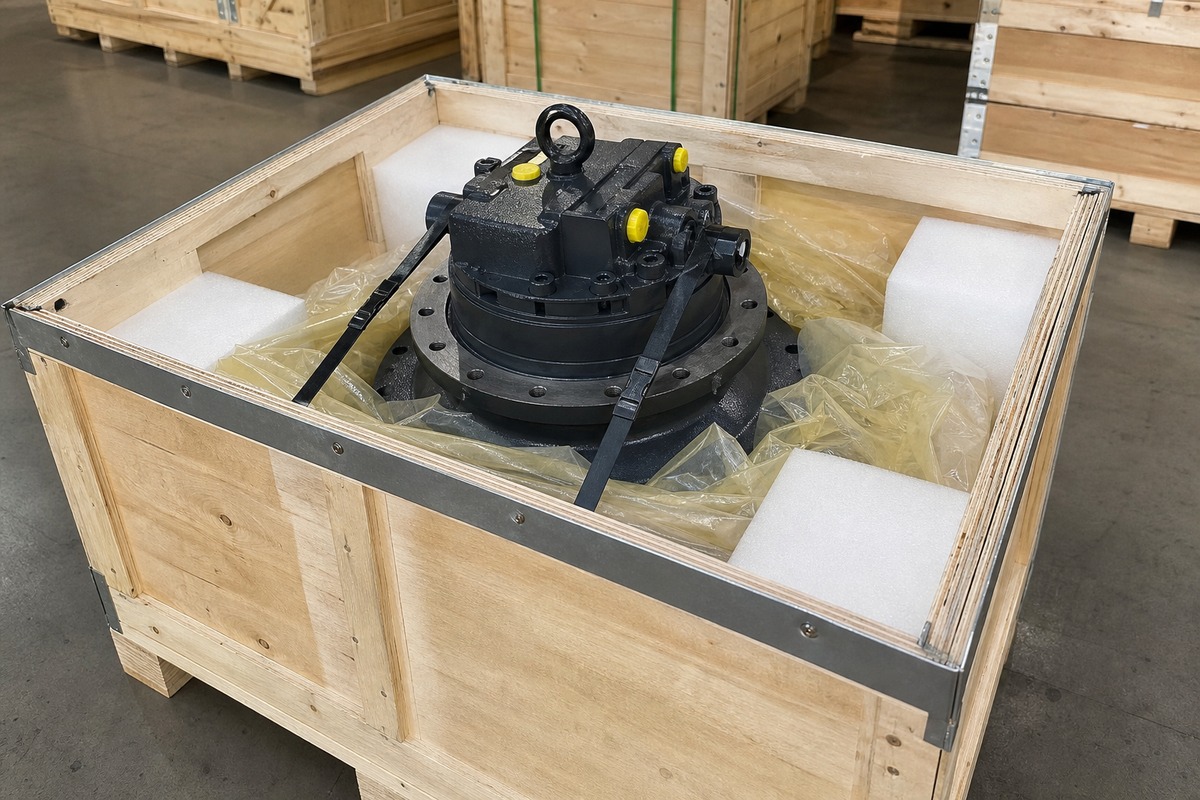
A travel motor is heavy, oil-filled and sensitive at the ports and seal area. Ports should be capped, the unit should be drained or protected according to the shipment method, and the housing should be fixed inside a crate so it cannot roll.
Packing photos should show capped ports, oil protection, straps, foam or wood blocking, lifting-eye protection and a wooden crate. This evidence helps the buyer inspect the unit immediately after arrival.
| Check | Evidence to save | Buyer value |
|---|---|---|
| Port caps | All hydraulic ports capped or plugged | Prevents contamination |
| Oil/seal protection | Clean housing, seal area and protective wrap | Controls leakage and corrosion |
| Crate | Blocking, straps and wooden crate | Prevents impact during freight |
Evidence Table
| Decision point | Evidence PRIMA should save | Risk controlled |
|---|---|---|
| Fitment | Code, port layout, flange pattern, sprocket side and old unit photos | Wrong motor or final drive assembly |
| Diagnosis | Symptom notes, one-side/two-side comparison, leakage and test evidence | Replacing the wrong hydraulic component |
| Export | Capped ports, oil protection, blocked crate and lifting safety | Contamination or transit damage |
Key Facts For PRIMA Buyers
- Travel motor and final drive terms must be defined before quotation.
- Port layout and flange bolt pattern are as important as machine model.
- Weak travel can come from hydraulic system faults, not only the motor.
- A travel motor should ship with capped ports and crate blocking.
Buyer FAQ
Is a travel motor the same as a final drive?
Buyers often use the terms together, but the quote must define whether it is the hydraulic motor section, reducer or complete assembly.
Can PRIMA quote from a machine model only?
It is safer to include old unit photos, code, port layout, flange pattern and sprocket side.
What if only one side is weak?
Compare left and right sides, then check motor, reducer, brake, valve, pump, hoses and swivel joint.
Do rebuilt units need test evidence?
Yes when available. At minimum, request leakage, pressure or bench-test notes and clear condition photos.
How should a travel motor be packed?
Ports capped, oil protected, unit blocked and strapped inside a wooden crate.
Useful PRIMA Links
- Excavator final drive buyer guide
- Excavator hydraulic pump buyer guide
- Excavator swing motor inspection guide
- Excavator parts supplier buyer guide
Conclusion
Travel motors should be ordered from a complete fitment and diagnosis file. Buyers should save old unit photos, code, port layout, flange pattern, sprocket side, symptom notes, test evidence and packing proof. PRIMA should define whether the order is a complete final drive or one section of the assembly, because that boundary controls price, freight and installation risk.