
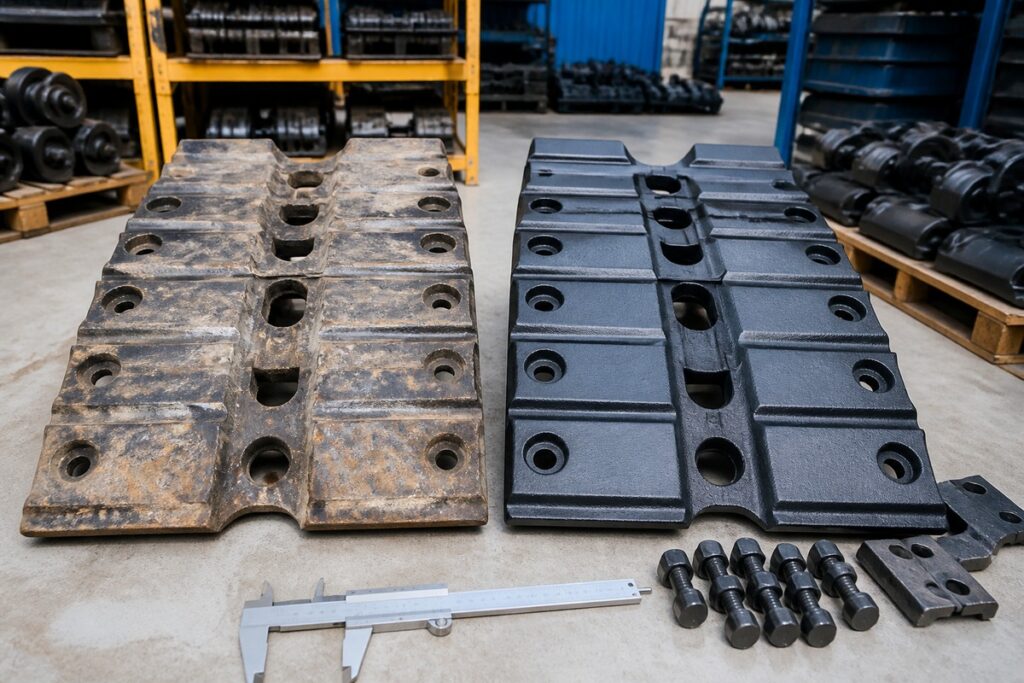
Buyers should check excavator track shoe bolts and shoe sets before ordering from China by confirming the old shoe type, machine model, track-chain pitch, shoe width, bolt-hole spacing, bolt size, bolt kit condition, grouser height, crack or bending condition, quantity per side and packing method. Track shoes look simple, but a wrong bolt size, wrong hole pattern or missing bolt kit can damage the chain, loosen on site or make the excavator unstable. PRIMA should keep the quote conditional until photos of the old shoes, bolt evidence, measurements and track-chain context are saved.
Track shoes are part of the undercarriage, so a small mismatch affects traction, chain life and operating cost. A buyer who only sends the excavator model may miss track-chain variations, shoe width options or previous aftermarket repairs.
This guide supports PRIMA’s excavator undercarriage parts guide and sprocket matching checklist. It focuses on quote evidence that can be checked before payment and before shipment.
Buyer Summary
- Best for buyers replacing steel track shoes, shoe bolts or a full undercarriage shoe set.
- Require photos of the old shoes, width, bolt-hole spacing, grouser height, chain pitch and quantity per side.
- Separate true shoe wear from chain, sprocket, idler or track-adjuster problems before ordering.
- Confirm bolt kits and crate packing because loose shoes are heavy and can damage each other in transit.
Quick answer: what proves an excavator track shoe bolt and shoe set order is safe?
A safe excavator track shoe bolt and shoe set order starts with the removed shoe, the existing track chain and the machine’s working condition. Buyers should send machine model, serial number if available, old shoe photos from top and bottom, shoe width, bolt-hole spacing, bolt diameter, bolt-head style, grouser height, number of shoes per side, track-chain pitch and photos of sprockets, idlers and adjusters. PRIMA should confirm whether the buyer needs only loose bolts, several damaged shoes, one side, both sides or a full chain-and-shoe set, then match bolt kits to the quoted shoes. Before shipment, the buyer file should show the same shoe type, matching bolts and nuts, clean stacking, anti-rust treatment, quantity labels and wooden-crate or pallet protection, because wrong heavy shoes are expensive to return.
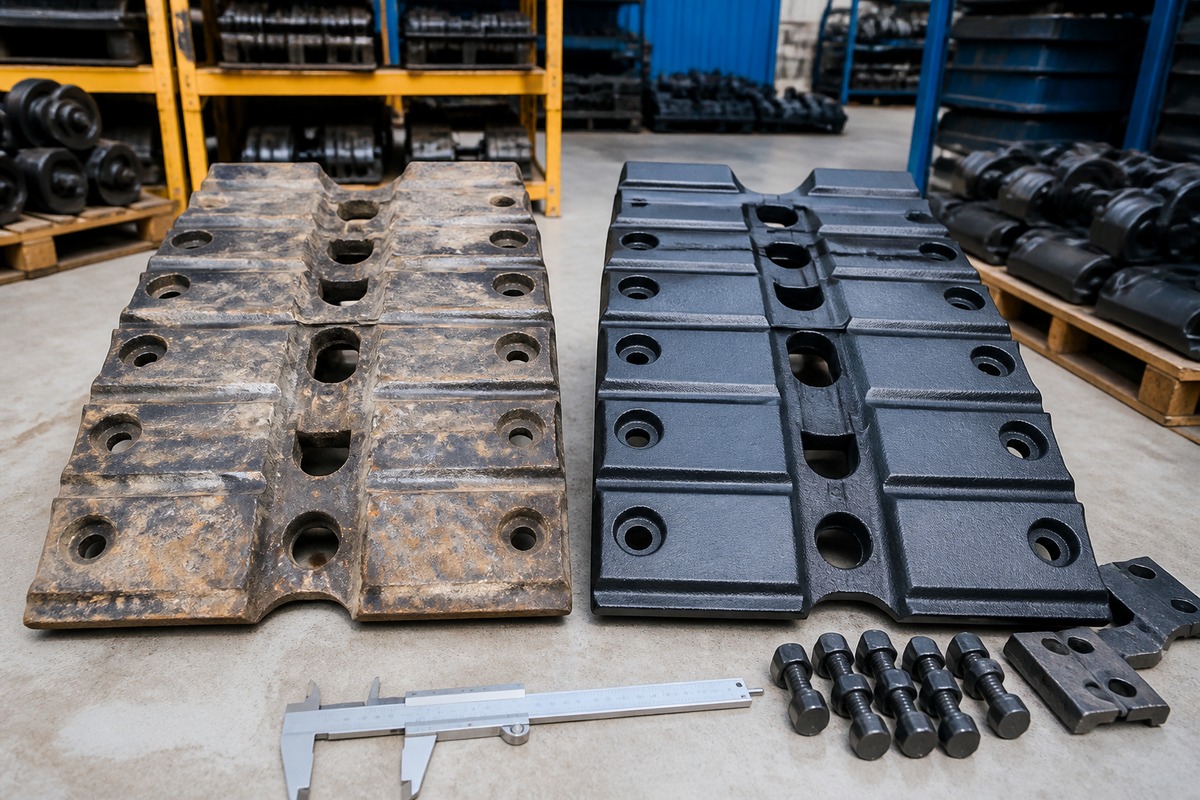
Which track shoe measurements should come before price?
The first proof is the old shoe. Buyers should photograph the top, bottom and bolt-hole area, then measure width, hole spacing, bolt diameter and grouser height. Shoe width affects ground pressure and turning load, while hole pattern determines whether the shoe can be mounted to the existing track chain.
PRIMA should not treat every excavator model as one fixed shoe specification. Some machines have narrow, standard or wide shoes, and previous repairs may have mixed parts. A quote file with measurements avoids shipping a set that cannot be bolted on.
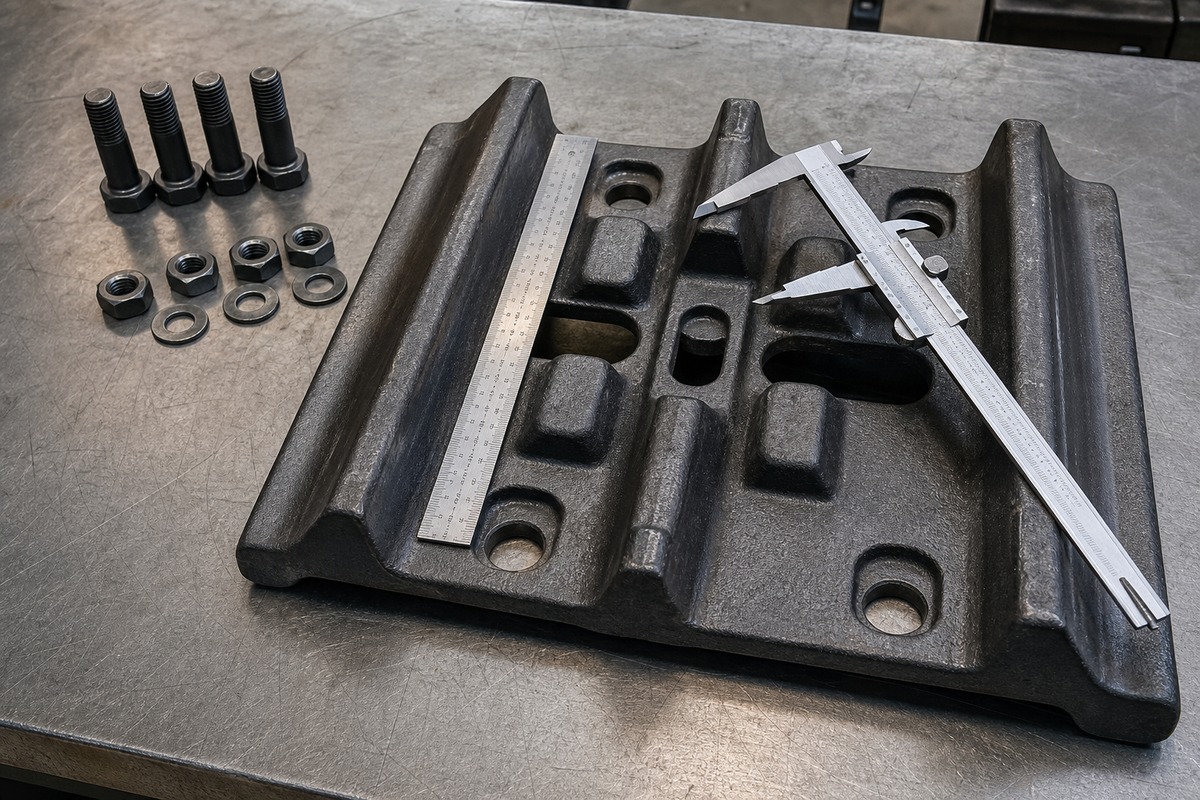
| Check | Evidence to save | Buyer value |
|---|---|---|
| Shoe width | Measure across the shoe plate | Controls ground pressure and frame clearance |
| Bolt-hole spacing | Measure center-to-center distance | Confirms match with the track chain |
| Grouser condition | Check height, cracks and bending | Separates normal wear from impact damage |
How should buyers match shoes with the track chain?
Track shoes are bolted to the link assembly. A shoe can be correct in width but wrong for the chain if the hole pattern or bolt size does not match. Buyers should send photos showing the mounted shoe, chain link and bolt head so PRIMA can see the real undercarriage configuration.
If the chain, sprocket or idler is already badly worn, replacing shoes alone may not solve tracking problems. The quote should state whether the order covers only shoes or a larger undercarriage repair file.
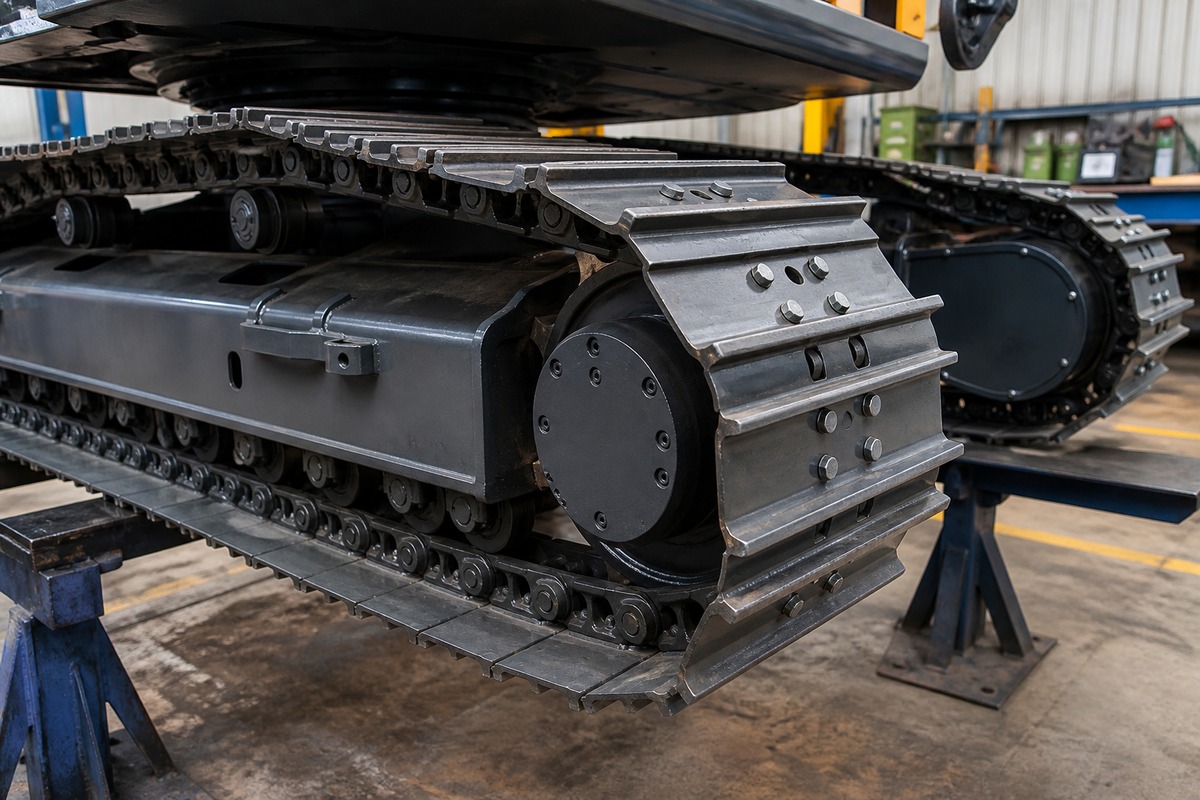
| Check | Evidence to save | Buyer value |
|---|---|---|
| Chain fit | Mounted shoe and link photos | Avoids wrong bolt pattern |
| Bolt kit | Bolt grade, size and washer/nut evidence | Prevents loose shoes after installation |
| Related wear | Sprocket, idler and chain photos | Prevents blaming new shoes for old undercarriage wear |
What wear signs should be photographed?
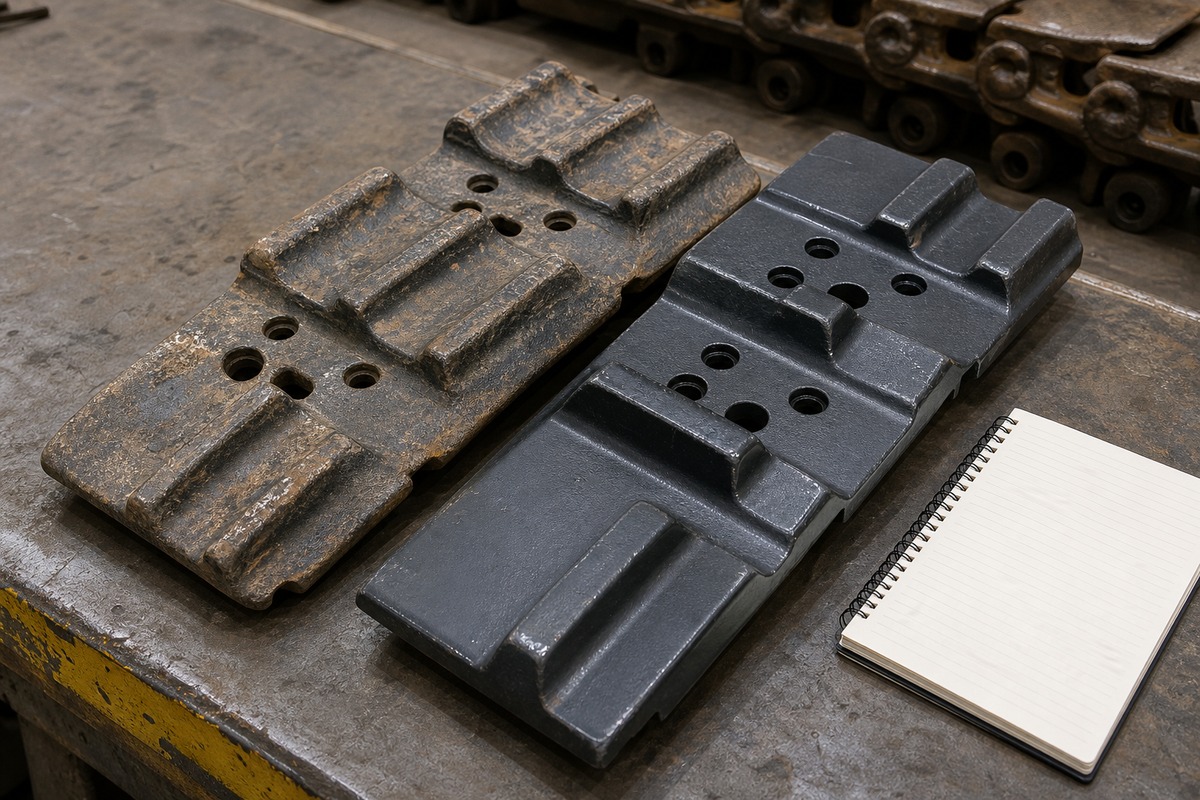
A worn track shoe may show low grouser height, elongated holes, cracked plate edges, bent corners or uneven wear. These photos help decide whether the buyer needs shoe replacement only, chain service or a full undercarriage discussion.
The old shoe photo also protects the buyer against vague descriptions such as heavy duty or standard. PRIMA should describe the replacement by measurable evidence instead of promotional wording.
| Check | Evidence to save | Buyer value |
|---|---|---|
| Grouser wear | Remaining height and edge profile | Shows traction loss |
| Hole wear | Oval holes or cracked areas | Shows bolt-retention risk |
| Plate bending | Bent or cracked shoe edges | Shows impact or wrong application |
What packing proof matters for track shoes?
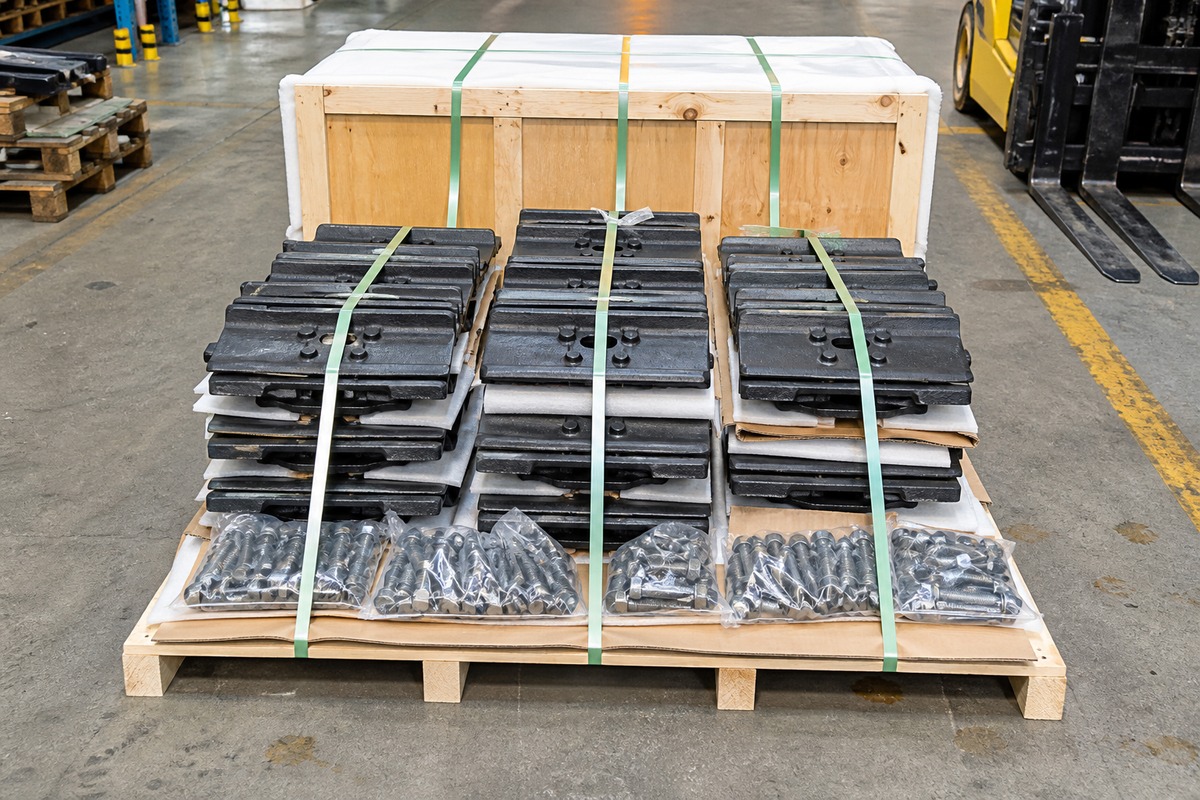
Track shoes are heavy, sharp-edged and usually shipped with bolt kits. Poor packing can scratch finished surfaces, lose small hardware or bend a few shoes inside the crate. Buyers should request photos before the pallet or crate is closed.
The packing file should show shoe stacks, bolt kits, wrapping, straps and crate structure. This makes receiving inspection easier and reduces disputes over missing bolts or transit damage.
| Check | Evidence to save | Buyer value |
|---|---|---|
| Stacking | Shoes grouped by size and quantity | Simplifies warehouse receiving |
| Hardware | Bolts, nuts and washers bagged separately | Prevents missing installation parts |
| Crate | Wooden crate, straps and edge protection | Controls transit damage |
Evidence Table
| Decision point | Evidence PRIMA should save | Risk controlled |
|---|---|---|
| Fitment | Width, hole spacing, bolt size, chain pitch and old shoe photos | Wrong shoe or bolt pattern |
| Wear decision | Grouser height, cracks, hole wear and chain condition | Replacing only one part of a worn undercarriage |
| Export | Stacking, bolt kits, anti-rust treatment and crate photos | Missing bolts or damaged shoes |
Key Facts For PRIMA Buyers
- Track shoe fitment depends on width, bolt-hole pattern and chain context, not model name alone.
- Shoe replacement should be checked with sprocket, idler, track chain and adjuster condition.
- Bolt kits are part of the order evidence because loose shoes can create field failure.
- Packing photos should show shoe stacks and hardware before the crate is closed.
Buyer FAQ
Can I order excavator track shoes by model only?
It is risky. Send old shoe photos, width, bolt-hole spacing, bolt size and chain context first.
Should I replace shoe bolts too?
Usually yes when bolts are worn, stretched, damaged or missing. Confirm bolt kit details in the quote.
What if only a few shoes are broken?
You can order partial quantity, but check whether the chain and neighboring shoes are also worn.
Do wide shoes always improve performance?
No. Wider shoes can change turning load and frame clearance, so width must match the machine and job condition.
What packing proof should I request?
Ask for shoe stacks, bolt bags, anti-rust treatment, straps and crate photos before shipment.
Useful PRIMA Links
- Excavator undercarriage parts guide
- Excavator sprocket matching checklist
- Excavator track adjuster inspection guide
- Excavator parts supplier buyer guide
Conclusion
Track shoes should be quoted as a measured undercarriage item, not as a generic plate. Buyers should save old shoe photos, width, bolt-hole spacing, bolt kit evidence, chain context and packing photos. PRIMA should make the quote conditional until these details are clear, because the cost of shipping wrong heavy shoes is much higher than asking for one more measurement before payment.