
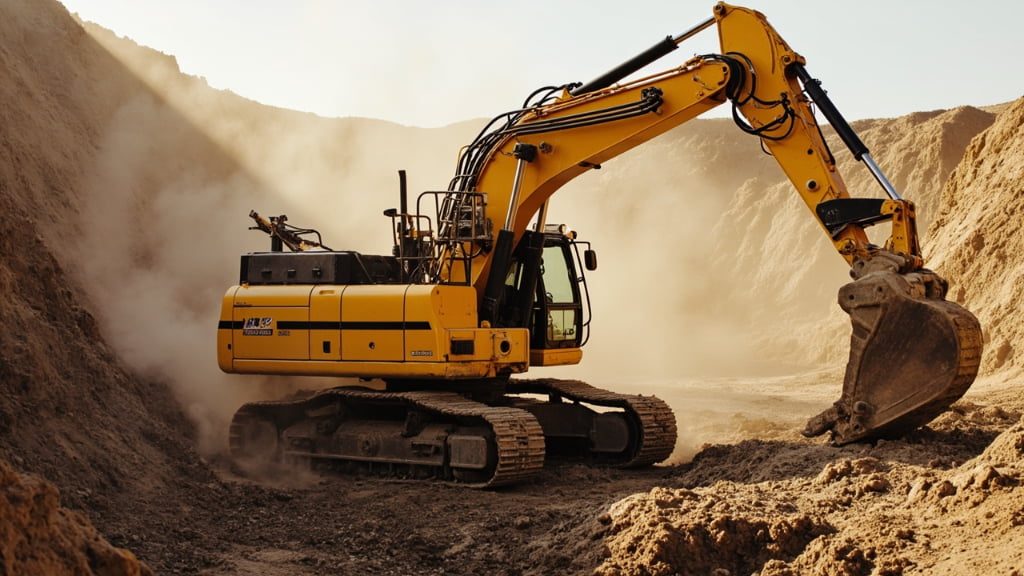
Let us be real—picking the wrong excavator for your job site is an expensive mistake. A machine built for highway construction will burn out in three months at an African mining face. An oversized mining rig will devour fuel and wear out your undercarriage on a residential development. Prima’s Baoding Xushui yard stocks both configurations, and here is how to choose between them.
Mining excavators run 40-90 tons with 6m3+ buckets and reinforced undercarriages built for continuous rock grinding. Construction excavators operate at 20-30 tons with 1-1.5m3 buckets optimized for versatility. Spec the wrong machine and a $10K mistake can cost $50K in downtime. Here is how to get it right.
Table of Contents
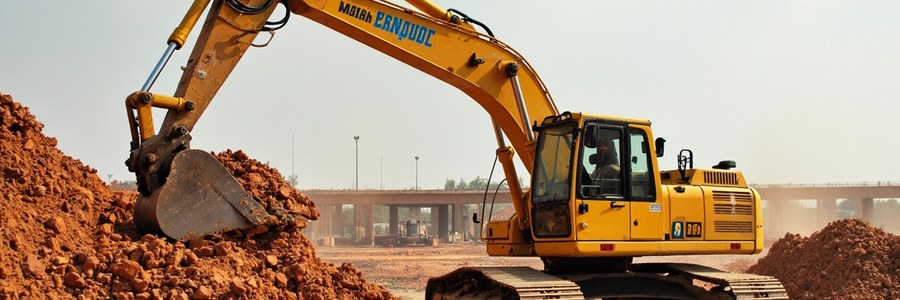
The fundamental difference between mining and construction excavators comes down to three things: hydraulic flow, undercarriage durability, and structural reinforcement. Here is how each spec matters for your project.
- Hydraulic Flow and Bucket Capacity: The Numbers That Actually Matter
- Undercarriage and Structural Durability: What Survives in the Field
- CAT 320D: The Crossover Candidate at 20-30K USD
- Heavy Mining Excavators: 40-90 Ton Class for African Operations
- Conclusion
Hydraulic Flow and Bucket Capacity: The Numbers That Actually Matter
Mining and construction excavators are built around fundamentally different hydraulic systems. Mining requires high flow for continuous heavy digging—typically 450-650 L/min for efficient bucket work. Construction operates efficiently at 200-400 L/min where versatility matters more than raw power.
Bucket capacity tells the same story. Mining buckets run 3m3 to 12m3 depending on machine class. Construction buckets sit in the 0.5m3 to 1.5m3 range. Construction Equipment publications document these specification differences across machine classes.. Put a construction-sized bucket on a mining machine and you starve the hydraulics. Put a mining bucket on a construction rig and you stall the pump—or worse.
Hydraulic flow matters more than raw pressure for application matching. Prima’s inventory team verifies hydraulic system specs on every listing so international buyers get machines matched to their actual application, not just the model name.
Undercarriage and Structural Durability: What Survives in the Field
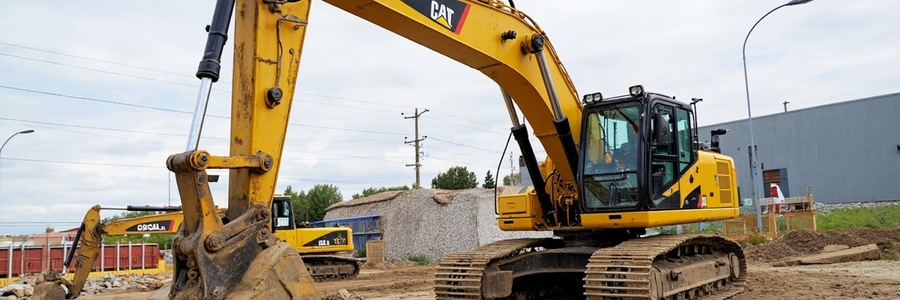
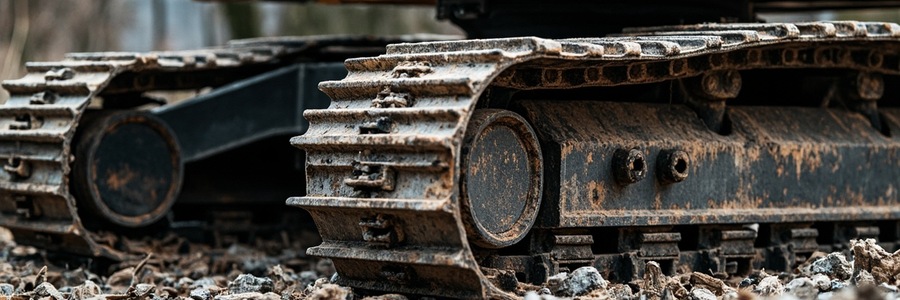
Mining undercarriages are built to handle 50-100+ ton machines grinding through rock continuously. Reinforced track links, triple-grouser shoes, and heavy-duty rollers are standard. Construction undercarriages prioritize maneuverability—tighter turning radiuses, lighter shoe options, and easier maintenance access.
Our Baoding Xushui yard stocks both configurations. The CAT 320D comes in construction undercarriage as standard, but we can spec mining-relevant components for African mining operations where conditions strip standard equipment alive. For Southeast Asian quarry work, we have spec’d machines with reinforced track pads and upgraded roller assemblies that doubled undercarriage life in abrasive material.
The cost difference between a construction-spec undercarriage and a mining-spec equivalent can be $8,000-15,000 per machine. That is an investment worth making when your alternative is replacing track components every six months.
CAT 320D: The Crossover Candidate at 20-30K USD
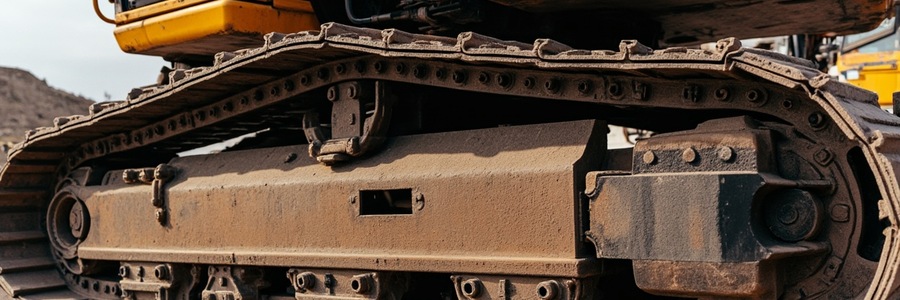
At $20,000-30,000 USD, the CAT 320D sits in an interesting zone. It is fundamentally a construction-class machine, but with proper specification it has been deployed successfully in lighter mining applications:
- Operating weight: 21-23 tons
- Bucket range: 0.8m3 – 1.2m3 standard; up to 1.6m3 with construction-optimized attachments
- Hydraulic system: 185 L/min main pump capacity
- Dig depth: 6.7 meters standard
Best for: Construction earthwork, trenching, utility installation, medium-scale site prep. Acceptable for: small-scale mining support, quarry face loading in soft rock, mine rehabilitation projects.
Not ideal for: Hard rock mining, continuous overburden removal, high-abrasion environments.
The $20K-$30K range is our most-recommended construction excavator for Southeast Asian markets. It balances capability, parts availability, and operator familiarity. The 320D hits the sweet spot—powerful enough for serious earthwork, efficient enough for fuel-conscious operators, and common enough that mechanics worldwide can service it.
Heavy Mining Excavators: 40-90 Ton Class for African Operations
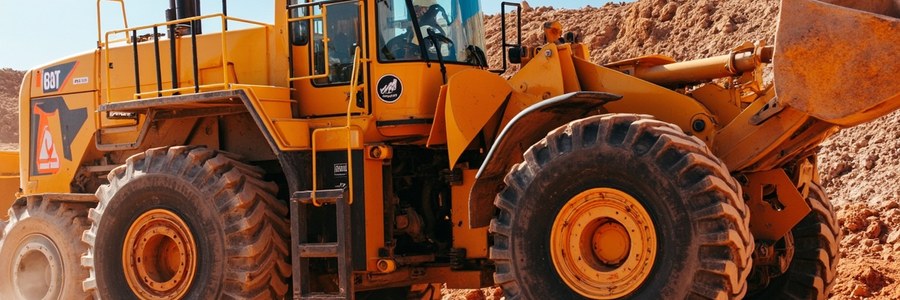
For serious African mining work—open-pit operations, quarry work in Southeast Asia, large-scale infrastructure projects—you need 40+ ton operating weight for stability and force. Our inventory from 2018-2025 includes heavy mining-class units with reinforced booms, HD undercarriages, and higher hydraulic flow systems designed for continuous duty cycles.
Budget $80,000-$150,000 for a capable machine in the 40-60 ton class. Used but well-maintained units from our Baoding Xushui inventory offer the best value at that price point. Factor in $50,000-$90,000 annual operating cost. The economics work when you are moving 1,000+ tonnes per day—productivity justifies the investment.
African mining operations face unique challenges: remote locations, abrasive ore characteristics, and operators who need equipment that runs dawn-to-dusk with minimal maintenance windows. Prima’s equipment is increasingly specified for these operations because we can deliver mining-grade machines at competitive price points with parts and technical support that keeps them running.
Conclusion
Choosing between mining and construction excavator specs comes down to three questions: what material are you moving, how many hours per day, and how long is the project? Get those answers right and your machine pays back. Get them wrong and a $10K specification mistake can cost $50K in downtime. If you are unsure, describe your site conditions to Prima’s team and we will help you spec correctly. The right machine is the one that matches your actual working conditions—not the most powerful or the cheapest on paper.
| 1 | CAT 320D specifications and performance data are documented in Caterpillar’s product literature. Caterpillar 320D.↑ |
| 2 | Komatsu hydraulic excavator specifications and PC200 series data are publicly available. Komatsu.↑ |
| 3 | African mining sector growth and equipment demand projections are documented by the African Development Bank. African Development Bank.↑ |
| 4 | Southeast Asian construction equipment market trends including infrastructure investment data. World Bank Urban Development.↑ |
| 5 | Excavator undercarriage maintenance and inspection standards from construction equipment industry guidelines. Construction Equipment Magazine.↑ |