
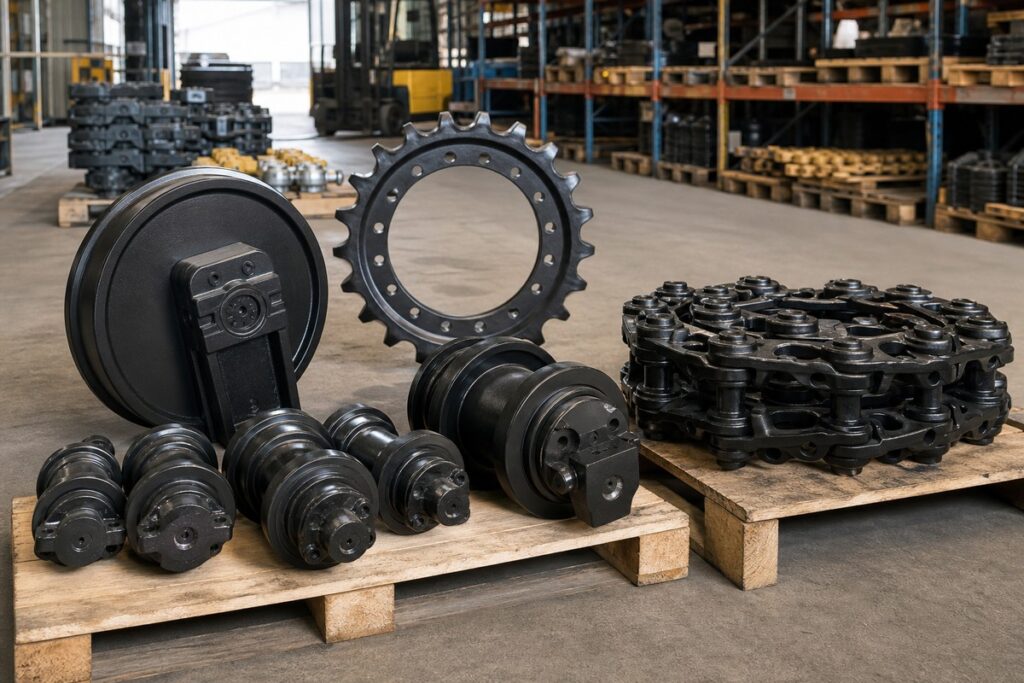
Buyers sourcing CAT excavator undercarriage parts should confirm machine model, serial number, old-part photos, track chain link count, track pitch, shoe width, sprocket teeth count, roller dimensions, condition grade, warranty scope and export packing evidence before payment.
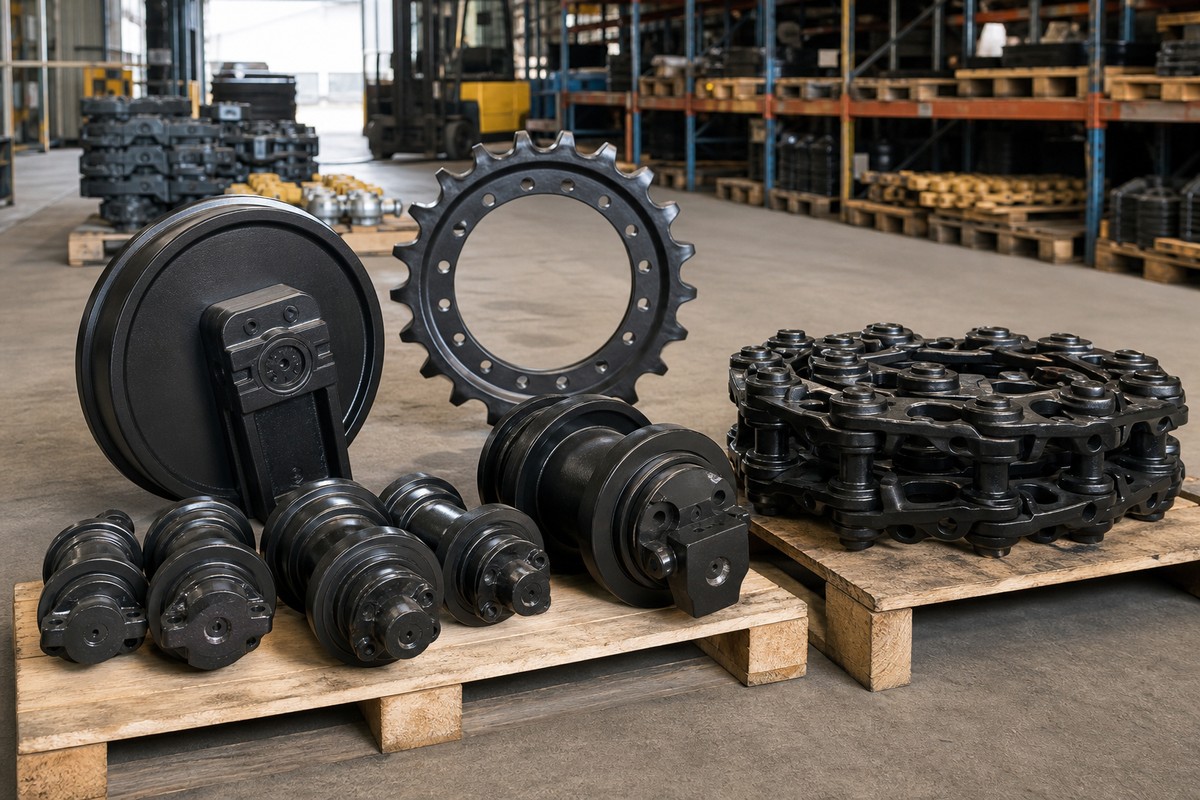
CAT excavator undercarriage parts are high-intent replacement items because a wrong roller, sprocket, idler or chain can stop a working machine immediately. This guide supports PRIMA resources on excavator undercarriage parts, the spare parts fitment checklist and the 53-link vs 51-link track chain mistake.
Buyer Summary
- CAT undercarriage orders should be checked by serial range, photos and dimensions, not model name alone.
- Track rollers, carrier rollers, idlers, sprockets and track chains work as a system, so wear pattern matters.
- The safest quotation file includes old-part photos, chain link count, pitch, shoe width, sprocket teeth and roller measurements.
- Condition grade should be clear: OEM, aftermarket, used or rebuilt, with warranty terms matched to part type.
What should buyers confirm before ordering CAT undercarriage parts?
The quotation should start with model, serial number, old-part photos, measurements, quantity per side and working condition.
A model name such as CAT 320 or CAT 330 is useful, but it is not enough for final confirmation. Undercarriage configuration can vary by generation, market and previous repair history. PRIMA should compare photos and measurements before treating a price as final.
| Item | Evidence to request | Buyer risk controlled |
|---|---|---|
| Machine identity | Model plate and serial number | Wrong generation or configuration |
| Old part | Photos from front, side and mounting area | Similar-looking part mismatch |
| Quantity | Quantity per side and total set plan | Incomplete shipment or mixed wear |
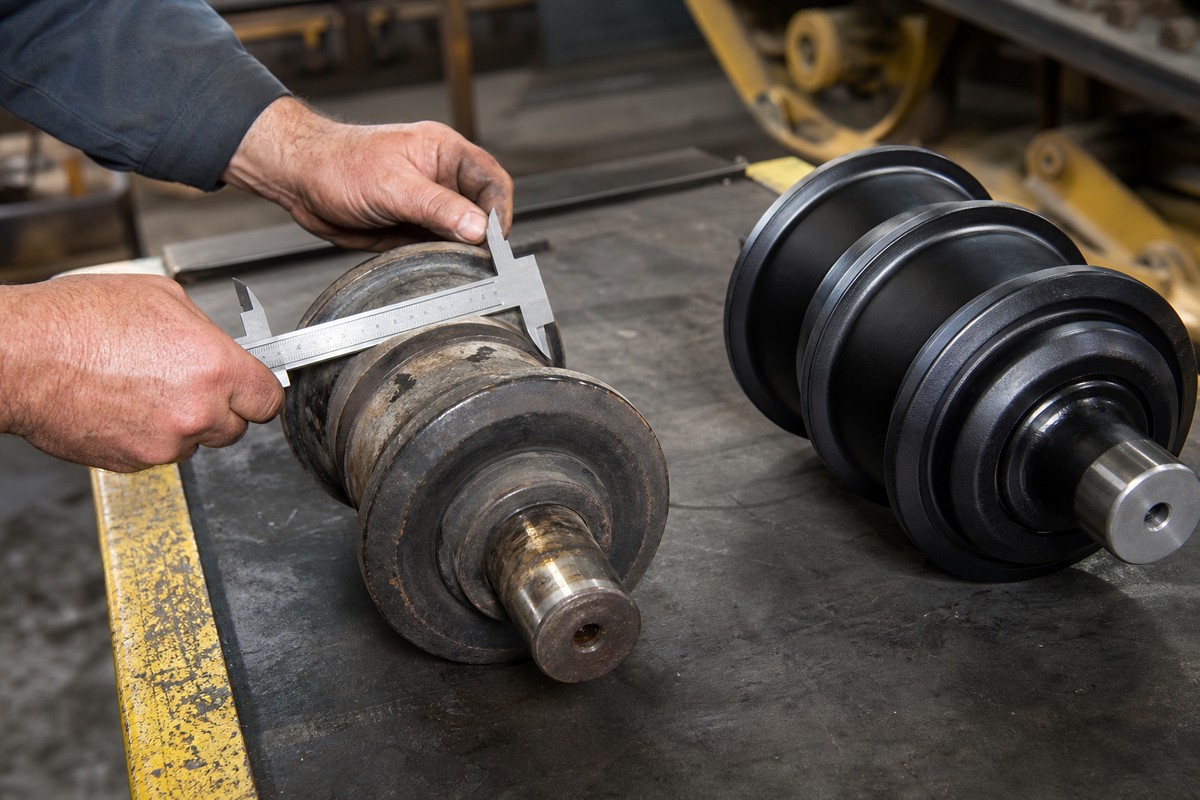
How should track roller and carrier roller fitment be checked?
Rollers should be checked by flange type, shaft dimensions, bolt pattern, shell width and quantity per side.
Track rollers carry the machine weight and guide the chain. A roller that is close but not correct can create abnormal wear, noise or installation failure. Buyers should send photos of the old roller and the installation position, especially when the machine has been repaired before.
| Roller check | What to measure | Why it matters |
|---|---|---|
| Flange type | Single or double flange | Affects chain guidance |
| Mounting | Bolt pattern and shaft area | Controls installation fit |
| Quantity | Bottom and carrier roller count | Prevents set shortage |
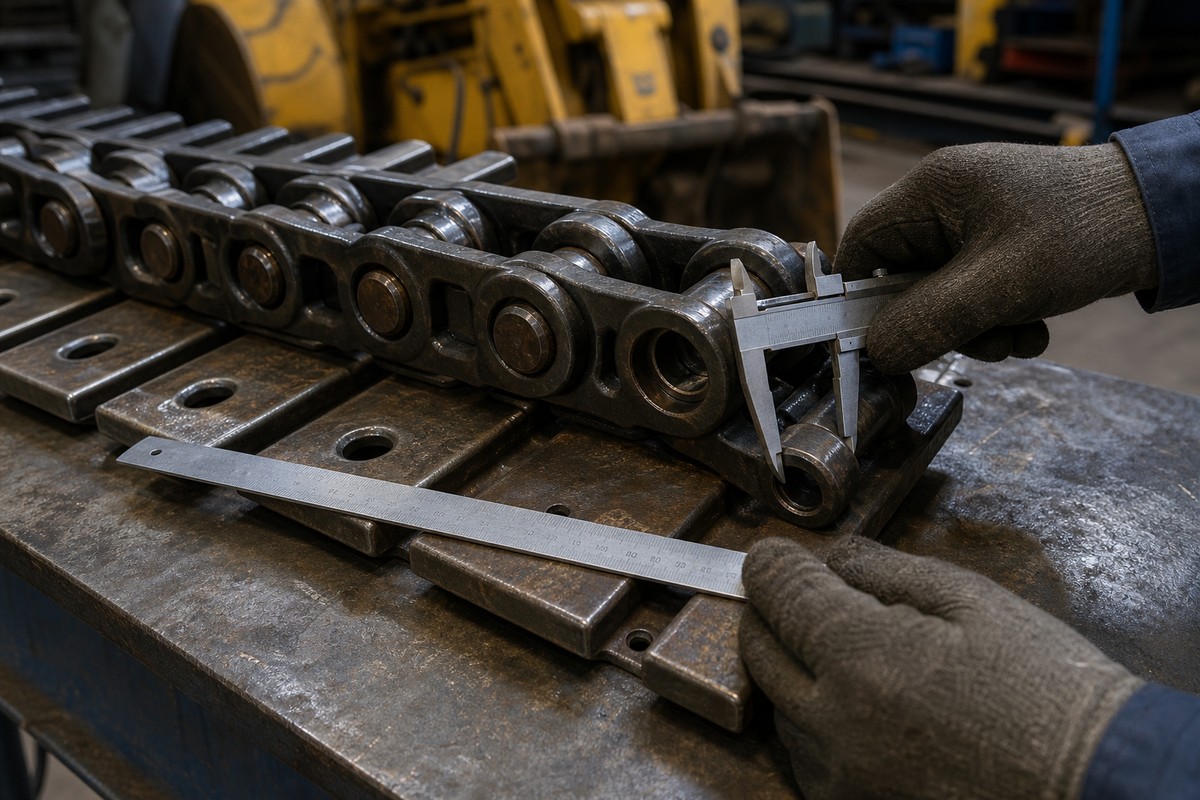
Why do track chain link count and pitch matter?
A track chain can fail the order even when the model looks correct if link count, pitch or shoe width is wrong.
PRIMA already records a practical fitment lesson: a buyer needed a 53-link chain, but a supplier shipped 51 links. That small difference made the chain unusable. Buyers should verify link count, pitch, shoe width and sprocket match before shipment.
| Chain data | Evidence | Failure mode |
|---|---|---|
| Link count | Count existing chain links | Chain too short or too long |
| Pitch | Measure center-to-center distance | Does not match sprocket |
| Shoe width | Measure shoe plate width | Wrong ground pressure and clearance |
How should sprocket and idler condition be evaluated?
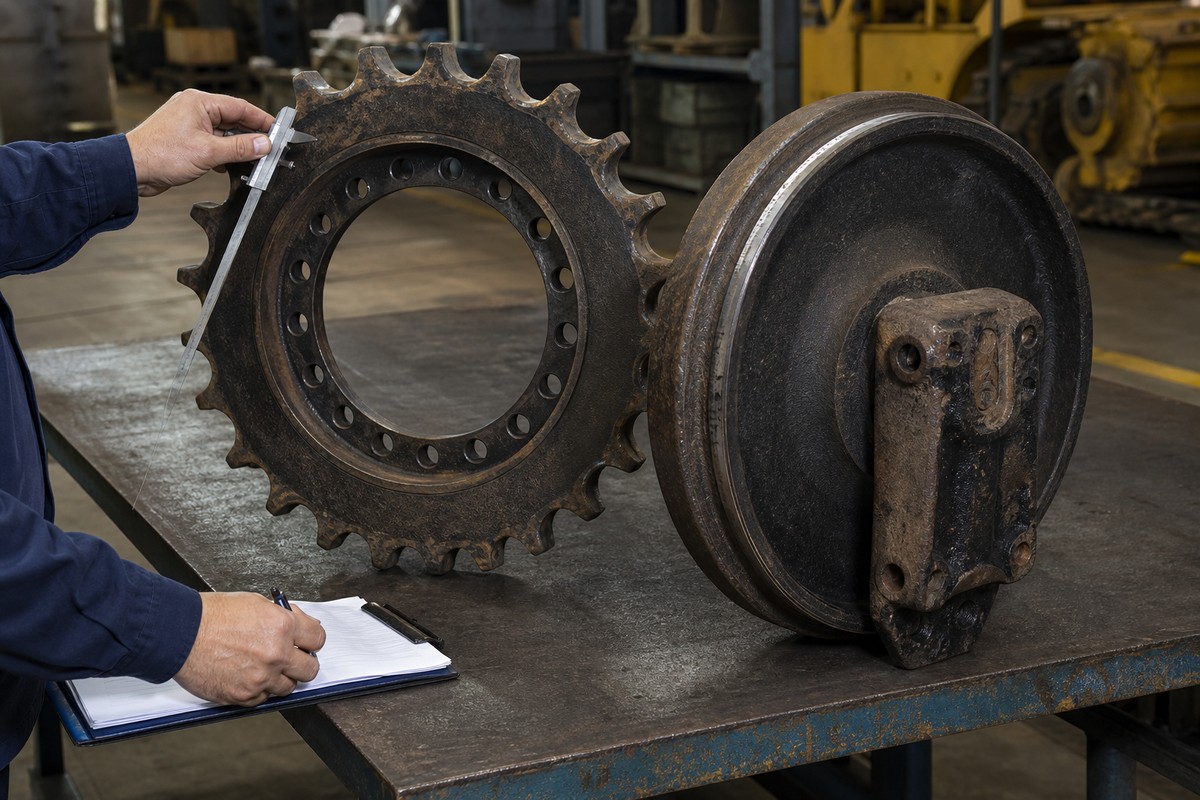
Sprocket teeth, idler rim wear, bearing condition and chain compatibility should be checked together.
Installing a new chain on a badly worn sprocket can shorten service life. The idler also controls chain tension and alignment. Buyers should send sprocket teeth photos, idler side photos and wear measurements when planning a partial undercarriage replacement.
What packing evidence should be provided before export shipment?
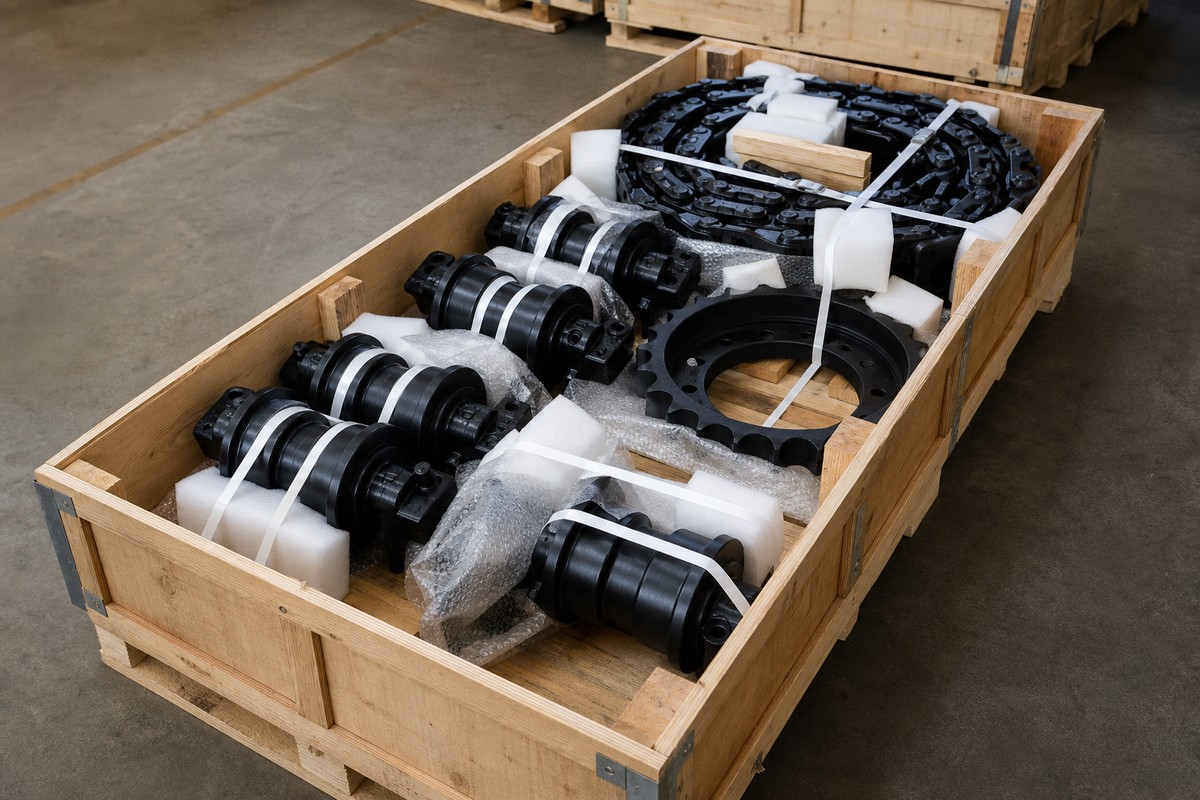
Heavy undercarriage parts should be fixed, padded and photographed inside the crate or pallet plan before final payment.
Track chains, sprockets and rollers are dense parts. They can damage each other if they move inside the crate. PRIMA should provide real photos of the parts, crate, straps, padding and shipment-ready batch when available.
Evidence Table
| Buyer question | Evidence PRIMA should request | Why it matters |
|---|---|---|
| Will the undercarriage part fit? | Serial number, old-part photos and measurements | Prevents wrong-part shipment |
| Is the set complete? | Quantity per side and complete set list | Avoids mixed or incomplete repair |
| Can it ship safely? | Crate photos, straps and padding evidence | Controls damage during export handling |
Buyer FAQ
Can CAT undercarriage parts be ordered by model only?
No. Model name is a starting point, but serial number, old-part photos, dimensions and quantity per side should be confirmed.
Which CAT undercarriage parts are most common?
Track rollers, carrier rollers, idlers, sprockets, track chains, shoes, bolts and nuts are common replacement items.
Can PRIMA support OEM, aftermarket, used and rebuilt options?
Yes, depending on buyer budget, machine value, availability and warranty expectations. The condition grade should be clear before payment.
Conclusion
A safe CAT undercarriage parts order is built around fitment evidence. Buyers should confirm serial number, old-part photos, link count, pitch, shoe width, sprocket teeth, roller dimensions, condition grade, warranty and packing proof before comparing price alone.
References
- Caterpillar parts: Useful reference for OEM parts identification logic.
- ISO 9001: General reference for supplier quality-management systems.
- Komatsu undercarriage care: Useful general undercarriage maintenance context.
2026-06-03 repair: CAT undercarriage links to used-machine and Spanish parts evidence
This repair connects CAT undercarriage parts with used CAT machine inspection and Spanish heavy-machinery parts sourcing, while preserving non-authorization wording.
Buyer Summary
- Added used CAT machine inspection link.
- Added Spanish heavy-machinery parts support link.
- Reinforced link count, pitch and shoe-width evidence.
Repair Evidence Table
| Gap | Repair | Buyer value |
|---|---|---|
| Used machine | Inspection link added | Machine-to-parts support |
| Spanish support | LATAM page linked | Localized buyer route |
| Fitment | Measurements reinforced | Less wrong undercarriage |
Internal Link Updates
- How Should Buyers Inspect a Used CAT Excavator Before Importing from China?
- Como Comprar Repuestos para Maquinaria Pesada desde China sin Error de Compatibilidad?
External Reference
Related PRIMA fitment and sourcing guides added on 2026-05-26
This update connects the page to PRIMA’s latest evidence-led buyer guides for general CAT excavator parts checklist and part-number serial evidence.